
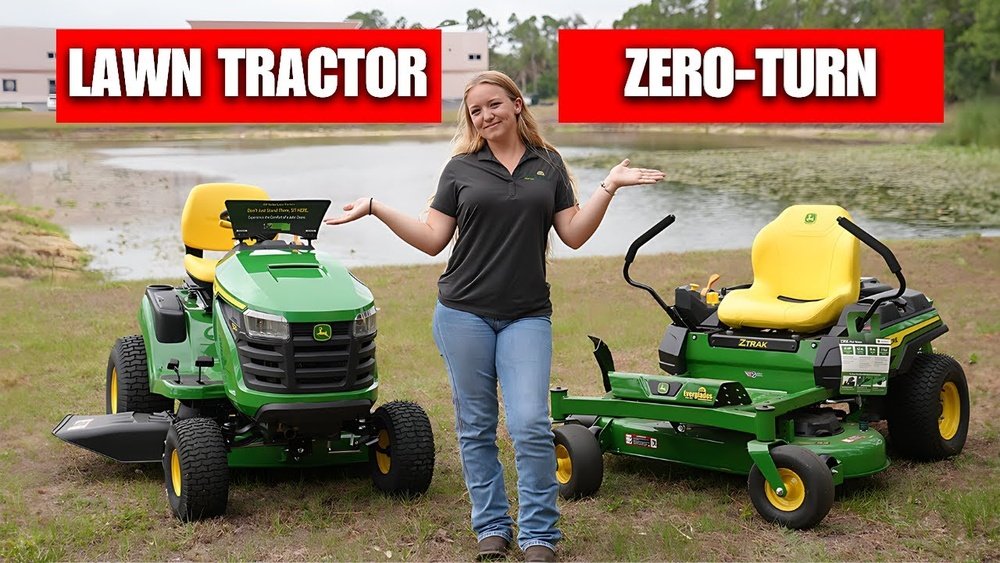
When you have a large yard to care for, the right mowing equipment makes all the difference. Many homeowners, landscapers, and property managers face the classic question: should I choose a zero turn mower or a lawn tractor? Both machines cut grass, but they offer very different experiences, features, and results. If you’re trying to make the best decision for your property, budget, and long-term satisfaction, it’s important to understand these differences inside and out.
Let’s walk through everything you need to know about zero turn mowers and lawn tractors. This will include how they work, the pros and cons of each, maintenance needs, costs, safety, and even which machine fits different lawn types and owner needs.
By the end, you’ll have a clear answer for your own situation, with confidence to choose the mower that’s truly right for you.
What Is A Zero Turn Mower?
Zero turn mowers are a type of riding mower designed for speed, agility, and professional-quality lawn care. The term “zero turn” means the mower can turn 180 degrees in place, with a turning radius of almost zero. This is possible because each rear wheel is powered by its own hydraulic motor, and they’re controlled by two lap bars or levers.
With this design, zero turn mowers can:
- Spin around tight corners
- Mow around trees, flowerbeds, and obstacles with minimal effort
- Make fast, clean turns at the end of each mowing row
Most zero turn mowers have the engine and cutting deck in the back, and the operator sits high above the machine for good visibility. Cutting decks are usually wider than those on standard lawn tractors, often ranging from 42” to 72” in width.
Zero turn mowers are widely used by professional landscapers, sports groundskeepers, and anyone who wants a fast, neat cut on medium to large lawns.
What Is A Lawn Tractor?
Lawn tractors, sometimes called garden tractors or riding lawn mowers, are the classic solution for mowing large residential yards. The design looks similar to a small tractor: a steering wheel, a front-mounted engine, and a cutting deck underneath the body.
Lawn tractors are built for:
- Comfortable, steady mowing of large grassy areas
- Handling gentle slopes and uneven ground (within limits)
- Towing small attachments, like carts, spreaders, or aerators
The cutting decks on lawn tractors usually range from 38” to 54”, and many models allow you to change the deck size or add other accessories. Lawn tractors are a familiar sight in suburban neighborhoods and on small-acreage properties.

Key Differences Between Zero Turn Mowers And Lawn Tractors
Understanding the true differences between these two machines is crucial. Here’s a detailed breakdown of how they compare on the factors that matter most.
| Feature | Zero Turn Mower | Lawn Tractor |
|---|---|---|
| Turning Radius | Zero (pivot in place) | 16-30 inches (wider turns) |
| Speed | Up to 8 mph | 3-6 mph |
| Control | Levers/lap bars | Steering wheel |
| Deck Width | 42″–72″ | 38″–54″ |
| Towing Ability | Limited | Good (attachments possible) |
| Best For | Flat, open lawns with obstacles | Mixed terrain, hills, and tasks |
Maneuverability
Zero turn mowers are famous for their exceptional maneuverability. They can spin around trees, posts, and flowerbeds quickly, leaving no patches of uncut grass. This is a massive advantage if your yard has lots of landscaping.
Lawn tractors can turn well, but their turning radius is wider. This means you may need to reverse or make extra passes to finish tight areas. For simple, open lawns, this isn’t an issue, but if you have complex landscaping, it’s less efficient.
Speed And Efficiency
Zero turn mowers can mow faster than most lawn tractors. Many models reach speeds of up to 8 mph, while typical lawn tractors top out at 3 to 6 mph. The ability to make tight turns also means less time wasted repositioning.
A zero turn mower can often finish the same job in 50–70% of the time it takes a lawn tractor, especially on flat and open ground. This is why they’re the choice of professional mowing crews.
Terrain Handling
Lawn tractors are generally better for uneven terrain and slight hills. Their lower center of gravity and wide tires help with stability. Most zero turn mowers are best on flat ground. On steep slopes (over 15 degrees), zero turn mowers can lose traction or even tip, which is a serious safety risk.
For hilly or bumpy yards, lawn tractors are usually the safer and more reliable choice.
Cutting Quality
Both machines can deliver a neat, even cut when properly maintained. However, zero turn mowers tend to leave fewer missed strips around obstacles, thanks to their maneuverability. Lawn tractors may leave small patches near trees or fences, requiring touch-up with a push mower or trimmer.
Comfort And Controls
Lawn tractors use a steering wheel and foot pedals, which feel familiar and easy to use for most people. Zero turn mowers use lap bars or levers, which steer by controlling the speed of each rear wheel. This takes some practice. Some users find lap bars tiring during long mowing sessions.
Many modern zero turn mowers now feature ergonomic seats and vibration dampening, but lawn tractors often have more comfortable seating for long periods.
Attachments And Versatility
Lawn tractors are designed for more than just mowing. You can add:
- Carts for hauling mulch or debris
- Snow blowers
- Aerators
- Spreaders
- Dethatchers
This makes lawn tractors a true multi-purpose yard machine. Zero turn mowers can sometimes pull small carts or sprayers, but their design is focused on mowing.
Storage And Footprint
Zero turn mowers, especially with larger decks, can be bulky. They require more storage space than many lawn tractors. If your garage or shed is small, measure carefully before buying.
Price And Value
Zero turn mowers usually cost more than lawn tractors for similar deck sizes and engine power. Entry-level zero turn mowers start at around $2,800–$3,500, while basic lawn tractors can be found for $1,800–$2,500. Professional-grade zero turn models can cost $5,000–$10,000 or more.
However, a zero turn’s speed may save you enough time (and money, if you pay for mowing) to justify the higher cost, especially for large yards.
Pros And Cons Of Zero Turn Mowers
Let’s look closely at the real-world advantages and disadvantages.
Benefits
- Unmatched maneuverability — Cuts around trees, beds, and obstacles with ease.
- Faster mowing times — More ground covered per hour.
- High-quality cut — Fewer missed patches, especially around edges.
- Professional results — Stripes and patterns possible.
- Great for large, flat lawns — Ideal for 1+ acre properties.
Drawbacks
- Not great on hills — Risk of sliding or tipping on steep slopes.
- Higher price — More expensive than similar lawn tractors.
- Learning curve — Lap bars require practice for smooth control.
- Limited attachments — Not as versatile for yard work beyond mowing.
- Storage needs — Larger footprint, especially with wide decks.
Pros And Cons Of Lawn Tractors
Here’s how lawn tractors stack up.
Benefits
- Familiar controls — Steering wheel and pedals are easy for most people.
- Versatile attachments — Haul, tow, and handle many yard tasks.
- Better for hills — More stable on slopes and uneven ground.
- Lower cost — Entry-level models are affordable.
- Compact storage — Smaller decks fit in tighter spaces.
Drawbacks
- Slower mowing — Lower speed and wider turning radius.
- More trimming needed — Harder to mow close to obstacles.
- Deck maintenance — Decks can be harder to remove or service.
- Not as neat — May leave strips or patches near landscaping.
- Less comfortable for very large properties — Longer time spent mowing.
Which Should You Choose? Decision Factors To Consider
Selecting between a zero turn mower and a lawn tractor depends on your specific needs, yard, and preferences. Here are the most important factors to guide your decision.
1. Yard Size
- Under 1 acre: A lawn tractor is usually enough, unless you want to mow extremely fast.
- 1–3 acres: A zero turn mower can save significant time.
- Over 3 acres: Zero turn mowers are almost always the best choice for speed and efficiency.
2. Terrain
- Flat, open ground: Zero turn mowers excel.
- Hilly, sloped, or uneven lawns: Lawn tractors are safer and more stable.
3. Obstacles And Landscaping
- Lots of trees, flowerbeds, or tight spaces: Zero turn mowers shine.
- Open, rectangular lawns: Either machine works, but a tractor is fine.
4. Budget
- Tight budget: Lawn tractors offer good value and versatility.
- Higher budget or time savings matter: Zero turn mowers can pay off over time.
5. Intended Use
- Only mowing: Zero turn mower is best for speed and a clean cut.
- Multiple tasks (hauling, snow removal, etc. ): Lawn tractor is the obvious winner.
6. Operator Preference
- Familiar, simple controls: Lawn tractor is less intimidating.
- Willing to learn for better results: Zero turn lap bars become intuitive with practice.
7. Maintenance And Repairs
Zero turn mowers often have more complex hydraulics. If you’re comfortable with basic maintenance, either type is manageable, but lawn tractors may be simpler for beginners.
Practical Example
Imagine you have a 2-acre yard with a gentle slope, several trees, and a few garden beds. You want to mow quickly but also might need to haul leaves in the fall. In this case, a zero turn mower will save you mowing time, but a lawn tractor would offer more year-round versatility.

Real-world Performance: Side-by-side Test Results
To help visualize the differences, here’s a comparison of mowing times and comfort on a typical 2-acre suburban yard with several obstacles.
| Task | Zero Turn Mower | Lawn Tractor |
|---|---|---|
| Mowing Time (2 acres, moderate landscaping) | ~55 minutes | ~95 minutes |
| Time Spent Trimming (obstacles) | 10 minutes | 25 minutes |
| Comfort (1 = poor, 5 = excellent) | 4 | 5 |
| Learning Curve (1 = easy, 5 = hard) | 4 | 2 |
| Versatility for Non-Mowing Tasks | Limited | Excellent |
Cost Of Ownership Over Time
The sticker price isn’t the whole story. Consider:
- Fuel Use: Zero turn mowers often have larger engines, so fuel costs can be a bit higher, but faster mowing time can balance this out.
- Maintenance: Zero turn mowers need regular hydraulic system checks; lawn tractors have simpler drive systems.
- Repairs: Zero turn parts can be pricier, especially on commercial models.
- Resale Value: Zero turn mowers generally hold value well if maintained.
A well-maintained zero turn mower may last 10–15 years with regular use, while a lawn tractor can last just as long if not overloaded or abused.
Maintenance Needs: What To Expect
Both machines need routine care, but there are some differences.
Zero Turn Mower Maintenance
- Hydraulic system: Check and change fluid as recommended.
- Blades: Sharpen or replace regularly.
- Deck cleaning: Grass buildup can affect cut quality.
- Belts and pulleys: Inspect for wear.
Lawn Tractor Maintenance
- Engine oil and filter: Change at least once per season.
- Air filter: Clean or replace.
- Blades: Sharpen or change as needed.
- Tires: Check for pressure and wear.
- Transmission fluid: Some models require periodic checks.
Many owners miss that zero turn mowers, with their exposed decks and open designs, may need more frequent deck cleaning to prevent grass clumping. Also, it’s important to follow the manufacturer’s guide for hydraulic maintenance—something beginners often forget.
Safety Considerations
Both types of mowers are powerful machines that can cause injury if used incorrectly. Here are some key tips:
- Zero turn mowers: Never mow across steep hills; always mow up and down if needed, but avoid slopes over 15 degrees.
- Lawn tractors: Use low gear on hills and avoid sudden turns.
- Both: Wear hearing protection, don’t carry passengers, and keep hands and feet clear of the deck.
Many accidents happen because operators try to mow too fast or don’t read the safety manual. Take time to practice with your machine before tackling tough areas.

Common Mistakes When Choosing
- Ignoring terrain — Buying a zero turn for a hilly yard can be dangerous.
- Underestimating maintenance — Neglecting hydraulic checks on zero turns or oil changes on tractors leads to early breakdowns.
- Buying too much or too little mower — Oversized decks can be hard to maneuver; undersized machines waste time.
- Forgetting about storage — Measure your garage or shed before purchasing.
- Overlooking comfort — For long mowing jobs, seat comfort and vibration matter more than you expect.
Environmental Impact
Both zero turn mowers and lawn tractors use gasoline engines, which emit carbon dioxide and pollutants. However, because zero turns mow faster, they may spend less total time running, slightly reducing emissions for the same size lawn.
Some new models are now available with electric motors, which are quieter and have no direct emissions. If sustainability is a top concern, look into electric options for both types of machines.
Brands And Models To Watch
Some of the most reliable zero turn mower brands include:
- Toro
- Hustler
- John Deere
- Cub Cadet
- Husqvarna
Top lawn tractor brands include:
- John Deere
- Cub Cadet
- Husqvarna
- Craftsman
Always check local dealer support and parts availability before choosing a brand.
For more in-depth technical details about riding mowers, you can refer to the Wikipedia page on lawn mowers.
Who Should Not Buy Each Type?
- Zero turn mowers are not ideal if: Your yard is very hilly, you need to tow heavy attachments, or you prefer familiar controls.
- Lawn tractors are not ideal if: You want the fastest mow time, have many obstacles, or need a true professional finish.
Two Non-obvious Insights
- Zero turn mowers can scalp turf on uneven ground. Because their decks are often wider and less flexible than a lawn tractor’s, they may cut too close on dips and bumps—leading to brown patches.
- Tire type matters more than you think. For both machines, upgrading to wider, turf-friendly tires can reduce ruts and improve traction, especially on soft or wet ground. Many buyers overlook this upgrade, but it makes a noticeable difference in cut quality and machine control.
Frequently Asked Questions
What Size Lawn Justifies Buying A Zero Turn Mower?
If you have a lawn larger than one acre, a zero turn mower starts to make sense for the time savings. For half-acre lawns or smaller, a lawn tractor or even a walk-behind mower may be more cost-effective.
Can I Use A Zero Turn Mower On Hills?
Zero turn mowers are not recommended for steep slopes (over 15 degrees). They can lose traction and become unstable. For hilly yards, a lawn tractor is generally safer.
Are Zero Turn Mowers Harder To Learn To Drive?
They do require a short learning period. The lap bar controls are very different from a steering wheel. Most users become comfortable after an hour or two of practice, but beginners should start slow and open.
Can Lawn Tractors Be Used For Snow Removal?
Yes, many lawn tractors can be fitted with snow blower or snow plow attachments. This makes them useful year-round, especially in areas with winter snowfall.
Which Is Easier To Maintain: Zero Turn Or Lawn Tractor?
Lawn tractors are usually simpler for routine maintenance. Zero turn mowers have hydraulic systems that require special attention, but both types need regular oil changes, blade sharpening, and deck cleaning.
Choosing between a zero turn mower and a lawn tractor is a big decision, but with a clear understanding of your yard, your needs, and the real-world differences, you’ll be able to pick the machine that will keep your grass healthy and your weekends free for years to come.
As an Amazon Associate, We earn from qualifying purchases