
Choosing the right lawn mower is a decision that shapes your weekends, your wallet, and your yard’s appearance for years. With so many options on the market today, the big question often comes down to electric vs gasoline lawn mower. Each type has its passionate fans, but which is right for you? To make an informed choice, you need real insights about power, cost, convenience, maintenance, and long-term value. This article dives deep into every angle, so you can pick a mower with zero regrets.
Understanding The Basics
Before comparing, it helps to understand what makes electric and gasoline lawn mowers different. Electric mowers use either a cord plugged into an outlet or rechargeable batteries. Gasoline mowers use small internal combustion engines fueled by gas.
At first glance, the main difference seems obvious—one uses electricity, the other uses gas. But these two types have unique advantages and drawbacks that go far beyond the engine.
Performance: Power And Cutting Ability
The heart of any mower is how well it cuts grass. Most homeowners want a mower that handles thick, tall, or wet grass without bogging down.
Gasoline Mowers
Gasoline mowers are known for their raw power. Their engines, measured in cubic centimeters (cc), can deliver strong torque and blade speed. This makes them excellent for:
- Large lawns (over 1/3 acre)
- Tough, thick grass varieties (like Bermuda or St. Augustine)
- Uneven or hilly terrain
A typical gas mower has 140-190cc engines, with blade speeds around 3,000 RPM. This means they rarely stall in challenging conditions.
Electric Mowers
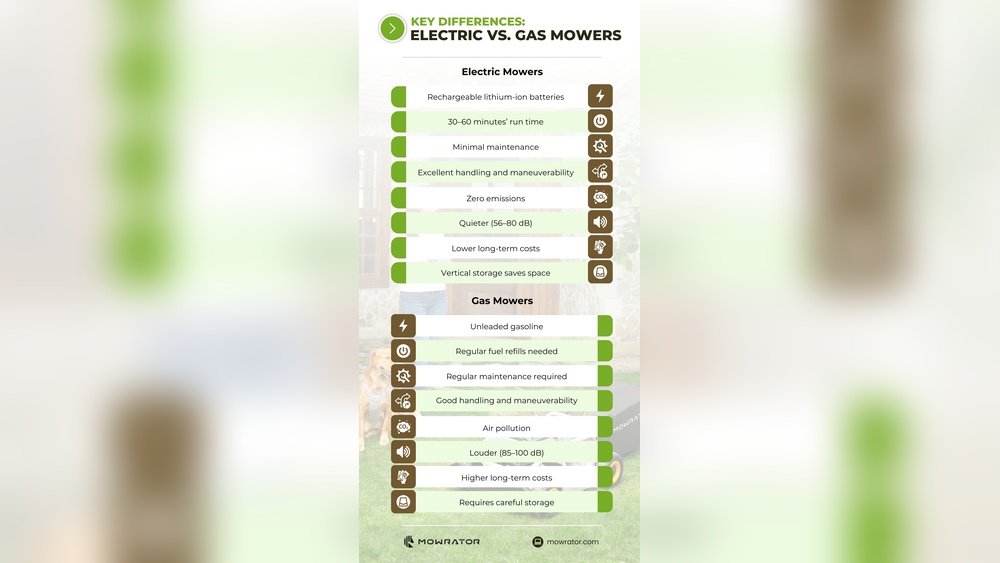
Electric mowers, especially the corded kind, have lower torque than gas models. Battery-powered mowers have improved in recent years, with some now matching the cutting ability of gas mowers for average-sized lawns.
- Good for small to medium lawns (up to 1/3 acre)
- Handle regular mowing well
- Struggle a bit with overgrown or very wet grass
Many high-end battery mowers now offer 60V or even 80V batteries. However, if your grass is thick or you let it grow long, you may need to slow down or make multiple passes.
Performance Comparison Table
Here’s a quick look at how both types compare on key performance factors:
| Feature | Gasoline Mower | Electric Mower |
|---|---|---|
| Engine Power | High (140-190cc) | Medium (up to 80V) |
| Blade Speed | ~3,000 RPM | ~2,500 RPM |
| Best For | Thick, tall grass; large lawns | Regular, short grass; small lawns |
| Stalling | Rare | Possible in tough conditions |
Non-obvious insight: Some homeowners assume all electric mowers are weak, but top-tier battery models today can rival small gas engines. However, the battery life may drop if the grass is extra thick.

Cost: Upfront And Long-term
When comparing electric vs gasoline lawn mowers, cost is more complex than just the sticker price.
Upfront Price
- Gasoline mowers: $250–$800 for walk-behind; $1,500+ for riding models
- Electric mowers: $150–$700 for corded/battery; $2,000+ for electric riding mowers
Corded electric mowers are usually the cheapest, but they’re best for small, simple yards.
Running Costs
Gasoline mowers require fuel, oil changes, spark plugs, and sometimes carburetor cleaning. Electric mowers have almost no routine expenses—just electricity and, for battery models, occasional battery replacement every 3–5 years.
Cost Comparison Table
Let’s break down typical annual operating costs for each type:
| Expense | Gasoline Mower | Electric Mower |
|---|---|---|
| Fuel/Electricity | $25–$50 | $5–$15 |
| Oil/Spark Plugs | $15–$30 | $0 |
| Battery (every 3–5 yrs) | $0 | $100–$200 |
| Maintenance | $40–$70 | $10–$20 |
Non-obvious insight: Many people don’t realize that battery replacement is a big part of electric mower costs over time. If you plan to keep the mower for 10 years, factor in at least two battery changes.
Maintenance And Reliability
Maintenance can make or break your long-term satisfaction. Some people love tinkering with engines; others want simplicity.
Gasoline Mowers
Gas mowers need:
- Regular oil changes
- Gas refills
- Spark plug replacement
- Air filter cleaning/replacement
- Occasional carburetor maintenance
These tasks take time and basic mechanical know-how. Neglecting them can lead to hard starts or costly repairs.
Electric Mowers
Electric mowers are low maintenance:
- No oil, spark plugs, or air filters
- Just clean the deck and sharpen the blade
Corded models have almost no maintenance, while battery models may need battery care (charging, not letting them drain fully).
Durability
Gas mowers, with care, can last 10–15 years or more. Electric mowers can last 5–10 years, but battery replacements are needed.
Practical tip: If you’re not comfortable with small engine repair, an electric mower is less hassle.
Ease Of Use And Convenience
How a mower fits into your routine matters. Consider starting, maneuvering, and storage.
Starting
- Gas mowers: Usually require a pull cord; some have electric start, but still need priming or choke.
- Electric mowers: Push-button start. No choke, no priming.
Weight And Maneuverability
Electric mowers weigh 10–20 pounds less than similar gas mowers. This makes them easier to push, turn, or carry up steps.
Noise
Electric mowers are much quieter. Gas mowers can reach 85–90 decibels (lawn mower-level loud); electric mowers operate at 65–75 decibels (normal conversation).
Storage
Electric mowers can often be stored vertically, saving space in small garages or sheds. Gas mowers must stay flat to avoid fuel or oil leaks.
Helpful example: If you have a small garage or need quiet mornings, an electric mower is less disruptive.
Environmental Impact
Lawn mowers may seem small, but their impact adds up.
Gasoline Mowers
A single gas mower can pollute as much in one hour as 11 cars, according to the EPA. They emit:
- Carbon monoxide
- Nitrogen oxides
- Volatile organic compounds
They also contribute to gas spills and noise pollution.
Electric Mowers
Electric mowers produce zero emissions at the yard. Their environmental impact depends on the local electricity source (coal, natural gas, or renewables). They are always quieter and create less air pollution.
Non-obvious insight: Over 17 million gallons of fuel are spilled each year refilling yard equipment in the US, more than the Exxon Valdez spill. Electric mowers eliminate this risk.
Battery Life And Range (electric)
Battery-powered mowers are only as good as their battery. Most come with 2. 0Ah to 6. 0Ah batteries, which run 30–60 minutes per charge.
Factors that affect run time:
- Grass height and thickness (tall, wet grass drains batteries faster)
- Mower deck size (wider decks use more power)
- Battery age (older batteries lose capacity)
If your lawn takes more than an hour to mow, you may need an extra battery or to mow in shifts.
Tip: Some brands offer “rapid chargers” that recharge batteries in under an hour, but you’ll pay extra.
Corded Electric Mowers: A Special Case
Corded electric mowers are often overlooked, but they have unique strengths:
- Never run out of power mid-mow
- Lowest upfront and operating costs
- No batteries to replace
However, dragging a cord can be annoying, and they’re best for lawns under 1/4 acre with few obstacles.
Practical advice: Use a heavy-duty outdoor extension cord, and always mow away from the cord to avoid tangling or cutting it.

Safety
Safety is a hidden but important factor.
- Gasoline mowers: Risk of burns from hot engines, fuel spills, and inhaling fumes.
- Electric mowers: No gas or oil, lower risk of burns. However, corded models have the hazard of running over the cord.
Both types have blades, so standard safety (wearing closed shoes, eye protection, keeping kids and pets away) applies.
Non-obvious insight: Electric mowers often have a “dead man’s switch”—blades stop as soon as you release the handle, reducing injury risk.
Features And Technology
Modern mowers come with features that go beyond basic cutting.
Gasoline Mowers
Common features:
- Self-propelled drive (front, rear, or all-wheel)
- Adjustable cutting height
- Mulching and bagging
- Side discharge
Electric Mowers
Common features:
- LED battery indicators
- Foldable/vertical storage
- Quiet mode (for light cutting)
- Interchangeable batteries with other tools (leaf blowers, trimmers)
Some electric mowers now have self-propelled options and even smart app integration.
Tip: If you already own battery-powered tools from a brand, sticking with that brand can let you share batteries and save money.
Resale Value
If you plan to upgrade or sell later, resale matters.
- Gasoline mowers: Hold value if well-maintained; buyers expect used gas mowers to work like new.
- Electric mowers: Resale depends on battery life. Old batteries can hurt value, but high-end brands sell quickly.
Suitability For Different Lawns
No mower is perfect for every yard.
Large Lawns (over 1/2 Acre)
- Gasoline mowers or riding mowers are usually best. Their range and power excel on big properties.
Small To Medium Lawns (under 1/3 Acre)
- Electric mowers (corded or battery) offer enough run time and are easier to use.
Hilly Or Bumpy Lawns
- Gasoline mowers (especially self-propelled) handle rough terrain better.
- Some electric self-propelled models now compete, but battery drains faster on hills.
Lawns With Many Obstacles
- Electric mowers are easier to lift and turn.
- Corded models can be a hassle around trees, so battery models are better.
Weather And Seasonal Considerations
Your climate affects mower choice.
- Hot climates: Gasoline mowers can overheat if left in the sun; battery mowers may lose charge in very hot or cold weather.
- Wet grass: Both types struggle, but gas mowers power through better.
- Winter storage: Gas mowers need fuel stabilizer; electric mowers just need to keep batteries indoors.
Common Myths Debunked
“gasoline Mowers Are Always More Powerful”
Not true anymore. High-voltage electric mowers can match small gas engines for regular lawns.
“electric Mowers Are Too Weak For Real Grass”
This was once true, but today’s battery tech has closed much of the gap for most homeowners.
“electric Mowers Are Maintenance-free”
They’re low-maintenance, not maintenance-free. Blades still need sharpening, and batteries require care.
“gas Mowers Last Forever”
Gas mowers can last longer, but only with proper maintenance. Neglect leads to engine problems.
User Experience: Real-world Feedback
Reviews show that most people who switch from gas to electric never go back—especially those with small to medium lawns. The quiet operation and easy start are big hits.
However, users with large, thick, or hilly lawns often stick with gas for extra power and unlimited run time.
Example: On a major home improvement forum, over 80% of electric mower owners said they would not return to gas, while only 60% of gas mower owners felt the same loyalty.
Best Use Cases
To sum up, here are the ideal matches:
- Gasoline mower: Large, tough, or hilly lawns; users who don’t mind maintenance.
- Electric mower: Small/medium lawns; users who want quiet, easy operation, and low maintenance.
Environmental Regulations And Trends
Cities and states are starting to ban or limit gas-powered small engines due to pollution. For example, California will ban the sale of new gas-powered lawn equipment starting in 2024. Electric mowers are likely to become the standard over the next decade.
Non-obvious insight: If you plan to sell your home soon, a quieter, “green” mower can be a small selling point.
Future Of Lawn Mowers
Battery technology is improving rapidly. Expect longer run times, shorter charge times, and more powerful electric mowers soon. Smart features, like app controls or automatic mowing, are also becoming available.
Gasoline mowers, though still very common, face growing regulations and may become harder to service or resell in the future.
For more on environmental regulations, see EPA’s regulations page.
Summary Comparison: Electric Vs Gasoline Lawn Mower
Here’s a final side-by-side look at the two types:
| Category | Gasoline Mower | Electric Mower |
|---|---|---|
| Power | High, best for thick/large lawns | Good for most lawns, less for overgrown grass |
| Operating Cost | Medium to high (fuel, maintenance) | Low (electricity, battery replacement) |
| Noise | Loud | Quiet |
| Maintenance | Regular (oil, spark plugs, etc.) | Minimal (blade, battery care) |
| Emissions | High | None (at point of use) |
| Ease of Use | Heavier, harder to start | Lighter, push-button start |
| Durability | 10–15 years with care | 5–10 years (battery-dependent) |
Making Your Choice
When deciding between an electric vs gasoline lawn mower, ask yourself:
- How big is your lawn?
- Is your grass thick or standard?
- Do you want to avoid engine maintenance?
- Is noise a concern for you or your neighbors?
- Are environmental impact and regulations important?
If you have a small to medium yard and want easy, quiet mowing, an electric mower is hard to beat. For big, tough yards—or if you enjoy the sound of a real engine—gasoline still has its place.
Remember, technology is changing fast. Today’s electric mower may surprise you with its power, and tomorrow’s models will be even better.
Frequently Asked Questions
Is A Gasoline Lawn Mower More Powerful Than An Electric Mower?
Generally, gasoline mowers offer more power and can handle very thick or tall grass better than most electric mowers. However, many new high-voltage battery mowers now match the cutting power of small gas models for regular home use.
How Long Do Electric Lawn Mower Batteries Last?
A typical battery lasts 3–5 years before its capacity drops noticeably. Run time per charge is usually 30–60 minutes, depending on the mower, grass thickness, and battery size.
Are Electric Lawn Mowers Really Maintenance-free?
No, but they’re very low-maintenance compared to gasoline mowers. You still need to clean the deck, sharpen the blade, and care for the battery, but there are no oil changes or spark plugs.
Can I Use An Electric Mower On A Large Yard?
For lawns over 1/3 acre, you may find battery run time too short for a single session. You’ll need extra batteries or to mow in stages. Gasoline mowers are usually better for large yards.
Are There Any Incentives For Choosing An Electric Mower?
Some cities and states offer rebates or incentives for choosing electric lawn equipment to reduce emissions. Check with your local government or utility company for current programs.
Choosing your mower is a long-term decision. Weigh your needs, check your lawn size, and don’t be swayed by myths. The right choice will make your yard work easier and your weekends more enjoyable.
As an Amazon Associate, We earn from qualifying purchases