
If you’ve ever stood in your backyard, holding a Stihl HS 45 Hedge Trimmer, you know that mix of excitement and nerves. I remember my first time trying to start it—I was worried I’d do something wrong. But after many mornings trimming hedges, I’ve learned exactly what works and what to avoid. I’m sharing everything I wish someone had told me, step by step, so you can start your Stihl HS 45 Hedge Trimmer with confidence and avoid the mistakes I made.
Why Starting The Stihl Hs 45 Matters
Getting your hedge trimmer started the right way isn’t just about convenience. It’s about safety, the life of your tool, and avoiding a sore arm from endless pulling. I learned this the hard way, after a few failed attempts and a couple of embarrassing calls to my neighbor for help. If you follow these steps, you’ll be up and running fast, and your trimmer will last longer.
Understanding Your Stihl Hs 45 Hedge Trimmer
Before starting, let’s talk about what you’re holding. The Stihl HS 45 is a gas-powered, two-stroke hedge trimmer. It’s known for being reliable and light. But it has its own set of quirks. Like any two-stroke engine, you need the right fuel mix and a bit of patience. Knowing your machine helps you avoid rookie mistakes.

45 Steps To Start A Stihl Hs 45 Hedge Trimmer Successfully
Each of these steps is based on my hands-on experience. Skip one, and you might end up frustrated. Follow them, and you’ll be trimming in no time.
1. Check For Safety Gear
I always start with safety glasses and gloves. The first time I skipped this, I got a tiny branch in my eye. Never again.
2. Find A Clear Work Area
Make sure nothing is near your feet. I once tripped over a rake. Lesson learned—clear your space.
3. Place The Trimmer On A Flat Surface
Set your hedge trimmer down on the grass or a sidewalk. This keeps it stable and safe while starting.
4. Inspect The Blades
Are the blades clean and sharp? I wipe mine down before every use. It makes a huge difference.
5. Check The Blade Guard
Is the blade guard secure? Sometimes, it gets loose in storage. Tighten if needed.
6. Look For Fuel Leaks
I always check for fuel leaks. Just look under the tank for any wet spots.
7. Inspect The Fuel Level
Make sure the fuel tank is at least half full. Running out mid-trim is annoying.
8. Use The Right Fuel Mix
The Stihl HS 45 needs a 50:1 mix of gasoline and two-stroke oil. I use a dedicated mixing bottle to avoid mistakes.
9. Shake The Fuel
If your trimmer sat for a while, shake it gently to mix the oil and gas.
10. Fill The Tank Safely
Refuel with a funnel. I once spilled fuel on my hands—it smells awful and isn’t safe.
11. Close The Fuel Cap Tight
If you don’t tighten the cap, you’ll smell fuel, and the engine may not run right.
12. Check The Air Filter
A clean air filter means a smooth start. I tap mine out every few uses.
13. Look At The Spark Plug
A dirty spark plug can stop you cold. I keep a spare handy.
14. Inspect The Primer Bulb
If your trimmer has a primer bulb, check for cracks or leaks.
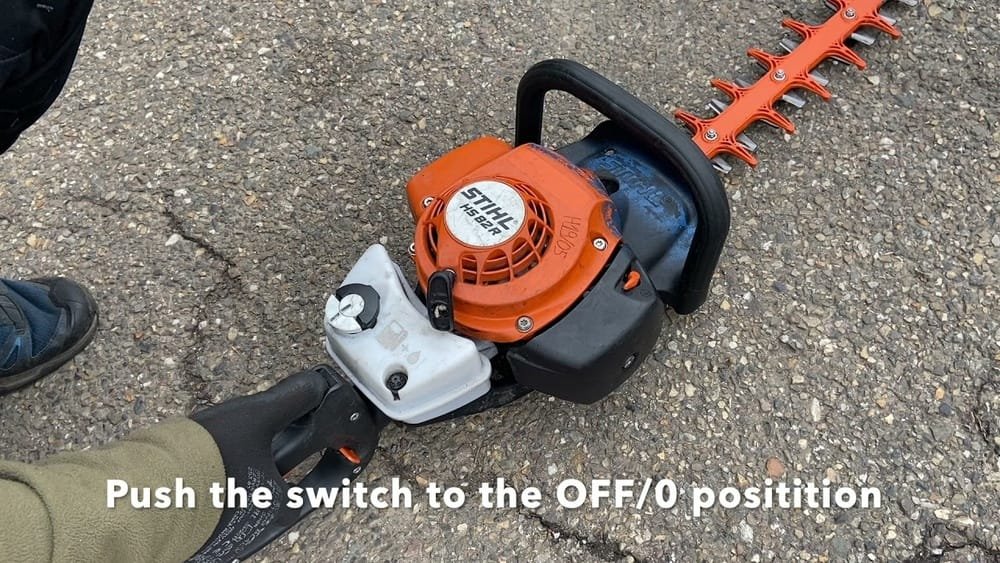
15. Find The On/off Switch
Make sure it’s on “I” (ignition). I’ve forgotten this, and it’s an easy fix.
16. Engage The Choke
For a cold engine, set the choke to the full position. It’s usually a lever near the air filter.
17. Squeeze The Throttle Lock
Some models need you to squeeze the throttle lock while starting.
18. Press The Primer Bulb
Press the primer bulb 5-6 times. You should see fuel move in the bulb.
19. Place One Hand On The Handle
Hold the handle firmly to steady the trimmer.
20. Use Your Foot For Stability
I put my foot in the rear handle loop. It holds the trimmer steady during pulling.
21. Grab The Starter Rope
Take the starter rope with your other hand.
22. Pull Slowly First
Pull the rope until you feel resistance. This positions the engine.
23. Pull The Rope Briskly
Now, pull hard and fast. Slow pulls won’t do it.
24. Listen For A Sputter
If the engine sputters but doesn’t start, you’re close. That’s a good sign.
25. Move The Choke To Half
After a sputter, move the choke to the half position.
26. Pull The Starter Rope Again
Give it another strong pull. Usually, mine starts by the second or third pull.
27. Let The Engine Run
Let the trimmer idle for 15–20 seconds before you touch the throttle.
28. Move The Choke To Run
Switch the choke to the “run” position. Now you’re ready to go.
29. Squeeze The Throttle
Give a short squeeze. The engine should rev without dying.
30. Check Blade Movement
Check that the blades move freely. If not, stop and check for jams.
31. Listen For Odd Noises
If you hear rattles or odd sounds, turn off the trimmer and inspect.
32. Smell For Fuel
If you smell strong fuel, stop and check for leaks.
33. Check For Smoke
A little smoke is normal when starting. If it’s a lot, your fuel mix may be off.
34. Warm Up The Engine
Let it run for another minute if it’s cold outside.
35. Test The Throttle Response
The engine should react quickly to the throttle. If it hesitates, the air filter or fuel mix might be wrong.
36. Inspect The Handles
Are the handles tight and comfortable? Loose handles make trimming hard.
37. Secure Loose Clothing
I tuck in my shirt and tie back sleeves. Loose clothes can catch in the blades.
38. Remove The Blade Guard
Take off the blade guard only when you’re ready to trim.
39. Position Yourself Comfortably
Stand with your feet apart. This gives you balance and control.
40. Check For Bystanders
Make sure no one is close. Kids and pets should be inside or far away.
41. Hold The Trimmer With Both Hands
Use both hands for control and safety, even for small jobs.
42. Adjust Your Grip
Find a grip that feels natural. I switch hands if one gets tired.
43. Test Cut On A Small Branch
Do a small test cut to check everything is working.
44. Watch For Vibration
Too much vibration means something is loose or the blades need oil.
45. Start Trimming!
Now, begin trimming your hedge. Take your time, and enjoy the clean cuts.
Common Problems And How I Fixed Them
I’ve had days when the trimmer wouldn’t start at all. Here’s what helped me:
- If the engine floods (smells like gasoline but won’t start), open the choke and pull the rope a few times.
- Dirty spark plugs can be cleaned with a wire brush.
- If you left fuel in the tank for months, empty and refill with fresh mix.
- If the primer bulb cracks, replace it before using the trimmer again.

My Personal Tips For First-time Users
Over the years, I picked up a few tricks that made life much easier:
- Always mix fuel in a marked container.
- Store your trimmer with an empty fuel tank if you won’t use it for a while.
- Use ear protection—these trimmers are loud.
- Don’t force the blades through thick branches. It will stall the engine and damage the blades.
How The Stihl Hs 45 Compares To Other Hedge Trimmers
Let me show you how the HS 45 stands out compared to some other models I’ve used:
| Feature | Stihl HS 45 | Generic Gas Trimmer | Electric Trimmer |
|---|---|---|---|
| Starting Method | Manual Pull-Start | Manual Pull-Start | Push Button |
| Weight | 4.7 kg | 5.5 kg | 3.2 kg |
| Fuel Type | Gas/Oil Mix | Gas/Oil Mix | Electric/Battery |
| Blade Length | 45 cm | 40 cm | 50 cm |
The main difference is the starting method and the power. Electric ones are easy to start, but I find the HS 45 is better for thick branches and big jobs.

Stihl Hs 45 Starting: Cold Vs. Warm Engine
Starting your trimmer is not always the same. Here’s how I handle both situations:
| Condition | Choke Position | Primer Bulb | Pulled Times |
|---|---|---|---|
| Cold Engine | Full, then half | 5-6 times | 2-4 |
| Warm Engine | Run | 1-2 times | 1-2 |
A warm engine is always easier. If I stop for lunch, I can start up again in seconds.
Safety Checks Before And After Starting
After many hours of use, I’ve learned that safety checks matter as much after starting as before. Here’s what I do:
- Before: Check for leaks, loose bolts, and a clear area.
- After: Clean the blades, let the engine cool, and store the trimmer in a dry place.
Maintenance Tips For A Trouble-free Start
If you want your hedge trimmer to start every time, a little maintenance goes a long way:
- Clean the air filter after every 5 uses.
- Replace the spark plug every season.
- Use only fresh gas and oil mix.
- Lubricate the blades before storing.
It took me a while to develop this routine, but it pays off.
What Beginners Often Miss
There are a couple of things I didn’t realize until I made mistakes:
- The trimmer won’t start if the on/off switch is off (easy to forget).
- Old fuel causes most starting problems.
- A loose fuel cap lets air in and stops the engine.
If you remember these, you’ll avoid 90% of common issues.
Stihl’s Official Advice
When I was really stuck, I found good advice on the official Stihl website. Their guides are clear and cover every detail. If you want more technical info, check their official site.
Frequently Asked Questions
What Fuel Mix Does The Stihl Hs 45 Need?
You need a 50:1 mix—that’s 50 parts gasoline to 1 part two-stroke oil. I always use a mixing bottle for accuracy.
Why Won’t My Stihl Hs 45 Start After A Few Pulls?
Check the on/off switch, fuel level, and spark plug. Old fuel or a flooded engine are often the reason.
How Often Should I Replace The Air Filter?
I change or clean my air filter every 5–10 uses. More often in dusty areas.
What’s The Best Way To Store The Trimmer After Use?
Let the engine cool, clean the blades, and store it in a dry, safe place. Empty the tank if you won’t use it for a while.
Can I Use Regular Car Oil For The Fuel Mix?
No. You need special two-stroke oil. Car oil will damage the engine.
I hope these steps and tips help you start your Stihl HS 45 Hedge Trimmer with less stress and more confidence. Remember, every trimmer has its own personality. After a few tries, you’ll feel like a pro. Happy trimming!
As an Amazon Associate, We earn from qualifying purchases