
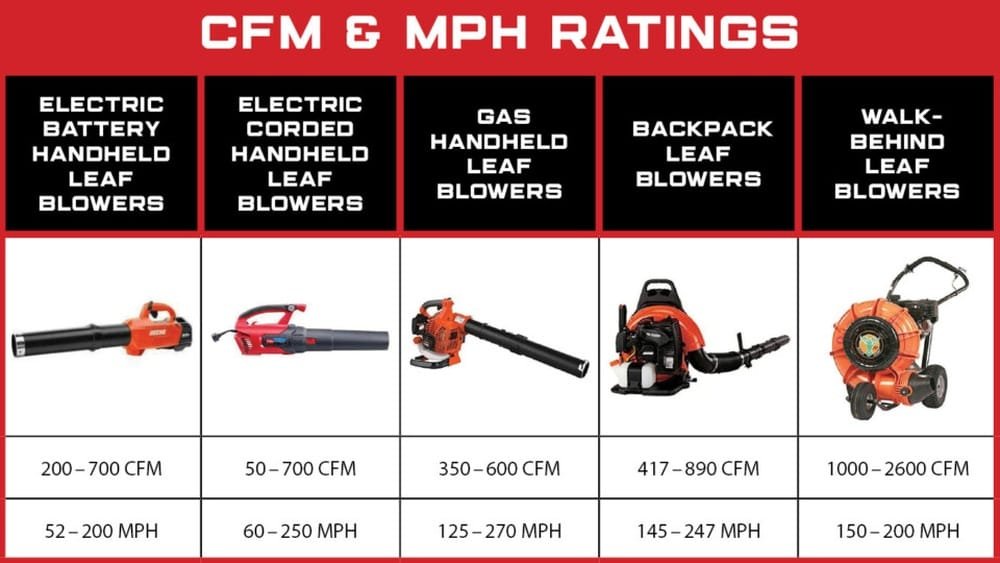
When I first started using a leaf blower, I saw the word “CFM” everywhere. At first, it felt confusing. What did those three letters actually mean? Did a higher number mean my blower was better? I wish someone had explained it to me in simple terms. Over time, I learned the real meaning of CFM and why it matters. Today, I want to share everything I know so you can choose the right leaf blower with confidence.
What Does Cfm Mean On A Leaf Blower?
Let’s get straight to the point. CFM stands for “Cubic Feet per Minute.” This tells you how much air the blower can move in one minute. Think of it like this: imagine a big empty box, one foot tall, one foot wide, and one foot deep. That’s one cubic foot. If your blower has a rating of 400 CFM, it can move 400 of those boxes of air every minute.
I used to think power was all about the speed of the air, but that’s not true. Speed is measured in MPH (miles per hour), while CFM is about the volume of air moved. A leaf blower with high CFM can push more leaves, dust, or grass at once. This makes a big difference when you clean your yard.
Why Cfm Matters More Than You Think
When I bought my first blower, I only looked at the MPH. I thought faster air meant better cleaning. But after a few uses, I noticed something odd. My blower had high MPH, but it took forever to clear piles of leaves. That’s when I learned that CFM is key for moving big piles, wet leaves, or heavy debris.
Let me give you a simple example. Imagine you have two hoses. One pushes water out really fast, but the stream is thin. The other hose pushes more water out, but it’s slower. Which one will fill a bucket faster? The one with more water. The same is true for leaf blowers. If you want to clear a wide area, you need high CFM.
The Real Difference Between Cfm And Mph
People often ask me, “Which is more important: CFM or MPH?” The answer depends on your needs, but I learned that CFM often matters more. Let’s break it down:
- CFM = How much air comes out of the blower.
- MPH = How fast the air is moving.
High MPH is useful if you want to lift stuck or wet debris. High CFM is better for moving lots of leaves at once. The best blowers balance both, but for most yard work, I focus on CFM first.
Here’s a quick look at how they compare:
| Feature | CFM (Cubic Feet per Minute) | MPH (Miles Per Hour) |
|---|---|---|
| What it Measures | Air Volume | Air Speed |
| Main Use | Move lots of debris | Lift stuck debris |
| Who Needs It | People with large yards, heavy leaves | People with tight corners, sticky messes |
How Cfm Changes Your Leaf Blower Experience
I have used blowers with different CFM ratings. The difference is huge. Here’s what I noticed:
- Low CFM (Under 200): Good for patios or small driveways. Not enough for big yards or wet leaves.
- Medium CFM (200–400): Works well for most small to medium yards. Handles dry leaves and light debris.
- High CFM (400+): Great for large yards, heavy leaves, or big cleanup jobs. Saves a lot of time.
If you have a small yard, you might not need the highest CFM. But if you have lots of trees or a big lawn, a high CFM blower makes life easier.

How To Measure Cfm (and Why Numbers Can Be Tricky)
Manufacturers test CFM in different ways. Some measure it at the nozzle, others at the fan. This means two blowers with the “same” CFM can feel very different in your hands.
Once, I bought a blower listed at 500 CFM. But when I used it, it didn’t feel much stronger than my old 350 CFM model. Later, I learned the 500 CFM was measured at the intake, not the nozzle, where air comes out.
So, don’t trust numbers alone—try to test the blower, or read real user reviews.
What Is A Good Cfm For Different Jobs?
Choosing the right CFM depends on what you want to do. Here’s what I’ve learned from years of yard work:
For Small Spaces
If you have a balcony, small driveway, or patio, a blower with 150–200 CFM is enough. It’s light, quiet, and easy to control. I used a small cordless blower for my apartment, and it worked well for dust and light leaves.
For Medium Yards
For a regular-sized yard, a blower with 200–400 CFM works great. It handles dry leaves, grass clippings, and small twigs. Most battery-powered blowers fall in this range. They’re easy to use and store.
For Large Yards Or Heavy Debris
If you have a big yard or many trees, look for 400–700 CFM. These are often gas-powered or high-end battery models. They clear wet leaves, pine needles, and even sand. I once helped a friend clean his huge backyard after a storm—his 600 CFM blower was a lifesaver.
For Commercial Use
Some blowers go beyond 700 CFM. These are for professionals—people who clean parks, stadiums, or construction sites. They can be heavy and loud, but they get massive jobs done quickly.
Comparing Popular Leaf Blowers By Cfm
To help you get a real sense of what’s out there, here’s a side-by-side look at some popular models I’ve tried or researched:
| Model | CFM Rating | Best For |
|---|---|---|
| Greenworks 40V | 150 CFM | Small patios, light tasks |
| DEWALT 20V Max XR | 400 CFM | Medium yards, dry leaves |
| Echo PB-580T | 510 CFM | Large yards, heavy leaves |
| Stihl BR 800 | 912 CFM | Professional, big jobs |
How Cfm Affects Battery Life And Weight
One thing I learned the hard way: higher CFM usually means more weight and shorter battery life. My first high-CFM blower felt powerful, but I could only use it for 20 minutes before the battery died. If you want strong airflow, be ready for a heavier tool or to buy extra batteries.
Gas blowers can run longer but are heavier and noisier. Corded electric blowers are lighter, but you need a power outlet and a long extension cord. There’s always a trade-off.
Common Myths About Cfm
I’ve heard a lot of myths about leaf blowers. Here are two that catch people out:
- “Only MPH matters.” Not true. I explained earlier why CFM can be more important for moving piles of leaves.
- “Bigger numbers are always better.” Not always. A super high CFM can be hard to control in tight spaces. Once, I tried to clear leaves from flower beds with a powerful blower. I ended up blowing mulch everywhere! Sometimes, less is more.
Mistakes To Avoid When Choosing By Cfm
I made some mistakes when buying my first leaf blower. Here are a few things I wish someone had told me:
- Don’t pick the highest CFM just because it sounds impressive. Think about your real needs.
- Try the blower if you can. Weight and balance matter as much as power.
- Check how manufacturers measure CFM. Nozzle CFM is the most useful number.
- Read reviews from people with yards like yours. Their stories are often more helpful than specs.
Tips For Getting The Most From Your Cfm
After lots of trial and error, here’s what works best for me:
- Use a high CFM blower for open spaces. You’ll clean up faster and with less effort.
- For corners, flower beds, or decks, switch to a lower setting (if your blower allows). This gives you more control.
- Wear ear protection if your blower is loud, especially with high CFM models.
- Keep the nozzle a few inches above the ground for the best effect. Too close, and you stir up dust; too far, and you lose power.
How Cfm Affects Noise And Comfort
Many people don’t think about noise until they start using the blower. High CFM often means a louder machine. My neighbors once complained about my old gas blower—it sounded like a chainsaw! Now, I use a battery model with moderate CFM for everyday tasks.
It’s much quieter and less tiring.
The Truth About Cfm Ratings
CFM ratings are helpful, but they don’t tell the full story. I always remind people:
- CFM is one part of the picture. Look at design, weight, balance, and battery life too.
- Real-world use matters. A blower with a lower CFM but smart design can feel more powerful in your hands.
If you want to dig deeper into how air volume and speed work together, you can check out this guide from the Wikipedia.
Frequently Asked Questions
What Is The Best Cfm For A Home Leaf Blower?
From my experience, a CFM of 200–400 is great for most homes. It handles dry leaves, grass, and dust with ease. If you have a big yard or lots of trees, you might want 400–600 CFM.
Does Higher Cfm Mean More Power?
Not always. Higher CFM means more air moves out, but it doesn’t always mean more power. You need a good balance of CFM and MPH for the best results.
Can I Use A Low Cfm Blower For Wet Leaves?
Low CFM blowers struggle with wet or heavy leaves. I tried and it took a long time. For wet leaves, I recommend at least 400 CFM.
Is Cfm The Only Thing To Consider?
No. Look at weight, battery life, noise level, and comfort too. A high CFM blower is useless if you can’t use it for more than 10 minutes.
How Do I Know If A Cfm Rating Is Accurate?
Check if the CFM is measured at the nozzle. Also, read user reviews and, if possible, try the blower in-store. Specs can be misleading.
—
Choosing a leaf blower can feel overwhelming at first. I’ve made mistakes, learned from them, and found what works best for me. Now, when I see “CFM” on a box, I know exactly what it means—and how it will help me keep my yard clean.
I hope my experience helps you pick the right blower and saves you some time and frustration. Happy leaf blowing!

As an Amazon Associate, We earn from qualifying purchases