
Getting locked out of a room or your own house can be frustrating. I’ve been there, standing outside with a sense of panic, wondering if I’d have to call a locksmith or break a window. But over the years, I learned that you can sometimes open a locked door with just a simple screwdriver.
Yes, it sounds like something from a movie, but with the right technique and a bit of patience, it actually works. Today, I want to walk you through everything I know about how to open a locked door with a screwdriver.
I’ll share what works, what doesn’t, and a few stories from my own experience. By the end, you’ll be ready to tackle that stubborn door with confidence.
Understanding Door Locks
Before I ever tried opening a locked door, I wanted to know what I was dealing with. There are different types of locks, and knowing which one you’re facing is half the battle.
Most interior doors in homes use a simple knob lock or a push-button lock. These are not as secure as deadbolts. You often find them on bedrooms or bathrooms. Exterior doors usually have deadbolts or keyed knob locks. Those are much harder to open with a screwdriver.
I once locked myself out of my bathroom. The lock was a basic push-button type. I realized that if I understood how the lock worked inside, I could find a way in without damaging anything. So, I started reading and watching videos about locks.
It made a big difference.
Here’s a quick summary of the most common door locks you might face:
| Lock Type | Common Location | Ease of Opening with Screwdriver |
|---|---|---|
| Push-button lock | Bathroom, Bedroom | Easy |
| Turn button lock | Bedroom, Closet | Easy |
| Keyed knob lock | Front/Back door | Hard |
| Deadbolt | Front/Back door | Very Hard |
Knowing the type of lock helps you choose the right method.
Safety And Legal Considerations
Let me be clear: you should only try to open a locked door with a screwdriver if it’s your door or you have permission. I never try this on doors I don’t own. There are laws against breaking into property, even if it seems harmless.
Also, if you force a lock, you might damage the door or lock. That could be expensive to fix. I always weigh the risks before I start.
There was one time I tried to help a friend get into his bedroom. We almost broke the door handle. In the end, we were lucky, but it taught me to be careful and gentle.
Tools You Will Need
The main tool is a screwdriver, but not just any screwdriver. I usually use a small flathead screwdriver. Sometimes, a Phillips screwdriver (the one with a cross shape) works if the slot matches. I keep a set of small screwdrivers in a drawer, just in case.
Here’s what I recommend having on hand:
- Flathead screwdriver (small or medium)
- Phillips screwdriver (for some locks)
- Paperclip or bobby pin (as backup)
- Flashlight (if it’s dark)
- Patience (seriously, it helps)
Sometimes, I use a butter knife if I can’t find a screwdriver. It’s not ideal, but it works in a pinch.
Step-by-step: How I Open A Locked Door With A Screwdriver
Let’s get into the details. I’ll break down the process by lock type. I’ve used these methods myself, and I’ll share what works best.
1. Opening A Push-button Lock (privacy Lock)
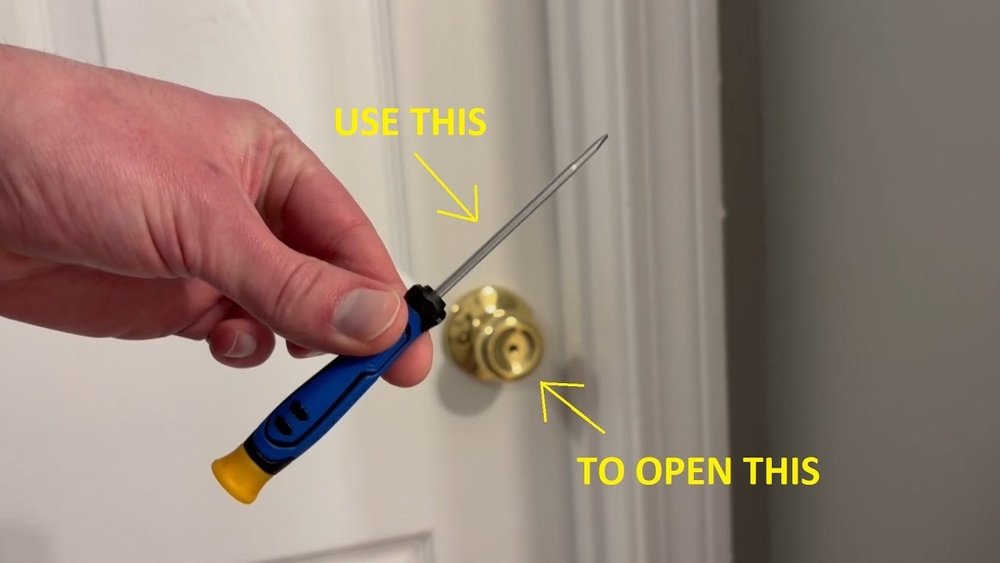
This is the easiest type. You usually find a small hole on the outside knob.
- Find the hole: Look for a tiny round hole in the center of the doorknob.
- Insert the screwdriver: Use a small flathead or Phillips screwdriver. Insert it straight into the hole.
- Apply gentle pressure: Push until you feel resistance. Sometimes you’ll hear a click.
- Turn the knob: The door should open.
I’ve opened my bathroom door this way many times. If the screwdriver doesn’t work, I try a straightened paperclip.
2. Opening A Turn-button Lock
For these, the outside knob usually has a small slot.
- Look for a slot: It may look like a flat line on the knob.
- Insert flathead screwdriver: Fit it into the slot.
- Turn gently: Rotate the screwdriver. You should feel the lock turning.
- Open the door: Turn the knob as usual.
One time, I helped my cousin with this method. He thought he’d have to break the door, but it took just 30 seconds with a screwdriver.
3. Removing The Doorknob
If you can’t open the lock from the front, you might need to remove the knob.
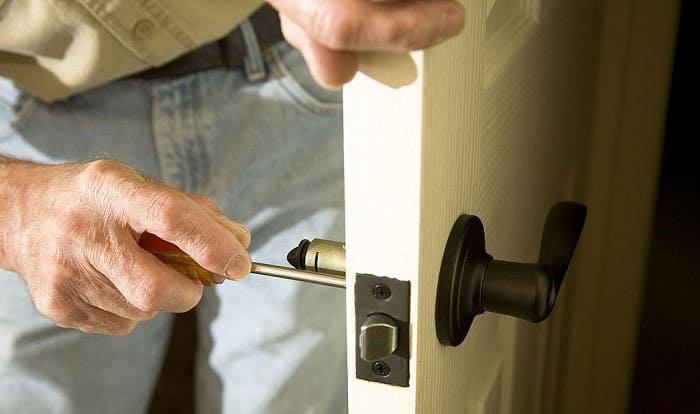
- Find the screws: Look for screws on the knob plate. Sometimes they are hidden under a cover.
- Unscrew the plate: Use the right screwdriver to remove the screws.
- Pull the knob off: The knob should come off. You might need to wiggle it.
- Unlock the latch: With the knob removed, you can reach the latch and open the door.
I had to do this when my bedroom door jammed. It felt strange taking apart the door, but I put everything back afterward.
4. Using A Screwdriver As A Lever (spring Latch)
Some doors use a spring latch. You can sometimes slide a screwdriver between the door and frame to push the latch back.
- Find the latch: Slip the screwdriver between the door and the frame just above or below the handle.
- Feel for the latch: Move the screwdriver until you touch the slanted latch.
- Push the latch: Apply gentle pressure to push the latch in.
- Open the door: Pull or push the door as you move the latch.
This works best on older doors with loose frames. Be careful not to bend the frame. I once scratched my paint doing this, so I go slow now.
5. When A Screwdriver Won’t Work
Not all doors can be opened with a screwdriver. Exterior doors, deadbolts, and high-security locks are tough. If I face these, I usually stop and call a locksmith. It’s better to pay a little than to break something and pay a lot.
Here’s a quick comparison of lock types and tool effectiveness:
| Lock Type | Best Tool | Success Rate | Risk of Damage |
|---|---|---|---|
| Push-button | Screwdriver, Paperclip | Very High | Low |
| Turn-button | Screwdriver | High | Low |
| Spring latch | Screwdriver | Medium | Medium |
| Deadbolt | Locksmith | Low | High |

Two Common Mistakes To Avoid
When I first started, I made a few mistakes. Here are two things I wish I knew sooner:
- Using the wrong size screwdriver: If it’s too big, it won’t fit. If it’s too small, it bends or slips. I now test a few sizes before I start.
- Forcing the lock: If something feels stuck, I stop. Forcing can break the lock or the screwdriver. Patience really pays off.
How To Stay Calm And Patient
Getting locked out can make anyone anxious. I used to get frustrated and rush. But I learned that staying calm helps me think better and avoid damage.
I take a few deep breaths and remind myself that most interior locks are not hard to open. If I get stuck, I take a short break and try again. Sometimes, the door opens when I least expect it.
What If You Don’t Have A Screwdriver?
This happened to me once at my friend’s house. We had no tools. Here’s what I tried:
- Used a butter knife to turn the slot (worked on a turn-button lock).
- Straightened a paperclip for a push-button lock.
- Used a bobby pin (not as strong, but sometimes works).
If nothing works, I ask a neighbor for tools or call a locksmith. It’s less embarrassing than breaking the door.
When To Call A Professional
If you’ve tried all the tricks and the door won’t budge, don’t feel bad. Some locks are just too tough. I remember spending almost an hour on a deadbolt before calling a pro. The locksmith opened it in five minutes with special tools.
If you’re worried about damaging your door, or if it’s an important room (like a nursery or bathroom with a child inside), call for help right away. Safety comes first.

Tips To Prevent Future Lockouts
After getting locked out a few times, I made some changes at home:
- I keep a spare key hidden outside (not obvious, like under a fake rock).
- I replaced most interior locks with ones that open from the outside with a coin or screwdriver.
- I always check that I have my keys before leaving a room.
- I taught my family how to open simple locks with a screwdriver.
These small steps saved me a lot of headaches.
Real-life Example: My Most Memorable Lockout
I’ll never forget one rainy afternoon when I locked myself out of my bathroom. I had just moved to a new apartment. The landlord wasn’t around, and my phone was inside.
I looked at the doorknob and saw the tiny hole. I remembered seeing my old flathead screwdriver in a kitchen drawer. I slid it into the hole and pushed gently. After a few seconds, I felt a click, and the door popped open.
I felt like a genius.
That small success gave me the confidence to help friends and neighbors later. I even opened my cousin’s closet door at a family party. It’s a handy skill to have.
Advanced Tricks I’ve Learned
Sometimes, a lock is extra stubborn or old. Here are a few expert tips I picked up:
- Lubricate the lock: A little WD-40 or even cooking oil helps if the lock feels stuck.
- Wiggle the tool: If you’re not making progress, try moving the screwdriver up and down or side to side.
- Use light: Shine a flashlight into the hole to see what’s inside. Sometimes you can spot the release mechanism.
- Check both sides: Some doors have screws or slots on both sides. If one side doesn’t work, try the other.
These extra steps helped me on tricky jobs.
What To Do After Opening The Door
Once I get the door open, I check the lock for any damage. If the lock feels loose or doesn’t work right, I tighten the screws or replace it. A broken lock isn’t safe.
I also test the door a few times to make sure it opens and closes smoothly. If I removed parts, I put them back carefully.
Comparing Opening Methods
Here’s a quick look at how the screwdriver method compares to other ways I’ve tried:
| Method | Tools Needed | Damage Risk | Time Needed |
|---|---|---|---|
| Screwdriver | Screwdriver | Low | 1-5 minutes |
| Credit Card | Plastic Card | Medium | 2-10 minutes |
| Lock picking set | Picks, Tension wrench | Low | 5-20 minutes |
| Calling Locksmith | Phone, Money | None | 10-60 minutes |
As you can see, a screwdriver is often the fastest and least risky for simple locks.
Where To Learn More
If you want to understand more about how locks work or see diagrams, I recommend the Wikipedia page on locks. It helped me a lot when I started.
Frequently Asked Questions
How Do I Know If A Screwdriver Will Work On My Door?
If your door has a small hole or slot on the knob, a screwdriver often works. Most interior privacy locks can be opened this way. Exterior doors with deadbolts are much harder and usually need a locksmith.
Can I Damage My Lock Using A Screwdriver?
There’s a small risk, especially if you use too much force or the wrong size tool. Go slow and gentle. If you feel stuck, stop and try a different method.
What Screwdriver Size Is Best For Opening A Door Lock?
A small flathead screwdriver, about 1/8 inch wide, works for most privacy locks. For slots, match the width of the slot as closely as possible.
Is It Legal To Open A Locked Door With A Screwdriver?
It’s legal if you own the property or have permission. Never try this on someone else’s door, as it could be considered breaking and entering.
What Should I Do If Nothing Works?
If you can’t open the door and need access fast, call a locksmith. They have tools and experience to open the door without damage.
Getting locked out is never fun, but with a simple screwdriver and some patience, you can often solve the problem yourself. I hope my stories and tips help you get back inside quickly and safely next time. Remember, stay calm, use the right tool, and don’t be afraid to ask for help if you need it.
As an Amazon Associate, We earn from qualifying purchases