
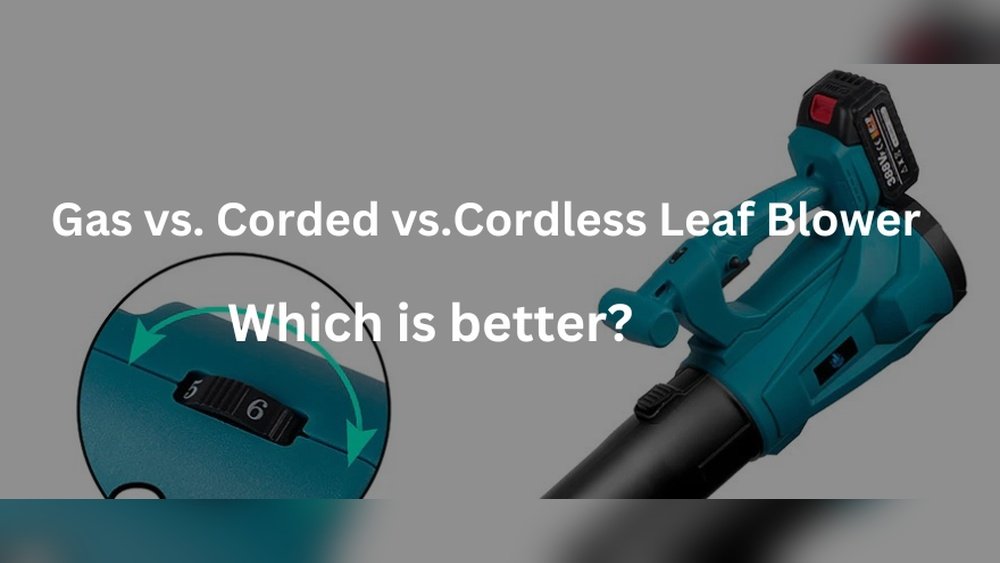
When leaves start to fall, many homeowners reach for a leaf blower to clear their yards and walkways. But one big question always comes up: should you get a corded leaf blower or a cordless leaf blower? Both have strengths and weaknesses. Choosing the right one for your needs can save time, energy, and even money. In this guide, you’ll find a full comparison of corded and cordless leaf blowers, with real examples, clear explanations, and practical tips to help you decide.
How Leaf Blowers Work
Before comparing corded and cordless models, it helps to know how leaf blowers function. Both types use a motor to spin a fan, creating a strong airflow that pushes leaves, dirt, and debris. The main differences are in how they get their power and how you use them.
- Corded models plug into an electrical outlet using a power cord.
- Cordless models use a battery, usually lithium-ion, to power the motor.
Both types are available in handheld and backpack styles, but most home users choose handheld models for lighter work.
Corded Leaf Blowers: Main Features
Corded leaf blowers are popular for small to medium yards. They are known for constant power and lighter weight.
Power And Performance
Corded blowers usually have 10-15 amps of power, producing air speeds between 150–250 mph and air volume (CFM) from 200–400 CFM. This means they can easily handle dry leaves and small twigs, but may struggle with wet leaves or heavy debris.
Unlimited Runtime
Since they are plugged into an outlet, you get unlimited runtime. As long as you have power and a working outlet, the blower will keep going. There’s no need to stop and recharge batteries.
Weight And Handling
Corded models are often lighter—most weigh between 5–7 pounds. This makes them easier to carry, especially for long periods or for users who may struggle with heavier tools.
Noise Level
Corded electric blowers are quieter than gas models. The average noise is about 65–70 decibels. This is roughly as loud as a normal conversation or a washing machine.
Price
Corded blowers are affordable. You can find quality models for $30–$80, making them good for budget buyers.
Limitations
The main drawback is the power cord. You must stay within the length of the cord, usually 50–100 feet. Moving around obstacles or large yards can be difficult. There’s also the hassle of dragging the cord, which can snag or unplug.
Cordless Leaf Blowers: Main Features
Cordless blowers run on batteries, offering more freedom and mobility.
Power And Performance
Cordless models use rechargeable batteries, usually 20V–80V. Air speeds range from 90–180 mph, and air volume from 200–600 CFM. High-end models can rival corded blowers for power, but most average models are a bit less powerful.
Battery Life
Most cordless blowers offer 15–45 minutes of runtime per charge, depending on the speed setting and battery capacity (measured in amp-hours, or Ah). Some advanced models let you swap batteries for longer jobs.
Portability
The big advantage is portability. You can take a cordless blower anywhere—no need for power outlets or extension cords. This makes them ideal for large yards, driveways, or off-grid areas.
Weight And Handling
Cordless blowers are heavier than corded ones, usually 6–10 pounds because of the battery. Still, they are lighter than most gas blowers.
Noise Level
Cordless models are also quiet, averaging 60–70 decibels.
Price
Cordless blowers cost more, usually $80–$300. The price depends on battery size, brand, and included features.
Limitations
The main drawback is limited runtime. If your battery runs out before the job is done, you need to stop and recharge, which can take 30 minutes to 2 hours. Replacement batteries add to the cost.
Direct Comparison: Corded Vs Cordless Leaf Blower
To make the differences clearer, here’s a comparison:
| Feature | Corded | Cordless |
|---|---|---|
| Power Source | Electric outlet | Rechargeable battery |
| Air Speed (mph) | 150–250 | 90–180 |
| Air Volume (CFM) | 200–400 | 200–600 |
| Runtime | Unlimited | 15–45 min/battery |
| Weight | 5–7 lbs | 6–10 lbs |
| Noise Level | 65–70 dB | 60–70 dB |
| Price | $30–$80 | $80–$300 |
| Range | Limited by cord | Unlimited |
When To Choose A Corded Leaf Blower
Corded blowers are best for some situations. Here’s when to choose one:
- Small to medium yards: If your yard is less than ¼ acre, a corded blower is enough.
- Near power outlets: If you have easy access to outdoor outlets, you won’t struggle with extension cords.
- Budget is important: Corded blowers are cheaper to buy and maintain.
- Long runtime needed: For long sessions, corded blowers won’t stop unless you do.
- Lightweight matters: Users who want a light tool for easy carrying benefit from corded models.
Example
Imagine you live in a suburban home with a small front and back yard. You want to clear leaves off your sidewalk and patio once a week. Dragging a 50-foot cord is not a big issue, and you want to spend less than $60.
A corded blower is a smart choice here.
When To Choose A Cordless Leaf Blower
Cordless blowers shine in different situations:
- Large yards or uneven spaces: No cords means you can move freely, even far from the house.
- No outdoor outlets: If your property lacks outlets, a cordless model is necessary.
- Multi-location use: Great for taking to parks, cabins, or helping friends.
- Quick, light jobs: For spot cleaning, cordless blowers start instantly and are easy to grab.
- No cord hassle: No tripping, tangling, or unplugging.
Example
Suppose you have a long driveway, a big backyard, and several garden beds. You need to clear leaves from all corners, and there’s no easy way to run a cord everywhere. A cordless blower will save time and effort, even if you need a second battery for bigger jobs.
Pros And Cons Of Corded Leaf Blowers
Let’s look at the advantages and disadvantages.
Pros
- Unlimited power: No need to recharge or swap batteries.
- Lightweight: Easier to hold for long periods.
- Quiet operation: Good for neighborhoods with noise rules.
- Affordable: Lower cost for both the unit and maintenance.
Cons
- Limited range: You can only go as far as your cord reaches.
- Cord management: Cords can get tangled, snag on bushes, or unplug.
- Not good for wet debris: Most corded models aren’t strong enough for wet leaves or large twigs.
Pros And Cons Of Cordless Leaf Blowers
Cordless blowers also have their own list:
Pros
- Freedom of movement: Go anywhere, even far from power outlets.
- Quick startup: Just press a button, no cords to plug in.
- Less risk of tripping: No cords around your feet.
- Great for quick jobs: Grab and go for fast clean-ups.
Cons
- Limited runtime: Batteries run out after 15–45 minutes.
- Heavier: Batteries add weight.
- Higher cost: Batteries and chargers are expensive.
- Battery care: Batteries lose charge over time and may need replacement.

Real-world Data: Performance In Different Conditions
It’s important to see how these blowers work with different types of debris and weather. Here’s a summary based on tests and user reports:
| Job Type | Corded Performance | Cordless Performance |
|---|---|---|
| Dry leaves on pavement | Excellent | Excellent |
| Wet leaves on grass | Fair to good | Good (with high-end model) |
| Clearing pine needles | Good | Good |
| Moving heavy debris | Poor to fair | Fair (with high power) |
| Large area (1/2 acre+) | Poor (cord limit) | Good (if extra battery) |
Key Factors To Consider Before Buying
When deciding between corded and cordless, keep these factors in mind:
1. Yard Size
If your yard is small and close to outlets, a corded blower is practical. For larger properties, cordless models are more convenient.
2. Type Of Debris
If you usually deal with dry leaves, both types work well. For wet leaves, grass clippings, or small branches, look for a model with higher CFM and MPH ratings.
3. Runtime Needs
Corded blowers are better for long sessions. If you want to finish the job quickly and don’t mind stopping to recharge, cordless is fine.
4. Weight And Handling
Check the weight with the battery installed for cordless models. Some people find heavier blowers hard to use for long periods.
5. Noise Restrictions
If your neighborhood has noise rules, check decibel ratings. Both corded and cordless are much quieter than gas models.
6. Budget
Corded blowers win for price. Cordless models cost more, especially if you need extra batteries.
7. Maintenance
Corded and cordless blowers need little maintenance—just keep them clean and store batteries properly.
Non-obvious Insights For Buyers
Many beginners overlook a few important points:
- Extension cords matter: For corded blowers, a poor-quality or too-long extension cord can reduce power and damage the motor. Always use the right gauge (usually 14-gauge for up to 100 feet).
- Battery compatibility: Some cordless blowers use batteries that fit other garden tools from the same brand. This can save money and make yard work easier.
- Variable speed control: Not all blowers have this feature. Models with variable speed help you adjust airflow for delicate areas like flower beds.
- Charge time vs. runtime: Some batteries take much longer to charge than they last during use. Consider buying a second battery if you have a large yard.
Environmental Impact
Both corded and cordless electric blowers are better for the environment than gas models, which produce emissions and use oil. However, battery production and disposal have their own environmental cost. Recycling old batteries and using energy-efficient chargers can help reduce your impact.
Safety Tips
Whether you choose corded or cordless, follow these safety tips:
- Wear hearing protection and eye protection.
- For corded models, keep cords clear of water and sharp objects.
- For cordless models, store batteries indoors and avoid extreme temperatures.
- Never use a blower to move toxic dust, such as lead paint or chemicals.
Popular Brands And Models
Some trusted brands in the leaf blower market include Black+Decker, Greenworks, DEWALT, and EGO. For example, the Greenworks 24012 is a well-reviewed corded blower for under $50, while the EGO Power+ LB6504 is a top cordless choice with powerful performance.
Cost Over Time
While the upfront cost for corded blowers is lower, cordless models may cost more over time because of battery replacements. Most lithium-ion batteries last 2–5 years with regular use. Replacement batteries cost between $40–$120 depending on size.
User Experience: What Real Owners Say
Many homeowners who bought corded blowers report satisfaction with the constant power and light weight. However, they often mention frustration with cord tangling and limited reach.
Cordless blower users love the freedom and quick start, but wish for longer battery life. Many buy an extra battery to avoid waiting for a recharge.
Common Mistakes When Choosing
Avoid these beginner errors:
- Ignoring cord length: Buying a corded blower without a long enough extension cord limits your work area.
- Overestimating battery life: Some cordless blowers run for less time than advertised, especially at high power settings.
- Choosing by price alone: Low-cost models may not have enough power or durability for your needs.
- Forgetting about weight: Even a few extra pounds can make a big difference over time.
Leaf Blower Use Cases: Which Is Right For You?
Every situation is different. Here are some scenarios and the best fit:
- Urban apartments with small patios: Corded blower (easy and affordable).
- Homes with large lawns and trees: Cordless blower (mobility is key).
- Elderly users: Corded blower (lightweight and simple).
- Landscaping business: Cordless or gas-powered (for mobility and longer runtime).
- Budget buyers: Corded blower (best value).
Advanced Features To Look For
Some blowers offer extra features that can make yard work easier:
- Turbo mode: Briefly boosts power for tough spots.
- Brushless motor: Offers more efficiency and longer life.
- Mulching or vacuum function: Some blowers can also vacuum and mulch leaves.
- Cruise control: Keeps speed steady without holding the trigger.
Not all users need these, but they can add value for larger properties or frequent use.
Maintenance Tips
To keep your blower working well:
- Clean the air intake after each use.
- For corded models, check the cord for cuts or damage.
- For cordless models, store batteries at half-charge if not using for months.
- Keep all parts dry to prevent rust.

Comparing To Other Options
Some people wonder if a rake or gas blower is better. Rakes are quiet and eco-friendly but require more effort. Gas blowers are powerful and have long runtime, but are noisy, heavy, and polluting. For most homeowners, corded or cordless electric blowers offer the best balance of power, ease, and cost.
If you want to learn more about how leaf blowers work, check out this in-depth guide from Wikipedia.
Frequently Asked Questions
What’s The Difference Between Cfm And Mph In Leaf Blowers?
CFM stands for cubic feet per minute and measures the volume of air moved. MPH is miles per hour and measures air speed. High CFM moves more leaves at once, while high MPH lifts heavy or wet debris.
How Long Do Cordless Leaf Blower Batteries Last?
Most batteries last 15–45 minutes per charge. The lifespan is about 2–5 years with regular use. Cold weather and high-power settings can reduce runtime.
Can I Use The Same Battery For Other Tools?
Many cordless blowers are part of a battery system where one battery fits different tools from the same brand. Always check compatibility before buying.
What Extension Cord Should I Use With A Corded Blower?
Use a 14-gauge extension cord for up to 100 feet. Thinner cords can overheat and reduce power. Always check the blower’s manual for recommendations.
Are Electric Leaf Blowers Safe For Flower Beds?
Yes, but use low speed near delicate plants. Both corded and cordless models with variable speed controls are best for this job.
A good leaf blower can make yard work faster and easier. By understanding the real differences between corded and cordless leaf blowers, you can pick the right tool for your needs and enjoy a cleaner, more beautiful yard all year long.
As an Amazon Associate, We earn from qualifying purchases