
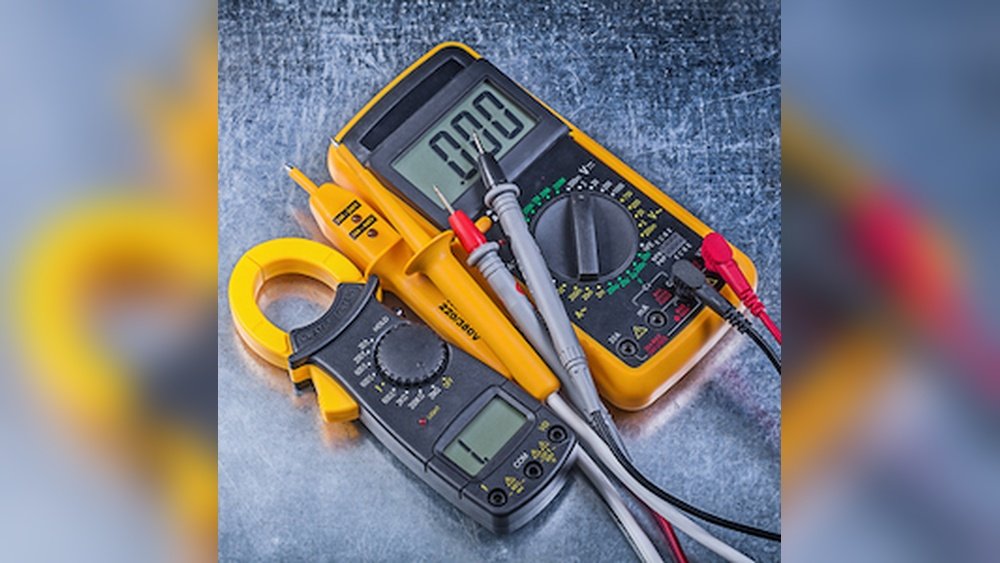
Choosing between a clamp meter and a multimeter can feel confusing if you’re not an electrical professional. Both tools help you measure electricity, but their designs, uses, and strengths are different. If you’re working on electrical projects at home, in your workshop, or as a technician, understanding these differences is essential.
A wrong choice may lead to inaccurate readings or even unsafe situations. This guide explains everything you need to know about clamp meters and multimeters. You’ll learn what each device does, their pros and cons, how they compare in different situations, and which one to pick for your needs.
What Is A Clamp Meter?
A clamp meter is a handheld device used to measure electric current (amperage) in a wire without touching the wire directly or breaking the circuit. The tool has a clamp-shaped jaw that opens and closes around a conductor. This design allows the meter to detect the magnetic field created by the flowing current and display the reading instantly.
Clamp meters are widely used in electrical work because they make measuring current fast and safe. Electricians use them for troubleshooting, maintenance, and installation. In recent years, most clamp meters can also measure voltage, resistance, and sometimes even frequency or temperature.
However, the main focus is always on current measurement.
How Clamp Meters Work
Clamp meters use a sensor called a current transformer (CT) or a Hall effect sensor. When you clamp the jaws around a live wire, the tool senses the magnetic field created by the flowing current. It then converts this magnetic field into an electrical signal and displays the value in amps on the screen.
A key advantage is safety: you don’t need to make direct contact with the wire or disconnect anything. This is especially useful when working with high-current circuits or crowded electrical panels.
Common Uses For Clamp Meters
- Checking the current draw of motors, heaters, or air conditioners
- Identifying overloaded circuits
- Verifying current balance in three-phase systems
- Quick troubleshooting without circuit interruption
What Is A Multimeter?
A multimeter is a versatile tool that can measure several electrical properties, including voltage (volts), current (amps), and resistance (ohms). Some models measure more, such as continuity, capacitance, temperature, or frequency. Multimeters are available in analog (needle display) and digital (numeric display) types, with digital multimeters (DMMs) being much more common today.
You connect the multimeter to a circuit using test leads with metal probes. For current measurement, you must connect the multimeter in series, which usually means opening the circuit—a more involved and potentially risky step compared to a clamp meter.
How Multimeters Work
Multimeters have a dial or buttons to select what you want to measure. For voltage and resistance, you touch the probes to two points in the circuit. For current, you must break the circuit and insert the multimeter so that the current flows through the tool.
The multimeter measures the electrical property and displays the value.
Because multimeters can measure many things, they are used for a wide range of tasks, from basic household checks to complex electronics troubleshooting.
Common Uses For Multimeters
- Measuring battery voltage or AC outlet voltage
- Testing fuses, switches, and wires for continuity
- Checking the resistance of components like resistors or heaters
- Diagnosing problems in appliances, cars, and electronic devices
Key Differences Between Clamp Meter And Multimeter
Understanding the main differences helps you pick the right tool for the job. Below is a comparison that highlights these contrasts.
| Feature | Clamp Meter | Multimeter |
|---|---|---|
| Main Function | Measures current (amps) without breaking the circuit | Measures voltage, current, resistance, and more by direct contact |
| Measurement Method | Non-contact (clamp around wire) | Contact (test leads) |
| Safety | High (no direct wire contact needed) | Lower (must touch wires, sometimes open circuit) |
| Versatility | Mostly measures current; some models measure voltage/resistance | Measures many properties (voltage, current, resistance, etc.) |
| Accuracy (Current) | Good for high current, less accurate for low current | Excellent for low current, limited for high current |
| Convenience | Fast and easy for current measurement | Slower, especially for current measurement |
| Price | Usually higher for advanced features | Wide price range, basic models affordable |
When To Use A Clamp Meter
Clamp meters are best when you need to measure current, especially on live circuits or when you want to avoid disconnecting wires. Here are a few scenarios where a clamp meter shines:
- Electrical Panels: Quickly check the current load on different wires without turning off the power.
- Large Motors/Equipment: Safely measure the current drawn by heavy equipment.
- Troubleshooting Overloads: Detect which circuit or wire is overloaded without guessing.
- Multiple Wires: Identify current flow in complex systems without disconnecting anything.
A clamp meter saves time, reduces the risk of accidental shocks, and is ideal for regular maintenance and troubleshooting. For example, an HVAC technician can clamp around a wire to see if an air conditioner is drawing too much current, which might indicate a problem.
When To Use A Multimeter
A multimeter is the tool of choice when you need to measure voltage, resistance, or test continuity. It’s also better for measuring small currents, such as in electronic circuits. Here are some situations where a multimeter is essential:
- Testing Outlets or Batteries: Measure AC or DC voltage to check if power is present.
- Checking Continuity: See if a wire or switch is working (no breaks).
- Measuring Resistance: Diagnose faulty resistors, heating elements, or wiring.
- Electronics Repair: Troubleshoot circuit boards, sensors, and small components.
If you’re working on cars, home appliances, or electronic devices, a multimeter provides the flexibility you need. For example, if a lamp isn’t working, you can check for voltage at the socket, test the bulb for continuity, and see if the switch is functioning—all with one tool.
Clamp Meter: Types And Special Features
Clamp meters have evolved a lot in recent years. Understanding the different types and features can help you choose wisely.
Types Of Clamp Meters
- Standard AC Clamp Meters: Measure only AC current. These are basic and usually affordable.
- True RMS Clamp Meters: Measure both AC and DC current accurately, even if the signal is not a perfect sine wave (important for modern electronics).
- Advanced Clamp Meters: Include extra features such as voltage, resistance, frequency, and temperature measurement.
Special Features
- Flexible Jaws: Some models have flexible jaws to fit around large or awkward wires.
- Data Logging: Record readings over time, useful for monitoring equipment.
- Inrush Current Measurement: Capture the peak current when a device starts, helpful for motors.
Non-obvious insight: Not all clamp meters can measure DC current. Many cheaper models are AC-only. If you work with solar panels or batteries, make sure you buy a DC-capable clamp meter.
Multimeter: Types And Special Features
Multimeters come in many shapes and sizes, each with its own strengths.
Types Of Multimeters
- Analog Multimeters: Use a moving needle to show values. Less common now, but sometimes preferred for observing slow changes.
- Digital Multimeters (DMMs): Show numbers on a screen. Easier to read and more accurate for most users.
Special Features
- Auto-Ranging: The meter selects the correct range automatically, reducing errors.
- Diode Testing: Useful for checking diodes and transistors.
- Capacitance and Frequency Measurement: Advanced models add these features for electronic work.
- Backlit Display: Helps in low-light conditions.
Non-obvious insight: Some multimeters have a built-in fuse for current measurement. If you blow this fuse by measuring too much current, the meter may show zero amps until you replace it. Always check the fuse if your readings don’t make sense.
Accuracy And Limitations
Accuracy matters, especially if you’re diagnosing tricky problems or working on sensitive equipment.
Clamp Meter Accuracy
Clamp meters are generally accurate for measuring high currents (above 1 amp). However, they are less accurate for very low currents. For example, measuring 0.1 amp (100 mA) may give unreliable results unless you buy a specialized model.
Clamp meters may also be affected by nearby wires. If you accidentally clamp around two wires carrying equal but opposite current, the readings can cancel out and show zero, even if a current is present.
Multimeter Accuracy
Multimeters are more accurate for low currents and precise voltage or resistance measurements. A good digital multimeter can measure down to milliamps (0.001 amp) or even microamps (0.000001 amp), which is impossible for most clamp meters.
However, measuring high current (above 10 amps) can be risky with a multimeter. Most models have a maximum current rating, and exceeding it can blow the internal fuse or damage the tool.
Safety Considerations
Safety is critical when working with electricity. Clamp meters and multimeters have different safety profiles.
- Clamp Meter Safety: Since you don’t touch live wires, the risk of shock is much lower. This makes clamp meters the preferred choice for high-voltage or industrial work.
- Multimeter Safety: You must touch the wires with probes, increasing the risk of accidental contact with live parts. Always use proper safety gear, keep fingers behind the probe guards, and double-check the tool’s safety rating.
Look for meters with CAT ratings (such as CAT II, III, IV), which show the tool’s safety level for different environments.
Cost And Value
Prices vary widely, but you usually get what you pay for.
- Clamp Meters: Basic models start around $30-$50, but advanced ones with more features cost $100-$300 or more.
- Multimeters: Basic models can be found for $10-$20. Reliable, feature-rich DMMs range from $40-$150.
Cheap meters may lack accuracy, safety features, or durability. If you use the tool regularly or for important work, invest in a quality brand. Fluke, Klein Tools, and Extech are respected names in the industry.
Clamp Meter Vs Multimeter: Real-world Examples
Let’s look at a few scenarios to see which tool fits best.
Example 1: Home Electrical Panel
You want to check if any circuits are overloaded in your home’s main panel.
- Clamp Meter: Open the panel, clamp around each hot wire, and instantly see the current. Fast, safe, and efficient.
- Multimeter: You’d need to disconnect each wire and connect the multimeter in series—not practical or safe.
Example 2: Troubleshooting A Dead Outlet
A kitchen outlet isn’t working, and you want to find out why.
- Multimeter: Check for voltage at the outlet, test for continuity on the wiring, and inspect the breaker—all with one tool.
- Clamp Meter: Not useful here, since you’re not measuring current flow.
Example 3: Automotive Repair
A car won’t start, and you suspect a bad starter or battery.
- Multimeter: Measure battery voltage, check resistance in cables, and test alternator output.
- Clamp Meter: Measure the current drawn by the starter motor without disconnecting anything, useful for advanced diagnostics.
Example 4: Electronics Project
You’re building a DIY circuit and want to check if a tiny LED is getting the right current.
- Multimeter: Measure small currents directly in the circuit; check voltage and resistance too.
- Clamp Meter: Most models can’t measure such low currents accurately.
Choosing The Right Tool For Your Needs
The best tool depends on what you plan to measure most often.
| Situation | Best Tool | Why |
|---|---|---|
| General household troubleshooting | Multimeter | More versatile for voltage, resistance, continuity |
| Checking current in home/industrial panels | Clamp Meter | Safe, fast current measurement |
| Electronics projects | Multimeter | Measures low current, voltage, resistance |
| HVAC, motor, heavy equipment work | Clamp Meter | Handles high current, non-contact |
| Automotive diagnostics | Both (depending on task) | Multimeter for voltage; clamp meter for high current |
Many professionals carry both tools. If you’re a homeowner or hobbyist, start with a good digital multimeter. If you work with high-current devices or do frequent electrical troubleshooting, a clamp meter is a smart investment.

Common Mistakes When Using Clamp Meters And Multimeters
- Wrong Range Selection: Always set the range higher than the expected value to avoid damaging the meter.
- Measuring Voltage on Current Setting: Never try to measure voltage while the meter is set to amps—this can blow the fuse or damage the tool.
- Clamping Around Multiple Wires: When using a clamp meter, clamp around only one conductor at a time. Clamping around both hot and neutral wires at once will give a false reading (usually zero).
- Ignoring Safety Ratings: Always check the meter’s CAT rating before using it on high-voltage or industrial circuits.
- Using a Multimeter for High Current: Don’t try to measure more current than the meter’s rated maximum. You could blow the internal fuse or cause injury.
Maintenance And Care Tips
To keep your meters working well and safe:
- Store in a dry place; avoid moisture or extreme heat.
- Check test leads for cracks, exposed wires, or wear.
- Replace batteries before they die to avoid inaccurate readings.
- Clean the clamp jaws on clamp meters to ensure accurate sensing.
- Calibrate your meters regularly, especially if you use them for professional work.
- Read the manual for your tool to understand its limits and special features.

Clamp Meter And Multimeter: Which Brands Are Best?
Some brands are known for quality, accuracy, and safety. Top choices include:
- Fluke: Industry leader, excellent accuracy and safety.
- Klein Tools: Trusted for durable, practical tools for electricians.
- Extech: Good value for advanced features.
- Amprobe: Reliable and affordable for many users.
Counterfeit meters are a growing problem, especially online. Buy from reputable sellers and check for official certification marks.
Learning More And Getting Certified
If you want to work professionally with electricity, consider formal training. Many community colleges and trade schools offer courses. Certification programs teach not only how to use meters, but also how to stay safe.
For further reading, you can explore the Wikipedia Multimeter article to deepen your understanding of electrical measurement tools.

Frequently Asked Questions
What Is The Main Difference Between A Clamp Meter And A Multimeter?
The main difference is in current measurement. A clamp meter measures current by clamping around a wire—no need to disconnect anything—while a multimeter measures current by making direct contact and usually requires you to open the circuit.
Can A Clamp Meter Measure Voltage And Resistance?
Many modern clamp meters can measure voltage and resistance, but not all. Always check the specifications. Basic models may only measure current.
Is A Clamp Meter Safer Than A Multimeter?
Yes, in general, a clamp meter is safer for current measurement because you don’t have to touch live wires or open the circuit.
Can I Use A Multimeter To Measure Very High Current?
Most multimeters are limited to low current (often 10 amps or less). Trying to measure high current can damage the meter or cause injury. For high-current measurements, use a clamp meter.
Which Tool Should A Beginner Buy First?
A digital multimeter is the best first tool for most beginners. It’s more versatile for home, automotive, and electronics use. If you often need to measure high current, add a clamp meter later.
Choosing the right electrical tool makes your work safer, easier, and more accurate. Now you know how clamp meters and multimeters compare, you’re ready to make a smart decision and work with confidence.
As an Amazon Associate, We earn from qualifying purchases