
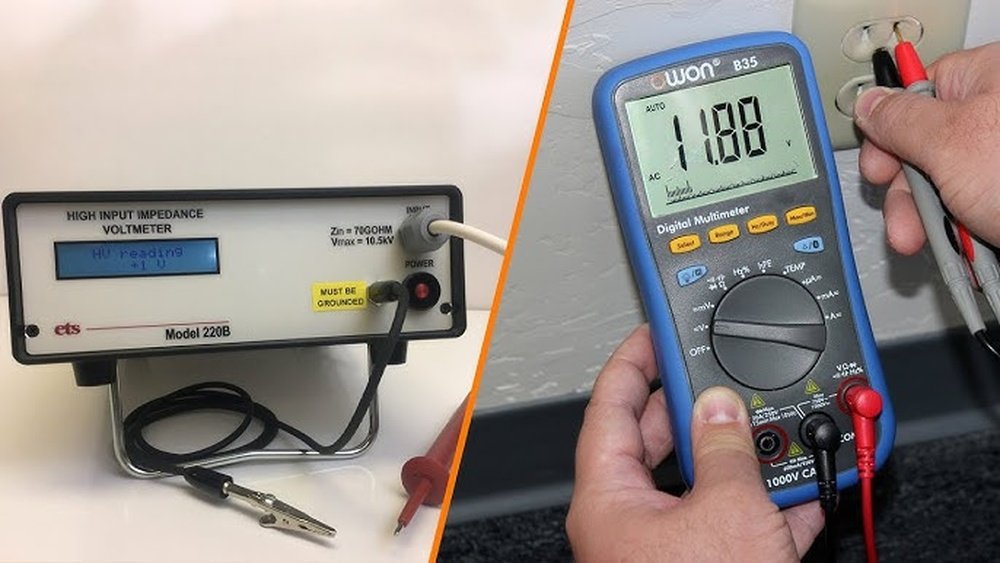
When you start learning about electrical measurements, you will often see two common tools: the voltmeter and the multimeter. At first, they might seem similar. Both have dials, probes, and digital or analog displays. Both are used for testing electricity. But as you look closer, their purposes, functions, and even their limitations are different. Understanding these differences is not just about using the right tool—it’s also about safety, accuracy, and saving time during electrical work.
This article explores the detailed differences between voltmeters and multimeters. You’ll learn about how each tool works, their main uses, and the situations where one is better than the other. You’ll also see practical examples, tips from professional electricians, and some common mistakes beginners make.
By the end, you’ll know which tool to pick for your next project, and how to use it with confidence.
What Is A Voltmeter?
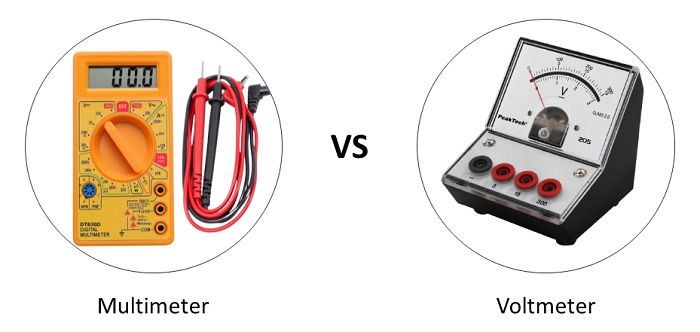
A voltmeter is an instrument designed to measure the electrical potential difference (voltage) between two points in an electric circuit. That’s all it does—it measures voltage. Voltmeters come in two main types: analog and digital.
Analog voltmeters have a needle that moves across a scale, while digital voltmeters show the value on an electronic display. Most voltmeters can measure a wide range of voltages, from millivolts to thousands of volts, depending on their design.
How Does A Voltmeter Work?
A voltmeter is connected in parallel with the part of the circuit where you want to measure the voltage. This means you connect its probes to both sides of the component, not in the path of the current. The voltmeter itself has a very high resistance, so only a tiny current flows through it. This design makes sure the measurement is accurate and does not change the circuit’s behavior.
Main Uses Of A Voltmeter
- Checking the voltage supply in outlets and batteries
- Verifying voltage across circuit components
- Troubleshooting power supply issues in devices
Advantages Of A Voltmeter
- High accuracy for voltage measurements
- Simple to use for a specific task
- Often more robust for high-voltage applications
Limitations Of A Voltmeter
- Can’t measure current or resistance
- Not suitable for diagnosing complex circuit problems
- Analog models can be hard to read for beginners
What Is A Multimeter?
A multimeter is a more versatile tool. As the name suggests, it can measure multiple electrical values: voltage, current (amperes), and resistance (ohms). Many modern digital multimeters (DMMs) also test continuity, diodes, and sometimes even temperature or frequency.
Multimeters are available in both analog and digital forms, but digital multimeters are much more common today because they are easier to read and more accurate.
How Does A Multimeter Work?
A multimeter has a rotary switch or buttons that let you choose what you want to measure. When you select voltage, it works like a voltmeter. When you select current, you connect it in series with the circuit, and it acts as an ammeter. For resistance, you measure across a component with the power off.
Multimeters have two probes (red and black) and usually come with safety fuses inside. When using a multimeter, you must always select the correct measurement type and range, or you could damage the meter or the circuit.
Main Uses Of A Multimeter
- Measuring voltage, current, resistance
- Testing continuity (checking if a wire or path is unbroken)
- Diagnosing electrical faults in appliances and vehicles
- Checking batteries, fuses, and switches
Advantages Of A Multimeter
- Versatile: One tool for many measurements
- Saves space and money
- Advanced features in modern models (data logging, auto-ranging)
Limitations Of A Multimeter
- Slightly less accurate for voltage compared to a dedicated voltmeter
- More complex for beginners
- Risk of incorrect use if the wrong setting is chosen
Key Differences: Voltmeter Vs Multimeter
Understanding the main differences helps you choose the right tool for the job. Here is a clear, side-by-side comparison:
| Feature | Voltmeter | Multimeter |
|---|---|---|
| Function | Measures voltage only | Measures voltage, current, resistance, and more |
| Accuracy | Usually higher for voltage | Good, but less than voltmeter for voltage |
| Complexity | Simple | Complex (multiple settings) |
| Cost | Generally less expensive | Varies (basic to advanced models) |
| Suitability | Best for voltage checks | Best for general diagnosis |
| Size | Often smaller | Can be bulkier |
| Use Case | Power supplies, labs | Repair, installation, troubleshooting |
When Should You Use A Voltmeter?
A voltmeter is the right choice when you only need to measure voltage and require high accuracy. For example, in a laboratory or a manufacturing environment, exact voltage readings can be critical. In these cases, a specialized voltmeter may give you more reliable results than a general-purpose multimeter.
Some scenarios where a voltmeter is ideal:
- Calibrating sensitive equipment
- Testing high-voltage power supplies
- Educational experiments in physics labs
Professional electricians sometimes prefer voltmeters for quick, precise voltage checks, especially when working with high or unusual voltages. Analog voltmeters are also useful for observing slow changes in voltage, as the needle movement is more visible than rapidly changing digital numbers.
When Should You Use A Multimeter?
A multimeter is the better choice when you need to diagnose problems, check several types of values, or work in the field. Most home users, hobbyists, and professionals use a multimeter for almost every electrical job. The ability to measure voltage, current, and resistance with one device saves time and money.
Typical uses for a multimeter:
- Checking batteries: Measure voltage and resistance
- Fixing a lamp: Test for voltage and continuity
- Automotive repairs: Measure battery voltage, check fuses, verify alternator output
- Electronics projects: Test components, trace faults
Modern digital multimeters are also safer, with features like auto-ranging and overload protection. This makes them less risky for beginners, as you are less likely to damage the device by choosing the wrong setting.
Types Of Voltmeters
Voltmeter technology has evolved over the years. Here are the main types you might see:
- Analog Voltmeters: Use a moving coil mechanism and needle. Good for observing trends, but less precise.
- Digital Voltmeters: Show numbers on a display. Accurate, easy to read, and common in modern labs.
- Electrostatic Voltmeters: Measure very high voltages (thousands of volts) without touching the circuit. Used in power plants and research.
- AC and DC Voltmeters: Some voltmeters are designed for alternating current (AC), others for direct current (DC), and some can do both.
Each type has its place. For example, an electrostatic voltmeter is needed for high-voltage power lines, while a digital voltmeter is best for home or school use.

Types Of Multimeters
Multimeters also come in different styles, depending on features and accuracy:
- Analog Multimeters (AMM): Show values with a moving needle. Useful for observing slow changes but can be hard to read for small values.
- Digital Multimeters (DMM): Show values as numbers. Most popular, accurate, and easy to use.
- Auto-ranging Multimeters: Automatically select the correct range for measurement, reducing risk of error.
- Manual-ranging Multimeters: Require you to choose the measurement range. Slightly more effort, but often cheaper.
- Clamp Multimeters: Can measure current without breaking the circuit, using a clamp around the wire. Useful for electricians.
- Bench Multimeters: Large, accurate, and used in laboratories for precise measurements.
A practical tip: For most home or hobby use, a basic digital multimeter with auto-ranging is the best choice.
How To Use A Voltmeter Safely
Using a voltmeter is simple, but safety is critical. Here’s how to use one correctly:
- Check the range: Make sure the voltmeter can handle the voltage you expect.
- Turn off power first (if possible): Connect the probes in parallel to the component you want to test.
- Turn on power: Take the reading without touching the metal parts of the probes.
- Avoid exceeding limits: Never use a voltmeter to measure current or resistance—it’s not designed for that.
- Remove probes safely: Turn off power before disconnecting the voltmeter.
One common mistake is connecting a voltmeter in series. This will not give a voltage reading and could damage the meter.
How To Use A Multimeter Safely
Multimeters are powerful but can be confusing for beginners. Follow these steps for safe, accurate use:
- Select the correct mode: Set the dial to voltage, current, or resistance as needed.
- Set the range: If using a manual-ranging model, choose a range higher than the expected value.
- Connect probes properly: Red to positive, black to negative or ground.
- Voltage measurements: Connect in parallel, like a voltmeter.
- Current measurements: Connect in series with the circuit (the meter becomes part of the circuit).
- Resistance/continuity: Only measure with the power off.
- Double-check settings: Wrong settings can blow the internal fuse or damage the circuit.
- Remove the probes safely: After measurements, turn off the device and remove probes.
A tip for beginners: Always start with the highest range if you’re unsure. This prevents damage to the meter.
Practical Examples
Let’s look at some real-life scenarios to see how voltmeters and multimeters are used.
Example 1: Checking A Wall Outlet
You want to see if a wall outlet is working. Both a voltmeter and a multimeter can do this. Set either tool to AC voltage, insert the probes into the outlet slots, and read the value. In the US, you should see about 120 volts.
If you only have a voltmeter, you’ll know the outlet works. If you use a multimeter, you can also check if the outlet is wired correctly by measuring between hot, neutral, and ground.
Example 2: Testing A Car Battery
A car battery should read about 12.6 volts when fully charged. Connect the voltmeter or multimeter (set to DC voltage) to the battery terminals. If the reading is low, the battery may be weak.
With a multimeter, you can also check the battery’s internal resistance (an indicator of age) and test the car’s charging system by measuring current.
Example 3: Diagnosing A Broken Lamp
A lamp does not turn on. With a voltmeter, you can check if voltage is reaching the socket. With a multimeter, you can check voltage, and also check for continuity across the switch and bulb, and test the resistance of the cord.
This extra capability often makes the multimeter more useful for troubleshooting.

Common Mistakes And How To Avoid Them
Even experienced users can make simple errors that lead to wrong readings or broken tools. Here are mistakes to watch out for:
- Using the wrong tool: Don’t try to measure current with a voltmeter.
- Wrong connection: Don’t connect a multimeter set to current across a voltage source (short circuit risk).
- Wrong range setting: Always start high, then go lower for more accuracy.
- Measuring resistance with power on: Can damage the meter and the circuit.
- Touching metal probe tips: This can give false readings or cause shocks.
A non-obvious mistake: Multimeters can have internal fuses. If you try to measure too much current, you may blow the fuse, and then all your readings will be wrong or missing. Always check your meter if something seems “off.”
Features To Consider When Choosing
When buying a voltmeter or multimeter, look at these factors:
- Accuracy: Needed for sensitive or professional work.
- Range: The maximum voltage, current, or resistance the tool can measure.
- Display type: Digital displays are easier to read.
- Safety ratings: Look for CAT (category) ratings for use with mains electricity.
- Durability: Rubber cases and strong build help in rough environments.
- Extra features: Backlit display, data hold, auto-ranging, temperature measurement.
- Price: Dedicated voltmeters can be very affordable, but advanced multimeters can be costly.
For home use, a basic digital multimeter is usually enough. For high-voltage or laboratory work, a high-quality voltmeter or bench multimeter may be required.
Real-world Statistics
According to a 2023 survey of electricians in the United States:
- 82% use a digital multimeter as their main electrical tester.
- Only 11% use a dedicated voltmeter for daily work.
- In education and research, voltmeters are still preferred for experiments needing high precision.
Another interesting fact: The global digital multimeter market is expected to reach $1.2 billion by 2026, driven by growth in electronics, automotive, and renewable energy sectors.
Maintenance And Care Tips
Both voltmeters and multimeters need basic care:
- Store in a dry place, away from extreme temperatures.
- Replace batteries regularly.
- Clean the probes and case with a dry cloth.
- Calibrate your tool (or have it professionally checked) if you use it for critical work.
- Check the leads for cracks or exposed metal.
A non-obvious insight: Many problems come from broken or dirty probe wires, not the meter itself. If your readings seem strange, check the leads first.
How Professionals Decide Which To Use
Professional electricians and engineers usually carry a digital multimeter for fieldwork. It’s the “Swiss army knife” of electrical testing. In factories, labs, or power stations, specialists might use high-end voltmeters for accuracy.
Here’s a quick decision guide:
| Situation | Recommended Tool | Why |
|---|---|---|
| Basic home repairs | Multimeter | Versatility: voltage, current, resistance |
| High-precision lab work | Voltmeter | Higher voltage accuracy |
| Automotive troubleshooting | Multimeter | Checks battery, fuses, continuity |
| High-voltage power lines | Special voltmeter | Safety and accuracy |
Frequently Asked Questions
What Is The Main Difference Between A Voltmeter And A Multimeter?
A voltmeter measures only voltage, while a multimeter can measure voltage, current, resistance, and sometimes more. Multimeters are more versatile but may be less accurate for voltage than a high-quality voltmeter.
Can I Use A Multimeter As A Voltmeter?
Yes, a multimeter can function as a voltmeter. Set it to the appropriate voltage setting (AC or DC), connect the probes in parallel to the circuit, and read the result.
Which Is Safer For Beginners: Voltmeter Or Multimeter?
Both are safe if used correctly, but a digital multimeter with auto-ranging is usually safer and more forgiving for beginners. Always read the manual and start with the highest range.
Do Professionals Still Use Voltmeters?
Yes, but mostly in laboratories or for specialized, high-precision tasks. Most fieldwork is done with multimeters because they are more versatile.
Where Can I Learn More About Electrical Measurement Tools?
A good starting point is the Wikipedia entry on voltmeters, which also links to articles about multimeters and other instruments.
Whether you choose a voltmeter or a multimeter, using the right tool makes electrical work safer, faster, and more accurate. Take your time to learn each tool’s strengths, and you’ll be ready for almost any electrical problem you encounter.
As an Amazon Associate, We earn from qualifying purchases