
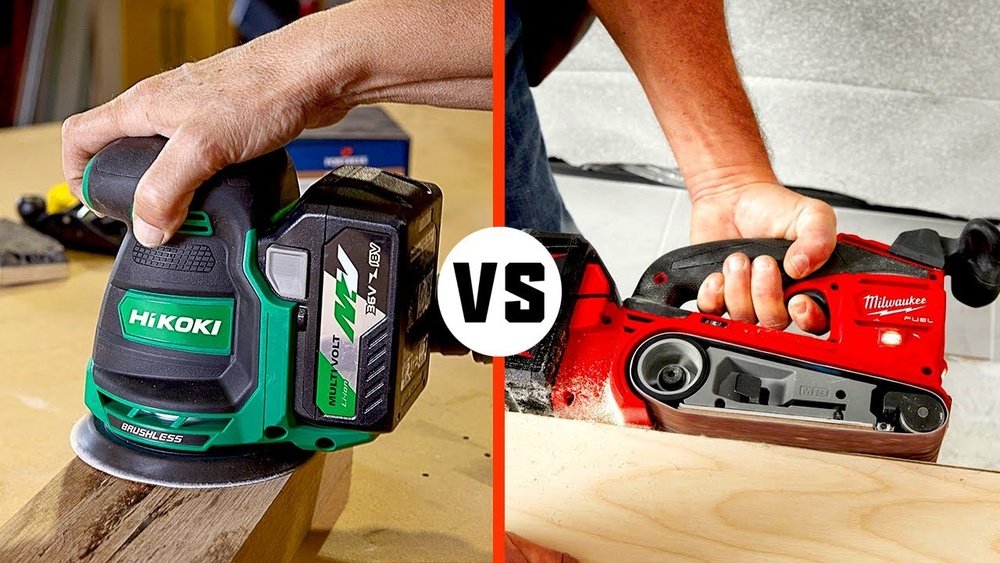
Belt Sander Vs Orbital Sander: Which One Should You Choose?
When working with wood or other materials, having the right tools can make all the difference. Two power sanders often found in workshops are the belt sander and the orbital sander. Both machines help to smooth surfaces, but they do so in different ways and suit different projects. If you’re not sure which one is best for you, this guide will break down their features, uses, advantages, and drawbacks. By the end, you’ll know exactly which sander to pick for your tasks—whether you’re a hobbyist, a DIYer, or a professional.
How Each Sander Works
Understanding how these sanders operate is the first step to making a smart choice.
Belt Sander
A belt sander uses a looped sanding belt that moves around two drums at high speed. The motor drives the belt in a straight line, making it very effective at removing large amounts of material quickly. Belt sanders are usually larger, heavy, and more powerful than other types.
Orbital Sander
An orbital sander has a square or round pad that moves in small, rapid orbits. This action sands surfaces gently, reducing the risk of gouging or removing too much material. There are two main types: the regular orbital sander (sometimes called a finishing sander) and the random orbital sander. The latter combines orbital motion with a spinning action, resulting in a smoother finish.
Key Differences At A Glance
A side-by-side look helps clarify the basic distinctions.
| Feature | Belt Sander | Orbital Sander |
|---|---|---|
| Motion | Straight line | Orbital (circular/elliptical) |
| Material Removal | Very fast, aggressive | Gentle, controlled |
| Best For | Large, flat surfaces | Finishing, curves, corners |
| Finish Quality | Rough (needs further sanding) | Smooth |
| Learning Curve | Steep | Easy |

Strengths Of Belt Sanders
Belt sanders stand out for their speed and power. Here’s why many professionals and serious DIYers choose them:
- Rapid Material Removal: Belt sanders can strip paint, level uneven boards, and remove rough edges much faster than orbital sanders.
- Ideal for Large Projects: If you need to sand doors, tabletops, or floors, a belt sander covers wide areas quickly.
- Tough Jobs: They handle hardwoods and stubborn old finishes with ease.
- Custom Shaping: With practice, you can use the edge of the belt for shaping or even rounding corners.
But, beginners often miss one thing: belt sanders can easily damage your work if you don’t keep them moving. Staying in one spot creates deep grooves that are hard to fix.
Strengths Of Orbital Sanders
Orbital sanders are much more forgiving. Their main advantages include:
- Smooth Finishing: Orbital action leaves fewer swirl marks, giving a clean look—especially on soft woods and painted surfaces.
- Gentle on Surfaces: They’re less likely to remove too much material by accident.
- Versatile for Small Areas: The small pad fits into corners and around edges where larger sanders can’t reach.
- Easy to Use: Most people find orbital sanders simple to control, even with one hand.
A detail many miss: orbital sanders, especially random orbital types, often have dust collection systems that keep your workspace cleaner.
:max_bytes(150000):strip_icc()/20180920595-c1399ebdf12b47f5a2aa0b03a29a67ee.jpg)
Typical Uses For Each Sander
Different projects call for different tools. Here’s how these sanders fit into common woodworking and home improvement tasks.
Belt Sander Uses
- Leveling uneven wooden floors or subfloors
- Stripping old paint or varnish from doors and tables
- Flattening glued panels
- Shaping large wood pieces (e.g., rounding a board’s edge)
- Removing a lot of material from rough lumber
Orbital Sander Uses
- Final surface preparation before painting or staining
- Smoothing between coats of finish
- Sanding small furniture parts, trim, or window frames
- Working on curved or contoured surfaces
- Removing minor scratches without changing the wood’s shape
Pros And Cons
Both sanders offer benefits and have drawbacks. Here’s a comparison to help you decide.
| Belt Sander | Orbital Sander | |
|---|---|---|
| Pros |
|
|
| Cons |
|
|
Which Sander Is Best For Your Project?
Choosing between a belt sander and an orbital sander depends on your specific needs. Here’s what to think about:
Project Size
- Large, flat surfaces: Belt sander is usually the better choice.
- Small or detailed surfaces: Orbital sander works best.
Surface Condition
- Very rough or uneven: Start with a belt sander.
- Slight imperfections: Orbital sander can handle it.
Desired Finish
- Rough shaping or stripping: Belt sander.
- Final smooth finish: Orbital sander.
Skill Level
- Beginner: Orbital sander is safer and easier.
- Experienced: Belt sander offers more power but needs careful handling.
An important insight: Many professionals use both. They start with a belt sander for rough work, then switch to an orbital sander to get a smooth finish.
Cost And Maintenance
Belt sanders and orbital sanders come at different price points and have unique maintenance needs.
Price
- Belt sanders usually cost more due to their power and size. Good models start around $60 and go up to $250 or more.
- Orbital sanders are generally cheaper, starting at $30 and going up to $150 for high-end versions.
Sandpaper And Accessories
- Belt sander belts cost more and wear out faster, especially on tough jobs.
- Orbital sander pads are cheaper, but you may use more of them if working on big projects.
Maintenance Tips
- Clean dust regularly to prevent clogs and overheating.
- Replace worn belts or pads quickly—dull sandpaper slows work and hurts results.
- Check alignment on belt sanders; a misaligned belt can damage the tool and your project.
- Lubricate moving parts as needed, especially on older machines.
One thing beginners often overlook: always use the dust bag or vacuum port. Fine wood dust isn’t just messy—it can affect your health over time.
Safety Differences
Power sanders can be dangerous if not handled properly. Here’s what you need to know:
Belt Sander Safety
- Always keep both hands on the tool when operating.
- Never start or stop the sander while it’s touching the workpiece.
- Keep loose clothing and hair away from the moving belt.
Orbital Sander Safety
- Orbital sanders are lighter, but can still jump if pressed too hard.
- Use light pressure—let the sander do the work.
- Wear a dust mask to avoid breathing in fine particles.
Both tools are noisy. Hearing protection is a smart idea for longer jobs.
Real-world Examples
Let’s look at how these tools perform in practice.
Example 1: Refinishing A Table
You need to remove thick varnish and smooth out scratches.
- Start with a belt sander (80-100 grit) to strip the old finish.
- Switch to an orbital sander (150-220 grit) for a smooth, ready-to-paint surface.
Example 2: Building A Bookshelf
You want clean edges and a nice finish.
- Use a belt sander to level the boards and get straight edges.
- Finish with an orbital sander to remove fine scratches and prepare for staining.
Example 3: Restoring Window Frames
Frames have curved edges and delicate details.
- Skip the belt sander—it’s too aggressive.
- Use an orbital sander for controlled, detailed work.
Common Mistakes To Avoid
- Pressing down too hard: Both sanders work best with gentle pressure. Forcing the tool can damage the motor and your work.
- Skipping sandpaper grits: Don’t jump from very coarse to very fine paper. Use 2–3 grits in sequence for the best finish.
- Ignoring dust control: Dust harms your lungs and your finish. Always use the vacuum or dust bag.
- Not checking your progress: Stop often and feel the surface. It’s easy to go too far with a belt sander.
- Using the wrong sander for the job: A belt sander on trim or corners leads to mistakes; an orbital sander on a rough floor takes forever.
Environmental Impact
Sanding produces a lot of fine dust and uses electricity. Here’s how to reduce your footprint:
- Choose sanders with efficient dust collection.
- Use high-quality sandpaper—it lasts longer and creates less waste.
- Consider sanders with lower power consumption for small jobs.
- Always clean up and dispose of dust safely.
For more about tool safety and environmental concerns, check out this OSHA Woodworking Resource.
Quick Reference: When To Use Each Sander
Here’s a summary to help you decide quickly:
| Project Type | Best Sander | Why |
|---|---|---|
| Stripping old paint from doors | Belt Sander | Removes material fast |
| Sanding curved chair arms | Orbital Sander | Fits curves, gentle |
| Prepping walls for painting | Orbital Sander | Smooth finish, no gouges |
| Leveling floorboards | Belt Sander | Handles large, rough areas |
| Finishing between coats of varnish | Orbital Sander | Fine, even finish |
Frequently Asked Questions
Which Sander Is Better For Beginners?
Orbital sanders are usually better for beginners. They are easy to control, less likely to damage your project, and work well on most tasks around the house.
Can You Use A Belt Sander For Finishing?
A belt sander is not designed for finishing. It removes material quickly but can leave deep scratches. For a smooth surface, use an orbital sander after the belt sander.
What Is A Random Orbital Sander?
A random orbital sander moves in both a circular and elliptical pattern. This reduces swirl marks and gives a finer finish compared to regular orbital sanders.
Are Sanders Safe To Use Indoors?
Yes, but always use dust collection and wear a mask. Fine dust can be harmful if inhaled. Good ventilation is also important.
How Do I Choose The Right Sandpaper Grit?
Start with a coarse grit (60–80) for heavy removal, then move to medium (120–150) and finish with fine (220+) for a smooth surface. Don’t skip steps for best results.
Choosing between a belt sander and an orbital sander comes down to your project and your skill level. Many workshops have both, using each where it shines. Take your time to learn each tool, and you’ll get pro-level results every time.

As an Amazon Associate, We earn from qualifying purchases