
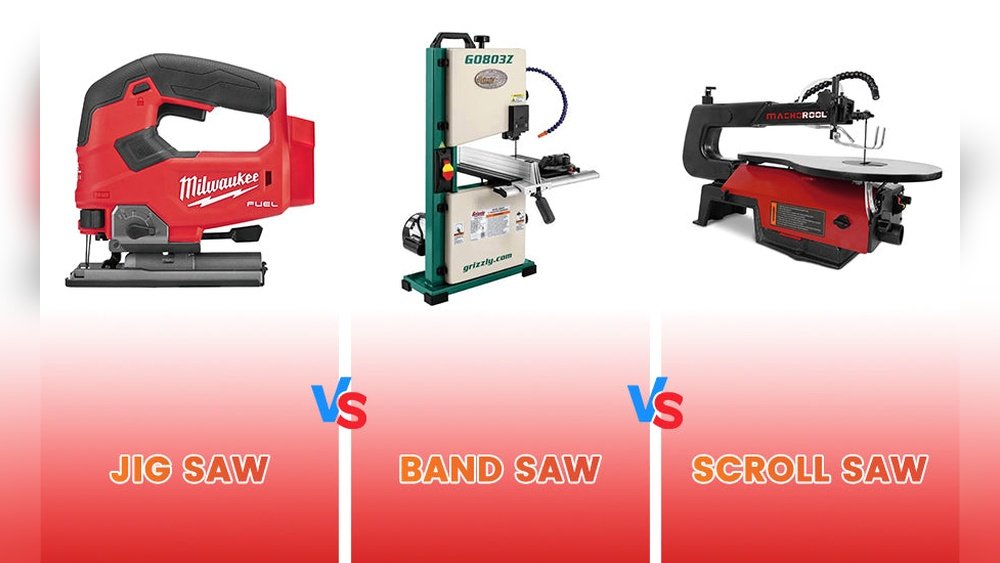
Band Saw Vs Jigsaw: Which Saw Should You Choose?
Choosing the right saw can make a huge difference in your woodworking or DIY projects. For many people, the decision comes down to band saw vs jigsaw. At first glance, both tools seem similar—they cut curves, handle different materials, and are must-haves for serious builders. But each saw has unique strengths and weaknesses. Using the wrong one can cost you time, money, and even ruin your workpiece.
In this guide, you’ll get a clear, practical comparison of band saws and jigsaws. You’ll learn how they work, when to use each, and common mistakes beginners make. By the end, you’ll know exactly which tool fits your needs and how to avoid costly errors.
What Is A Band Saw?
A band saw uses a long, continuous blade stretched between two wheels. The blade is a metal band with teeth on one side. When the saw is running, the band spins around quickly. You guide your material into the blade on a flat table.
Band saws are usually large, stationary machines. Some smaller, portable models exist, but most are heavy and stay in one place. They come in different sizes, usually measured by the distance between the blade and the frame (the “throat”).
Key Features
- Continuous blade: A single, flexible band moves in a loop.
- Large table: Supports big pieces of wood or metal.
- Vertical or horizontal: Most common for woodworking is the vertical band saw.
- Adjustable blade guides: Keep cuts accurate and safe.
Typical Uses
- Cutting curves in wood
- Resawing (cutting boards into thinner pieces)
- Making straight cuts in thick material
- Cutting irregular shapes
- Handling metal, plastic, or even meat (with the right blade)
Band saws shine in workshops that need to cut thick or hard material, or when you need to make precise curved cuts.
What Is A Jigsaw?
A jigsaw uses a short, straight blade that moves up and down very quickly. The tool is handheld, so you move it along your cut line. Jigsaws are lightweight and portable, making them a favorite for home DIYers and professionals alike.
Jigsaws can use different blades for wood, metal, plastic, or even ceramic tile. You can easily swap blades for each job.
Key Features
- Up-and-down blade action: Also called “reciprocating” motion.
- Handheld design: Move the tool itself, not the material.
- Orbital setting: Some jigsaws have this for faster or smoother cuts.
- Bevel cuts: The shoe can tilt for angled cuts.
Typical Uses
- Cutting curves and circles in thin material
- Making plunge cuts (start a cut in the middle of a piece)
- Short, straight cuts
- Cutting out shapes or openings (like sink holes in countertops)
- Working in tight spaces
Jigsaws are perfect for detailed work, quick jobs, and when you need a lightweight saw.

Side-by-side Comparison
To help you see the main differences at a glance, here’s a direct comparison:
| Feature | Band Saw | Jigsaw |
|---|---|---|
| Blade Type | Continuous loop | Straight, short, reciprocating |
| Operation | Stationary (material moves) | Handheld (tool moves) |
| Best For | Thick, hard, and large materials | Thin material, curves, plunge cuts |
| Cutting Speed | Fast, especially for big pieces | Slower, better for detail |
| Precision | High (with practice) | Medium (depends on user control) |
| Portability | Low | High |
| Price Range | $200-$2000+ | $30-$300 |
Key Differences Explained
Understanding the deeper differences will help you pick the right saw for your job.
Cutting Power
Band saws have much more power. Their motor and blade system can handle thick hardwoods, metal, and even logs. This makes them the go-to choice for big projects or professional shops.
Jigsaws are lighter and less powerful. They can struggle with thick or hard materials. For heavy-duty work, a jigsaw will be slow and the blade can break.
Cut Quality
Band saws give smoother, more accurate cuts when set up well. Their table and guides keep the material steady, and the blade doesn’t wander as much.
Jigsaws can cut curves and shapes, but it’s harder to get a clean edge, especially in straight cuts. The blade can bend or deflect, especially in thick or hard materials.
Curved Cuts
Both tools can cut curves, but the band saw makes larger, sweeping curves easily and keeps the cut smooth. For tight corners or very small shapes, a jigsaw is better since you can turn the tool sharply.
Versatility
A jigsaw is more versatile for quick, mobile jobs. You can carry it anywhere, cut in place, and handle a variety of shapes. For example, making a curved cutout in a table or cutting a hole in drywall is faster with a jigsaw.
Band saws are less flexible because they’re big and stationary. But they can handle a wider range of materials if you have the right blade.
Cost And Space
Band saws cost more and require a dedicated workspace. A good one can be a big investment, and you’ll need a bench or floor space.
Jigsaws are cheaper and store easily in a toolbox. They’re the clear winner for beginners or hobbyists with limited space.

When To Use A Band Saw
Band saws are best when you need:
- Precision: If your project requires exact, repeatable cuts, a band saw is more accurate.
- Resawing: Cutting thick boards into thin slices is much easier.
- Bulk work: Cutting lots of pieces, or very large or hard material.
- Smooth curves: For furniture making, instrument building, or art pieces with gentle curves.
Example: If you build furniture and need to cut legs with a gentle curve, a band saw will do it faster and smoother than a jigsaw.
When To Use A Jigsaw
Jigsaws are ideal for:
- Tight spaces: When you can’t fit a big board on a band saw.
- Plunge cuts: Start a cut in the middle of a panel (like for outlets or sink holes).
- Small, quick jobs: Fixing a shelf, cutting a laminate sheet, or making quick shapes.
- Intricate detail: Tight corners or patterns where a band saw blade is too big.
Example: Installing a new sink? Use a jigsaw to cut the opening in the countertop.

Common Mistakes Beginners Make
Many people buy the wrong saw or use it incorrectly. Here are mistakes to avoid:
- Trying to cut thick hardwood with a jigsaw: The blade will bend, and the cut will wander. Use a band saw for this.
- Using a band saw for tiny, tight patterns: The blade might not turn sharply enough. Use a jigsaw with a fine blade.
- Wrong blade selection: Both saws need the right blade for the material. Beginners often keep the same blade for everything, which ruins the blade and the workpiece.
- Pushing too fast: Especially with a jigsaw, forcing the tool leads to crooked or rough cuts.
- Not securing the material: Always clamp your work, especially with a jigsaw, to avoid slips and accidents.
- Ignoring safety: Band saws can be dangerous—keep fingers away from the blade. Jigsaws can jump if not held firmly.
Which Is Safer?
Both tools can be safe if used correctly. Band saws are stationary, so your hands are always near the blade, but you have more control. Jigsaws are handheld and can “kick” or slip, especially on hard materials.
Always wear safety glasses, keep hands away from blades, and unplug tools when changing blades. Never wear loose clothing or jewelry.
Which Saw Should You Buy First?
If you’re just starting, a jigsaw is the better first tool for most people:
- Lower cost
- Easy to store and transport
- Good for many basic cuts
But if you know you’ll work with thick wood, do a lot of resawing, or want to build furniture, invest in a band saw.
Pro tip: Many serious woodworkers end up owning both. Each tool fills a different need.
Band Saw Vs Jigsaw For Different Materials
Let’s look at how these saws perform on common materials:
| Material | Band Saw | Jigsaw |
|---|---|---|
| Softwood | Excellent | Good (thin pieces) |
| Hardwood | Excellent | Fair (thin only) |
| Plywood | Excellent | Good |
| Metal | Good (with right blade) | Possible (thin only, right blade) |
| Plastic | Good | Good |
| Laminate | Fair | Excellent |
Band saws are best for thick and hard materials. Jigsaws are great for thin, flexible, or installed materials.
Essential Buying Tips
Before you buy, consider these factors:
- Project needs: What will you cut most often? Thick hardwood or thin panels?
- Space: Do you have a workshop or just a small area?
- Budget: Jigsaws are affordable, band saws are an investment.
- Power and speed: For heavy work, look at motor power (measured in amps or horsepower).
- Blade changes: Both tools should make blade changes easy.
- Dust collection: Band saws often have dust ports, helpful for cleaner work.
- Brand reputation: Go for reliable brands with good reviews.
Non-obvious insight: Don’t buy based on price alone. A cheap tool may ruin your work, waste material, and even cause injury. Try to test the saw in-store if possible.
Practical Examples
Building a curved shelf: Start the curve with a jigsaw, then use a band saw to smooth and finish.
Cutting out a floor vent: Use a jigsaw for plunge and detail.
Resawing a 6-inch board: Only a band saw can do this easily.
Maintenance And Longevity
Both tools need care to last long:
- Band saw: Keep the blade sharp, clean the wheels, and check tension. Lubricate moving parts.
- Jigsaw: Change blades when dull, keep shoe flat, check power cord.
A well-maintained saw will last years. Dull blades are the top cause of poor results and accidents.
Professional And Hobby Use
For professionals, band saws save time and deliver perfect results for big projects. Cabinet shops, luthiers, and metal workers rely on them.
Hobbyists and DIYers love jigsaws for their flexibility and low cost. Many home projects never need a band saw.
Hidden tip: If you do a lot of scrollwork or tight patterns, consider a scroll saw. It’s designed for the smallest, most delicate cuts.
Real-world Data
According to market surveys:
- Band saws: Over 75% of professional woodshops have at least one.
- Jigsaws: 90% of DIYers own a jigsaw, and it’s the most-used saw for small home projects.
- Injuries: Jigsaw injuries are more common, but usually minor (cuts, slips), while band saw accidents are rare but more serious.
For more details on saw types and safety, see the Bandsaw Wikipedia page.
Frequently Asked Questions
Is A Band Saw Or Jigsaw Better For Beginners?
A jigsaw is better for beginners. It’s easier to use, less expensive, and handles most small projects. You can do a lot with a jigsaw before needing a band saw.
Can A Jigsaw Replace A Band Saw?
No, not for heavy or precise work. A jigsaw can handle many cuts, but it can’t resaw thick boards or make perfectly straight, clean cuts like a band saw. For serious woodworking, both tools are needed.
What Safety Gear Should I Use With These Saws?
Always wear safety glasses. For band saws, consider hearing protection. With jigsaws, wear a dust mask if cutting MDF or particle board. Secure your material and keep hands away from the blade.
How Do I Choose The Right Blade?
For both saws, match the blade to the material. Use fine-tooth blades for metal or clean cuts, coarse for fast wood cuts. Replace blades when they get dull or burned.
Which Saw Is Best For Cutting Circles?
A jigsaw is best for small circles and tight curves. For large, smooth circles, a band saw is better—if the workpiece fits on the table.
—
With a clear understanding of the band saw vs jigsaw debate, you can make the right choice for your work. Remember, choose the tool that matches your main projects and space, and don’t be afraid to start simple. The right saw saves time, improves safety, and makes your DIY or woodworking projects truly shine.
As an Amazon Associate, We earn from qualifying purchases