
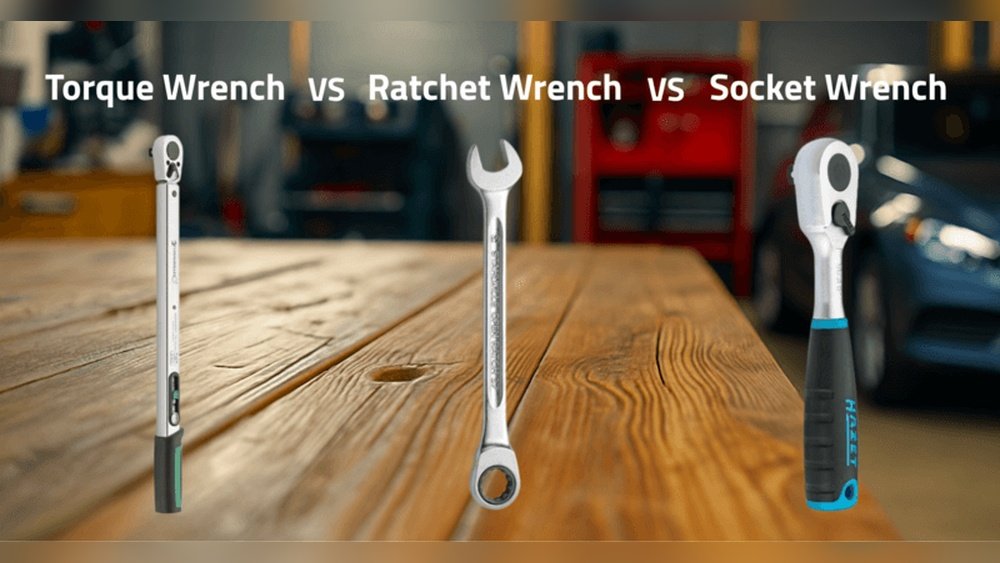
Many people get confused when they see a torque wrench and a ratchet in a toolbox. Both tools look similar, and sometimes, they even fit the same sockets. But their purpose, design, and the results they deliver are very different. Whether you’re a car mechanic, a DIY home repair fan, or just someone interested in tools, understanding these differences is important. The right tool can mean the difference between a job done well and one that causes expensive damage.
In this guide, you’ll learn exactly what makes each tool unique, how they work, and when you need one over the other. You’ll see real-life examples, learn about common mistakes, and find practical advice for choosing and using these tools safely.
By the end, you’ll have the confidence to select the right tool for every tightening job.
What Is A Torque Wrench?
A torque wrench is a special tool made to tighten bolts and nuts to a precise force, known as torque. This is important because too much or too little force can damage parts or make them unsafe. For example, if you overtighten a car engine bolt, you might strip the threads. If you don’t tighten enough, the engine could leak or even fail.
Torque wrenches come in several types:
- Click-type torque wrench: This is the most common. It makes a “click” sound when you reach the set torque.
- Beam-type torque wrench: Uses a needle to show how much force you’re using.
- Electronic torque wrench: Shows the exact torque value on a digital screen.
The main advantage of any torque wrench is that it ensures every bolt is tightened exactly as the manufacturer recommends. This is critical for safety in cars, bikes, planes, and even building construction.
What Is A Ratchet?
A ratchet is a hand tool that lets you turn fasteners (like nuts and bolts) quickly and easily. It works with a gear and a lever that move in one direction and lock in the other. This means you can tighten or loosen a bolt without removing the tool from the fastener each time you turn.
Ratchets are used with socket sets. The socket attaches to the ratchet, and you can switch sockets for different bolt sizes. Most ratchets have a small switch to change between tightening and loosening.
Unlike torque wrenches, ratchets do not measure or control how much force you use. They are made for speed and convenience, not precision.

Key Differences: Torque Wrench Vs Ratchet
At first glance, a torque wrench and a ratchet might look almost the same. Both have handles and square drives for sockets. But their differences are important. Here’s a direct comparison:
| Feature | Torque Wrench | Ratchet |
|---|---|---|
| Main Purpose | Apply precise force | Quickly turn fasteners |
| Measures Force? | Yes | No |
| Common Use | Critical bolts (e.g., engines, wheels) | General assembly/disassembly |
| Design | Heavier, often longer | Lighter, compact |
| Price | More expensive | More affordable |
The main takeaway: A torque wrench is for precision, a ratchet is for speed.
When To Use A Torque Wrench
There are situations where using a torque wrench is not just preferred, but absolutely necessary. Some examples include:
- Tightening car wheel lug nuts to the manufacturer’s specification (usually 80–100 ft-lbs).
- Assembling bicycle parts, especially carbon frames or seat posts that can crack if overtightened.
- Installing engine cylinder heads or other engine parts, where uneven or incorrect torque can lead to leaks or engine failure.
- Mounting industrial machinery or critical parts on airplanes.
Using a torque wrench in these cases can prevent accidents, injuries, and expensive repairs. You should always check the product’s manual or technical sheet for the correct torque values.
Real-world Example
If you change a car tire and overtighten the lug nuts with a ratchet, you risk stretching or breaking the wheel stud. Under-tightening can cause the wheel to come loose while driving—a major safety hazard. A torque wrench prevents both problems.
When To Use A Ratchet
A ratchet is your go-to tool for most non-critical tasks where speed is more important than exact force. Typical uses include:
- Removing or installing body panels or interior trim in vehicles.
- Building or taking apart furniture.
- Everyday home repairs, like fixing a leaky sink or tightening loose bolts.
- Tasks where the manufacturer does not specify a torque value.
A ratchet makes these jobs much faster because you don’t need to lift the tool off the bolt after each turn. If you’re working in a tight space, a ratchet is often the only practical choice.
Non-obvious Insight
Many beginners try to use a ratchet for final tightening on important bolts. This is a mistake. Ratchets can make it easy to overtighten without realizing it, especially if you’re strong or working fast. For critical bolts, always finish with a torque wrench.
Types Of Torque Wrenches And Ratchets
Understanding the different kinds of each tool will help you pick the best one for your needs.
Types Of Torque Wrenches
- Click-Type: Most popular, gives a clear “click” at the set torque. Good for most users.
- Beam-Type: No moving parts, so very reliable, but harder to read in tight spaces.
- Electronic: Digital readout, sometimes with alarms. Accurate but expensive.
- Slip-Type: Slips when set torque is reached, useful for delicate parts.
Types Of Ratchets
- Standard Ratchet: Basic, reliable, comes in different sizes (1/4”, 3/8”, 1/2” drive).
- Flex-Head Ratchet: Head pivots to reach bolts at odd angles.
- Stubby Ratchet: Short handle for working in small spaces.
- Extendable Ratchet: Adjustable length for extra leverage.
- Swivel Head Ratchet: More movement options for tough spots.
Pros And Cons Of Each Tool
It’s useful to see the upsides and downsides side by side. Here’s a quick overview:
| Tool | Pros | Cons |
|---|---|---|
| Torque Wrench | – Precise tightening – Prevents damage – Required for critical bolts | – Slower to use – Needs calibration – More expensive |
| Ratchet | – Fast and easy – Works in tight spaces – Inexpensive | – No torque control – Easy to overtighten – Not for critical work |
Common Mistakes To Avoid
Many people make costly errors because they do not understand the correct use of these tools. Here are the most common mistakes and how to avoid them:
- Using a ratchet instead of a torque wrench for important bolts. This can lead to overtightening or undertightening.
- Not calibrating a torque wrench. Over time, all torque wrenches lose accuracy. Most should be calibrated at least once a year or after heavy use.
- Using a torque wrench to loosen bolts. These tools are made for tightening, not loosening. Using them the wrong way can damage the wrench.
- Storing a click-type torque wrench at a high setting. Always reset it to the lowest torque after use to protect the internal spring.
- Using the wrong drive size. Make sure your socket fits both the bolt and the tool drive (1/4”, 3/8”, or 1/2” are most common).
How To Choose The Right Tool
When faced with a tightening job, ask yourself these questions:
- Is the torque specification important for safety or function?
- Does the manual recommend a certain torque?
- Is speed or precision more important for this task?
- Do I have enough space for the tool?
If the answer to the first two questions is yes, use a torque wrench. If not, a ratchet is usually fine.
Practical Buying Tips
- For car work, a 3/8” or 1/2” drive click-type torque wrench covers most needs.
- If you work on bicycles or electronics, get a smaller (1/4” drive) wrench with lower torque range.
- Invest in a quality ratchet with a comfortable handle and a fine-tooth gear for smoother operation.
- Avoid very cheap torque wrenches, as they may be inaccurate out of the box.
Care And Maintenance
Proper care extends the life of both tools and keeps them accurate.
- Clean after use with a dry cloth.
- Store torque wrenches in their case and reset to the lowest torque.
- Calibrate torque wrenches yearly or after a hard drop.
- Lubricate ratchet gears lightly every few months for smooth action.
A well-maintained tool set gives more reliable results and lasts longer.
Real-world Scenarios
Let’s look at two common jobs:
Changing A Car Tire
- Use a ratchet and socket to quickly remove lug nuts.
- Put on the new tire and hand-tighten the nuts.
- Use the ratchet to snug them up.
- Finish with a torque wrench set to the correct value (usually 80–100 ft-lbs).
This method is safe and efficient.
Assembling Flat-pack Furniture
- Use a ratchet with the correct socket for all bolts.
- Do not overtighten—stop when the parts are snug and flush.
- No need for a torque wrench unless the instructions specify one.
Cost Comparison
Torque wrenches are generally more expensive than ratchets. Prices depend on brand, size, and features.
- Basic ratchet: $10–$30
- Good click-type torque wrench: $40–$150
- Electronic torque wrench: $100–$300
For most home users, one torque wrench and a couple of ratchets cover all needs.
The Bottom Line
The torque wrench and ratchet are both essential tools, but for very different jobs. The torque wrench is about precision and safety. The ratchet is about speed and convenience. Knowing when to use each tool will help you work faster, avoid damage, and stay safe.
One insight many beginners miss: You can use a ratchet to quickly spin on a nut, then switch to a torque wrench for the final tightening. This saves time and ensures accuracy.
If you want to learn more about torque tools, the Wikipedia entry on torque wrenches is a great resource.
Frequently Asked Questions
What Happens If I Overtighten A Bolt With A Ratchet?
Overtightening can stretch or break the bolt, damage threads, or even crack expensive parts like engine blocks or carbon bike frames. Always use a torque wrench when torque matters.
Can I Use A Torque Wrench Like A Regular Ratchet?
You can use a torque wrench to tighten bolts, but it’s not made for high-speed or heavy loosening. Using it for general ratcheting can damage its internal mechanism and reduce accuracy.
How Often Should I Calibrate My Torque Wrench?
Most experts recommend yearly calibration or after about 5,000 cycles. If you drop it or use it heavily, calibrate sooner. Some industries require calibration every six months.
What Size Torque Wrench Do I Need?
For cars, a 3/8” or 1/2” drive covers most needs. For bikes or electronics, use a 1/4” drive with a lower torque range. Always match the tool size to the bolt size and the required torque.
Are Digital Torque Wrenches Better Than Click-type?
Digital torque wrenches are more precise and easier to read, but they are also more expensive and need batteries. Click-type wrenches are reliable for most home and garage use. Choose based on your budget and need for accuracy.
Understanding the difference between a torque wrench and a ratchet is one of the most important steps for anyone who works with bolts. With this knowledge, you can work smarter, safer, and with more confidence.

As an Amazon Associate, We earn from qualifying purchases