
Having spent years clearing everything from massive wet leaf piles to tiny workshop wood shavings, I have put both the STIHL BR 700 and the Makita DUB185Z through their paces in real-world conditions. In this comparison, you will discover how these two wildly different blowers perform when tackling yard debris, maintenance tasks, and daily cleanups. We will look closely at their power, usability, and build quality to help you decide which tool fits your specific cleanup needs.
stihl vs makita leaf blower: At a Glance
| stihl | makita leaf blower | |
|---|---|---|
| Primary Power Source | Primarily gas-powered (gasoline), with growing battery-powered options. | Primarily cordless battery-powered, utilizing standard power tool batteries. |
| Blowing Power | High to extreme power, excellent for heavy, wet yard debris. | Moderate to high power, ideal for dry leaves and light sweeping. |
| Maintenance | High; requires fuel mixing, spark plug changes, and engine maintenance. | Minimal; requires only battery charging and occasional nozzle cleaning. |
| Noise Levels | Typically louder due to gas engines, requiring hearing protection. | Relatively quiet electric operation, ideal for noise-sensitive neighborhoods. |
| Weight & Design | Heavier overall; features backpack models to comfortably distribute weight. | Lightweight and compact, mostly designed as highly maneuverable handhelds. |
| Run Time | Continuous operation with quick fuel refills for large-scale jobs. | Limited by battery life, requiring spare batteries for extended use. |
| Target User | Professional landscapers and owners of large, heavily wooded properties. | Homeowners, DIYers, and contractors already on the Makita battery platform. |
Complete Comparison: stihl vs makita leaf blower
| STIHL BR 700 Professional Backpack Leaf | Makita DUB185Z Cordless Handheld Leaf Blower | |
|---|---|---|
| Product Image | 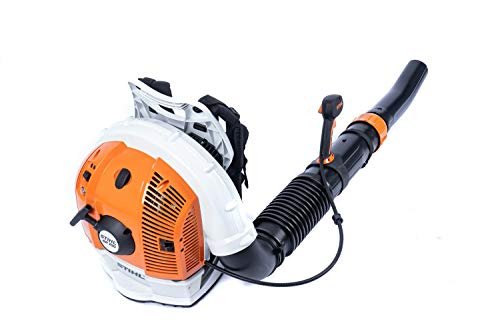 | 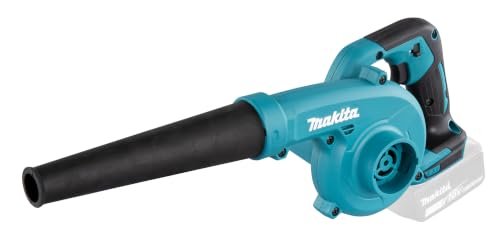 |
| Price | View On Amazon | View On Amazon |
| Category | Premium | Budget/Mid-Range |
| Power & Velocity | STIHL 4-MIX Engine with maximum blowing force of 88 m/s | 18V LXT Li-Ion battery power (Battery & Charger NOT included) |
| Weight & Ergonomics | 10.8 kg backpack design with wide shoulder straps & anti-vibration system | Ultra-compact handheld design (approx. 1.6 – 2.0 kg) with ergonomic soft grip |
| Functionality & Speed Control | Length-adjustable blow pipe with a soft grip handle designed for blowing tasks | Variable speed trigger, 3 air volume settings (Low/Med/High), and integrated vacuum function (with dust bag) |
| Safety & Protection Features | Stihl anti-vibration system and premium harness to reduce operator fatigue | Battery protection circuit (protects against overdischarge, high temperature, and overload current) |
| Best For | Removing wet leaves, heavy debris, and lawn/hedge cuttings across large properties | Quick cleanups, tight spaces, workshop dust, and light duty blowing/vacuuming tasks |
| Amazon Link | View On Amazon | View On Amazon |
| Overall Winner | Winner (Best for high-capacity power and heavy-duty tasks) | Runner-up (Best for lightweight precision and multi-functional vacuuming) |
STIHL BR 700 Professional Backpack Leaf Blower
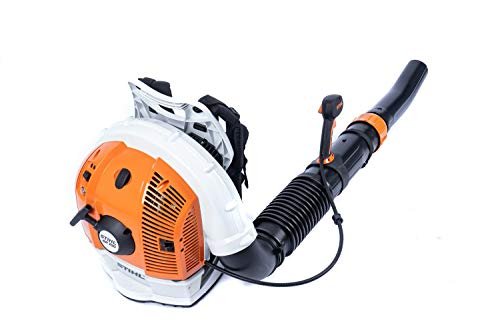
I still remember the first time I strapped on the STIHL BR 700 Professional Backpack Leaf Blower to clear a heavily wooded two-acre property. This machine relies on a highly efficient STIHL 4-MIX engine that delivers an incredible maximum blowing force of 88 m/s, making quick work of wet, packed leaves. Despite its commercial-grade performance, the blower feels surprisingly manageable at 10.8 kg because of its exceptionally wide shoulder straps and ergonomic backpack design. To keep your hands from getting numb during long shifts, the built-in STIHL anti-vibration system absorbs almost all the engine shudder. Adjusting the tool to your height is simple thanks to the length-adjustable blow pipe and tool-free handle adjustment.
- STIHL 4-MIX Engine: Combines the benefits of 2-stroke and 4-stroke engines for lower emissions and high torque.
- High Blowing Force: Delivers a maximum air velocity of 88 m/s to move heavy, wet debris easily.
- Anti-Vibration System: Significantly reduces handle vibration to minimize operator fatigue during extended use.
- Adjustable Blow Pipe: Allows quick, tool-free adjustment of the tube length to match different user heights and sweeping tasks.
Comfortable Backpack Harness: Uses wide, padded shoulder straps and back ventilation for balanced weight distribution.
Massive blowing power that handles wet leaves, heavy gravel, and large yards easily
- Excellent weight distribution makes the 10.8 kg feel much lighter on your back
Highly fuel-efficient engine with a relatively quiet exhaust tone for its size
Requires mixing gas and oil along with regular engine maintenance
- Too large and heavy for quick, indoor workshop cleanups
Best for: Homeowners with large properties, professional landscapers, and anyone dealing with heavy, wet leaf accumulation over large areas.
Expert Opinion: The STIHL BR 700 is an absolute beast for heavy-duty land clearing, offering unmatched blowing force that makes quick work of massive, wet leaf piles.
Makita DUB185Z Cordless Handheld Leaf Blower
Moving to the opposite end of the spectrum, the Makita DUB185Z Cordless Handheld Leaf Blower excels at quick, nimble cleanups around the garage and patio. Running on a single 18V LXT Li-ion battery, this compact tool offers incredible portability without the hassle of extension cords or gas mixing. I found the variable speed control trigger highly responsive, letting you dial in the exact airflow needed for delicate garden beds. You can cycle through 3 air volume settings (Low, Medium, High) to balance battery life with blowing power. It also features a clever vacuum function that transforms the blower into a small workshop vacuum when you attach a dust bag. Safety is built right in with a battery protection circuit that guards against overloading, overdischarging, and overheating.
- 18V LXT Battery Power: Works with the widely compatible Makita 18V battery platform for cordless convenience.
- Three-Speed Volume Settings: Offers low, medium, and high air volume options to match different tasks.
- Two-in-One Vacuum Function: Easily converts to a handy vacuum for small debris cleanup when paired with a dust bag.
- Battery Protection Circuit: Automatically shuts down the tool if it detects overload, overheating, or over-discharge.
Ergonomic Soft Grip: Features a lightweight, compact design that reduces hand and wrist strain.
Extremely lightweight and easy to maneuver with one hand
- Instant start with no gas fumes, spark plugs, or engine maintenance
Highly versatile tool that doubles as a light-duty workshop vacuum
Lacks the sheer power needed to clear large grassy areas or wet leaves
- Battery and charger are sold separately if you do not already own Makita tools
Best for: DIYers, woodworkers, and homeowners who need a quick, lightweight tool for clearing driveways, patios, and indoor workshops.
Expert Opinion: This compact Makita blower is the perfect companion for quick daily maintenance and workshop dust control, though it lacks the muscle for serious autumn yard work.
stihl vs makita leaf blower: Key Differences That Matter
Performance Comparison
The sheer gap in performance is the first thing you notice when comparing these two. The STIHL gas engine produces a hurricane of air, reaching up to 88 m/s, which easily pushes piles of wet leaves and heavy debris across acres of land. On the other hand, the Makita 18V handheld is designed for precision, clearing dry leaves from walkways, blowing sawdust off workbenches, and cleaning gutters. While the STIHL easily handles commercial-scale debris clearing, the Makita is limited to light-duty, localized tasks due to its lower air volume and battery runtimes.
Price/Value Analysis
From a budget perspective, the upfront cost of the STIHL backpack model is significantly higher. However, you are paying for professional-grade construction and massive power output that saves hours of hard labor on large properties. The Makita comes at a much lower entry price, especially if you already own Makita 18V batteries. If you only need to clear a small deck or workshop, the Makita offers far better value. Paying for the STIHL would be unnecessary overkill for small properties.
Build Quality Comparison
Both brands enjoy legendary reputations for durability, but they approach construction differently. STIHL builds its backpack units to withstand daily professional abuse, utilizing heavy-duty plastics, a reinforced blower tube, and a commercial-grade engine designed to run for thousands of hours. Makita focuses on tight tolerances, impact-resistant housings, and intelligent electronic protection for its motor and battery. While both tools feel exceptionally solid, the STIHL is built to endure harsh outdoor weather and rough truck transport, while the Makita is optimized for clean storage and indoor or residential environments.
User Experience Differences
Operating these two tools feels completely different. The STIHL requires you to mix fuel, pull-start a gas engine, and wear a backpack harness, which can feel hot on warm summer days. Once strapped in, the weight is beautifully balanced, and the anti-vibration system keeps your hands comfortable. In contrast, the Makita starts instantly at the squeeze of a trigger, produces zero emissions, and runs almost silently compared to the roar of the gas motor. It is light enough to hold with one hand for quick five-minute cleanups, making it the clear winner for convenience.
Which Should You Choose?
If you manage a large suburban property, have multiple mature trees, or run a commercial landscaping business, the choice is clear. You need the raw power of a gas-powered backpack blower to move heavy debris. Investing in the STIHL model will save you hours of frustration.
Alternatively, if you live in a townhouse, need to clean up a small driveway, or want to blow wood shavings out of your garage, a lightweight battery-powered tool is ideal. You can grab the Makita, clear the mess in two minutes, and hang it back on the wall without worrying about stale fuel.
Ultimately, these two leaf blowers serve completely different purposes. The STIHL BR 700 stands out as a commercial workhorse designed to dominate large-scale outdoor projects with relentless gas-powered force. The Makita DUB185Z acts as a nimble, ultra-convenient helper that makes daily cleanup tasks effortless. Your decision should come down to the size of your yard and how much physical effort you want to invest in maintaining a gas engine versus managing lithium-ion batteries.
Frequently Asked Questions
Q: How does the power of a stihl vs makita leaf blower compare?
A: The STIHL BR 700 backpack blower is vastly more powerful, delivering a maximum blowing force of 88 m/s designed for heavy yard work. The Makita DUB185Z is a compact, light-duty cordless blower designed for clearing small patios, decks, and workshops.
Q: Can the Makita DUB185Z handle wet leaves as well as the STIHL BR 700?
A: No, the Makita lacks the air volume and velocity to lift and push heavy, wet leaves over grass. The STIHL BR 700 is designed specifically for this type of demanding outdoor clearing.
Q: Which is quieter when comparing a stihl vs makita leaf blower?
A: The Makita DUB185Z is significantly quieter because it runs on a battery motor. The STIHL BR 700 uses a powerful gas-burning 4-MIX engine that is much louder and requires ear protection during operation.
Q: Does the Makita DUB185Z come with a battery and charger?
A: Typically, the “Z” in the model name indicates it is sold as a bare tool, meaning the battery and charger are sold separately. This is a great option if you already own other Makita 18V tools.
Q: How heavy is the STIHL BR 700 backpack blower?
A: It weighs 10.8 kg, but the weight is distributed evenly across your back using wide shoulder straps, making it comfortable to wear for long periods.
Q: Can I use the Makita leaf blower as a vacuum?
A: Yes, the DUB185Z has a vacuum function. You can attach a compatible dust bag to collect light debris, wood shavings, and dust from your workbench.
Q: What kind of fuel does the STIHL BR 700 require?
A: It uses a fuel-to-oil mix because of its STIHL 4-MIX engine. You must mix high-quality two-stroke engine oil with unleaded gasoline, or use pre-mixed fuel like STIHL MotoMix.
As an Amazon Associate, We earn from qualifying purchases