
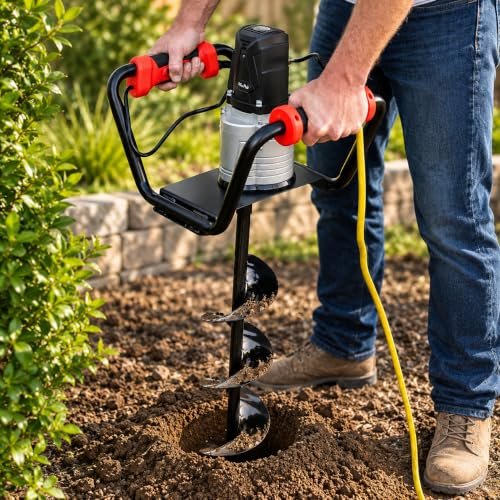
I have spent years digging holes for fences and planting trees on my property, using both electric and gas-powered equipment to get the job done. Testing the XtremepowerUS 1500W electric digger alongside the VEVOR 43cc gas model showed me exactly how power sources affect performance. This comparison will help you decide which tool fits your backyard projects or professional landscaping needs.
electric vs gas auger: At a Glance
| electric | gas auger | |
|---|---|---|
| Power Source | Corded electricity or rechargeable batteries. | Gasoline, often mixed with 2-cycle engine oil. |
| Maintenance | Minimal maintenance with no oil, spark plugs, or fuel to manage. | High maintenance; requires fuel mixing, engine tuning, and winterization. |
| Portability & Range | Restricted by extension cord length or battery runtime. | Fully portable with unlimited range, ideal for remote sites. |
| Power & Torque | Sufficient for light-to-medium digging and residential landscaping. | High torque and drilling power for tough clay and professional use. |
| Noise & Emissions | Quiet operation with zero emissions during use. | Loud operation requiring hearing protection; produces exhaust fumes. |
| Ease of Starting | Instant start with the push of a button or trigger. | Requires pulling a starter cord and managing fuel chokes. |
| Weight & Handling | Lightweight and easier to maneuver for a single operator. | Heavier body requires more physical effort to control. |
Complete Comparison: electric vs gas auger
| XtremepowerUS 1500W Electric Post Hole Digger, | VEVOR Post Hole Digger, 43cc 1250W | |
|---|---|---|
| Product Image | 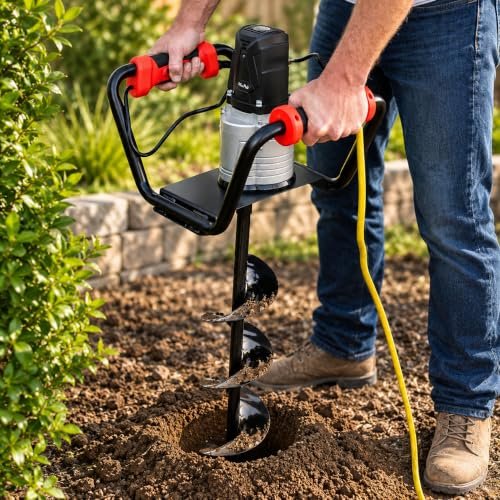 | 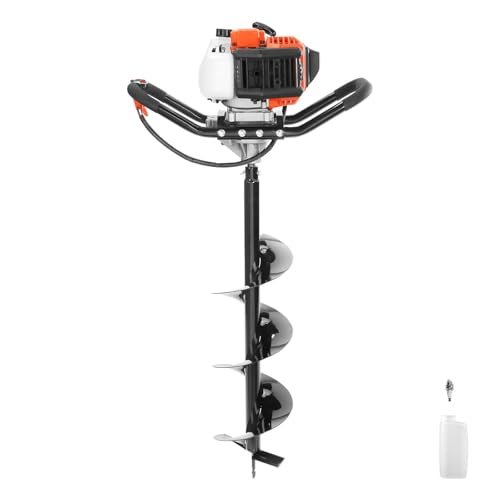 |
| Price | View On Amazon | View On Amazon |
| Category | Budget/Mid-Range | Budget/Mid-Range |
| Power Source & Mobility | Corded Electric (1500W / 10.9A) – Quiet, zero emissions, requires extension cord | Gas-Powered (43cc 1250W Engine) – Unlimited mobility, EPA-certified engine |
| Drill Bit & Digging Depth | 6-inch diameter, 28-inch digging depth (high strength manganese steel) | 8-inch diameter, 30-inch digging depth (powder-coated alloy steel) |
| Performance & Speed | 270 RPM impact rated speed, delivers 90 ft-lb torque | Up to 9350 RPM max rotational engine power with heavy-duty ball-bearing gearbox |
| Starting & Safety Mechanisms | Instant electric start with a powerhead safety lock function to prevent accidental triggering | 1.2m thickened pull-cord manual start with emergency stop switch on handle |
| Handle & Comfort | Two anti-skid, vibration-proof ergonomic grips for maximum leverage | Heavy-duty steel-welded handles with shock-absorbing foam grips |
| Best For | Homeowners and residential gardeners needing quick setup near an electrical outlet | Farmland, off-grid projects, larger tree plantings, and digging in remote areas |
| Amazon Link | View On Amazon | View On Amazon |
| Overall Winner | Runner-up (Best for Maintenance-Free Home Use) | Winner (Best Overall Power, Capacity, & Portability) |
XtremepowerUS 1500W Electric Post Hole Digger Review
I plug in the XtremepowerUS 1500W Electric Post Hole Digger when I need instant power without dealing with gasoline. This machine delivers a surprising 1500W heavy-duty motor that easily turns the included 6-inch manganese steel drill bit. The electric motor operates with a 270 RPM impact rated speed to clear out dirt quickly. I appreciate the safety lock function on the powerhead because it prevents any sudden starts. Ergonomic skid-proof handles offer great stability while I press down into the soil.
Key Features
- Powerful 1500W Motor: Delivers 90 ft-lb torque with a 270 RPM speed for rapid hole digging.
- Safety Lock Powerhead: Includes an integrated lock system that stops accidental activation.
- High-Strength Drill Bit: Uses a durable manganese steel 6-inch bit with a 3/4-inch shaft coated in anti-rust paint.
- Vibration-Proof Grips: Features two anti-skid handles designed to reduce strain and increase control.
Pros
- Starts instantly with the press of a trigger, avoiding pull-start hassles.
- No gas emissions or loud engine noise during operation.
- Lightweight frame makes it easy for a single person to carry.
- Zero engine maintenance required compared to gas models.
Cons
- Requires a heavy-duty extension cord, which limits your work area.
- The 6-inch bit size cannot be easily swapped for massive industrial bits.
Best for:
Homeowners, gardeners, and DIYers who need to install fence posts near an electrical outlet without handling fuel.
Expert Opinion: This electric tool is incredibly convenient for quick backyard projects where dragging a cord is not an issue. The instant torque handles soft to medium soils surprisingly well without wearing out your arms.
VEVOR 43cc Gas Post Hole Digger Review
When my digging projects take me far from the house, I rely on the VEVOR 43cc Post Hole Digger. Its powerful 43cc gas engine delivers 1250W of power, spinning the drill up to 9350 RPM for demanding tasks. The 30-inch alloy steel auger bit allows me to dig deep without bending my back, saving my spine from aches. A large 1.2L capacity fuel tank means I can dig dozens of holes on a single fill. The package comes with a complete accessory kit including a spark plug and mixing can to get started immediately.
Key Features
- Heavy-Duty 43cc Engine: Offers high-speed drilling with a maximum of 9350 RPM to cut through hard ground.
- Extra-Long Alloy Bit: Includes a 30-inch long, 8-inch wide alloy steel bit designed to resist bending.
- Extended Pull Cord: Features a 1.2-meter thickened cord that reduces starting effort.
- EPA Certification: Built to meet environmental standards for cleaner emissions.
- Shock-Absorbing Handles: Equipped with foam-padded steel handles that reduce engine vibration.
Pros
- Complete mobility allows you to work deep in fields or remote areas.
- High rotational speed tears through roots and dense clay easily.
- Large fuel capacity keeps the engine running through long work sessions.
Cons
- Mixing gasoline and oil at a 40:1 ratio is messy and requires precise measuring.
- The pull-start mechanism can require physical effort, especially in cold weather.
Best for:
Farmers, landscapers, and property owners with large acreage who need heavy-duty drilling power far from electrical outlets.
Expert Opinion: The pure digging speed and mobility of this gas unit make it the superior choice for tough clay and remote fence lines. You must be prepared for standard small-engine maintenance to keep it running smoothly.
electric vs gas auger: Key Differences That Matter
Performance comparison
Gas engines have higher rotational speeds. The VEVOR model reaches up to 9350 RPM, which helps it slice through roots and packed clay. Electric motors provide instant torque but spin slower, topping out around 270 RPM on the XtremepowerUS. This slower rotation makes the electric version safer when hitting rocks, as it does not jerk your arms as violently.
Price/Value analysis
Electric augers usually cost less upfront because their motors are simpler. You do not need to buy engine oil or fuel stabilizers. Gas augers require a higher initial investment. They also demand ongoing expenses for gasoline, two-stroke oil, and replacement spark plugs.
Build quality comparison
The XtremepowerUS features a steel bit with a hard plastic housing around the motor. It feels sturdy, though dropping it on concrete could crack the casing. VEVOR uses a heavy-duty steel-welded frame and an alloy steel bit. The engine parts are metal, making the gas unit more durable against rough handling in truck beds.
User experience differences
Weight and noise are the main differences here. The electric model runs quietly and starts instantly with a trigger pull. It produces no exhaust fumes, which means you can use it in semi-enclosed spaces. The gas model is loud, heavy, and vibrates intensely. You must pull a cord to start it and wear ear protection during use.
Which Should You Choose?
Choosing between these two tools depends entirely on your property size and soil type. If you are working close to home on a small garden project, the electric option is excellent. You can easily plug in the electric post hole digger and start working without mixing fuel. It is perfect for light landscaping and putting up a basic yard fence.
For larger properties, a gas auger is necessary. You will need the mobile power of gas if you are fencing off a pasture or planting trees far from your house. The raw speed of a gas-powered earth auger is also better suited for heavy clay soils filled with rocks and roots.
Your physical comfort is another factor. The lighter weight of the electric machine saves your back during long days. If you dislike engine maintenance, avoid gas altogether.
The right choice comes down to convenience versus raw power. For most residential yard work, the XtremepowerUS electric model provides more than enough power without the headaches of engine maintenance. Buy the VEVOR gas model if you need to tackle tough, remote terrain and do not mind the extra weight and fuel mixing.
Frequently Asked Questions
Q: Which option is quieter when comparing an electric vs gas auger?
A: The electric auger is significantly quieter. It only makes noise when you pull the trigger to dig, whereas the gas model idle noises and high-RPM engine roar require hearing protection.
Q: How does the weight differ between an electric vs gas auger?
A: Electric augers are much lighter because they do not have a heavy gas engine or fuel tank. This makes them easier to lift and maneuver for a single operator.
Q: Can I use an electric auger on rocky soil?
A: Yes, but you must go slowly. Electric augers have lower RPMs, which actually helps prevent violent kickbacks when you strike a buried rock.
Q: What kind of fuel does the VEVOR gas auger require?
A: It requires a mixture of unleaded gasoline and two-stroke engine oil at a 40:1 ratio. Using pure gasoline without oil will ruin the engine.
Q: Can the XtremepowerUS electric model be used for ice fishing?
A: Yes, you can use it for ice fishing if you attach a specialized electric ice auger drill bit designed for cutting through thick ice.
Q: Do gas augers last longer than electric ones?
A: Gas augers can last for decades with proper maintenance, such as cleaning the carburetor and replacing the spark plug. Electric models have fewer moving parts to break but can eventually burn out their motors if pushed too hard in rocky ground.
Q: Is an extension cord required for the XtremepowerUS electric digger?
A: Yes, you will need a heavy-duty, outdoor-rated extension cord. Make sure to use a cord rated for 15 amps to prevent voltage drops.
As an Amazon Associate, We earn from qualifying purchases