
When you face a tough material like concrete or want to hang a picture on a brick wall, the tool you use makes all the difference. For many homeowners and professionals, the choice often comes down to a rotary hammer or a hammer drill. Both tools look similar and even sound similar, but their power, applications, and results are surprisingly different. Choosing the wrong one can lead to wasted time, damaged tools, and even ruined projects. Let’s break down these two power tools, so you know exactly when and why to use each.
What Is A Rotary Hammer?
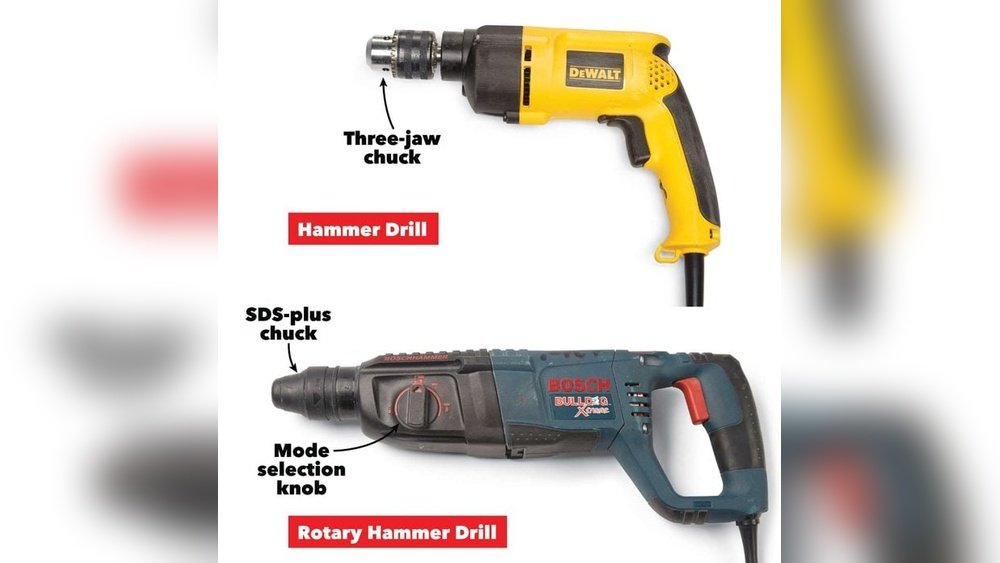
A rotary hammer is a heavy-duty power tool designed for drilling and chiseling hard materials, especially concrete, stone, and masonry. It uses a unique mechanism called electro-pneumatic hammering, which delivers strong, fast blows with less effort from the user. Rotary hammers are larger and heavier than standard drills, often featuring side handles for better control.
Most rotary hammers use SDS (Slotted Drive System) bits, which lock securely for high-impact work. These tools are common on construction sites, especially for tasks like breaking up concrete slabs, making holes for rebar, or removing tiles. Rotary hammers can usually be set to three modes: drilling only, hammering only, or hammer drilling (both actions at once).
What Is A Hammer Drill?
A hammer drill looks like a regular drill but adds a mechanical hammering action. As you drill, the bit not only spins but also moves back and forth quickly. This extra movement helps the drill cut into harder materials like brick, concrete, and stone. However, the hammering in a hammer drill is less powerful compared to a rotary hammer.
Hammer drills are lighter, more compact, and easier to handle for most people. They use standard drill bits with a three-jaw chuck and are great for jobs like drilling holes for wall anchors in brick or concrete. When switched to regular drill mode, they can also handle wood, metal, and plastic.
How Does Each Tool Work?
Understanding the internal mechanics helps explain why rotary hammers and hammer drills perform differently.
Rotary Hammer Mechanism
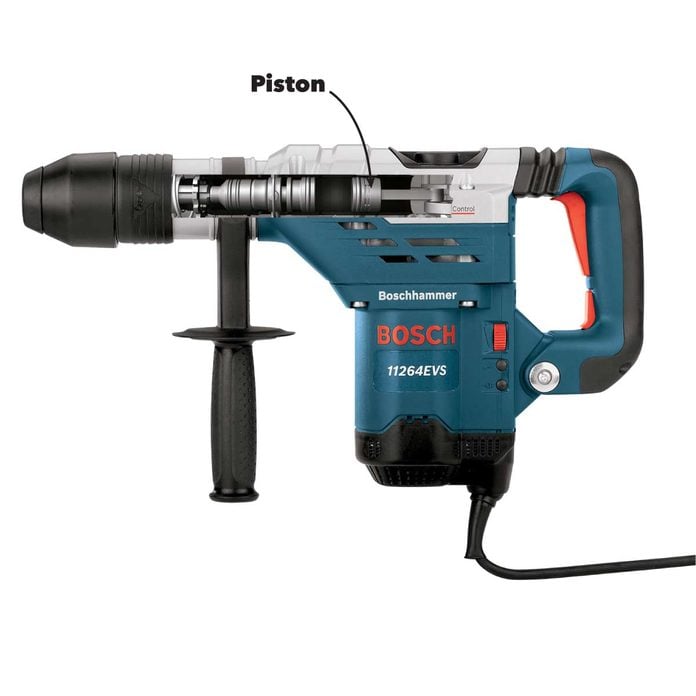
Rotary hammers use an electro-pneumatic piston. When you press the trigger, a piston inside compresses air, which then pushes a second piston to strike the bit. This system produces strong, consistent blows with less vibration, making it ideal for heavy-duty tasks.
Hammer Drill Mechanism
Hammer drills use two sets of toothed discs (sometimes called cams) inside the tool. As you push the drill into the material, the discs slide past each other, causing the bit to move in a rapid, short hammering motion. This motion is not as forceful as the rotary hammer’s piston action but works well for lighter masonry.
Key Differences Between Rotary Hammer And Hammer Drill
Let’s explore the main differences that set these tools apart:
| Feature | Rotary Hammer | Hammer Drill |
|---|---|---|
| Hammering Mechanism | Electro-pneumatic piston | Mechanical cam action |
| Power | High, for heavy-duty tasks | Moderate, for light masonry |
| Bit Type | SDS (SDS-Plus, SDS-Max) | Standard drill bits |
| Weight | 6–15 lbs (2.7–7 kg) | 4–8 lbs (1.8–3.6 kg) |
| Applications | Concrete, demolition, tile removal | Brick, mortar, light concrete |
| Price Range | $100–$800+ | $50–$300 |

When To Use A Rotary Hammer
A rotary hammer is your go-to tool for demanding jobs:
- Drilling large holes in concrete (over ½ inch or 12 mm diameter)
- Breaking up concrete or stone
- Chiseling tiles, masonry, or plaster
- Driving ground rods
- Heavy demolition work
If you are installing rebar, anchor bolts, or need to break up a concrete slab, a rotary hammer will save you time and effort. Its power makes it possible to finish jobs that would be nearly impossible with a hammer drill.
Non-obvious insight: Even smaller rotary hammers outperform the largest hammer drills when it comes to concrete. Many beginners try to use a hammer drill for big holes in concrete, but the process is slow and can burn out the tool. Rotary hammers are built for this challenge.
When To Use A Hammer Drill
Hammer drills shine in lighter jobs:
- Drilling small holes in brick, mortar, or concrete (under ½ inch or 12 mm)
- Installing wall anchors or screws in masonry
- Drilling into wood, metal, or plastic (when hammer mode is off)
- DIY projects around the home
If you’re mounting shelves on a brick wall or installing light fixtures in a concrete ceiling, a hammer drill is more than enough. It’s also the better choice for general-purpose drilling, since it can switch back to regular drill mode.
Non-obvious insight: Hammer drills can be damaged if used for heavy-duty jobs. Their internal cams can wear out quickly if you force them through thick concrete. If the drill sounds like it’s struggling or starts to smell hot, stop and switch to a rotary hammer.
Pros And Cons Of Rotary Hammer
Every tool has strengths and weaknesses. Here’s what you should know about rotary hammers:
Pros
- Greater power for tough jobs
- Multiple modes (drill, hammer, hammer drill)
- Handles thicker and harder materials
- Less vibration for user comfort
- Long-lasting with proper maintenance
Cons
- Heavier and bulkier
- More expensive
- Overkill for light jobs
- Requires SDS bits (not standard bits)
- Can be tiring for overhead or detailed work
Pros And Cons Of Hammer Drill
Hammer drills are popular for good reasons, but they have limits:
Pros
- Lightweight and easy to handle
- Affordable
- Uses standard drill bits
- Good for mixed drilling needs
- Great for home use and small projects
Cons
- Less power for hard materials
- Not suitable for demolition
- Can wear out with heavy use on concrete
- More vibration to the user’s hand
- Slower for large holes
How To Choose: Rotary Hammer Or Hammer Drill?
Making the right choice depends on your needs, budget, and the materials you’ll work with. Here are the main factors to consider:
1. Project Type
- For breaking concrete, tile removal, or drilling large holes, choose a rotary hammer.
- For small holes, light masonry, and mixed materials, a hammer drill is better.
2. Frequency Of Use
- Frequent heavy-duty work justifies investing in a rotary hammer.
- Occasional home repairs are often best served by a hammer drill.
3. Tool Size And Weight
- If you need to work overhead or in tight spaces, a hammer drill is lighter and easier to handle.
- For large, open jobs, the rotary hammer’s weight is less of an issue.
4. Bit Compatibility
- Rotary hammers require SDS bits, which may cost more but last longer for tough tasks.
- Hammer drills use standard bits, which are easy to find and cheaper for light work.
5. Budget
- Rotary hammers are more expensive but built to last for tough jobs.
- Hammer drills offer a good balance of price and performance for most DIYers.
6. Power Source
Both tools come in corded and cordless versions. Cordless models are convenient but may offer less power or shorter run time. For heavy-duty work, a corded rotary hammer is often best.
Practical tip: If you’re unsure, some tool rental shops allow you to test both tools before making a purchase. This hands-on experience can be eye-opening.
Real-world Examples
Imagine you’re hanging a shelf on a living room’s brick wall. A hammer drill with a masonry bit will drill quick, clean holes with little effort. Now, picture removing old tiles from a concrete floor—here, a rotary hammer with a chisel bit will make short work of the job, while a hammer drill would struggle and possibly break.
On a construction site, workers use rotary hammers to drill deep holes for rebar in concrete foundations, while electricians often use hammer drills to make quick holes for cable clips in cinderblock walls.
Safety Tips For Both Tools
Working with powerful tools means safety should always be your priority:
- Wear eye and ear protection—both tools are loud and can throw debris.
- Use gloves to reduce vibration and protect your hands.
- Secure the material before drilling.
- Check for wires or pipes in walls before drilling.
- Let the tool do the work—don’t force it, or you’ll risk damage.
- Keep bits sharp for best results.
- Follow the manufacturer’s instructions for maintenance and operation.
Comparison Table: Rotary Hammer Vs Hammer Drill (features At A Glance)
To help you decide, here’s a quick reference for the most important features:
| Feature | Rotary Hammer | Hammer Drill |
|---|---|---|
| Drilling Mode | Hammer, Drill, Chisel | Hammer + Drill, Drill |
| Suitable Materials | Concrete, stone, masonry | Brick, light concrete, wood |
| Best For | Large holes, demolition | Small holes, light work |
| Vibration Level | Low (with anti-vibration) | High |
| Bit Locking System | SDS | Keyless or keyed chuck |
Common Mistakes When Choosing Or Using These Tools
Many beginners make errors that cost time and money:
- Using a hammer drill for heavy demolition—this quickly wears out the tool.
- Choosing the wrong bit—using non-SDS bits in a rotary hammer leads to poor performance.
- Ignoring safety gear—both tools can create dust and flying debris.
- Not checking compatibility—some bits only fit certain models.
- Overdrilling—pushing too hard slows drilling and heats up the bit.
Experience-based tip: Always start with a smaller pilot hole in tough materials, then increase bit size as needed. This makes drilling easier and reduces tool stress.
Maintenance Tips For Longevity
To keep your rotary hammer or hammer drill working well:
- Clean the tool and vents after each use to remove dust.
- Lubricate SDS chucks and bits regularly.
- Inspect power cords and batteries for wear.
- Replace worn brushes in corded tools when needed.
- Store tools in a dry place to prevent rust.
With good care, both tools can last for many years.

Where To Buy And Rent
Rotary hammers and hammer drills are sold in hardware stores, home centers, and online. Leading brands include Bosch, DeWalt, Makita, Milwaukee, and Hilti. For one-time jobs, renting can save money and let you try before buying. Many large hardware chains offer tool rental services.
If you want to learn more about the technical differences and see detailed diagrams, check out the Wikipedia page on hammer drills.
Frequently Asked Questions
What Is The Main Difference Between A Rotary Hammer And A Hammer Drill?
The main difference is in the hammering mechanism. Rotary hammers use an electro-pneumatic piston for strong blows, making them suitable for heavy-duty work. Hammer drills use a mechanical cam action, which is less powerful and best for light masonry.
Can I Use A Hammer Drill For Concrete?
Yes, you can use a hammer drill for small holes in concrete (under ½ inch). For larger holes or thick concrete, a rotary hammer is much more effective and less likely to overheat or wear out.
Do Rotary Hammers And Hammer Drills Use The Same Drill Bits?
No, rotary hammers use SDS bits, which lock securely for high-impact work. Hammer drills use standard drill bits with a regular chuck. Never try to use the wrong type of bit in your tool.
Are Cordless Rotary Hammers Powerful Enough For Tough Jobs?
Modern cordless rotary hammers can handle many tough tasks, especially with high-capacity batteries. However, for all-day heavy-duty work, corded models may offer more consistent power.
Which Tool Is Better For Home Use?
For most home projects, a hammer drill is more versatile and easier to handle. If you plan to do a lot of concrete or demolition work, consider renting or buying a rotary hammer.
Choosing between a rotary hammer and a hammer drill is all about matching the tool to your project. With the right knowledge, you’ll save time, money, and effort—and get the results you want, every time.
As an Amazon Associate, We earn from qualifying purchases