
Choosing the right circular saw can make your woodworking or construction projects much easier. But with so many options, it’s easy to feel lost—especially when you see terms like “rear handle” and “top handle.” Both saw types look similar at first glance, but they serve different needs and work styles. If you’re new to power tools, or just want to make a smart investment, understanding these differences is essential. This guide will break down the key features, advantages, and downsides of rear handle and top handle circular saws, so you can decide which one fits your hands, your projects, and your budget.
What Is A Circular Saw?
A circular saw is a power tool with a round blade that spins quickly to cut through wood, metal, plastic, or masonry. It’s one of the most used tools on construction sites and in home workshops. Circular saws are portable, powerful, and can make straight, angled, and even beveled cuts with the right blade and adjustments.
There are several types of circular saws, but two of the most popular for professional and DIY use are the rear handle and top handle designs.
Rear Handle Circular Saw: Features And Benefits
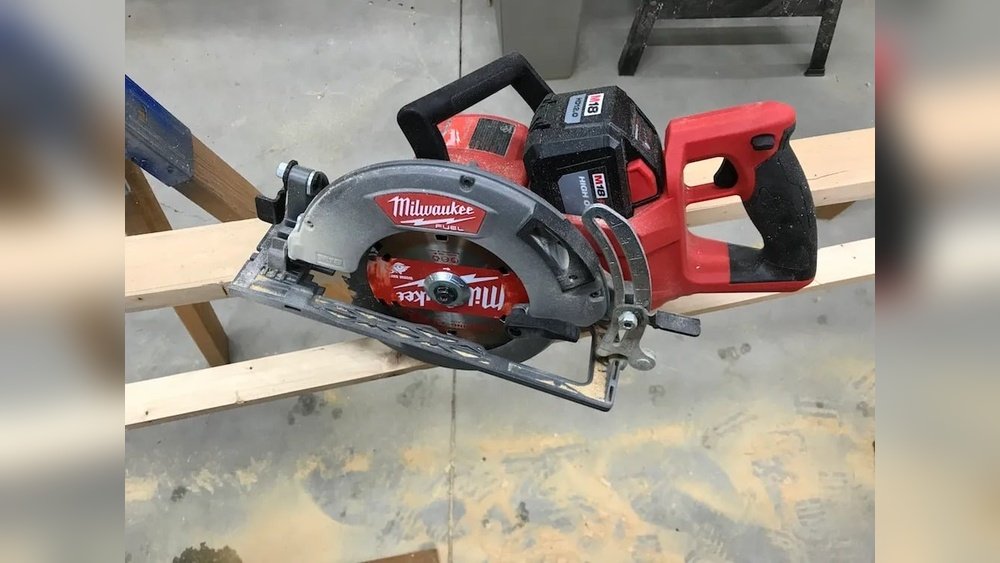
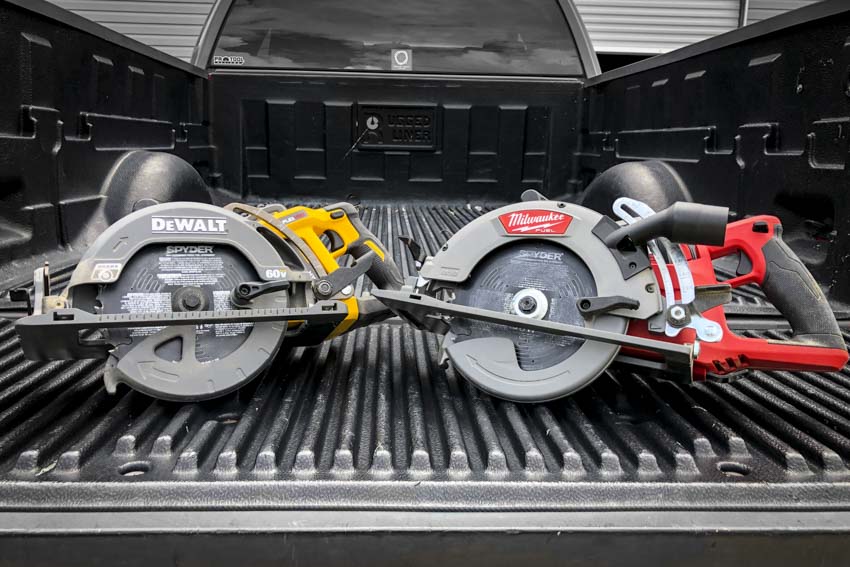
A rear handle circular saw is often called a “worm drive saw.” The motor sits behind the blade, and the main handle is positioned at the back, far from the blade.
Key Features
- Motor Placement: The motor is at the rear, giving the saw a long, narrow shape.
- Blade Position: The blade is usually on the left side, making it easy to see the cut line for right-handed users.
- Drive Mechanism: Uses gears (worm drive) to transfer power, which gives more torque.
- Weight: Heavier than top handle saws, often between 12–15 pounds.
Benefits
- More Torque
- Rear handle saws have high torque, so they cut through thick or hard materials easily.
- This is why many professionals use them for framing houses and heavy-duty jobs.
- Better for Long, Straight Cuts
- Their shape helps keep the saw straight during long cuts.
- The weight of the saw works in your favor, pushing the blade smoothly through the wood.
- Excellent Visibility
- With the blade on the left, right-handed users can see exactly where the blade meets the wood.
- This reduces mistakes and makes following a line much easier.
- Durability
- Rear handle saws are built to last, with strong gear systems and tough metal parts.
- Many last for decades with proper care.
When To Choose A Rear Handle Circular Saw
- For framing, decking, or roofing
- If you cut thick lumber regularly
- When you need power and precision for large projects
Top Handle Circular Saw: Features And Benefits
A top handle circular saw is often called a “sidewinder.” The main handle sits above the blade, which is usually to the right of the motor.
Key Features
- Motor Placement: The motor is next to the blade, making the tool more compact.
- Blade Position: Usually on the right side, which can block the view for right-handed users.
- Drive Mechanism: Uses direct drive (the motor spins the blade directly), which is efficient but has less torque.
- Weight: Lighter than rear handle saws, often 8–10 pounds.
Benefits
- Lightweight and Portable
- Easier to carry, lift, and use overhead or in tight spots.
- A good choice for users who move between locations or work above their heads.
- Faster Blade Speed
- The direct drive system gives a higher blade speed (RPM), so cuts are smoother and faster in thin materials.
- User-Friendly for Beginners
- Easier to handle and control, especially for new users or those with less arm strength.
- Lower Cost
- Top handle saws are usually less expensive, making them a smart choice for DIYers or those on a budget.
When To Choose A Top Handle Circular Saw
- For DIY projects, plywood, or trim work
- When you need a lightweight tool
- If you mostly cut thinner materials
Side-by-side Comparison: Rear Handle Vs Top Handle
Understanding the differences is easier with a direct comparison. Here’s a quick look at the most important factors:
| Feature | Rear Handle | Top Handle |
|---|---|---|
| Motor Location | Behind blade | Next to blade |
| Blade Side (for right-handed) | Left | Right |
| Weight | 12–15 lbs | 8–10 lbs |
| Torque | High | Medium |
| Blade Speed (RPM) | Lower | Higher |
| Ease of Use | Better for pros | Better for beginners |
| Price | $$$ | $$ |
Real-world Scenarios: Which Saw Fits Which Job?
Choosing the best saw depends on what you actually do. Here are examples of when each saw works best:
Rear Handle In Action
- Framing Walls: The high torque and straight tracking make framing a house or building walls faster and easier.
- Cutting Beams: When you need to cut through 2×10 or 2×12 lumber, rear handle saws don’t stall.
- Roofing: Professionals prefer rear handle saws for cutting rafters and roof decking because of their power and durability.
Top Handle In Action
- Sheet Goods: If you need to cut plywood, OSB, or MDF, top handle saws make quick work of these materials.
- Trim and Finish Work: The lighter weight makes it simple to cut small boards or molding.
- DIY Repairs: From shelving to small home fixes, a top handle is easy to store and use.
Safety And Ergonomics: What To Consider
Safety is always important, especially with powerful tools. Here’s how the two saws compare in terms of safety and comfort:
| Factor | Rear Handle | Top Handle |
|---|---|---|
| Kickback Resistance | Better (due to weight and torque control) | More likely (lighter saw can jump back) |
| Fatigue | More tiring over long jobs | Less tiring |
| Control | Stable for straight cuts | Easier for small cuts |
| Visibility (for right-handed users) | Excellent | Can be blocked |
Non-obvious insight: Many beginners overlook the importance of tool balance. Rear handle saws, though heavy, often feel more stable during long cuts, which actually improves safety. Top handle saws, being lighter, are less tiring but can lead to shaky hands if you rush or use poor technique.

Blade And Cut Quality
The type of cut you need also affects which saw is better.
- Rear Handle Saws: Provide a slower but very steady cut, perfect for accuracy over long distances. The worm drive system also gives a cleaner finish on thick lumber.
- Top Handle Saws: The faster blade speed can lead to splintering if you push too fast, especially in plywood or laminate. Using a high-quality blade designed for your material can help.
Practical tip: Always match your blade to the material. For example, use a fine-tooth blade for plywood and a framing blade for 2x4s.
Durability And Maintenance
Both types of saws are tough, but their drive systems need different care.
- Rear Handle Saws: The worm drive gears need oil. You must check and change the oil regularly. This adds to maintenance time, but it also extends the saw’s life.
- Top Handle Saws: The direct drive system needs less maintenance, but the motor can wear out faster if you push it too hard.
Beginner mistake: Forgetting to oil a worm drive (rear handle) saw is a common cause of breakdowns. If you buy one, set a reminder to check the oil every few months.
Price And Value
Price often decides which tool you buy, but value is more than the sticker cost.
- Rear Handle Saws: Usually cost $150–$300 for professional models. They hold their value well and last for many years.
- Top Handle Saws: Range from $60–$180. Good for homeowners or anyone who needs a saw only occasionally.
If you plan to cut wood every week, the higher price of a rear handle saw may be worth it. If you just need a tool for the occasional project, save money with a top handle model.
Common Misunderstandings About Rear Handle Vs Top Handle Saws
Many new users think more power is always better. But the truth is, more power means more weight and more fatigue. Another common error is believing the blade side (left or right) is only about comfort. In reality, it changes your line of sight, which can affect cut accuracy and safety.
Second non-obvious insight: Some top handle saws come in “left-blade” versions, but they are rare in the US. If you are left-handed, seek out these models for better control.
Which Saw Is Right For You? A Quick Test
Still not sure? Ask yourself these questions:
- Will you be making long, straight cuts in thick wood?
- If yes, consider a rear handle saw.
- Do you need to carry your saw up ladders or use it overhead?
- If yes, a top handle saw is easier.
- Is budget your main concern?
- Top handle saws are usually cheaper.
- Do you need to see the cut line clearly (right-handed)?
- Rear handle saws offer better visibility.
Brands And Models To Consider
Here are some popular, reliable models for each type:
Rear Handle
- SKILSAW SPT77WML-01: Classic worm drive, strong and durable.
- DeWalt DWS535B: Lightweight for a rear handle, but still powerful.
- Makita 5377MG: Good balance and less vibration.
Top Handle
- Makita 5007MG: Lightweight, fast, and easy to control.
- DeWalt DWE575SB: Compact and comes with an electric brake for safety.
- Bosch CS10: Smooth operation, great for beginners.
Always handle the saw in a store if possible, to see which one feels right in your hands.
Practical Buying Tips
- Check the tool’s weight before buying. A saw that feels comfortable for five minutes may be tiring after an hour.
- Look for electric brakes (they stop the blade quickly for safety).
- Consider dust blowers or guides for a clear cut line.
- Cordless models are available in both types, but battery life can be short for heavy-duty work.
Expert advice: If you work on job sites without power, cordless rear handle saws are becoming more common, but they are still heavier than top handle models.
Industry Trends And New Technology
Recently, both saw types have seen improvements:
- Brushless motors: Provide longer life and higher efficiency.
- Cordless power: Strong batteries now let you cut lumber all day on one charge.
- LED lights: Help you see the cut line in dim spaces.
For more on tool advances, see This Old House.

Frequently Asked Questions
What Is The Main Difference Between Rear Handle And Top Handle Circular Saws?
The main difference is the motor and handle position. Rear handle saws have the motor behind the blade, giving them more torque but more weight. Top handle saws have the motor next to the blade, making them lighter and faster but with less cutting power.
Which Saw Is Better For Beginners?
Most beginners find a top handle circular saw easier to use. It’s lighter, more balanced, and less tiring for small projects. However, if you plan to work with thick lumber often, learning with a rear handle saw might be worth the effort.
Do I Need To Oil My Circular Saw?
You need to oil rear handle (worm drive) saws regularly, as the gears need lubrication to last. Top handle (sidewinder) saws do not need oiling, but you should keep them clean and check the motor brushes if they wear out.
Can I Use The Same Blades On Both Saw Types?
Yes, most blades are interchangeable if the arbor size matches (usually 5/8 inch in the US). Always check your saw’s manual before buying a new blade.
Are Cordless Circular Saws As Powerful As Corded Ones?
Cordless circular saws have improved a lot. For top handle models, cordless versions are almost as powerful as corded. Cordless rear handle saws are catching up, but for heavy-duty jobs, corded saws still have an edge in power and run time.
Choosing the right circular saw is about more than power or price. Think about your work style, the materials you cut, and how often you’ll use the tool. Both rear handle and top handle circular saws have their place, and now you know how to choose the best one for your needs.
As an Amazon Associate, We earn from qualifying purchases