
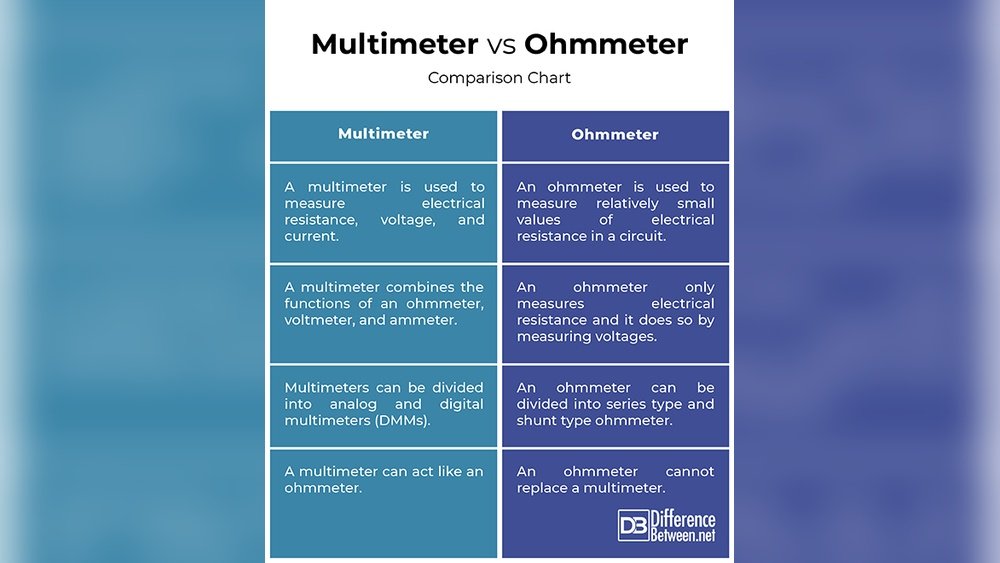
When working with electronics, understanding the difference between an ohm meter and a multimeter is essential. Many people, especially beginners, confuse these tools or think they do the same job. In reality, each serves a specific purpose, and choosing the right one makes troubleshooting and building circuits much easier. Whether you are a DIY enthusiast, a student, or an electrical technician, knowing when and how to use these instruments can save time, money, and frustration.
This article explores the similarities, differences, and ideal applications for both devices. We’ll go deeper than basic definitions, focusing on practical use, technical details, and real-world examples. By the end, you’ll know which tool to choose for any electrical measurement task, and you’ll have a clearer understanding of how each one fits into modern electronics work.
What Is An Ohm Meter?
An ohm meter is a device designed to measure electrical resistance. Resistance is the property of a material that slows down the flow of electric current, measured in ohms (Ω). In simple terms, an ohm meter helps you check if a wire, resistor, or circuit is conducting electricity as it should.
How Ohm Meters Work
Ohm meters send a small current through the component being tested and measure how much the current is slowed down. The device then calculates and shows the resistance value. Most modern ohm meters are digital, displaying the reading on a screen, but analog types (with a needle) are still used in some places.
Common Uses
- Testing Resistors: Ensuring a resistor has the correct value.
- Checking Wires and Cables: Detecting breaks or bad connections.
- Inspecting Fuses: Seeing if a fuse is blown (infinite resistance).
- Troubleshooting Appliances: Finding faulty parts by checking resistance.
Ohm Meter Limitations
While ohm meters are great for resistance, they can’t measure voltage or current. They are only for resistance checks, so you’ll need other tools for a full diagnosis.
Beginner insight: Some people try to use an ohm meter on a live circuit. This is a mistake. An ohm meter should never be used on powered circuits—it can damage the meter and give wrong readings.
What Is A Multimeter?
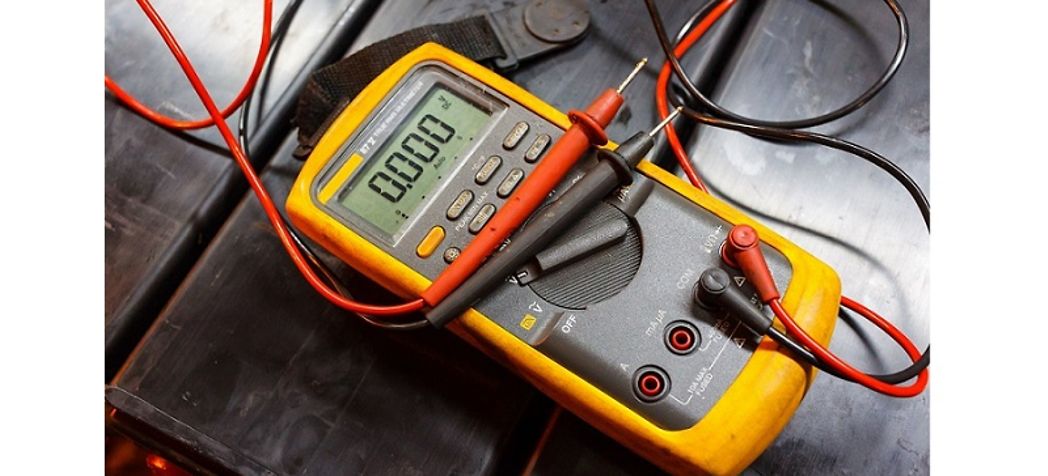
A multimeter is a versatile instrument that can measure voltage (V), current (A), and resistance (Ω). It’s essentially three meters in one. Most multimeters today are digital (DMMs), but analog versions still exist.
Multimeter Functions
- Voltage Measurement: Checks voltage across batteries, power supplies, or outlets.
- Current Measurement: Measures the flow of electric charge in a wire or component.
- Resistance Measurement: Works as an ohm meter.
- Additional Features: Some models test continuity, diodes, capacitance, and more.
How Multimeters Work
A multimeter has a dial or buttons to select the measurement type. By connecting the probes to different parts of a circuit, you can quickly switch between voltage, current, and resistance. Some multimeters are auto-ranging, which means they pick the right scale for you, making them even easier to use.
Non-obvious insight: Multimeters can sometimes be less accurate than dedicated meters for specialized measurements (like high-precision resistance), but their flexibility makes them the top choice for general electronics work.
Key Differences Between Ohm Meter And Multimeter
The main difference is that an ohm meter only measures resistance, while a multimeter can measure resistance plus other electrical properties. But there are more details to consider, especially for those buying or using these tools.
Here’s a direct comparison for clarity:
| Feature | Ohm Meter | Multimeter |
|---|---|---|
| Main Function | Measures resistance | Measures voltage, current, and resistance |
| Cost | Usually cheaper | Often more expensive |
| Accuracy | High for resistance | Good; may vary by function |
| Complexity | Simple to use | More functions; can be complex for beginners |
| Common Users | Repair techs, students | Electricians, hobbyists, engineers |
When To Use Each Tool
Choosing between an ohm meter and a multimeter depends on your work. Here’s how to decide:
Ohm Meter
- Best for: Tasks focused only on resistance, like testing resistors in bulk, checking heating elements, or diagnosing open circuits.
- Why: Simpler operation, fewer settings, less risk of choosing the wrong measurement mode.
- Practical example: A repair shop that only checks heating elements in appliances may prefer ohm meters for their speed and ease.
Multimeter
- Best for: General troubleshooting, testing batteries, checking wall sockets, or working with electronics.
- Why: Multimeters let you measure different things without switching tools.
- Practical example: An electronics student needs to measure voltage, current, and resistance in a single project—one multimeter does it all.
Common mistake: Some users think a multimeter is always better. But for high-precision resistance checks, a dedicated ohm meter might be more accurate, especially in scientific labs.

Types Of Ohm Meters
Ohm meters come in a few varieties. Each type has specific advantages:
1. Series Ohm Meter
This is the oldest style. The meter, battery, and resistor are in series. Mostly found in analog meters. Less common today.
2. Shunt Ohm Meter
More accurate at lower resistance values. Used in specialized equipment.
3. Digital Ohm Meter
Most popular today. Shows resistance as a number on a display. Fast, reliable, and easy to read.
Non-obvious insight: Even though they look simple, some digital ohm meters have features like data hold and auto-off, making them useful for fieldwork.
Types Of Multimeters
Multimeters can be divided by design and features. Knowing the differences helps when buying.
1. Analog Multimeter
Uses a needle to show readings. Good for observing slow changes but harder to read precisely.
2. Digital Multimeter (dmm)
Displays results on an LCD. Most common type now. Easier to use, more accurate, and offers extra features.
3. Auto-ranging Multimeter
No need to set the range manually. The meter selects the best range, reducing user error.
4. Clamp Meter
A special type of multimeter that can measure current by clamping around a wire—no need to break the circuit. Very useful for electricians.
5. Advanced Multimeters
Some have Bluetooth, data logging, or can connect to computers for complex measurements.
Important note: Not all multimeters can handle high voltages or currents. Always check the specifications.
Practical Uses: Real-world Examples
Let’s look at some scenarios where you would choose one tool over the other.
Fixing A Broken Lamp
- Problem: The lamp won’t turn on.
- With an ohm meter: Check the resistance across the bulb. Infinite resistance means the bulb is burned out.
- With a multimeter: Measure the voltage at the socket, check continuity of the switch, and test resistance of the bulb.
Building A Circuit
- Problem: You need to check resistor values and verify voltage levels.
- With an ohm meter: Check resistor values.
- With a multimeter: Check resistor values, plus measure supply voltage and test current draw.
Car Electrical Troubleshooting
- Problem: Headlights flicker.
- With an ohm meter: Check if wires have high resistance (could show corrosion).
- With a multimeter: Measure battery voltage, check alternator output, test for voltage drop along wires, and measure resistance.
Pro tip: Many professionals carry a multimeter for flexibility, but keep a dedicated ohm meter for quick resistance checks.
How To Use An Ohm Meter
Using an ohm meter is simple, but there are a few important steps:
- Turn off power: Never measure resistance on a live circuit.
- Select resistance mode: Most ohm meters have only one mode.
- Zero the meter: For analog meters, short the leads and adjust to zero.
- Connect probes: Touch the probes to both ends of the component.
- Read the value: Note the resistance shown.
Common mistake: Forgetting to discharge capacitors before testing can damage the meter.
How To Use A Multimeter
Because a multimeter has more functions, setup is important:
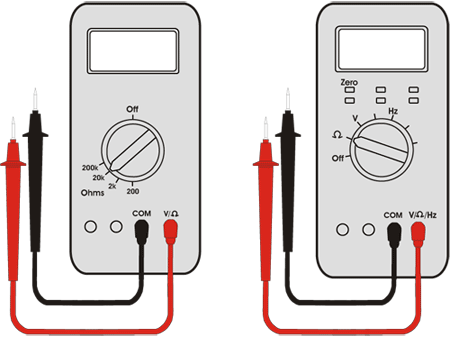
- Select the measurement type: Resistance (Ω), voltage (V), or current (A).
- Set the range: If not auto-ranging, pick a range above what you expect.
- Insert probes: Black in “COM,” red in the correct port (depends on function).
- Connect to circuit/component: For resistance, power must be off. For voltage, power must be on.
- Take the reading: Read the value on the display.
Non-obvious insight: When measuring current, you must connect the meter in series with the circuit—unlike voltage and resistance, which are measured across components.
Safety Considerations
Working with electrical instruments is safe if you follow basic rules, but there are risks:
- Never measure resistance on live circuits: This can destroy the meter and injure the user.
- Use the correct settings: Setting the dial wrong can damage both the meter and the circuit.
- Check probe condition: Damaged probes can cause false readings or shocks.
- Stay within rated limits: Exceeding a meter’s voltage or current rating is dangerous.
Practical advice: Always read the manual for your specific device. Modern meters often have fuses and protection circuits, but not all are created equal.
Accuracy, Precision, And Calibration
Accuracy is how close the reading is to the true value. Precision is about getting the same reading every time. Both ohm meters and multimeters need regular calibration, especially for professional use.
- Ohm meters: Usually more accurate for resistance, especially at very low or high values.
- Multimeters: Good all-around, but may drift over time or with battery changes.
Beginner insight: Environmental factors like temperature and humidity can affect readings, especially with analog meters.
Cost And Buying Considerations
Price varies widely. Here are some typical ranges in the US:
- Basic ohm meter: $10–$30
- Digital multimeter: $20–$100 for most good-quality models
- Professional multimeter: $100–$500+
When buying, consider:
- Accuracy requirements: Do you need scientific precision?
- Features: Do you need auto-ranging, data logging, or just simple resistance checks?
- Build quality: Is the meter robust enough for fieldwork?
- Brand reputation: Well-known brands like Fluke or Klein are trusted for a reason.
Common mistake: Buying the cheapest tool often leads to unreliable results and early failure.
Which One Should You Buy?
This depends on your needs:
- For basic resistance checks: An ohm meter is simple and often enough.
- For electronics, electrical work, or general troubleshooting: A multimeter is far more versatile.
- For automotive or industrial work: A high-quality multimeter (possibly a clamp meter) is best.
Pro insight: Even professionals sometimes keep both—a multimeter for most jobs and an ohm meter for quick, high-precision resistance checks.
Ohm Meter Vs Multimeter: Features At A Glance
For a quick summary, here is a feature comparison for typical modern devices:
| Feature | Ohm Meter | Multimeter |
|---|---|---|
| Measures Resistance | Yes | Yes |
| Measures Voltage | No | Yes |
| Measures Current | No | Yes |
| Measures Continuity | No | Most models |
| Ease of Use | Very easy | Moderate to easy |
| Portability | Small, lightweight | Usually portable, but can be larger |
| Price Range | Low | Low to high |
The Role Of Each Tool In Modern Electronics
As electronics become more advanced, the need for accurate measurement grows. Ohm meters remain important in quality control, manufacturing, and certain repair jobs where only resistance matters. Multimeters, on the other hand, are the backbone of troubleshooting and repair, from home DIY projects to industrial automation.
Non-obvious insight: Some multimeters have “True RMS” measurement, giving more accurate readings for complex AC signals. This is valuable for modern electronic devices, but not all multimeters offer it—always check the specs.
Advanced Features And New Trends
Modern meters are evolving. Some trends include:
- Bluetooth connectivity: Lets you log data on your phone or computer.
- Auto-detection: Advanced meters can sense what you’re testing and choose the right mode.
- Non-contact voltage detection: Useful for quick checks, especially in wall wiring.
- Data hold and min/max recording: Helpful for capturing brief changes in readings.
But remember, simplicity is sometimes best. For basic resistance checks, these features might just complicate things.
Professional Vs. Hobbyist Needs
Professionals need accuracy, durability, and safety certifications. They may require features like True RMS, high CAT ratings (for safety), and logging. Brands like Fluke dominate here.
Hobbyists or students often do well with mid-range digital multimeters. These offer most functions needed for learning and basic repair.
Beginner insight: Even a budget multimeter, if handled with care, will last years for simple tasks.
Maintenance And Care
To keep your meter working:
- Store in a dry place: Humidity can damage electronics.
- Replace batteries promptly: Low battery can give wrong readings.
- Calibrate if needed: Especially for professional use.
- Clean probes: Dirty contacts cause false readings.
- Keep manuals: Reference for settings and troubleshooting.
Pro tip: Label your meters if you have several, to avoid mixing them up in busy workshops.
Common Problems And Troubleshooting
Users sometimes face issues like:
- Meter reads “OL” (overload): The value is above the range set; increase the range.
- No reading: Check power, probes, and connections.
- Flickering display: Low battery or loose probe.
- Inconsistent readings: Could be a sign of a damaged meter or bad test leads.
Non-obvious insight: Static electricity can sometimes cause digital meters to behave oddly. Turning the meter off and on can reset it.
Learning And Practice
The best way to get comfortable is by practice. Start with:
- Testing batteries (voltage check)
- Measuring known resistors (resistance check)
- Checking wall outlets (voltage, with safety)
Plenty of free tutorials and guides exist online. For deeper study, read manufacturer manuals and resources like the Wikipedia Multimeter page.
Frequently Asked Questions
What Is The Main Difference Between An Ohm Meter And A Multimeter?
The main difference is that an ohm meter measures only resistance, while a multimeter can measure resistance, voltage, and current. Multimeters are more versatile, but ohm meters can be more precise for resistance tests.
Can I Use A Multimeter As An Ohm Meter?
Yes, all multimeters have a resistance (ohm) function. You can use a multimeter to measure resistance just like an ohm meter, but make sure to set the dial to the correct mode.
Is A Digital Or Analog Meter Better For Beginners?
Most beginners find digital meters easier to use because readings are clear and mistakes are less common. Analog meters are harder to read and can be affected by how you hold them.
Why Shouldn’t I Measure Resistance On A Live Circuit?
Measuring resistance on a powered (live) circuit can damage the meter and cause incorrect readings. It can also be dangerous. Always turn off power before using the resistance function.
Do I Need Both An Ohm Meter And A Multimeter?
For most users, a multimeter is enough because it can do everything an ohm meter does, plus more. However, professionals who need fast, high-accuracy resistance checks might still use a dedicated ohm meter.
Having the right tool can make any electronics project safer, faster, and more successful. Understanding the strengths and limits of both ohm meters and multimeters helps you choose with confidence. Whether you’re fixing a simple gadget or designing complex circuits, knowing when to use each device is a mark of real electrical skill.
As an Amazon Associate, We earn from qualifying purchases