
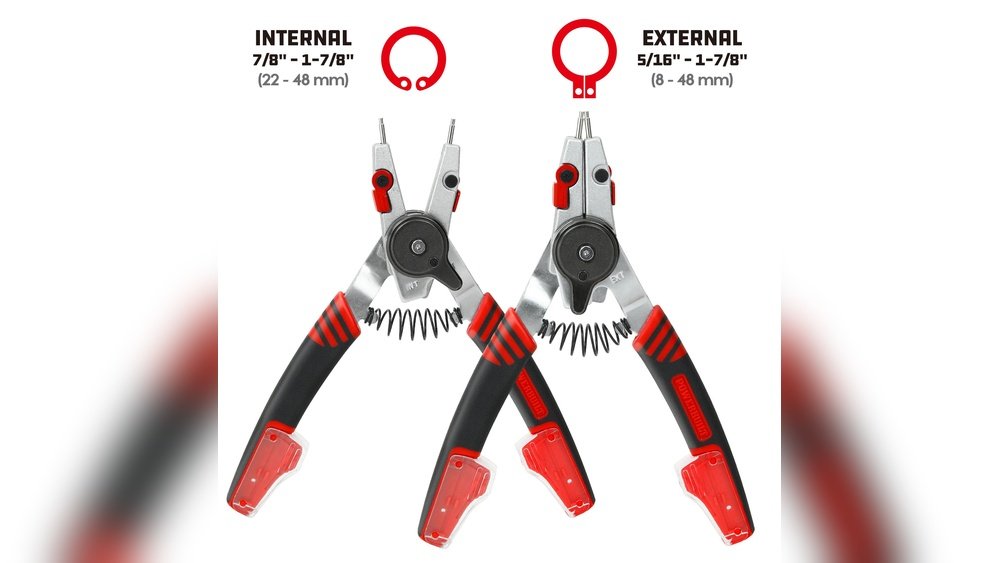
Snap rings are tiny parts, but they play a big role in machines, engines, and tools. These circular clips hold components in place on a shaft or in a housing. When you need to remove or install snap rings, you cannot just use your fingers or a regular pair of pliers. You need a special tool: snap ring pliers. But here comes a common question: should you use internal snap ring pliers or external snap ring pliers? Many people—even some mechanics—get confused about the differences, uses, and how to pick the right one. This article will help you understand both types in detail and show you how to choose wisely.
What Are Snap Ring Pliers?
Snap ring pliers are hand tools designed to remove and install snap rings (also called circlips or retaining rings). Snap rings are C-shaped or E-shaped fasteners that fit into a groove on a shaft or inside a bore. They prevent parts from sliding off or moving.
There are two main types:
- Internal snap ring pliers
- External snap ring pliers
Some pliers are “convertible,” meaning you can switch between both types, but most are made for one job only.
Snap ring pliers have two arms and pointed tips that fit into the holes of a snap ring. Squeezing or spreading the handles either closes or opens the snap ring, depending on the type.
Internal Snap Ring Pliers: Explained
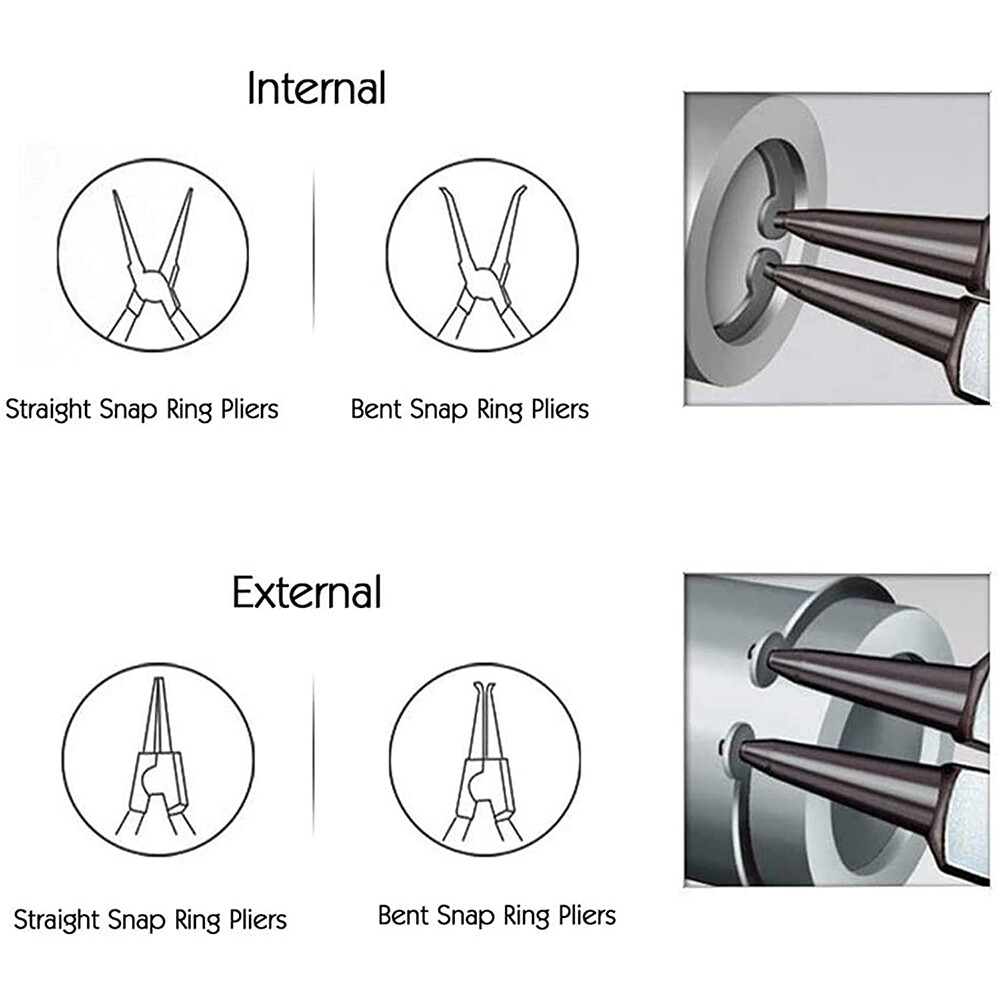
Internal snap ring pliers are made to install or remove snap rings inside a hole or bore. These rings hold bearings or gears inside housings.
When you squeeze the handles, the tips close together. This compresses the snap ring, making it smaller so you can fit it inside the groove or pull it out.
When To Use Internal Snap Ring Pliers
- Installing/removing snap rings inside gearboxes
- Securing bearings in wheel hubs
- Fixing bushings or sleeves in cylinders
A good example: when repairing a car’s transmission, you might need to take out a bearing held by an internal snap ring.
Key Features Of Internal Snap Ring Pliers
- Narrow tips for reaching inside holes
- Reverse action: Squeezing the handles brings the tips together
- Some have angled jaws for hard-to-reach places
Practical Insight
Many beginners try to use regular pliers for internal snap rings. This often fails. Regular pliers can slip and damage the snap ring, or worse, hurt your fingers. Internal snap ring pliers are built for this job and make it much safer.
External Snap Ring Pliers: Explained
External snap ring pliers are made for snap rings that fit around the outside of a shaft or pin. These rings keep gears, pulleys, or wheels from sliding off.
With external pliers, squeezing the handles opens the tips. This spreads the snap ring so it can slip over the shaft.
When To Use External Snap Ring Pliers
- Installing/removing snap rings on axles
- Holding wheels or pulleys on shafts
- Securing sprockets in machinery
For example: when fixing a bicycle, you may remove a wheel held by an external snap ring.
Key Features Of External Snap Ring Pliers
- Strong jaws for spreading rings over shafts
- Standard action: Squeezing the handles opens the tips
- Many have spring-loaded handles for easy one-hand use
Non-obvious Tip
A common mistake is forcing an external ring with the wrong pliers. This can bend the snap ring or even break your tool. Always match the tool to the ring.
Internal Vs External Snap Ring Pliers: Direct Comparison
Let’s look at how these two types differ, side by side.
| Feature | Internal Snap Ring Pliers | External Snap Ring Pliers |
|---|---|---|
| Main Use | Snap rings inside a hole or bore | Snap rings around a shaft |
| Action | Tips close when handles squeezed | Tips open when handles squeezed |
| Typical Jobs | Bearings, gears inside housings | Wheels, pulleys, sprockets on shafts |
| Jaw Shape | Narrow, sometimes angled | Strong, straight or curved |
| Ring Size Range | Small to medium | Medium to large |
How To Identify The Right Type For The Job
Choosing the correct pliers depends on where the snap ring is fitted.
- Look at the snap ring position.
- Inside a hole? Use internal snap ring pliers.
- Around a shaft? Use external snap ring pliers.
- Check the snap ring design.
- Internal rings: Usually have two small holes facing each other.
- External rings: Holes are on the outer edges.
- See how the ring moves.
- Must compress to fit inside a groove? Internal.
- Must expand to go over a shaft? External.
Common Mistake
Some convertible pliers can switch between both types. But they often do not work as smoothly as dedicated pliers. For frequent use, buy one of each.
Types Of Snap Ring Pliers: Variations To Know
Not all snap ring pliers are the same. There are a few key types:
1. Fixed-tip Pliers
These have solid tips that do not change shape. They are sturdy and good for heavy-duty jobs.
2. Interchangeable-tip Pliers
You can swap out the tips for different sizes or shapes. Useful if you work with many snap ring sizes.
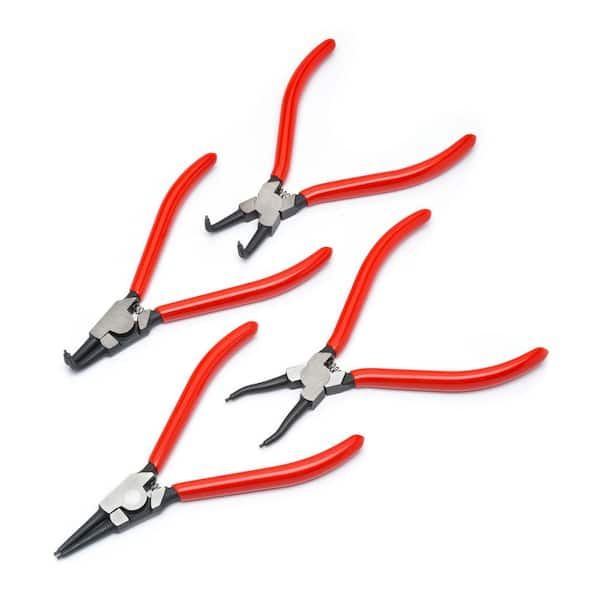
3. Angled Jaw Pliers
Tips are bent at 45° or 90°. Handy for tight or awkward spaces, like deep inside a gearbox.
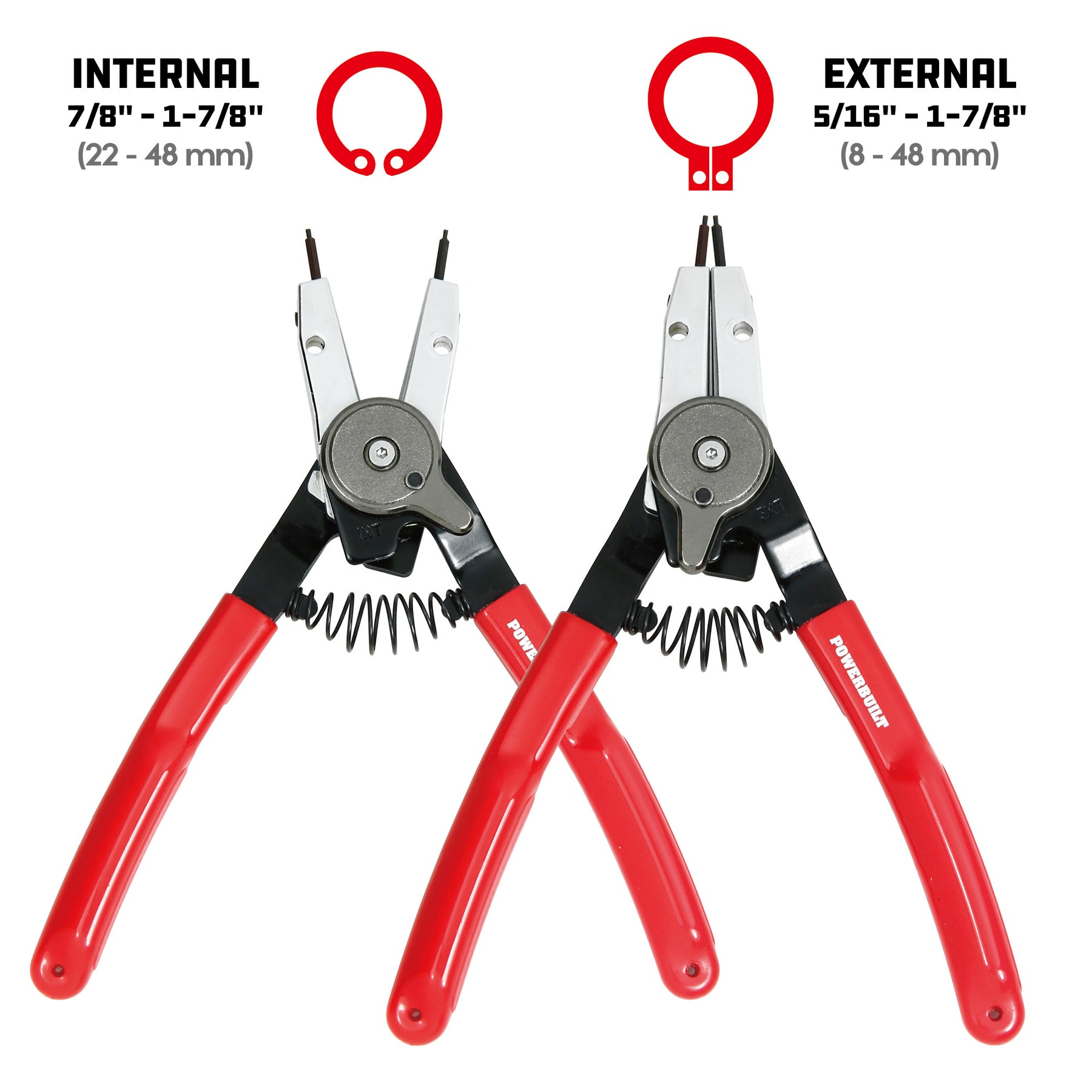
4. Convertible Pliers
A switch lets you change from internal to external use. Convenient, but not as precise as fixed pliers.
5. Heavy-duty Pliers
Built for large or tough snap rings, often found in industrial machines.
| Type | Main Benefit | Drawback |
|---|---|---|
| Fixed-Tip | Strong and reliable | Limited to one tip size/shape |
| Interchangeable-Tip | Versatile for many sizes | Tips can loosen |
| Angled Jaw | Access hard-to-reach rings | May not fit all spaces |
| Convertible | One tool for both types | Less precision |
| Heavy-Duty | Can handle large rings | Bulky for small jobs |
Key Factors When Choosing Snap Ring Pliers
Choosing the right pliers is about more than just “internal or external.” Consider these points:
Tip Size And Shape
- Tips must fit the holes in the snap ring snugly.
- If too small, they slip; if too big, they won’t fit.
Handle Comfort
- Look for non-slip, cushioned grips.
- Spring-loaded handles reduce hand fatigue.
Material Quality
- Hardened steel tips last longer.
- Cheaper pliers can bend or break easily.
Jaw Opening Range
- Make sure the pliers open wide enough for your snap rings.
- Some only handle small rings, others large ones.
Storage And Maintenance
- Keep pliers clean and dry to avoid rust.
- Store in a case to prevent damage to the tips.
Special Features
- Some have locking mechanisms to hold the ring open/closed.
- Interchangeable tips are useful if you work with many ring types.
Real-world Examples
Imagine you’re fixing a washing machine. The drum is held by a snap ring inside the housing. You need internal snap ring pliers to squeeze and remove the ring without damaging it.
Now, picture changing a wheel bearing on your car. The bearing is held in place by a snap ring around the axle. Here, you need external snap ring pliers to open the ring and pull it off.
Common Mistakes And How To Avoid Them
- Using the wrong pliers type.
- This can bend the snap ring or ruin the pliers.
- Choosing the wrong tip size.
- Too small or too big tips make the job harder and risk slipping.
- Applying too much force.
- Snap rings are springy. Forcing them can send them flying or snap them.
- Not wearing safety glasses.
- Snap rings can pop off suddenly and injure your eyes.
- Ignoring tool quality.
- Cheap pliers can break under pressure. Invest in a good set.
Maintenance Tips For Snap Ring Pliers
To make your pliers last longer:
- Wipe clean after each use to remove grease and dirt.
- Oil the pivot point regularly for smooth action.
- Store in a dry place to prevent rust.
- Check tips for bending or wear before each use.
- Replace worn tips (if possible) to keep a good grip.
Internal Vs External Snap Ring Pliers: Which Should You Buy?
For most mechanics, DIYers, or anyone who works with machines, the answer is both. Each type has its own job. If you only do one kind of repair, buy the type you need most. For example:
- Bike or car repair? You’ll use external pliers more.
- Small engines or home appliances? Internal pliers are common.
Convertible pliers can be good for beginners, but if you do a lot of work, dedicated pliers are safer and more reliable.
Safety Tips When Using Snap Ring Pliers
- Always wear safety glasses.
- Hold the pliers firmly, but do not squeeze too hard.
- Work in a well-lit area.
- Keep your fingers away from the snap ring’s path.
- Never force a snap ring—if it is stuck, apply a little oil and try again.
What Beginners Often Miss
First, the direction of force matters. With internal pliers, you’re pushing inward; with external, you’re pulling outward. This small detail can make a big difference in how easy the job is.
Second, the groove where the snap ring sits must be clean. Dirt or rust in the groove can make snap rings tough to remove or install. Clean the groove before you start.
Where To Buy Quality Snap Ring Pliers
You can find snap ring pliers at hardware stores, online shops, and tool suppliers. Look for trusted brands like Knipex, Channellock, or GearWrench. For more technical details, see this guide on the snap ring Wikipedia page.
Frequently Asked Questions
What Is The Main Difference Between Internal And External Snap Ring Pliers?
Internal snap ring pliers are for rings inside a bore; squeezing the handles closes the tips. External snap ring pliers are for rings around a shaft; squeezing the handles opens the tips.
Can I Use One Type Of Pliers For Both Internal And External Snap Rings?
You should not. Each plier type is designed for a specific job. Some “convertible” pliers can switch between both, but they may not work as well as dedicated pliers.
How Do I Know Which Size Snap Ring Pliers To Buy?
Measure the diameter of the snap ring holes and the space you have to work in. Match the tip size to the ring and make sure the pliers open wide enough for your needs.
Are Angled Snap Ring Pliers Better Than Straight Ones?
Angled pliers are helpful for hard-to-reach places or deep inside machinery. Straight pliers are better for open, easy-to-access rings. It is good to have both if you do a variety of repairs.
How Do I Avoid Damaging Snap Rings During Installation Or Removal?
Use the correct pliers with the right tip size. Do not force the ring. Keep the groove clean and wear safety glasses in case the ring slips or snaps.
The right snap ring pliers make repair work faster, safer, and less frustrating. Once you know the difference between internal and external types—and how to pick the right tool—you’ll save time, protect your parts, and get the job done right every time.
As an Amazon Associate, We earn from qualifying purchases