
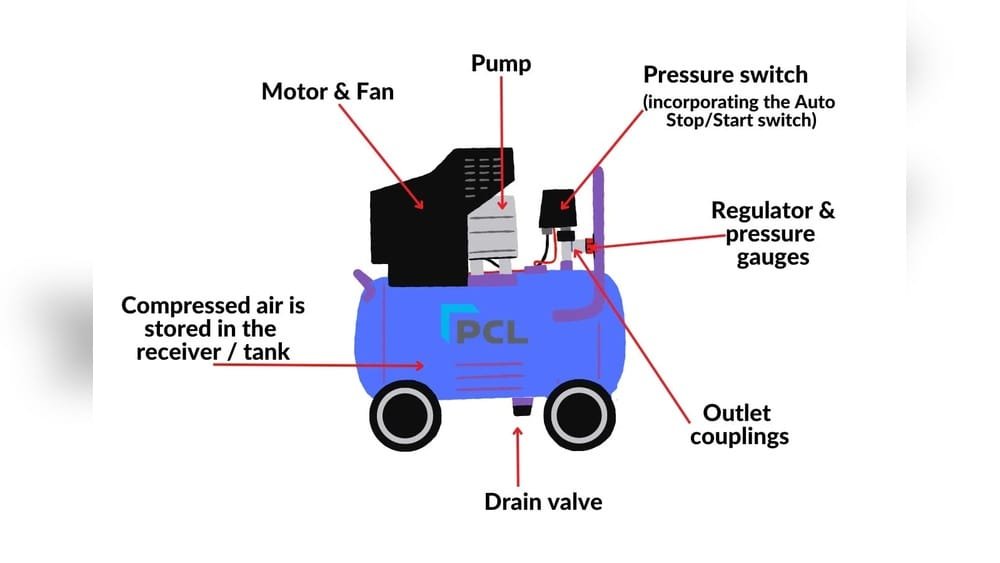
If you’ve ever stared at an air compressor and thought, “How do I actually use this thing? ”—you’re not alone. I had the same question the first time I saw one in my garage. It looked like a machine from a car shop, not something I could use at home.
But once I learned the basics, it became one of my most useful tools. I use it for everything from inflating tires to powering tools. In this guide, I’ll share exactly how I use my air compressor, step by step, with all the tips I wish someone had told me.
Whether you’re a complete beginner or just want to be safer and more confident, this article is for you.
Understanding What An Air Compressor Does
Let’s start simple. An air compressor takes air from the room and squeezes it into a small tank. This gives you pressurized air you can use for many jobs. Think of it like a pump, but much stronger. I use mine to power nail guns, clean tools, inflate sports balls, and even blow up pool toys. The best part? The air comes out with enough force to do tough jobs quickly.
Types Of Air Compressors I’ve Used
Not all air compressors are the same. The first time I bought one, I was surprised by the choices. Here’s a quick look at the main types I’ve tried:
| Type | Best For | Noise Level | Portability |
|---|---|---|---|
| Pancake | Home tasks, inflating tires | Low to Medium | Easy to carry |
| Hot Dog | DIY jobs, brad nailers | Medium | Moderate |
| Twin Stack | Workshops, multiple tools | Medium to High | Heavy |
| Wheelbarrow | Construction sites | High | Very heavy |
For most home uses, I started with a pancake compressor. It was small and easy to store. If you need more power, you may want a twin stack or larger. But for most jobs, small ones are enough.
My First Time: Getting Ready To Use An Air Compressor
I remember feeling nervous the first time. But with a few checks, I was ready. Here’s my simple checklist before I start:
- Read the manual – Every compressor is a little different. I learned this the hard way when I missed a step and couldn’t start the machine.
- Check the oil (if needed) – Some compressors need oil; some don’t. My first one was oil-free, but I later bought an oiled one for heavy jobs.
- Look for leaks or damage – I always check the hose and fittings. Even a tiny crack can cause problems.
- Place it on a flat surface – This helps keep the compressor safe and steady.
- Plug it into a grounded outlet – Never use a thin extension cord. It can overheat. I use a heavy-duty cord if I need extra length.
These steps may sound basic, but they save a lot of trouble. Once, I forgot to check my hose and wasted 30 minutes fixing a leak.
How I Connect The Hose And Tools
Here’s where things get hands-on. The first time, I didn’t know how tight to screw the connections. Too loose, and the air leaks. Too tight, and you damage the threads.
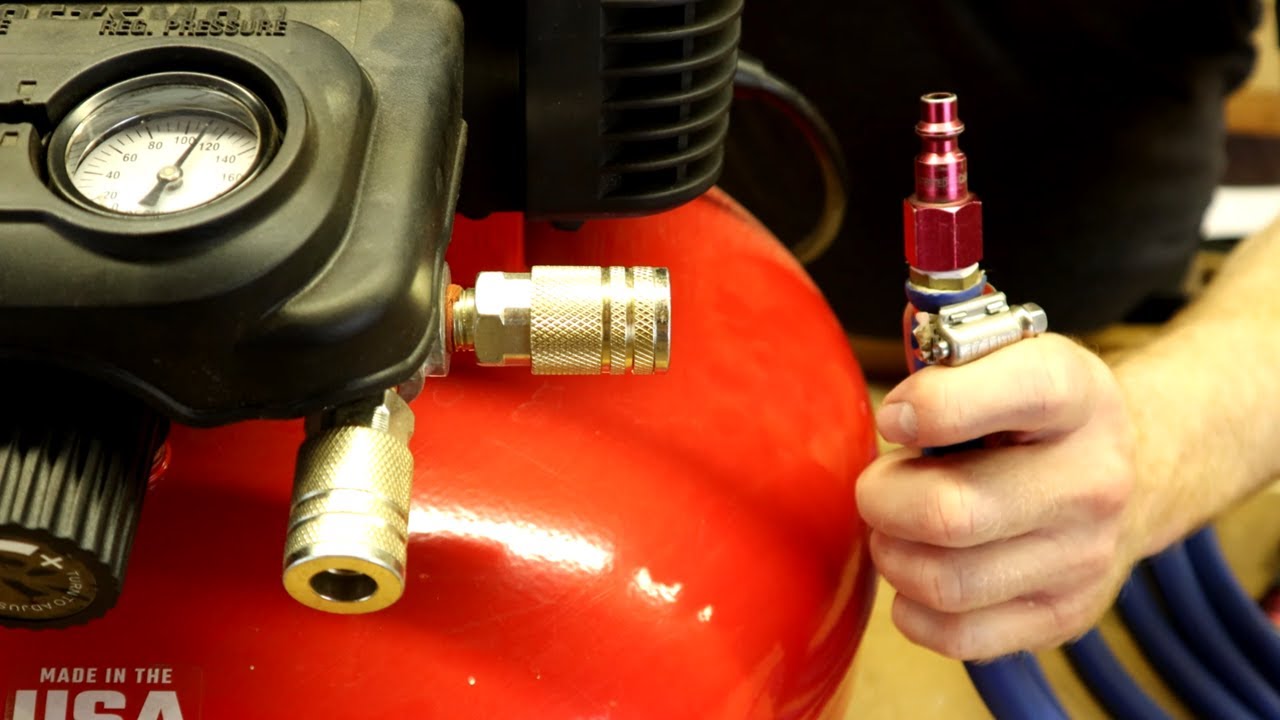
- Attach the air hose – I push the hose fitting onto the compressor’s outlet and twist or snap it into place.
- Connect the tool – The other end of the hose connects to your tool (like a tire inflator or nail gun).
- Check for leaks – I listen for hissing. If I hear it, I disconnect and reconnect. A little plumber’s tape on the threads helps prevent leaks.
At first, I didn’t use plumber’s tape. My tools lost pressure fast. Now, I always keep some handy.
Setting The Air Pressure (psi)
I didn’t know what PSI (pounds per square inch) meant at first. It’s just the amount of pressure you set for your tool. Too high, and you can damage your project or the tool. Too low, and it won’t work well.
Most air compressors have a gauge. Here’s how I set it:
- Find the tool’s PSI range – My nail gun needs 70–100 PSI, but my airbrush only needs 20–30 PSI.
- Turn the pressure regulator knob – I twist it until the gauge shows the right number.
- Test the tool – I give the trigger a quick squeeze to see if it works well.
One mistake I made was running my tools at the max PSI. This wore them out quickly. Now, I start low and increase as needed.
Filling The Tank And Starting The Compressor
Now comes the fun part. Here’s what I do:
- Turn on the compressor – I flip the switch and listen as it starts up.
- Let the tank fill – The compressor will run until it reaches the set pressure. Mine takes about 1–2 minutes.
- Watch the gauges – Most have two gauges: One for tank pressure, one for tool pressure. I make sure both are in safe ranges.
When the tank is full, the compressor will stop on its own. I used to worry it would overfill, but most machines have safety shut-offs.
Using The Air Compressor For Different Jobs
The best part of owning an air compressor is all the things you can do. Here are the main ways I use mine.
Inflating Tires
This was my first project. I have a small car and bikes, so I use my compressor every month.
- Check the tire’s PSI – It’s usually printed on the tire or the car door.
- Set the compressor’s regulator – I set it to the recommended PSI.
- Attach the inflator – Press it onto the tire valve.
- Squeeze the handle – Air flows in quickly. I check with a gauge and stop when it’s full.
One tip: Don’t overfill. Tires can burst. I learned to stop a few PSI below the max, then check with a manual gauge.
Powering Tools
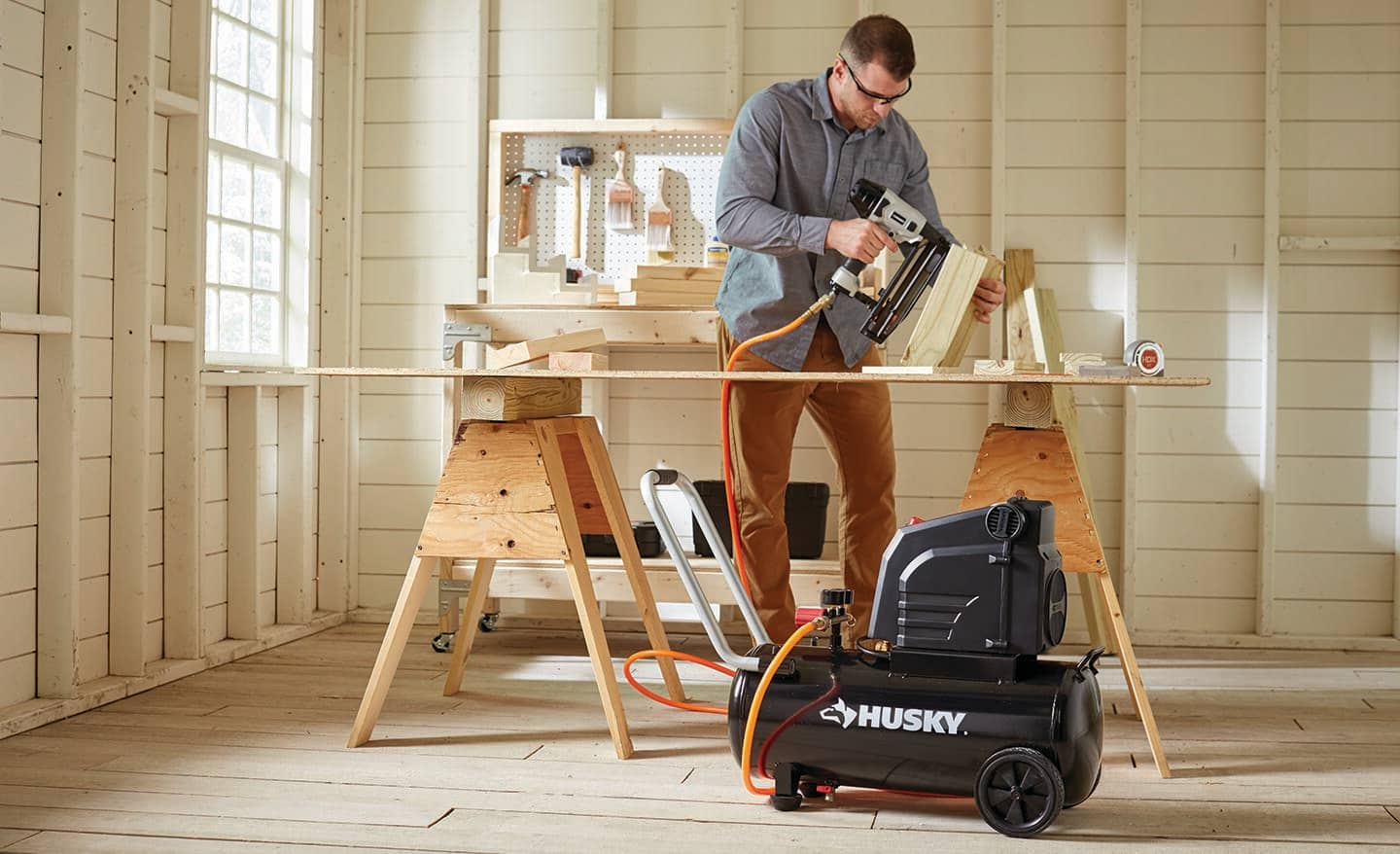
I use my compressor for a nail gun and a staple gun. It saves so much time when building shelves or fixing fences.
- Set the right PSI for the tool (usually between 60–100 PSI).
- Test on scrap wood before starting the real project.
- Wear safety glasses – Flying nails are no joke.
Once, I forgot to test the nail gun first. The nails went too deep and ruined my wood. Now, I always test.
Cleaning With Air
My favorite quick trick is using an air blower to clean dust from tools or keyboards.
- Use a nozzle for control.
- Keep the pressure low – High pressure can damage small parts.
- Wear goggles – Dust flies everywhere.
It’s amazing how much dirt comes out. But be careful—don’t blow air into your eyes or ears.
Painting And Airbrushing
I tried spray painting a chair once. The finish was so smooth—much better than with a brush.
- Set a low PSI (usually 20–40 PSI for airbrush).
- Practice on cardboard before starting.
- Move in smooth strokes for even paint.
The key is keeping the air steady. Stop and clean the nozzle often to avoid clogging.
Key Safety Tips I Learned
Air compressors are powerful, but they can be dangerous if you’re not careful. Here’s what I always do:
- Wear eye protection – Debris can fly into your face.
- Check for leaks before starting.
- Never exceed tool PSI ratings – Too much pressure can destroy tools or hurt you.
- Release the pressure after use. I pull the safety valve or run the tool until the tank is empty.
- Store hoses safely – I once tripped over a tangled hose and fell.
- Never point the nozzle at people or pets – Pressurized air can cause injury.
One thing I missed at first was draining the tank. Water collects inside over time. Now, I open the drain valve after every use to prevent rust.
How I Troubleshoot Common Air Compressor Problems
Even good compressors have issues sometimes. Here are a few problems I’ve faced and how I fixed them.
Compressor Won’t Start
- Check the power – Is it plugged in? Is the outlet working?
- Reset the overload switch – Some compressors have a reset button.
- Check for blown fuses – My garage fuse blew once because of a weak extension cord.
Air Leaks
- Tighten all fittings – Use a wrench but don’t overtighten.
- Replace cracked hoses – I keep a spare hose around.
- Apply plumber’s tape to threads.
Low Pressure
- Check the air filter – If it’s dirty, replace it.
- Drain water from the tank – Water takes up space and lowers pressure.
- Inspect for leaks – Even a small leak can drop pressure.
Here’s a quick comparison I made when troubleshooting:
| Problem | Possible Cause | Solution |
|---|---|---|
| No power | Tripped breaker | Reset breaker, use proper cord |
| Low pressure | Air leak or water in tank | Fix leaks, drain tank |
| Loud noise | Loose parts or worn motor | Tighten bolts, check motor |
Maintaining My Air Compressor
A little care goes a long way. Here’s my maintenance routine:
- Drain the tank after each use – Prevents rust.
- Check and change oil (if needed) – I do this every few months.
- Clean the air filter – Dust can block airflow.
- Inspect hoses and fittings – Replace any that look worn.
- Store in a dry place – Moisture causes damage.
I set a calendar reminder to do these tasks. It keeps my compressor running for years.
Mistakes I Made (so You Don’t Have To)
Let me be honest—I made some silly mistakes at first.
- I ran the compressor with a loose hose and sprayed my wall with dust.
- I forgot to release the pressure and the tank hissed all night.
- I ignored the manual, and my tools stopped working because I used the wrong PSI.
If you avoid these, you’ll have a much better time.
When To Choose A Bigger Or Smaller Compressor
It’s tempting to buy the biggest air compressor you can afford. But bigger isn’t always better. Here’s what I learned:
- Small compressors are perfect for home use, inflating, and small tools.
- Large compressors are for auto shops, heavy painting, or running multiple tools at once.
If you only need to inflate tires or use a nail gun, a small pancake compressor is enough. But if you want to paint cars or use air sanders, go bigger.
Here’s a side-by-side I made when shopping for my second compressor:
| Job Type | Small Compressor | Large Compressor |
|---|---|---|
| Inflating tires | Excellent | Overkill |
| Running nail gun | Good | Good |
| Spray painting car | Poor | Excellent |
| Multiple tools | Poor | Excellent |
Two Insights Most Beginners Miss
After years of using air compressors, I’ve noticed two things many people overlook:
- The air hose size matters – A wider hose delivers more air. If you use a tiny hose for a big tool, it won’t work well.
- Drain the tank often – Even if you only use the compressor once a month, water builds up inside. Rust can destroy the tank from the inside out. I learned this after seeing brown water come out when I finally drained it.
Where I Go For Extra Help
When I get stuck or need to find a manual, I visit Wikipedia’s air compressor page. It’s full of helpful diagrams and safety advice.

Frequently Asked Questions
What Size Air Compressor Do I Need For Home Use?
For most home jobs like inflating tires or using a nail gun, a small pancake or hot dog compressor (about 2–6 gallons) is perfect. You only need a bigger compressor for heavy tools or painting cars.
How Often Should I Drain The Air Compressor Tank?
I drain my tank after every use. It only takes a minute and prevents rust. If you forget, water can damage the tank and lower the pressure.
Can I Use Any Air Tool With My Compressor?
Check your compressor’s CFM (cubic feet per minute) and your tool’s needs. If the tool needs more air than your compressor can supply, it won’t work well. Most small tools are fine with a basic home compressor.
Is It Safe To Leave My Air Compressor Plugged In?
I always unplug and turn off my compressor when I’m done. This prevents accidents and saves energy. Leaving it on can be a fire risk.
What Should I Do If My Compressor Makes A Loud Noise?
A little noise is normal. But if it’s suddenly loud or rattling, check for loose parts or a dirty air filter. Sometimes, oil needs changing. If the problem continues, ask a pro to check it.
Using an air compressor gets easier with practice. Start small, follow these tips, and soon you’ll wonder how you ever did without one.
As an Amazon Associate, We earn from qualifying purchases