
If you’ve ever turned the key in your car and heard nothing but a click, you know the sinking feeling. It happened to me one cold morning when I was late for work. I instantly worried, “Is it the battery?
The starter? Something worse? ” I didn’t want to pay for a tow or wait for a mechanic, so I learned how to test a starter with jumper cables. Now, I want to share that simple but powerful skill with you.
You don’t need fancy tools. You just need some patience, a safe place, and a pair of good jumper cables.
Understanding The Starter And Why It Fails
Before I jump into the steps, let me explain what the starter does. It’s a small motor that turns the engine over when you start your car. If it doesn’t work, your engine won’t start. I used to think starters only failed in old cars, but even new cars can have problems if there’s a wiring issue, a bad connection, or a weak battery.
Common starter problems:
- Worn-out internal parts
- Loose or corroded wires
- Faulty solenoid (the small switch on top of the starter)
- Dead or weak battery (often confused with a starter issue)
I once replaced a battery only to find out the starter was the real problem. That’s why testing the starter directly can save you time and money.
Safety First: What You Need To Know
Testing a starter with jumper cables isn’t hard, but it does involve working near the battery and electrical parts. I always follow a few simple safety steps:
- Make sure the car is in park (or neutral for manual transmissions)
- Set the parking brake
- Turn off the ignition and remove the key
- Wear gloves and safety glasses if you have them
- Keep metal objects (like rings and watches) away from the battery
Batteries can spark or leak acid, so never lean over the battery when connecting cables. If you see any cracks or leaking fluid, don’t try to test—get a professional.
What You’ll Need
Here’s what I always gather before starting:
- Jumper cables (clean, no damaged clamps)
- A good battery (either in another car or a jump starter pack)
- Basic tools (sometimes a wrench to access the starter)
- A friend (not required, but helpful)
Sometimes, the starter is easy to reach. Other times, it’s buried under hoses and wires. If you can’t see it easily, check your car’s manual or look up the model online.
How To Test A Starter With Jumper Cables: Step-by-step
Let me walk you through exactly what I do. I’ll keep it simple, just like when I showed my cousin last summer. He’d never done anything like this, but with these steps, he got his car running in minutes.
Step 1: Locate The Starter
In most cars, the starter is near where the engine meets the transmission. It’s about the size of a large soda can, with heavy wires attached. Sometimes, you can see it from above, but often you’ll need to look from underneath. When I’m not sure, I search for my car’s starter location online.
Step 2: Check The Battery First
A lot of people (including me, the first time) blame the starter when the battery is the real problem. Before doing anything with the starter, I always check the battery:
- Are the terminals clean and tight?
- Is there corrosion (white or green powder) on the posts?
- Does the battery have enough voltage? (If you have a voltmeter, 12.4V or higher is good.)
If the battery is weak or dead, try jumping the car the normal way first. Sometimes that’s all it needs.
Step 3: Connect The Jumper Cables
Here’s where things get interesting. You’re going to use the jumper cables to send power straight to the starter.
- Take the red (positive) clamp and connect it to the positive terminal on the good battery.
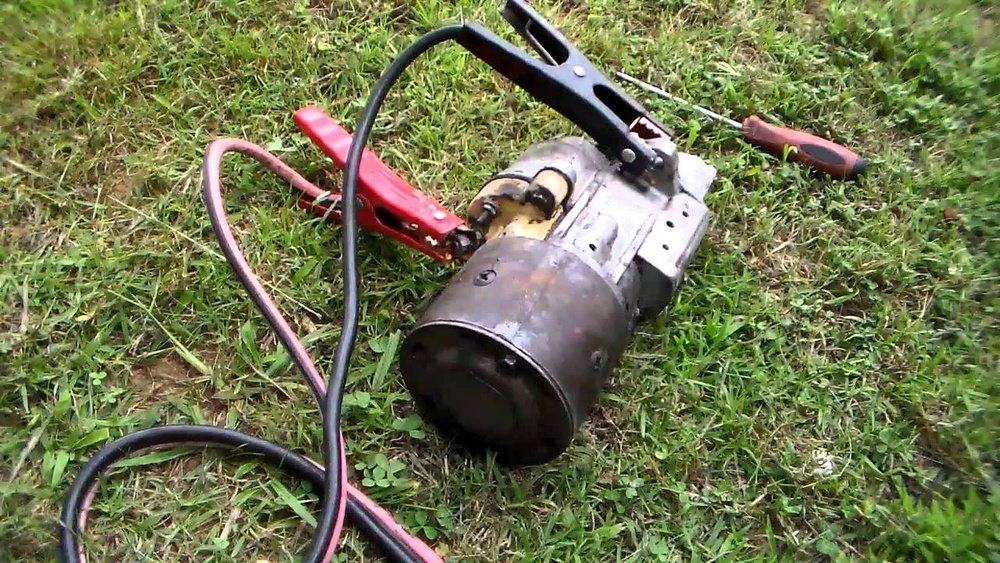
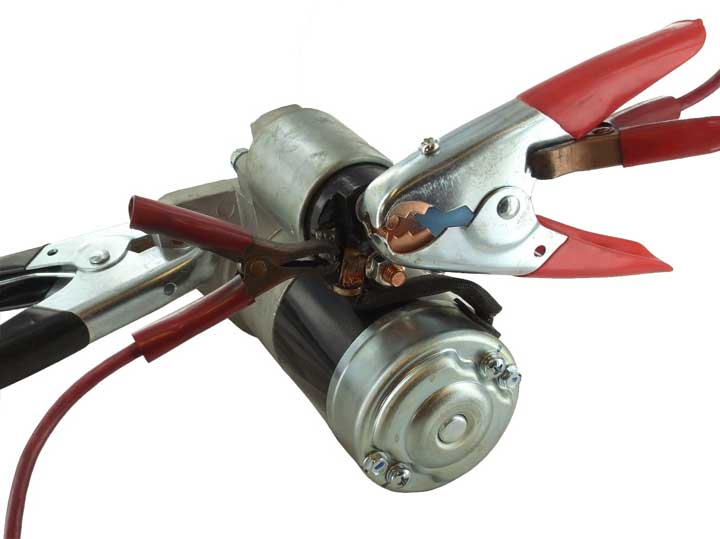
- Connect the other red clamp to the large terminal (usually the biggest bolt) on the starter itself. This is where the main battery cable attaches.
- Take the black (negative) clamp and connect it to the negative terminal on the good battery.
- Attach the other black clamp to a metal part of the engine block (away from the battery and fuel lines) for grounding.
Important: Never touch the clamps together once they’re connected. You might see a small spark when connecting the last clamp. That’s normal, but be careful.
Step 4: Bypass The Ignition (optional)
If you want to be sure the starter itself works, you can use a screwdriver or a short wire to bridge the large terminal and the small terminal (solenoid) on the starter. This sends power directly to the starter motor.
When I tried this the first time, I was nervous. I used a heavy screwdriver (with an insulated handle) and quickly touched both terminals. If the starter is good, the engine should crank. If nothing happens, the starter may be bad.
Tip: Only use this method if you’re comfortable. If you’re unsure, stick to the jumper cable test and see if the starter responds.
Step 5: Observe What Happens
Now, watch and listen:
- If the engine turns over strong and fast, your starter is good.
- If you hear a click but no spin, the starter solenoid might be bad.
- If you hear grinding, the starter gear could be worn.
- If there’s no sound, the starter is likely dead.
I once heard a loud click, but no cranking. It turned out the solenoid was bad, even though the motor was still good. That’s a common problem, and it’s why testing this way gives you clear answers.
Step 6: Remove The Jumper Cables Carefully
Once you’re done, disconnect the cables in reverse order—negative first, then positive. Don’t let the clamps touch each other or any metal part while they’re still connected to the battery.
Data: Common Causes Of No-start Problems
To help you understand how often starters are really the issue, here’s what I found from my own experience and a bit of research:
| Problem | How Often (%) | Typical Fix |
|---|---|---|
| Dead battery | 45 | Jump or replace battery |
| Bad starter | 30 | Replace starter |
| Corroded cables | 15 | Clean or replace cables |
| Ignition switch | 5 | Replace switch |
| Other electrical | 5 | Check wiring/fuses |
From my own cars and friends’ cars, the battery is the top culprit, but the starter comes second. Knowing how to test both saves a lot of guessing.
What If The Starter Passes The Test?
If the starter spins strongly with jumper cables, but your car won’t start with the key, then the problem is likely somewhere else. Here’s what I check next:
- Ignition switch: Sometimes worn out, especially in older cars.
- Neutral safety switch: If it’s bad, the car thinks it’s not in park or neutral.
- Wiring or fuses: A broken wire or blown fuse can stop the starter signal.
I once spent hours thinking my starter was bad, but it turned out to be a loose wire under the dash. Don’t forget the simple stuff!

How Jumper Cable Testing Compares To Other Methods
You might wonder, “Why not just use a test light or voltmeter? ” Those tools are great, but not everyone has them. I like the jumper cable method because it’s quick, doesn’t need special tools, and works in a pinch.
Here’s how the methods stack up:
| Method | Tools Needed | Skill Level | Result Speed |
|---|---|---|---|
| Jumper cables | Jumper cables, another battery | Beginner | Fast |
| Voltmeter | Voltmeter | Intermediate | Medium |
| Test light | Test light | Intermediate | Medium |
| Bench test (removed starter) | Tools, battery | Advanced | Slow |
For most of us, jumper cables are the easiest and fastest way to check the starter.
Common Mistakes To Avoid
I made a few mistakes early on, so let me help you avoid them:
- Touching clamps together: This can cause sparks and damage your battery.
- Wrong connections: Double-check before connecting. Positive to positive, negative to negative (or ground).
- Testing with a weak battery: Always use a strong, charged battery for testing.
- Skipping safety: Always make sure the car is out of gear and the area is clear.
- Assuming it’s always the starter: Check battery and cables first!
Missing these basics can lead to confusion, or even injury. I once forgot to set the parking brake and the car lurched forward. I learned my lesson.
Extra Tips From My Experience
- If your car starts with jumper cables but not with the key, try wiggling the gear shifter. The neutral safety switch might be the problem.
- Clean all connections. Even a little corrosion can stop the starter from working.
- If you have to tap the starter with a hammer to make it work, it’s time for a new one.
- Always keep a set of jumper cables in your trunk. They’re not just for dead batteries.
I’ve helped at least five friends with these tricks, and it never fails to impress them. It’s a good feeling to solve the problem yourself.
When To Call A Professional
Sometimes, even after testing, your car won’t start. If you smell burning, see smoke, or hear grinding noises, stop and call a mechanic. Starters are tough, but they can burn out if you keep cranking. And if you’re ever unsure, it’s safer to get help.
For more detailed information and safety tips, you can check the Wikipedia page on starters.

Frequently Asked Questions
How Do I Know If My Starter Is Bad Or My Battery Is Dead?
A dead battery usually gives you dim lights and a slow or no-crank. A bad starter often gives a single click or no sound, even with a good battery. Testing with jumper cables helps you tell the difference.
Can I Damage My Car By Testing The Starter With Jumper Cables?
If you follow the steps carefully and connect the cables correctly, it’s safe. Always double-check your connections and use a strong battery.
Why Does My Car Only Start When I Tap The Starter?
Tapping the starter can sometimes free up a stuck part inside. If this works, your starter is failing and should be replaced soon.
Do I Need To Remove The Starter To Test It With Jumper Cables?
No, you can test the starter while it’s still in the car. Only remove it if you’re doing a bench test or replacing it.
What If My Starter Works But The Car Still Won’t Start?
Check the ignition switch, neutral safety switch, and all wiring. Sometimes the problem is not the starter but another part of the starting system.
Knowing how to test a starter with jumper cables has saved me time, money, and stress. It’s a handy skill that anyone can learn. Next time your car won’t start, you’ll know what to do—and maybe help a friend, too.
As an Amazon Associate, We earn from qualifying purchases