
When I first started working with pipes, I thought all pipe wrenches were the same. I grabbed whatever looked big enough and hoped for the best. But after ruining a few fittings and scraping my knuckles too many times, I learned that measuring pipe wrench size is not just about guessing. It’s about getting the right tool for the job. If you’ve ever wondered how to measure pipe wrench size correctly, or why it matters so much, let me walk you through what I’ve learned—sometimes the hard way.
Why Pipe Wrench Size Matters
The first time I tried to loosen a rusty pipe with a small wrench, I felt the tool slip. My hand smashed into the wall. I realized right then that using the wrong size isn’t just annoying—it’s dangerous.
A pipe wrench that’s too small won’t grip the pipe well. You’ll use more force, and that can hurt you or damage the pipe. If it’s too big, it feels clumsy and hard to control. When I finally got the right size wrench, the job was smoother, and I didn’t have to struggle.
Getting the right size wrench helps you:
- Work faster because the tool fits well.
- Stay safe by reducing slips.
- Protect pipes from scratches or crushing.
Understanding Pipe Wrench Sizes
When I first looked at my toolbox, I saw numbers like 10″, 14″, 18″, and 24″ on my wrenches. I thought these numbers told me the pipe size they fit. But I was wrong.
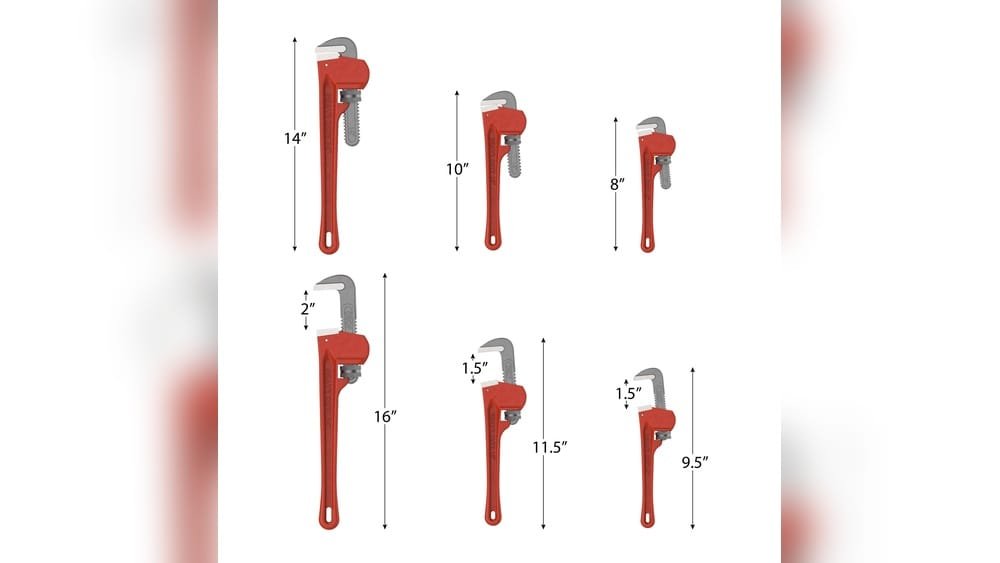
The number on a pipe wrench is its overall length, not the pipe size it fits. For example, a 14-inch wrench is 14 inches from end to end. But the jaw opening is much smaller.
Here’s something most beginners miss: a bigger wrench does not mean it will fit a bigger pipe. The jaw size is what matters for the pipe, and the length gives you more leverage.

Common Pipe Wrench Sizes And What They Fit
Let me share the sizes I use most and what pipes they fit. This helped me avoid guesswork.
| Wrench Size (inches) | Typical Pipe Capacity (inches) | Common Uses |
|---|---|---|
| 10″ | Up to 1-1/2″ | Small household pipes, tight spaces |
| 14″ | Up to 2″ | General plumbing |
| 18″ | Up to 2-1/2″ | Larger plumbing, outdoor work |
| 24″ | Up to 3″ | Heavy-duty, big pipes |
| 36″ | Up to 5″ | Industrial pipes, rare at home |
If you only buy one wrench, a 14″ or 18″ is a good middle ground for most home tasks.
How To Measure A Pipe Wrench: Step-by-step
I remember my first time trying to measure a pipe wrench. I held it next to the pipe, unsure what to do. Here’s the simple way that works for me now:
1. Check The Wrench Length
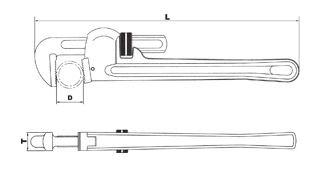
Use a tape measure to measure from the very end of the handle to the tip of the jaws. This is the wrench size (like 14″ or 18″). It’s always the full length, not just the jaw.
2. Open The Jaws Fully
Turn the thumbwheel to open the jaws as wide as they go. This is the maximum jaw capacity. Some brands print this on the wrench, but measuring yourself is more accurate.
3. Measure The Jaw Opening
Take your tape and measure the distance between the teeth of the jaws at their widest point. This tells you the biggest pipe the wrench can grip.
4. Match To Pipe Size
Pipes are sized by their outside diameter (OD). Match the maximum jaw opening of your wrench to the OD of the pipe you need to turn.
Here’s a quick example: I needed to work on a 2″ pipe. My 14″ wrench opened wide enough, but my 10″ wrench didn’t.
5. Test On The Pipe
Before you start, I always fit the wrench on the pipe and give it a gentle twist. If the jaws grip firmly with a small gap, that’s perfect. If it slips or you have to force it, try a different size.
A Simple Table For Wrench And Pipe Size Matching
This is the chart I keep in my workshop. It’s saved me so much time.
| Pipe Size (inches) | Suggested Wrench Length (inches) | Jaw Capacity Needed (inches) |
|---|---|---|
| 1/2″ – 1″ | 10″ | 1.5″ |
| 1″ – 2″ | 14″ | 2.0″ |
| 1-1/2″ – 2-1/2″ | 18″ | 2.5″ |
| 2″ – 3″ | 24″ | 3.0″ |
| 3″ – 5″ | 36″ | 5.0″ |
If you work with metric pipes, measure the diameter in millimeters and look for a wrench that opens a little wider than that.
Different Types Of Pipe Wrenches
I used to think there was just one kind of pipe wrench. But that’s not true. Each type has its own use.
Straight Pipe Wrench
This is the classic one. Long handle, strong jaws, used for most jobs. Most of my wrenches are straight type.
Offset Pipe Wrench
The jaws are angled. These are great when I need to reach pipes in awkward spots, like behind sinks.
End Pipe Wrench
Jaws are at the end, not the side. I use this for pipes close to the wall.
Strap Wrench
Instead of metal jaws, it uses a strap. I use this on chrome pipes or plastic so I don’t scratch them.
Knowing these types helps you choose not just the right size, but the right style for the job.
Choosing The Right Pipe Wrench For Your Job
Here’s the process I follow now. It saves me from wasted time and tools.
- Measure the pipe outside diameter first.
- Check what material the pipe is—metal, plastic, or chrome.
- Pick a wrench that opens wider than the pipe, but isn’t huge.
- Choose the type of wrench for the location.
- Test fit before starting work.
A common mistake I made early on was using a big wrench on a small pipe. It felt powerful, but I ended up crushing the pipe. Now I use a smaller wrench for delicate work.
Real-world Example: Fixing A Leaky Pipe
A few months ago, I had to fix a leaky pipe under the kitchen sink. I measured the pipe and found it was 1-1/2″ outside diameter. My 14″ wrench was just right. I opened the jaws, fit it over the pipe, and with a little pressure, the fitting turned smoothly.
If I had used my old 10″ wrench, it would have slipped. A 24″ wrench would have been too heavy and hard to turn in the tight space.
This little win reminded me: right size saves time and frustration.
Mistakes To Avoid When Measuring And Choosing Pipe Wrenches
I’ve made almost every mistake in the book. Here are two that beginners often overlook:
- Not checking the pipe material. Metal jaws can ruin soft pipes. Use a strap or a wrench with smooth jaws for plastic or chrome.
- Not adjusting the wrench properly. Don’t just slap the wrench on. Adjust it so the jaws are snug, and the teeth grip well. Too loose, and it slips. Too tight, and you crush the pipe.
Another thing I learned: always buy quality. Cheap wrenches flex or break, and can slip dangerously.
Maintenance Tips For Your Pipe Wrenches
A good wrench lasts years if you take care of it. Here’s what I do:
- Clean after use. Dirt and oil can clog the teeth.
- Oil the moving parts. A drop of machine oil on the thumbwheel keeps it smooth.
- Check teeth for wear. Worn jaws slip more often. Replace if needed.
- Store dry. Rust is the enemy. I wipe mine down and keep them off the ground.
These little habits keep my tools ready for any job.

Comparing Pipe Wrenches To Other Wrenches
Sometimes people ask me, “Can I use a regular adjustable wrench on pipes?” Here’s what I’ve found:
| Wrench Type | Best For | Drawbacks |
|---|---|---|
| Pipe Wrench | Round pipes, high grip | Heavy, can damage soft surfaces |
| Adjustable Wrench | Nuts, bolts, flat surfaces | Slips on round pipes |
| Strap Wrench | Polished or soft pipes | Less torque, can slip on tough jobs |
My advice: for round, threaded pipes, always use a pipe wrench or strap wrench.
Extra Tips I Wish I Knew Sooner
- Pipe size is not the same as jaw opening. Double-check before buying.
- Test fit before starting. Saves your hands and your pipes.
- Buy a medium-size wrench first. 14″ or 18″ covers most jobs.
- Add a strap wrench for delicate pipes. No scratches, ever.
Frequently Asked Questions
How Do I Know What Size Pipe Wrench To Use?
Measure the outside diameter of your pipe. Then, choose a wrench with a jaw opening a bit wider than the pipe. For most home jobs, a 14″ or 18″ wrench works well.
Can I Use A Bigger Wrench On A Small Pipe?
You can, but it’s not safe. Large wrenches can crush or deform small pipes. Use the smallest wrench that fits snugly for better control.
Are Pipe Wrench Sizes Universal?
Most brands follow the same size system based on handle length, but jaw capacities can vary. Always check the jaw opening, not just the length.
What If I Don’t Have The Right Size Wrench?
You can try an adjustable wrench, but it may slip. For delicate or shiny pipes, use a strap wrench. If you’re doing a lot of plumbing, invest in a set of different sizes.
How Do I Keep My Pipe Wrench In Good Shape?
Clean it after use, oil the moving parts, check for worn jaws, and store it dry. These simple steps make your wrench last much longer.
If you want to learn more about how pipe wrenches work and their history, check out the Wikipedia page on pipe wrenches.
Finding the right pipe wrench size changed how I work with pipes. It turned a frustrating chore into a job I could do well and safely. I hope these tips help you avoid my mistakes and make your next plumbing project a little easier.
As an Amazon Associate, We earn from qualifying purchases