
Keeping my hedge trimmer working smoothly used to be a mystery. I’d cut a few hedges, and soon the blades would stick or sound rough. I learned the hard way that lubricating a hedge trimmer is not just a fancy extra—it’s the key to making your tool last and work its best. If you’ve never done it or worry you’ll make a mess, don’t worry. I’ll walk you through everything step by step, just like I wish someone had done for me.
Why Lubricating Your Hedge Trimmer Matters
I once ignored the creaky sound in my old trimmer. It started cutting slower and left ragged edges on my bushes. Then, one day, it jammed completely. That’s when I realized the real cost of skipping lubrication. When you lubricate the blades:
- They move smoothly without friction.
- You get clean cuts on every branch.
- The motor doesn’t have to work so hard.
- The tool lasts much longer.
Think of it like oiling a bicycle chain. Neglect it, and things wear out faster. I ruined one trimmer before I got this simple habit right.
What You Need For Lubricating A Hedge Trimmer
The first time I tried, I grabbed whatever spray was in my garage. That was a mistake—some oils attract dirt, and some can even harm the blades. Here’s what really works:
- Hedge trimmer oil – Special blade oil is best. If you don’t have it, sewing machine oil or 3-in-1 oil works in a pinch.
- Clean cloth or rag – Old t-shirts are great for this.
- Brush – A small paintbrush or old toothbrush.
- Safety gloves – The blades are sharp, even when off.
- Protective eyewear – Oil can splash.
Some people use WD-40, but I found it’s better as a cleaner, not a long-term lubricant. It dries up too fast and doesn’t protect well.
When And How Often To Lubricate
At first, I only oiled the blades when they started sounding rough. That was too late. Now, I do it:
- Before every use (a light oiling).
- After every use (for storage).
- After cleaning or sharpening the blades.
If you use your trimmer a lot, oil it more often. If it sits for a while, oil it before you put it away, and again before you use it. This keeps rust away.
Step-by-step: How I Lubricate My Hedge Trimmer
Here’s my simple routine, which takes less than ten minutes. I follow these steps every time, and my hedge trimmer has never jammed since.
1. Unplug Or Remove The Battery
Safety first. I once forgot this and almost pressed the trigger while cleaning. Always make sure the trimmer can’t start.
2. Clean The Blades
Dirt, sap, and old oil build up fast. I take a dry brush and scrub the teeth. For sticky sap, I use a little soapy water, then dry it well. Never use water if your trimmer is electric—just wipe with a damp cloth.
3. Check For Damage
While cleaning, I look for nicks or bent teeth. If a tooth is bent, I don’t try to force it straight with pliers—it’s safer to let a pro handle it.
4. Apply Lubricant
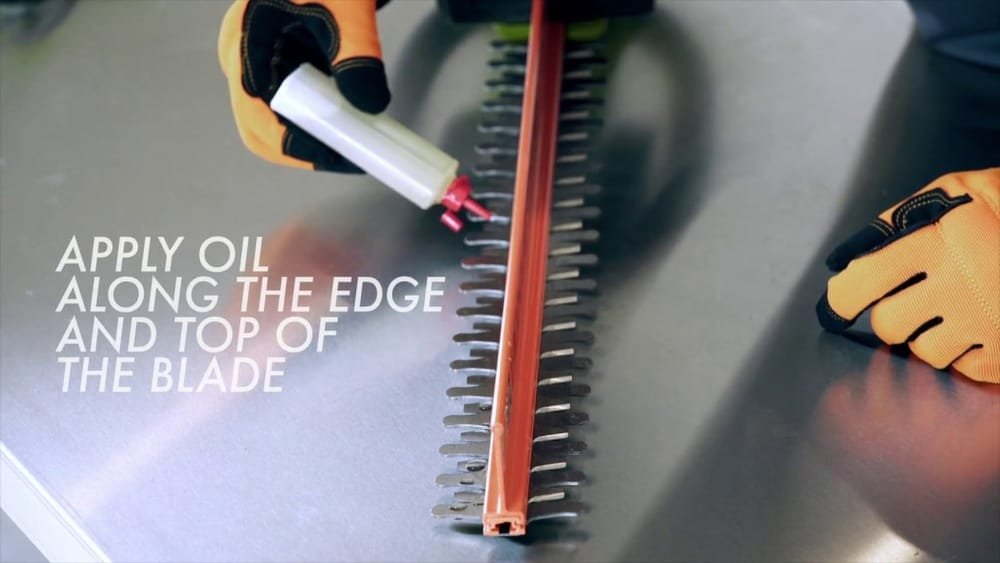
I put on gloves and drip a line of oil along the blades. Then I use my brush or a cloth to spread it evenly. I make sure oil gets between every tooth. Too much oil is messy, but too little is useless.
I aim for a thin, even coat.
5. Run The Trimmer Briefly
This is a step most people skip. I reconnect the power and run the trimmer for 5–10 seconds. This spreads the oil inside the moving parts. Then, I unplug it again.
6. Wipe Away Extra Oil
I use a clean cloth to wipe off any oil drips. This prevents dirt from sticking. If I’m storing the tool, I leave a little extra oil on to stop rust.
Types Of Lubricants: What Works Best
I tried a few oils before finding what works. Here’s what I learned, with a quick comparison.
| Lubricant Type | Pros | Cons |
|---|---|---|
| Special blade oil | Protects well, made for tools | Costs more, sometimes hard to find |
| 3-in-1 oil | Easy to find, works okay | Attracts dust over time |
| Sewing machine oil | Cheap, very thin, doesn’t gum up | Needs more frequent use |
| WD-40 | Cleans, loosens sap | Not a long-term lubricant |
If you want your blades to last, I suggest special trimmer oil. For a quick fix, sewing machine oil works. Just avoid thick motor oil or vegetable oil—they get sticky and collect dirt.
How To Tell If Your Blades Need Lubrication
Sometimes, you can feel or hear when your trimmer needs oil:
- The sound gets louder or rougher.
- The tool vibrates more.
- Cutting feels harder.
- Leaves look torn, not clean-cut.
If you see rust spots, that’s a clear sign you’re not oiling enough. I once let mine sit in the shed for a month, and rust appeared where I’d missed a spot.
Cleaning Vs. Lubricating: What’s The Difference?
I used to think cleaning and lubricating were the same. They’re not. Cleaning removes dirt, sap, and old oil. Lubricating leaves a protective film so blades move easily. Both are important, but don’t skip one for the other.
Here’s how I split the tasks:
- After trimming – Clean first, then lubricate.
- Before storage – Extra oil to protect from rust.
- Before use – Wipe off dust, add a drop of oil.
Common Mistakes I Made (so You Don’t Have To)
I wish someone had told me these things when I started:
- Using too much oil – Makes a mess, attracts grit.
- Skipping cleaning – Oil on dirty blades traps moisture and rust.
- Forgetting to run the trimmer – Oil doesn’t spread inside.
- Not wearing gloves – Hedge trimmer blades are sharper than they look!
- Storing while wet – Moisture causes rust fast.
I also once used cooking spray, thinking oil is oil. It worked for a day, then turned sticky and gummed up the blades.

How Lubrication Affects Trimmer Performance
After I started regular oiling, I noticed:
- My battery trimmer’s charge lasted longer.
- It cut clean, even thick branches.
- The noise level dropped.
- The blades didn’t get hot.
I compared my old trimmer (which I rarely oiled) to my new, well-oiled one:
| Trimmer | Cut Quality | Noise | Battery Life |
|---|---|---|---|
| Oiled regularly | Clean and smooth | Low | 45 minutes |
| Rarely oiled | Jagged, rough | Loud | 30 minutes |
It’s not just about care—it saves money on batteries and repairs.
How To Lubricate Cordless, Electric, And Gas Hedge Trimmers
No matter what type you use, the lubrication steps are almost the same. Here’s what I’ve seen:
Cordless Trimmers
- Remove the battery before oiling.
- They need frequent oil, as the motors are smaller.
Electric Trimmers (with Cord)
- Unplug every time.
- Watch out for water and electricity—never use a wet rag.
Gas Trimmers
- Turn off and cool down before oiling.
- Oil more often, as they run hotter and collect more sap.
I have all three types in my shed, and the main difference is safety. Always make sure the power is off and the tool is cool before you start.

How To Store A Lubricated Hedge Trimmer
I learned that storage is as important as oiling. If you store the trimmer right, it won’t rust, even over winter.
- Wipe the blades clean and dry.
- Apply a light coat of oil.
- Wrap blades in a soft cloth or use a blade cover.
- Store in a dry place, away from damp walls or floors.
If you leave oil on for months, check for sticky spots before using it again. Sometimes, I give it a quick wipe and re-oil before the first trim of spring.
Practical Tips For Hassle-free Lubrication
Here are a few tricks I picked up:
- Keep a small bottle of oil and a rag in your garden shed. This way, you’re always ready.
- Use a toothbrush for hard-to-reach spots.
- If the oil bottle leaks, wrap it in a plastic bag.
- If you trim a lot of sappy plants (like pine or yew), clean and oil more often.
And if you’re ever unsure about a product, check the manual or look for advice on trusted sites like the STIHL Official Site.

Frequently Asked Questions
How Often Should I Oil My Hedge Trimmer?
I recommend oiling the blades before and after every use. If you’re trimming for a long time, add a little oil halfway through. Regular oiling prevents rust and keeps cuts clean.
Can I Use Wd-40 As Blade Oil?
WD-40 is good for cleaning and loosening sap, but it doesn’t protect long-term. It dries out fast. For lasting lubrication, use special trimmer oil or light machine oil.
What If I Forget To Lubricate My Hedge Trimmer?
If you forget once, the blades might get noisy or cut poorly. If you forget often, the blades can rust, jam, or even break. Regular lubrication avoids expensive repairs.
Is Vegetable Oil Safe For Hedge Trimmer Blades?
I tried vegetable oil once, but it got sticky and attracted dust. Over time, it can turn rancid and make things worse. Stick with oils made for tools or machines.
Should I Sharpen Or Lubricate First?
Always sharpen first, then clean, then lubricate. Oil helps protect the newly exposed metal after sharpening.
Keeping my hedge trimmer in top shape is now a quick, simple habit. With the right oil, a bit of care, and a few minutes each time, your trimmer will work better and last longer. Trust me—your hedges (and your wallet) will thank you!
As an Amazon Associate, We earn from qualifying purchases