
Can an Air Compressor Explode? My Honest Experience and What You Need to Know
Air compressors look simple. They sit in the corner of a garage or workshop, quietly doing their job. But a few years ago, I learned the hard way that they can become dangerous if not handled right. People often ask me, “Can an air compressor explode?
” I want to share my experience, clear up some myths, and explain what you really need to know to stay safe.
What Is An Air Compressor And How Does It Work?
Before we get into the risks, let me quickly explain what an air compressor actually does. In simple words, an air compressor pulls in air and squeezes it into a small space. This builds up pressure. When you need it, you release the air to power tools, fill tires, or clean dust.
Inside, there’s a motor, a pump, a tank, and some safety parts. The pump is the heart of the machine. It forces air into the tank, where the pressure gets higher and higher. Most home compressors run at 90 to 150 PSI (pounds per square inch).
Industrial ones can go much higher.
The tank is strong, but it’s not magic. It can only hold so much pressure. That’s where the risk comes in.
Can An Air Compressor Really Explode?
The short answer is yes, an air compressor can explode. But let me explain what that means, and how likely it is.
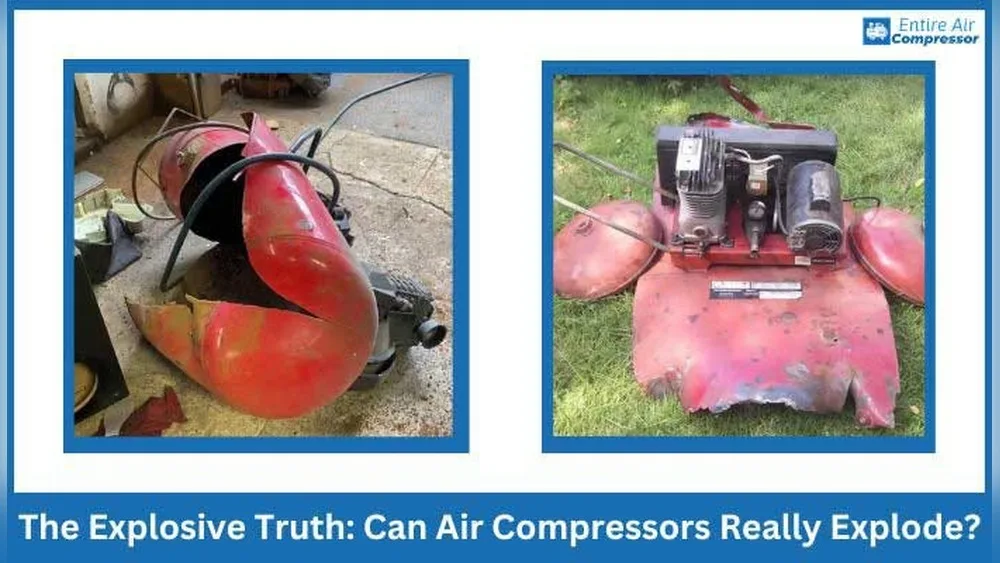
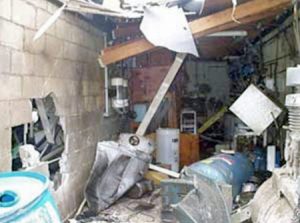
When people hear “explode,” they imagine a huge fireball, like in movies. That’s not what usually happens. Most air compressor explosions are not fiery. They’re more like a sudden, violent burst. The tank or hose can split open, sending metal pieces and air flying.
This can hurt people or damage things nearby.
I’ve never seen a full-blown explosion myself, but I did have a close call. I once heard a loud pop from my old compressor. The safety valve had failed, and the tank was over-pressurized. Luckily, I was nearby and shut it down fast.
That experience made me realize how real the danger is.
Why Do Air Compressors Explode?
Let’s break down the main reasons I’ve learned over the years.
1. Over-pressurization
Every tank has a maximum pressure rating. If the pressure inside goes above this limit, the metal can’t hold it anymore. This is the most common reason for a compressor to explode.
If the pressure switch or safety valve fails, the compressor keeps running, building more and more pressure. This is exactly what almost happened to me. If I hadn’t noticed in time, the tank might have burst.
2. Corrosion And Rust
Moisture is a big enemy. Air always has water vapor. When you compress air, water collects inside the tank. Over time, this water causes rust inside the tank walls.
I once opened up an old tank and found piles of rust flakes. Rust eats away at the metal, making it thin and weak. Even if you stay under the pressure limit, a rusty tank can crack or split open.
3. Physical Damage
Dropping a compressor or banging it hard can create tiny cracks. These cracks get worse every time the tank fills and empties. One of my friends ignored a dent in his tank for months. When he finally replaced it, the inside was full of weak spots.
4. Poor Maintenance
Skipping regular checks is a recipe for disaster. Dust and dirt can block the safety valve. Old hoses can crack and leak. I set a reminder every month to check my compressor, clean the valve, and drain the tank. It only takes a few minutes but can prevent big problems.
5. Manufacturing Defects
Rarely, a new compressor might have a bad weld or weak spot from the factory. This is why it’s important to buy from trusted brands and check for recalls.
Signs Your Air Compressor Could Be Dangerous
When I first started using air compressors, I didn’t know what to look for. Over time, I learned these warning signs:
- Strange noises (popping, hissing, or banging)
- Visible rust or water coming from the drain
- Pressure gauge stuck or not moving
- Safety valve not releasing air when you pull it
- Tank feels hot or has dents
If you notice any of these, stop using the compressor and check it right away. It’s not worth taking a risk.
How Often Do Air Compressors Explode?
You might be wondering, “Is this really common? ” The good news is, explosions are rare if you care for your compressor. But they do happen.
According to the U. S. Consumer Product Safety Commission, there are dozens of reported accidents every year. Many more go unreported. Most cases involve old or poorly maintained tanks.
Here’s a quick comparison of risk factors:
| Factor | Explosion Risk | How to Prevent |
|---|---|---|
| Over-pressurization | High | Check safety valve and pressure switch |
| Rust/corrosion | Medium-High | Drain tank regularly, inspect for rust |
| Physical damage | Medium | Avoid dropping, replace damaged tanks |
| Poor maintenance | High | Follow regular checks and cleaning |
| Manufacturing defects | Low | Buy quality brands, check for recalls |
Real-life Examples And Statistics
Let me share a few stories I’ve come across. In 2017, a man in Texas was seriously injured when his shop compressor exploded. The tank had rusted from the inside, but he didn’t know. In another case, a small garage in Australia lost its roof when a compressor’s safety valve failed.
While these are rare, they show what can happen if we ignore warning signs.
A study by the National Board of Boiler and Pressure Vessel Inspectors found that over 70% of air tank accidents were caused by corrosion. Most of these could have been prevented with simple maintenance.
Common Myths About Air Compressor Explosions
When I talk to friends, I hear a lot of myths. Let’s clear up a few:
- Myth 1: “Small compressors can’t explode.”
Any size tank can fail if it’s weak or over-pressurized.
- Myth 2: “If it’s working, it’s safe.”
Problems can hide inside the tank. Just because it turns on doesn’t mean it’s healthy.
- Myth 3: “I only use it sometimes, so it’s fine.”
Rust and damage can happen even if you rarely use the compressor.
These myths can get people hurt. It’s better to stay cautious.
How To Prevent Air Compressor Explosions
Over the years, I’ve built a simple routine to keep my compressor safe. Here’s what I recommend:
1. Drain The Tank Regularly
Every time I finish using my compressor, I open the drain valve and let out the water. This keeps rust away. Even if you don’t use the compressor much, drain it at least once a week.
2. Inspect For Rust And Damage
I look inside the tank with a flashlight every few months. If I see flakes or orange spots, I know rust is starting. I also check the outside for dents or cracks.
3. Test The Safety Valve
I pull the safety valve ring to make sure it pops and releases air. If it sticks, I clean it or replace it. This simple check gives me peace of mind.
4. Watch The Pressure Gauge
If the needle doesn’t move or gets stuck, I replace the gauge right away. A broken gauge means you can’t trust the pressure inside.
5. Replace Old Hoses And Fittings
I had a hose burst once, and it was scary. Now, I check for cracks or bulges and swap out hoses every couple of years.
6. Follow The User Manual
Each compressor is different. The manual tells you the right pressure, oil type, and service schedule. I keep mine in the toolbox for easy reference.
7. Store In A Dry Place
I keep my compressor off the ground and away from damp areas. Moisture is the biggest enemy for tanks.
8. Buy From Trusted Brands
Cheap, no-name compressors may save money at first, but they often have poor quality control. I only buy from brands with good reviews and safety records.
9. Don’t Push The Limits
It’s tempting to crank up the pressure for faster work, but I always stay under the recommended max PSI. Safety comes first.
10. Replace Old Tanks
If a tank is more than 10 years old or has lots of rust, I replace it. It’s not worth the risk to keep using an old, weak tank.

What To Do If Something Goes Wrong
If you notice something wrong—a strange noise, a stuck valve, or a leak—stop using the compressor. Unplug it and let all the air out. Don’t try to fix a pressurized tank. If you’re not sure what to do, call a professional or contact the manufacturer.
If an explosion does happen (even a small one), stay away from the tank. There could be sharp metal or more pressure inside. Once it’s safe, have the tank checked by an expert.
How Air Compressor Safety Compares To Other Tools
You might wonder how dangerous air compressors are compared to other garage tools. Here’s a quick comparison I made from my own experience:
| Tool | Main Danger | Explosion Risk | Injury Rate* |
|---|---|---|---|
| Air Compressor | Tank burst, flying debris | Low (with maintenance) | About 1 in 10,000 |
| Angle Grinder | Cutting, sparks | Very Low | About 1 in 500 |
| Power Drill | Drill bits breaking | None | About 1 in 800 |
*Injury rate is based on my own reading and experience; your risk may vary.
Two Insights Most People Miss
I learned a couple of things the hard way:
- Moisture builds up faster than you think. Even on dry days, water collects inside the tank. Skipping just a week or two can lead to rust.
- The safety valve is your best friend. Most people never test it, but it’s the last line of defense. Take a second to pull the ring every time you use the compressor.
Useful Resources
If you want to dig deeper, the OSHA compressed air safety guide has great tips and rules for safe use.

Frequently Asked Questions
What Happens If An Air Compressor Explodes?
If an air compressor explodes, the tank can split open suddenly. This sends metal parts and high-pressure air flying. It can hurt people nearby and damage property. Fire is rare but possible if oil or sparks are present.
How Do I Know If My Air Compressor Tank Is Safe?
Check for rust, dents, or cracks. Test the safety valve and watch the pressure gauge. If your tank is old or has visible damage, it’s safer to replace it.
Can I Repair A Rusty Air Compressor Tank?
No, you should not repair a rusty tank. Patching or welding can make it weaker. It’s best to buy a new tank to stay safe.
How Often Should I Drain My Air Compressor?
Drain the tank after every use or at least once a week. This helps remove water and prevents rust inside the tank.
Is It Safe To Use A Compressor Indoors?
Yes, but make sure the room is dry and well-ventilated. Keep the compressor away from heat, sparks, and chemicals to lower the risk of fire or explosion.
Air compressors make life easier, but they need respect and care. After my own close call, I never skip my safety checks. Take a little time, and your compressor will serve you well—without any scary surprises.
As an Amazon Associate, We earn from qualifying purchases