
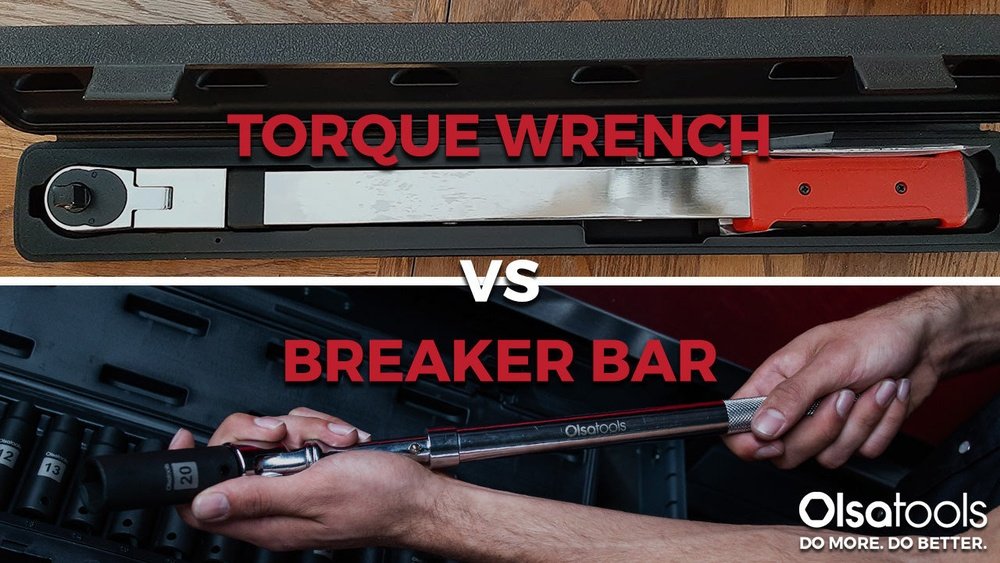
When you work on cars, bikes, or heavy machinery, you’ll often hear about two important tools: the breaker bar and the torque wrench. Many beginners confuse them or think they do the same job. But these tools are actually very different—and using the wrong one can damage your equipment or even be dangerous. Whether you’re a weekend DIYer or just starting out in auto repair, understanding the difference helps you work safer and get better results. This article gives you a clear, in-depth look at breaker bars vs torque wrenches, so you’ll always know which tool to use, when, and why.
What Is A Breaker Bar?
A breaker bar is a long, non-ratcheting bar used with sockets to loosen very tight nuts and bolts. It doesn’t click or measure force. It’s simply a strong lever that helps you apply more force, making it easier to “break” stuck fasteners free.
Key Features Of Breaker Bars
- Length: Usually between 18 and 40 inches. The longer the bar, the more torque you can create.
- No Torque Measurement: It does not measure how much force you’re using.
- No Ratcheting: Unlike a ratchet, it doesn’t turn back and forth. You have to reposition it by hand.
- Heavy-Duty Build: Made for high-stress use. Most are steel or chrome vanadium.
Common Uses
- Loosening rusted or over-tightened lug nuts on cars
- Breaking free suspension bolts or crankshaft pulleys
- Any job where a normal ratchet might break or not give enough power
Why Use A Breaker Bar?
A breaker bar gives you leverage. The longer handle means you can apply the same force as a ratchet, but get much more torque. For example, if you double the handle length, you double the torque with the same effort. This is simple physics but makes a huge difference when working on stubborn bolts.
What Is A Torque Wrench?
A torque wrench is a precision tool that lets you tighten nuts and bolts to a specific force, called torque. This is important because many parts need to be tightened to a certain value—not too loose, not too tight.
Key Features Of Torque Wrenches
- Adjustable Settings: You set the torque value, usually in foot-pounds (ft-lb) or Newton-meters (Nm).
- Click or Digital Feedback: Mechanical versions “click” when you reach the set value. Digital ones beep or show numbers.
- Precision Tool: Calibrated for accurate tightening. Needs regular checking.
- Shorter Handle: Usually shorter than breaker bars, because precise control matters more than raw power.
Common Uses
- Tightening wheel lug nuts to manufacturer specs
- Engine assembly (cylinder head bolts, connecting rods)
- Brake and suspension work
- Any time you need exact torque for safety and reliability
Why Use A Torque Wrench?
Parts like cylinder heads, wheels, and brakes can fail or be damaged if over- or under-tightened. A torque wrench gives you accuracy, not just power. For example, over-tightening a spark plug can crack the engine head, while under-tightening may cause leaks.
Main Differences Between Breaker Bar And Torque Wrench
Many people get these tools mixed up, but their roles are completely different. Here’s a direct look at what sets them apart:
| Feature | Breaker Bar | Torque Wrench |
|---|---|---|
| Main Function | Loosening stubborn bolts | Tightening to specific torque |
| Handle Length | Long (18-40 inches) | Shorter (12-24 inches) |
| Measurement | No torque measurement | Measures torque accurately |
| Ratcheting | No | Some do, but not for high force |
| Build Strength | Very strong for high force | Precision parts, not for heavy force |
When To Use A Breaker Bar
It’s best to reach for a breaker bar when you know you’ll need a lot of force just to get a bolt moving. For example, if you’ve ever tried to remove a wheel lug nut that’s been on for years, you know how tough it can be.
Using a standard ratchet might break the tool or hurt your wrist. A breaker bar’s longer handle multiplies your strength, making the job safer and easier.
Another smart time to use a breaker bar is when a bolt has rusted solid or was over-tightened by a previous mechanic. If you try to use a torque wrench for this, you risk damaging its delicate inner parts. Breaker bars are built to take this abuse.
Non-obvious insight: Always use the breaker bar to “break” the fastener loose first, then switch to a ratchet for faster turning. This saves time and protects both tools.
When To Use A Torque Wrench
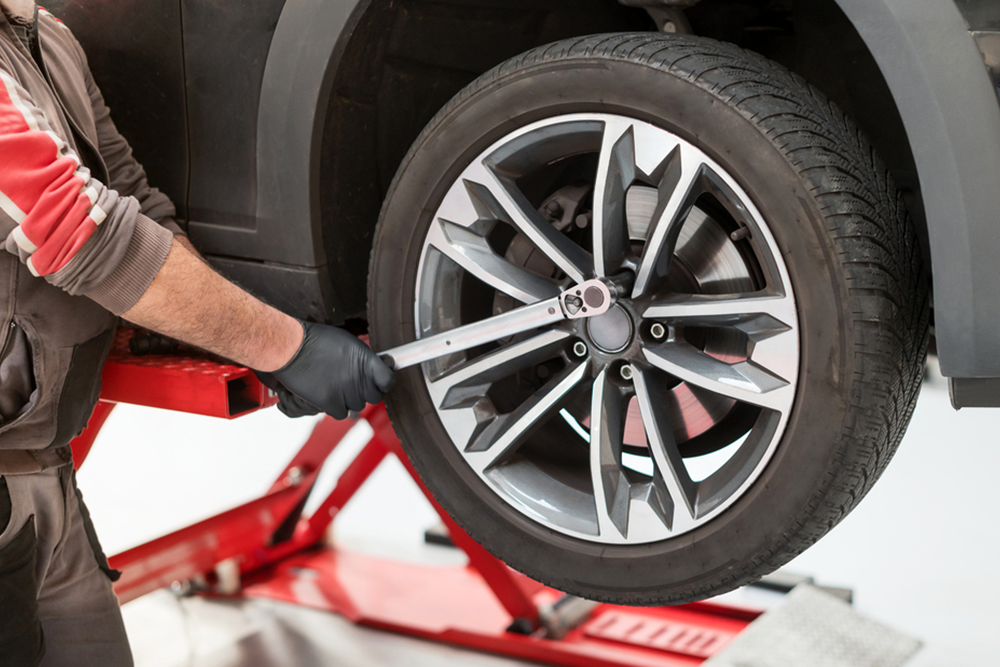
A torque wrench is your go-to tool for putting things back together, especially where exact tightness is critical. For example, after changing a tire, car makers often recommend tightening the lug nuts to 80-100 ft-lb. Too loose, and the wheel could fall off.
Too tight, and you might warp the brake rotors.
Engine building is another area where torque wrenches are essential. Each bolt must be tightened just right to avoid leaks or failure. It’s not just about “tight enough”—it’s about “exactly right. ”
Non-obvious insight: Never use a torque wrench to loosen bolts. This can throw off its calibration or even break the mechanism. Use it only for final tightening.
Practical Examples And Mistakes To Avoid
Let’s look at a real-world scenario: You need to remove your car’s brake caliper bolts, which are rusted tight.
- Use a breaker bar to loosen the bolts. If they’re very stuck, you may need to use a pipe as a “cheater bar” for even more leverage—but do this with care.
- After cleaning and replacing the parts, use a torque wrench to tighten the bolts back to the car’s recommended spec.
Many beginners try to “feel” the right tightness without a torque wrench, but this is risky. Human judgment is often off by 30-50%. It’s common to over-tighten, stretching or snapping bolts.
Another mistake is using a torque wrench to break loose bolts. This can damage the tool, costing you accuracy and money.
Types Of Breaker Bars
Not all breaker bars are the same. Here are some common types:
- Fixed Head: The most basic type. Simple, strong, and reliable.
- Swivel Head: The head pivots, making it easier to use in tight spots.
- Extendable: The handle can be made longer for more leverage or shorter for storage.
- Flex Handle: The handle bends slightly, offering more control in awkward positions.
When buying, think about your main use. For wheel lug nuts, longer is better. For engine work, a medium-length bar is often enough.
Types Of Torque Wrenches
There are several torque wrench designs. Each has its own pros and cons:
- Click Type: The most common. It clicks when you reach the set value.
- Beam Type: Has a needle that points to the torque value. Simple, but harder to read in tight spots.
- Digital/Electronic: Shows the torque on a screen and may beep or vibrate.
- Dial Type: Very accurate, used mostly in labs or by professionals.
Click-type is most popular for home and car use. Digital types are growing because of their easy-to-read displays, but they cost more.
Durability And Maintenance
Breaker bars are nearly indestructible if used properly. Wipe them clean, check for cracks, and store them dry. They don’t need calibration.
Torque wrenches are precise instruments. To keep them accurate:
- Store them at their lowest setting (not zero).
- Avoid dropping them.
- Have them calibrated every year or after 5,000 uses.
- Never use them to loosen bolts.
If you drop a torque wrench, have it checked before using it again. Even a small error can ruin a repair job.
Cost And Value
Breaker bars are simple and cheap—usually $15 to $50, depending on size and brand. They last for decades if not abused.
Torque wrenches cost more, from $30 for a basic beam type, to $300+ for digital models. Higher price often means better accuracy and longer life.
Is a torque wrench worth it? For any job where tightness matters (wheels, engines, brakes), the answer is yes. It’s a small price for safety and peace of mind.
Table: Typical Sizes And Uses
Here’s a quick guide to common sizes and their most suitable jobs.
| Tool | Drive Size | Common Uses |
|---|---|---|
| Breaker Bar | 1/2 inch | Car wheels, suspension bolts |
| Breaker Bar | 3/8 inch | Smaller engine bolts, motorcycles |
| Torque Wrench | 1/2 inch | Lug nuts, engine work |
| Torque Wrench | 1/4 inch | Small bolts, electronics |
Which Tool Should You Buy First?
If you’re just starting out, buy a breaker bar first. You can use it to loosen anything, and it’s hard to damage. Add a torque wrench as soon as you plan to do jobs where correct tightness matters, like brake work or engine repairs.
Tip: Don’t buy the cheapest torque wrench you find. Accuracy is important, and poor-quality tools often give false readings.

Safety Tips
- Always wear gloves and eye protection when using a breaker bar. Bolts can snap and send metal flying.
- Never use a pipe with a torque wrench—it’s not made for extra force.
- Double-check your torque setting before tightening.
- Store tools in a dry place to prevent rust.
Real-world Data
Studies show that over-tightening is a common cause of fastener failure in cars. The American Society of Mechanical Engineers found that incorrect torque accounts for nearly 30% of engine assembly failures. Using the right tool can prevent costly mistakes and keep you safe.
Summary Table: Quick Comparison
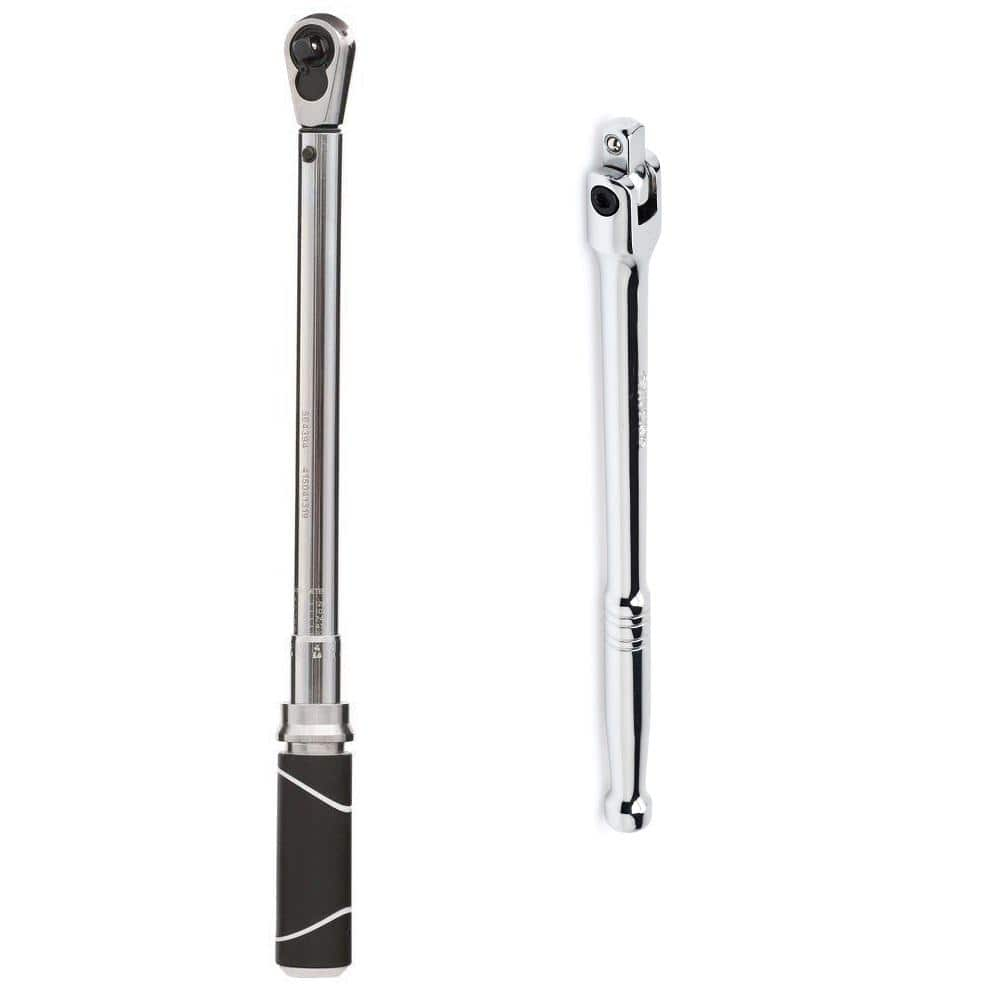
| Question | Breaker Bar | Torque Wrench |
|---|---|---|
| Can it measure torque? | No | Yes |
| Best for loosening? | Yes | No |
| Best for precise tightening? | No | Yes |
| Price range | Low | Medium to High |
Final Thoughts
Both the breaker bar and the torque wrench are must-have tools for anyone serious about car or machinery work. The breaker bar gives you raw power to loosen even the toughest bolts. The torque wrench gives you the precision needed to tighten things just right. Using them correctly saves time, prevents damage, and keeps you safe. Never use one in place of the other. Understand their roles, invest in good quality, and your toolbox—and your repairs—will be much better for it.
For more on the science of torque, you can visit the Wikipedia Torque Wrench page.
Frequently Asked Questions
What Happens If I Use A Breaker Bar Instead Of A Torque Wrench To Tighten Bolts?
A breaker bar can easily over-tighten bolts because it offers a lot of leverage but has no torque measurement. This can stretch or snap bolts, damage parts, or create unsafe conditions.
Can I Use A Torque Wrench To Loosen Bolts?
No, you should not. Torque wrenches are designed for tightening only. Using them to loosen bolts can damage their internal mechanisms and make them inaccurate.
How Often Should I Calibrate My Torque Wrench?
Most experts recommend calibrating a torque wrench once a year or every 5,000 uses, whichever comes first. If you drop the tool, get it checked before using it again.
Is A Breaker Bar Necessary For Home Mechanics?
Yes, if you plan to do any serious car or machinery work. Breaker bars make it much easier and safer to loosen stuck bolts without damaging your other tools.
Are Digital Torque Wrenches Better Than Click Type?
Digital torque wrenches are easier to read and often more accurate, but they cost more and require batteries. Click-type wrenches are simple, reliable, and very popular for most users. Choose based on your needs and budget.
As an Amazon Associate, We earn from qualifying purchases