
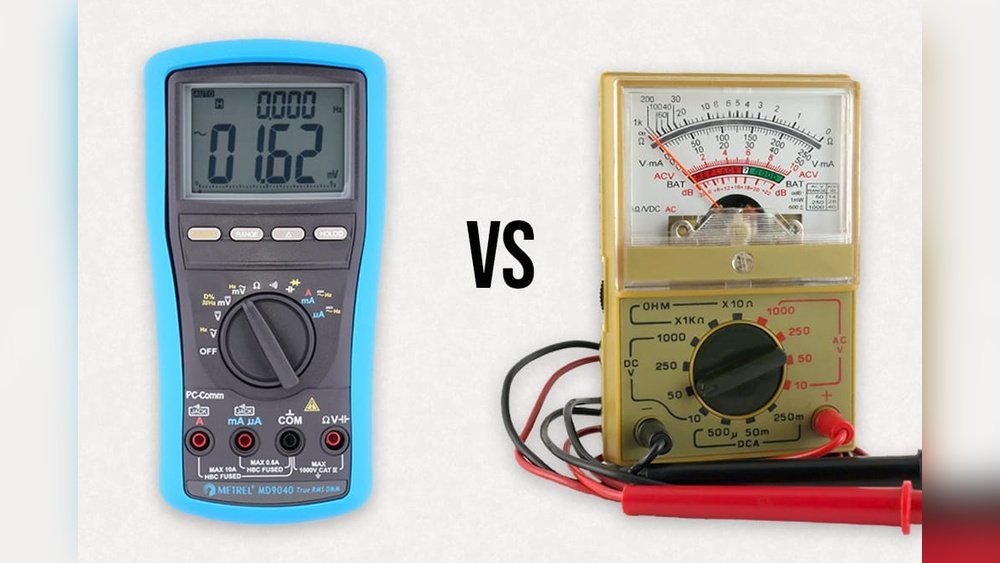
Choosing the right multimeter can feel confusing, especially if you’re new to electronics or troubleshooting. You’ve probably noticed there are two main types: analog multimeter and digital multimeter. Both are used to measure voltage, current, and resistance, but they work differently and suit different needs. Understanding their differences is essential, whether you’re a student, electrician, hobbyist, or professional technician. In this article, you’ll discover how each type works, their strengths, weaknesses, and which is best for your work.
Let’s dive deep into analog vs digital multimeters, so you can make a smart, confident choice and avoid common mistakes that frustrate many beginners.
What Is A Multimeter?
A multimeter is a tool that measures three main things: voltage (volts), current (amperes), and resistance (ohms). Some also check additional functions like continuity, diode tests, and even temperature. Multimeters are essential for electrical and electronic work. They help you test batteries, fix appliances, check fuses, and diagnose circuits.
There are two main types:
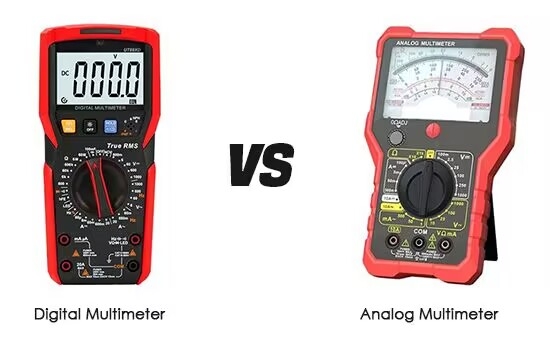
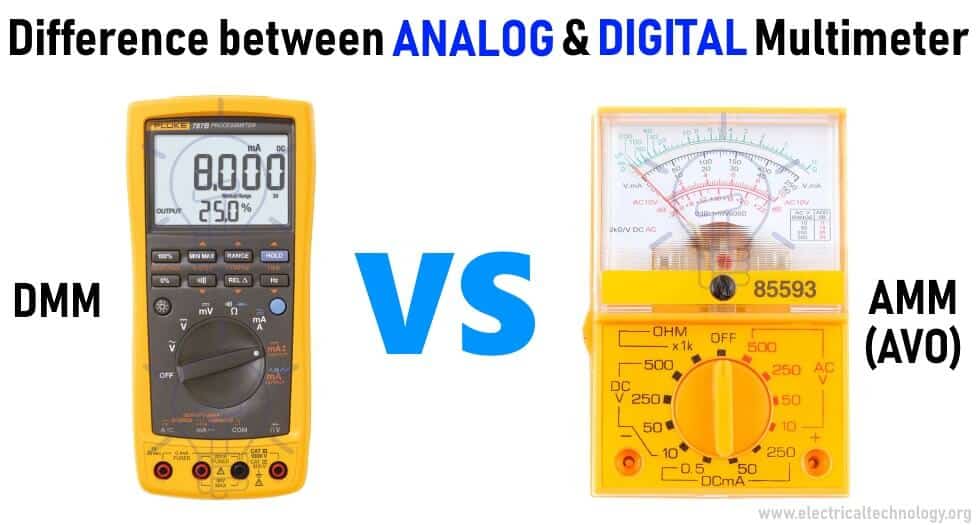
- Analog multimeter: Uses a needle and scale.
- Digital multimeter: Shows readings as numbers on a screen.
Even though both types do similar jobs, how they show results and how you use them can be quite different.
How Analog Multimeters Work
Analog multimeters, sometimes called VOMs (Volt-Ohm-Milliammeter), have been around for decades. They use a moving coil meter with a needle that points to numbers on a scale.
Inside, a small coil moves when electrical current passes through it. This movement turns the needle, which you read against a printed scale. Different settings (voltage, current, resistance) use different circuits inside the meter.
Key Features Of Analog Multimeters
- Needle display: Results are shown by a needle moving across a scale.
- No batteries needed for voltage/current: Batteries are only needed for resistance measurements.
- Manual range selection: Users often need to pick the correct range for what they’re measuring.
- Durable for certain tasks: Some analog meters are quite tough.
Example Use
If you’re fixing an old radio and want to see voltage changes over time, an analog multimeter makes it easy to watch the needle move as you adjust things.
How Digital Multimeters Work
Digital multimeters (DMMs) replaced analog models in many places because they are easier and faster to read. Instead of a needle, they use a digital screen (often LCD) that shows numbers directly.
Inside, digital meters use electronic circuits to convert the measured value to a digital number. This makes readings very clear.
Key Features Of Digital Multimeters
- Numeric display: Readings appear as numbers (e.g., 12.56 V), making them easy to read.
- Auto-ranging: Many DMMs automatically select the best range, so you don’t have to guess.
- Extra functions: Modern DMMs can test diodes, continuity, frequency, temperature, and more.
- Powered by batteries: Needed for all functions.
Example Use
When checking the voltage of a car battery, a digital multimeter lets you see the exact value (like 12. 47 V) without guessing or reading tiny scales.
Analog Vs Digital Multimeter: Head-to-head Comparison
To make things clearer, here’s a direct comparison of the main differences between analog and digital multimeters:
| Feature | Analog Multimeter | Digital Multimeter |
|---|---|---|
| Display | Needle and scale | Numeric LCD/LED screen |
| Accuracy | Moderate, reading errors possible | High, clear numbers |
| Range Selection | Usually manual | Often auto-ranging |
| Price | Usually cheaper | Wide range; basic to expensive |
| Shock Resistance | Needle can be damaged easily | More rugged models available |
| Power Source | Battery only for resistance | Battery needed for all functions |
| Readability | Needs practice; parallax error possible | Easy for everyone |
| Advanced Features | Limited | Many (diode test, frequency, etc.) |
Pros And Cons Of Analog Multimeters
Understanding the strengths and weaknesses of analog multimeters helps you decide when they’re best.
Pros
- Real-time trend watching: The needle lets you see changes as they happen, which is useful for tuning or adjusting circuits.
- Simple construction: Fewer electronic parts mean less can go wrong.
- No batteries for voltage/current: If the battery dies, you can still measure voltage and current.
- Resistant to radio frequency interference (RFI): Less likely to be affected by strong radio waves.
- Low cost: Most basic models are affordable.
Cons
- Harder to read: The needle can be tricky, especially for small changes.
- Manual ranging: You must set the right range, or you could damage the meter.
- Less accurate: Parallax error (viewing angle) can lead to mistakes.
- Fragile needle: Dropping the meter can break the needle mechanism.
- Limited extra features: Few analog models have advanced tests like diode or continuity.
Pros And Cons Of Digital Multimeters
Digital multimeters are now the most popular type. Here’s why:
Pros
- High accuracy: Digital readout removes guesswork.
- Easy to use: Auto-ranging models are beginner-friendly.
- Many extra functions: Test continuity, diodes, frequency, capacitance, temperature, and more.
- Memory/hold functions: Some can store or freeze readings.
- Safer for high voltage: CAT ratings on good DMMs show they’re tested for safety.
Cons
- Needs battery always: If the battery is dead, nothing works.
- Can be more expensive: Advanced models cost more.
- Lag in fast-changing signals: Cheaper DMMs might miss quick voltage changes.
- Sensitive to static and drops: Some models can be damaged by static or falls, but rugged designs exist.
- Can have too many features: Beginners might get confused by complex menus.
Where Analog Multimeters Excel
While digital is now king, analog meters still have a few special uses:
- Tuning radio circuits: The needle’s movement makes it easy to spot trends and small shifts.
- Learning basic electronics: Some teachers prefer analog meters because students learn to read scales and understand how meters work.
- Simple battery or fuse tests: When you don’t need high accuracy, an analog meter does the job.
- Testing with RFI present: Where radio interference is a problem, analog meters are less likely to give false readings.
Where Digital Multimeters Dominate
Digital meters win in most situations:
- Electronics repair: From phones to TVs, digital accuracy is a must.
- Automotive work: Digital meters quickly show battery and sensor values.
- Power troubleshooting: For home wiring, HVAC, or industrial systems, safety and accuracy matter.
- Fieldwork: Rugged DMMs survive in tough environments and can log data.
Accuracy And Precision: The Real Story
One common myth is that digital multimeters are always more accurate. In reality, accuracy depends on the quality of the meter, not just the type. A cheap digital meter might be less accurate than a high-end analog meter. However, most digital meters are designed to give precise, repeatable results with little chance for human reading error.
Key Accuracy Factors
- Display resolution: Digital meters can show more digits (e.g., 3½ or 4½ digits). Higher digits mean finer measurement.
- Calibration: Both types must be calibrated, but digital models hold calibration longer.
- Range selection: Auto-ranging in DMMs reduces mistakes, while manual ranging in analog meters can lead to errors.
Main Functions: What Can Each Meter Measure?
Both types measure voltage, current, and resistance. However, modern digital meters can do much more.
| Function | Analog Multimeter | Digital Multimeter |
|---|---|---|
| AC/DC Voltage | Yes | Yes |
| AC/DC Current | Yes | Yes |
| Resistance | Yes | Yes |
| Continuity Test | Rare | Common |
| Diode Test | Rare | Common |
| Capacitance | No | Some models |
| Frequency | No | Some models |
| Temperature | No | Some models |
| Transistor Test | No | Some models |
Who Should Choose An Analog Multimeter?
While most people now use digital, analog meters still have fans.
You might choose an analog multimeter if:
- You like to see trends and smooth changes (not just numbers).
- You’re learning basic electronics and want to practice reading scales.
- You work in areas with strong radio signals that might confuse digital meters.
- You need a cheap, simple tool for basic battery or continuity checks.
- You enjoy classic or vintage tools.
However, analog meters are not ideal for precision work or advanced troubleshooting.
Who Should Choose A Digital Multimeter?
For most users, a digital multimeter is the best choice. Choose a DMM if:
- You want quick, accurate readings with no guessing.
- You need extra features: Continuity beep, diode test, temperature, etc.
- You work on modern devices (phones, computers, cars).
- You want safety features like CAT ratings and overload protection.
- You need to record or store data (some DMMs have memory).
- You value ease of use (auto-ranging, clear display).
Digital meters are especially helpful for beginners, as they reduce common mistakes.
How To Use Each Type Safely
Safety is critical with any electrical tool. Here’s what you need to know for each type:
Analog Multimeter Safety Tips
- Always start on the highest range: This prevents needle damage from overload.
- Check the battery: For resistance checks, a weak battery gives wrong results.
- Handle carefully: The needle can break if dropped.
- Avoid high voltages: Most analog meters are not rated for high-voltage circuits.
Digital Multimeter Safety Tips
- Check the CAT rating: Make sure your meter matches your work (home, industrial, etc. ).
- Inspect leads and case: Damaged wires can cause shocks.
- Don’t measure current in voltage mode: This can blow a fuse or damage the meter.
- Replace the battery: If the display fades, change the battery before testing.
Both types should only be used if you understand the circuit and have basic electrical safety knowledge. For more on electrical safety, see the OSHA guide.
Common Mistakes With Multimeters
Even experienced users make mistakes. Here are some to avoid:
- Wrong range selection: On analog meters, starting too low can break the needle.
- Ignoring polarity: Reversing leads can damage some meters (especially analog).
- Testing live circuits on resistance setting: This can destroy both analog and digital meters.
- Not checking battery: For analog meters, a weak battery causes wrong resistance readings.
- Poor lead contact: Dirty or loose probes cause false readings.
A non-obvious insight: Always check for fused protection in your digital multimeter. Many cheap DMMs skip good fuses, which can be dangerous when measuring current.
Price And Value: What Should You Expect?
Analog Multimeter Price Range
- Basic models: $10–$30
- Higher-end: Up to $60, but rare
Digital Multimeter Price Range
- Basic DMM: $15–$30 (suitable for home, hobby use)
- Mid-range: $40–$100 (auto-ranging, extra features)
- Professional: $120–$500+ (high accuracy, data logging, rugged build)
Analog meters are usually cheaper, but digital meters offer more value for most users. Don’t buy the cheapest DMM—poor quality can lead to unsafe results.
Practical Examples: When To Use Each Type
Analog Example
Suppose you are tuning an old audio amplifier. As you adjust the controls, the needle on your analog meter moves smoothly. This helps you see how changes affect the signal in real time.
Digital Example
If you’re fixing a modern appliance, you need to check if a sensor is working. A digital multimeter shows the exact voltage or resistance, so you can quickly decide if the part is good or bad.
How To Choose: Key Factors
Not sure which type to buy? Ask yourself:
- What will I measure most? If you work on modern electronics, a digital is better.
- Do I need extra features? Continuity beep, diode test, temperature—only on digital.
- Is cost a big concern? Analog is cheaper, but basic digital meters are now very affordable.
- How important is accuracy? Digital wins for precise work.
- Do I want to see trends? Analog is better for watching moving signals.
- Will I use it in tough conditions? Many DMMs are designed for fieldwork.
A beginner mistake is to buy a meter with too many features, then never use them. Start with a model that fits your needs now. You can always upgrade later.
Maintenance And Care Tips
Keeping your multimeter in good shape extends its life and keeps you safe.
- Store in a case: Protects from dust, drops, and moisture.
- Change batteries regularly: Dead batteries cause wrong readings.
- Check leads for breaks: Replace if wires are damaged.
- Calibrate yearly: For both types, calibration keeps readings accurate. High-end DMMs can be sent to a lab.
- Avoid measuring live voltage on resistance setting: This is a common way to destroy meters.
- Clean contacts: Dirty probes or jacks can give false readings.
Environmental Impact And Durability
Analog meters, with fewer electronic parts, can last decades if treated well. They are less sensitive to heat and static electricity. However, their needle mechanisms are fragile.
Digital meters are more sensitive to environmental factors but modern designs are much tougher than older ones. Rugged DMMs resist water, dust, and drops—perfect for fieldwork. However, when a digital meter breaks, it is usually harder (and more expensive) to repair.
Latest Trends: The Future Of Multimeters
The line between analog and digital is blurring. Some advanced meters now offer a bar graph on the digital screen, showing trends like an analog needle. Smart digital meters can connect to phones or computers, log data, and even alert you to dangerous voltage.
True RMS digital multimeters are becoming common. These can measure AC signals accurately, even if the signal is not a perfect sine wave—something analog meters can’t do well.
Still, analog multimeters have a loyal following among vintage radio and audio enthusiasts, and as a teaching tool.

Frequently Asked Questions
What Is The Main Difference Between Analog And Digital Multimeters?
The main difference is the display type. Analog multimeters use a moving needle and scale, while digital multimeters show numbers on a screen. This affects how easy they are to read and use.
Can I Use A Digital Multimeter For All Types Of Electrical Work?
Yes, a digital multimeter can handle almost all electrical and electronic tasks, from home wiring to car repairs. Just check the CAT safety rating and features before using on high-voltage circuits.
Why Do Some Professionals Still Use Analog Multimeters?
Some professionals prefer analog meters for tasks like tuning circuits or watching trends. The needle’s movement gives real-time feedback that is hard to match on basic digital models.
Are Digital Multimeters Always More Accurate?
Not always, but most digital meters are more precise and easier to read than analog models. Accuracy depends on the quality of the meter, not just the display type.
How Do I Know If My Multimeter Is Safe To Use?
Check for a CAT rating (like CAT II, III, IV), good build quality, and fused current inputs. Inspect the leads and case for damage before each use.
Making the right choice between analog and digital multimeters comes down to your needs, experience, and budget. For most people, a digital multimeter is the best, most flexible tool. However, analog meters are still valuable in special cases, especially for learning and trend-spotting.
Remember, the best meter is the one you understand and use safely.
As an Amazon Associate, We earn from qualifying purchases