
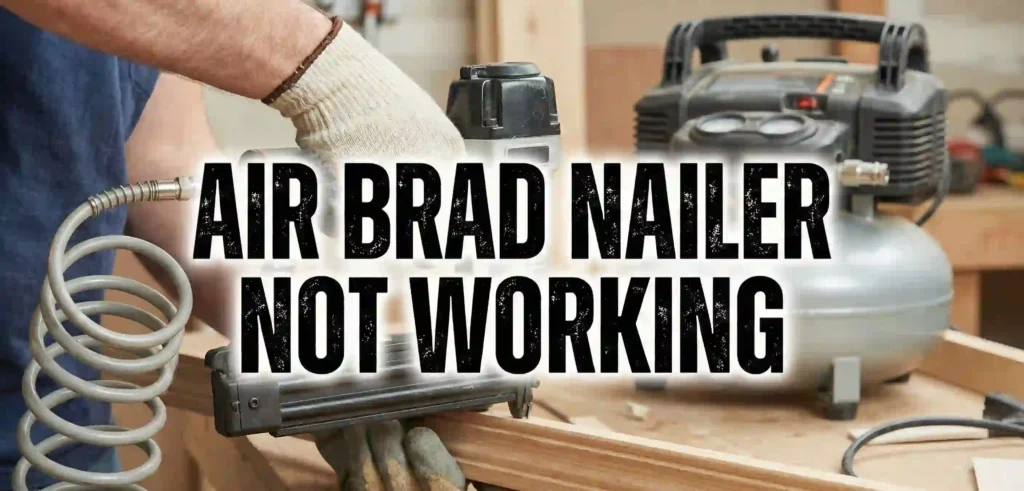
Last Tuesday, I was finishing a set of shaker-style cabinet doors in my garage. The sun was setting, and I had just two pieces of trim left. I lined up the last corner, squeezed the trigger, and… thud. No nail came out. Just a tiny puff of air and the sound of my own frustrated sigh echoed in the room.
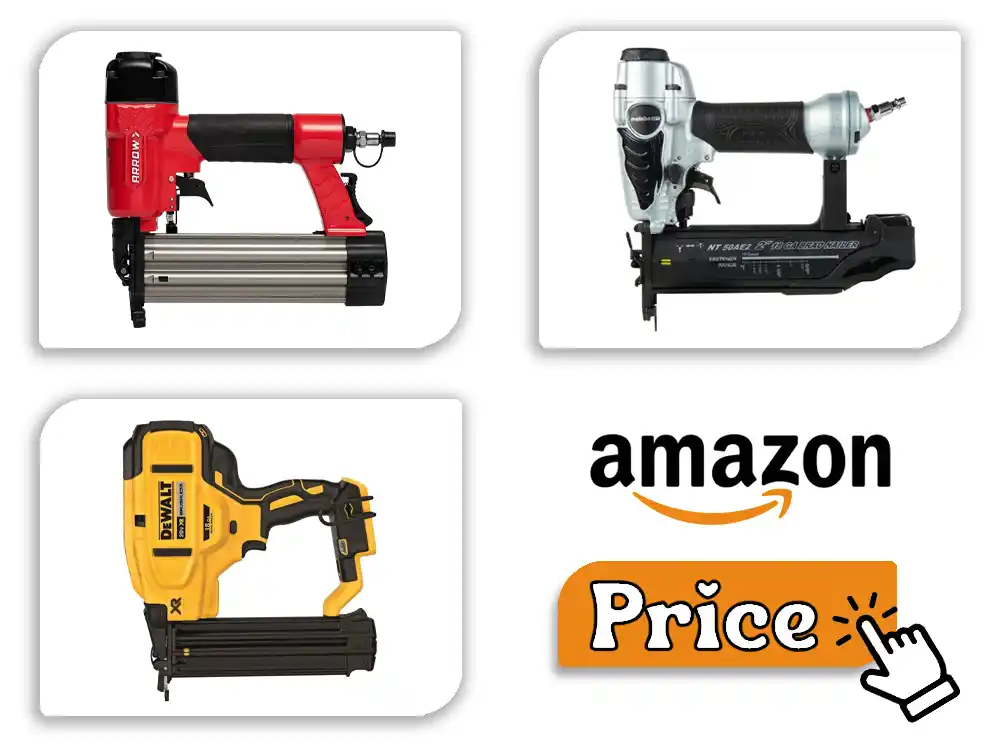
When an air brad nailer is not working, it usually happens at the worst possible time. I have spent years using brands like DeWalt, Bostitch, and Makita. I’ve dealt with every jam, leak, and hiss you can imagine. If your gun is acting up, do not worry. You do not need a degree in engineering to fix it.
Common Reasons for Nailer Failure
I like to start with the easy stuff first. It saves me from taking the whole tool apart when I do not have to. Most problems come down to air, nails, or oil. If you check those three things, you will solve most of your issues in minutes.
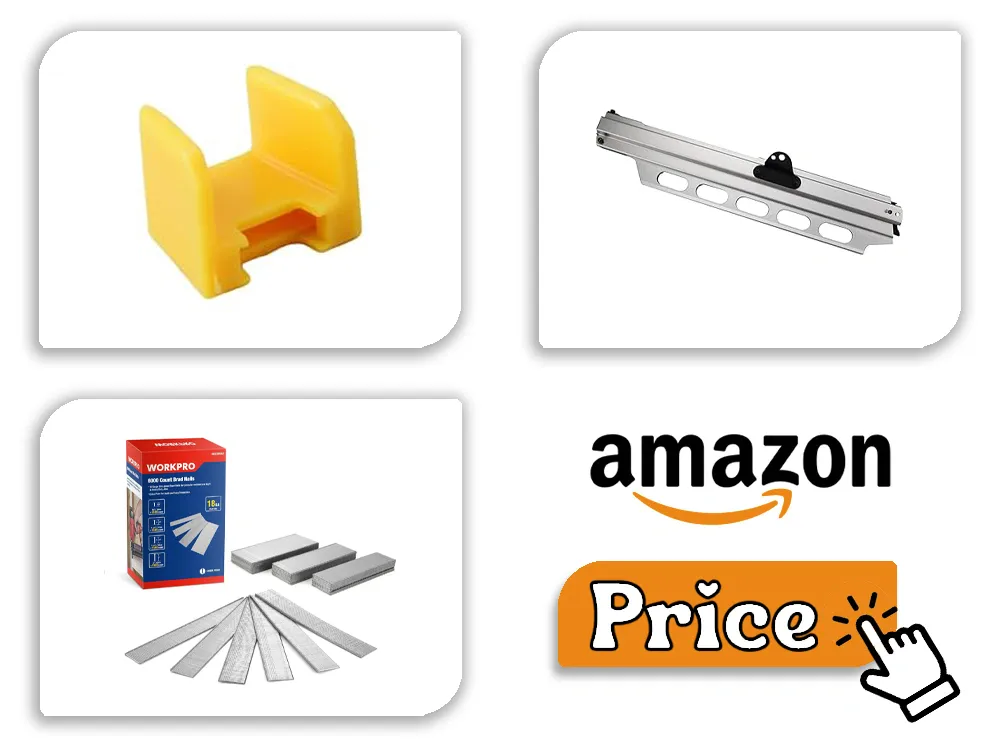
Troubleshooting at a Glance
| Symptom | Quick Fix | Tools Needed |
| Tool makes a “thud” sound | Increase air pressure | Air Compressor |
| Hissing near the trigger | Add tool oil | Pneumatic Oil |
| Trigger won’t pull | Check for empty magazine | 18-Gauge Nails |
| Nails sticking out | Adjust depth drive | None |
Check Your Air Supply and Pressure
The very first thing I do is check the compressor. It sounds silly, but I once spent ten minutes getting mad at a Porter-Cable nailer only to find out my hose had a kink. If the air can’t get to the tool, the tool won’t fire.
Most pneumatic tools need a specific range of pressure. If the air is too low, the piston won’t have enough force to drive the nail. If it is too high, you might blow out the O-rings. I always check my gauge first to see where the needle sits.
Finding the Sweet Spot (PSI)
| Material Type | Suggested PSI |
| Soft Pine Trim | 70 – 80 PSI |
| Oak or Hardwood | 90 – 100 PSI |
| Thick Plywood | 85 – 95 PSI |
I always keep my compressor set to about 90 PSI for trim work. If the nails are “proud” or sticking out, I turn it up just a bit. If they go too deep, I turn it down. This simple tweak is often all you need to get back to work.
Dealing with a Jammed Nail
A jam is the number one reason an air brad nailer is not working. I can usually tell it is a jam by the sound. It is a flat, metallic “clack” instead of a sharp “pop.” Last month, I used some cheap nails I found on a shelf, and they buckled in the nose every three shots.
To clear a jam, always disconnect the air hose first. I have seen people try to clear a jam with the air still on, and that is very risky. Just pop the coupler off and move to a well-lit workbench. Then, you can safely look into the nose of the gun.
Most modern nailers have a tool-free latch on the front. I flip that lever up and the nose plate opens right up for me. Look inside the nose for a bent nail or a tiny shard of metal. If the driver blade is stuck in the “down” position, use a small screwdriver to gently push it back up into the head.
The Importance of Tool Oil
I used to be lazy about oiling my tools. I thought “oil-free” tools were the only way to go. But many of my favorite guns still need a little lube to stay fast. The inside of your nailer is full of rubber O-rings that need to stay slick.
As the tool works, air moves fast and gets hot. This dries out the rubber seals inside the chamber. When the rubber dries, it shrinks, and that is when you start hearing that annoying “hiss” of leaking air. A dry tool is a slow tool that will eventually fail.
I keep a small bottle of pneumatic tool oil right by my compressor at all times. Before I start a project, I put three drops into the air plug at the bottom of the gun. Do not use WD-40, as it is too thin and can eat the rubber. Use real tool oil to keep the piston moving.
Understanding Dry Fire Lockout
Have you ever been nailing along and the gun just stops? The trigger will not move, but the gun looks fine. This happened to me during a baseboard job, and I thought the trigger had snapped off inside.
It turns out, many brad nailers have a “dry fire lockout” feature. When you get down to the last few nails, the gun locks itself. This stops the metal driver from hitting the wood with no nail. It protects your trim from ugly dents and keeps your tool safe.
If your gun stops for no reason, check the magazine. You might just be out of brads. Slide in a fresh strip of 18-gauge nails and try again. The trigger should unlock right away, and you can finish your project without any more stress.
Temperature and Environment Issues
If you work in a cold garage like I do, your tools might act up in the winter. One January morning, my Makita nailer just would not fire. The grease inside had thickened up in the cold air. It felt like the tool was moving through thick mud.
If your tool is freezing, bring it inside the house for thirty minutes. Let it warm up to room temperature before you try to use it. You can also add a few extra drops of oil to help thin out the cold grease. This usually fixes the problem quickly.
Also, watch out for water in your lines. Compressors trap moisture as they pump air. If that water gets into your hose and freezes, it can block the air. I drain my compressor tank every time I finish working to keep the rust out and the air clean.
When to Call It a Day and Replace Parts
Sometimes, a quick fix is not enough to save the day. If air is leaking from the back of the gun, you likely have a blown head valve. You might also have a cracked O-ring that oil cannot fix.
I have rebuilt a few of my tools using seal kits. It is a fun project if you like taking things apart on a Saturday. But if the metal body of the gun is cracked, it is time for a new one. A cracked tool is not safe to use with high pressure.
Repair vs. Replace
| Problem | Fix Level | Recommendation |
| Constant air leak | Medium | Buy a seal kit ($15) |
| Broken nose latch | Easy | Order a replacement part |
| Bent magazine | Hard | Time for a new tool |
| Cracked housing | Dangerous | Replace immediately |
Final Thoughts on Fixing Your Nailer
I know it is frustrating when your air brad nailer is not working. But most of the time, it is just a simple jam or a dry seal. Take a deep breath and disconnect the air hose. Check the nose for jams and add a few drops of oil.
Nine times out of ten, that will get you back to your project in a few minutes. My best advice is to listen to your tool. If it sounds different or feels slow, stop and check it. A little care goes a long way in making your tools last for many years.
FAQs: Air Brad Nailer Not Working
Why is my air brad nailer not working after I oiled it?
You might have used too much oil. Excess oil can gum up the internal firing pin. Fire the tool a few times without nails to clear the extra lube out of the chamber.
Can I use a DeWalt or Milwaukee battery compressor with my nailer?
Yes, cordless compressors work great for trim. Just make sure the tank hits 90 PSI. Small portable tanks are perfect for quick home repairs or small hobby projects.
Why does my nailer hiss when I plug in the air hose?
A hiss usually means a dry or torn O-ring seal. Try adding three drops of tool oil to the air inlet first. If the leaking stays loud, you likely need a cheap rubber seal kit.
Does cold weather affect my pneumatic brad nailer?
Yes, cold air makes the internal grease thick and sticky. This slows down the piston and causes misfires. Keep your tool in a warm room before you start working in a cold garage.
What is the best way to store my nailer in a damp shed?
Moisture is the enemy of metal tools. Always drain your compressor tank to keep water out of the lines. Store your nailer in a hard case with a small silica gel pack to stop rust.