
Every homeowner or business that cares about cleaning has heard of pressure washers. These powerful machines can strip away years of grime in just minutes. But if you look closely, you’ll see two very different types: belt drive and direct drive pressure washers. This difference isn’t just about what’s under the hood—it affects everything from cost and maintenance to cleaning power and how long your machine will really last.
Maybe you’re a contractor who needs a tough machine for daily jobs. Or maybe you just want the best tool for your home driveway. Choosing the right drive system can save you money, prevent headaches, and help you get the job done right. But most guides miss the small details that really matter. In this article, you’ll discover not just how these systems work, but what they mean for real-world cleaning, repairs, and long-term value. You’ll find practical advice, overlooked facts, and clear examples to help you decide: Belt drive or direct drive—which pressure washer is truly best for you?
How Pressure Washers Work: A Quick Overview
To compare belt drive and direct drive, it helps to understand the basics. A pressure washer uses a motor (electric or gas) to power a pump. Water enters the pump, which forces it out under high pressure through a hose and spray gun. This high-pressure water does the cleaning.
But how the motor connects to the pump makes a big difference. That’s where the drive system comes in.
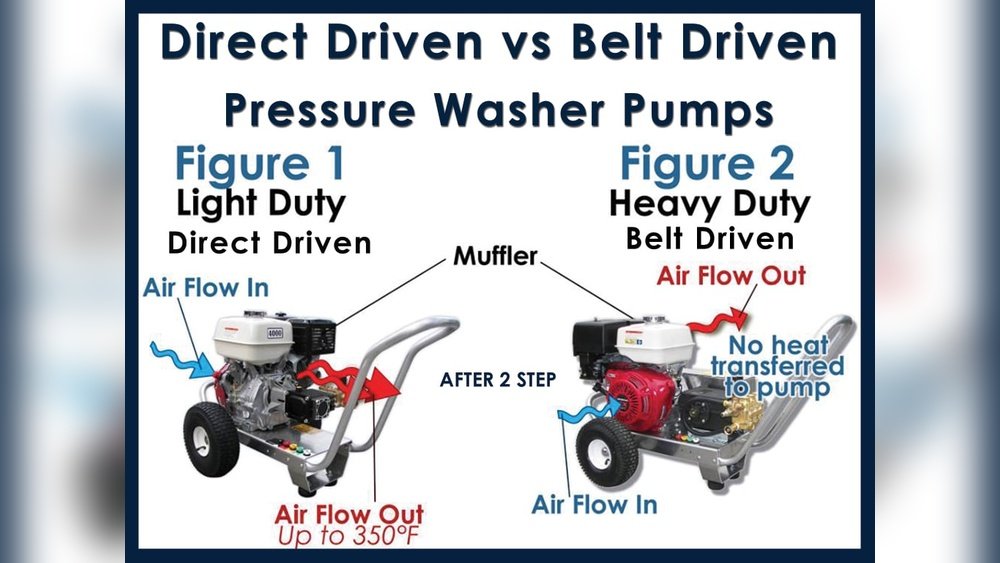
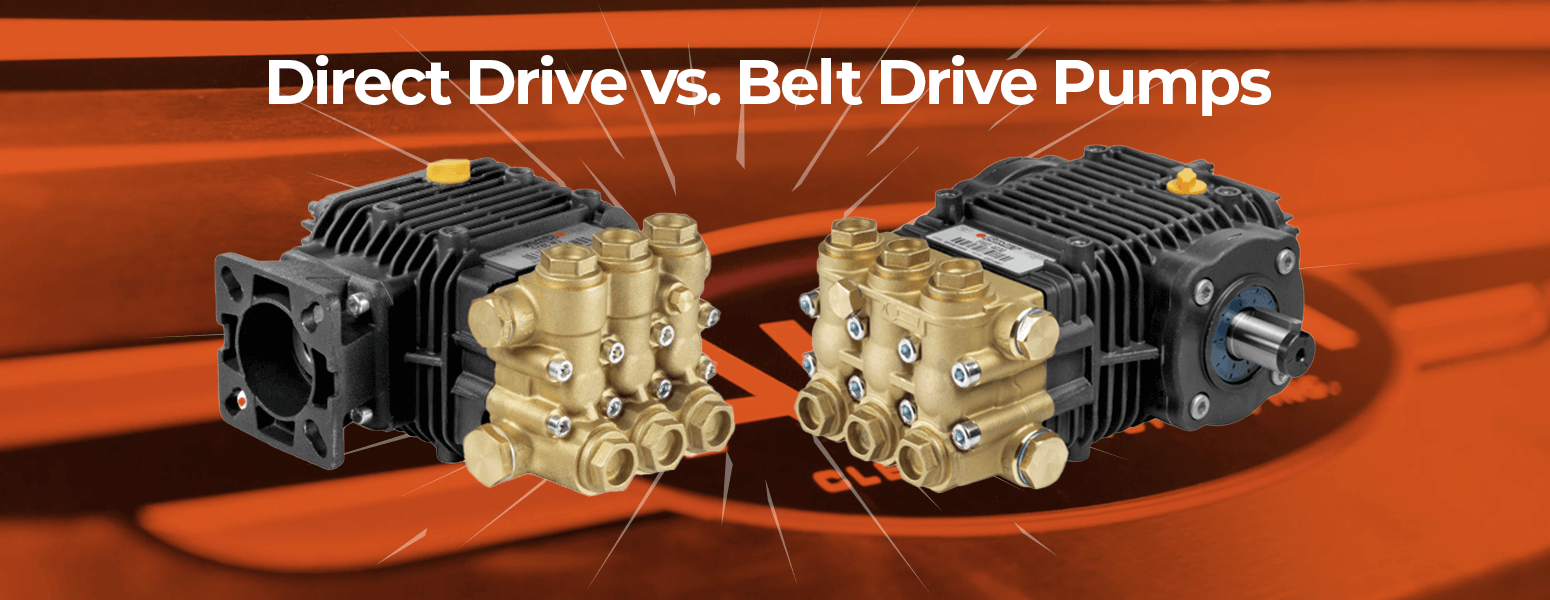
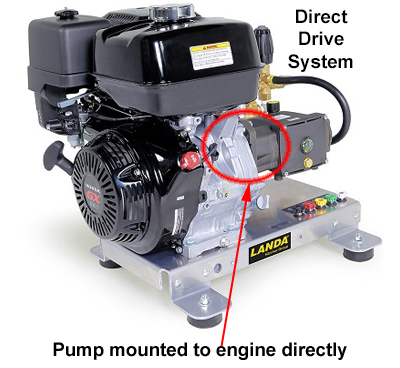
- In a direct drive washer, the pump is mounted right onto the motor or engine shaft. They turn together, at the same speed.
- In a belt drive washer, a belt and pulleys connect the motor to the pump. The belt transfers motion and can change the speed.
This simple difference changes much more than most people realize.
What Is A Direct Drive Pressure Washer?
A direct drive pressure washer is the most common type you’ll find in hardware stores. Here, the pump sits directly on the engine or motor shaft. When the engine runs, the pump spins at the same speed—usually around 3,400 RPM for gas engines.
Key Points
- Simple design: Fewer parts, less to maintain.
- Compact size: Takes up less space.
- Lower price: Usually costs less to buy.
Typical Uses
Direct drive washers are popular for homeowners and small businesses. You’ll see them for cleaning cars, driveways, decks, and small commercial jobs. They work well for jobs under 20 hours per week.
Example
A 3,000 PSI, 2. 5 GPM direct drive washer is common for cleaning a home’s siding or washing a car. It’s affordable, portable, and easy to use.
What Is A Belt Drive Pressure Washer?
A belt drive pressure washer uses a system of pulleys and a belt to connect the engine and the pump. The pump usually spins slower—about 1,450 RPM. The belt absorbs vibrations and lets the pump run cooler.
Key Points
- More complex: Extra pulleys and a belt to maintain.
- Larger size: Needs more space for parts.
- Higher price: Costs more up front.
Typical Uses
Belt drive washers are built for professional use. They’re ideal for contractors, fleet washers, and anyone using a washer more than 20 hours a week. They last longer under heavy, daily use.
Example
A 4,000 PSI, 4 GPM belt drive washer is a favorite for commercial cleaning, paint prep, or washing construction equipment.
Head-to-head: Belt Drive Vs Direct Drive
Let’s break down the major differences to see what really matters.
Cost
- Direct drive washers are cheaper. You can buy a direct drive unit for $300–$1,200.
- Belt drive washers usually start at $1,200 and can go well over $3,000.
The higher price comes from extra parts—belt, pulleys, larger frame—and the heavy-duty pump.
Size And Weight
- Direct drive machines are lighter and more compact. They’re easy to move and store.
- Belt drive units are bulkier. The extra parts add weight and size. You’ll need a truck or trailer for larger models.
Pump Speed And Heat
- A direct drive pump spins fast (engine speed, usually 3,400 RPM).
- A belt drive pump spins slower (about 1,450 RPM).
Slower speed means less heat and wear. Heat is the enemy of pump life.
Vibration And Noise
- Direct drive washers vibrate more. Vibration can wear out parts faster.
- Belt drive systems absorb vibration. They’re quieter and have less stress on the pump.
Maintenance Needs
- Direct drive units have fewer parts. But because they run hotter and faster, the pump may wear out sooner.
- Belt drive units need belt checks and adjustments, but pumps last much longer.
Lifespan
- Direct drive washers: Expect 500 to 2,000 hours before pump replacement.
- Belt drive washers: Often last 5,000 hours or more with proper care.
Duty Cycle
- Direct drive machines are made for occasional use—a few hours at a time.
- Belt drive machines are built for continuous, all-day use.
Price Vs. Value
Direct drive washers are a good value for light or medium use. For heavy use, the extra money spent on a belt drive pays off in lower repair costs and fewer breakdowns.
Real-world Scenarios: Which Is Better?
Choosing between belt and direct drive depends on your situation. Here are some real-life examples to help you decide.
Homeowners
If you wash your car or driveway once a week, a direct drive washer is plenty. It’s affordable and easy to store. You won’t see the benefits of a belt drive unless you’re cleaning for hours every day.
Small Businesses
A small landscaper or shop owner might use a pressure washer for a few hours per week. Direct drive works here, but if uptime is critical (you can’t afford breakdowns), a belt drive may be worth the investment.
Contractors
If you clean buildings, fleets, or construction sites all day, every day, a belt drive is the clear winner. The lower heat and vibration protect the pump, and the machine lasts longer under constant use.
Rental Businesses
Rental companies choose belt drives because customers may run them all day and don’t always use them carefully. The extra durability saves money in repairs.
Pros And Cons: Direct Drive Pressure Washer
Let’s look at the real advantages and disadvantages.
Pros
- Lower initial cost—easy to buy for less money.
- Compact size—fits in small spaces.
- Simple maintenance—fewer parts to check.
- Easy to move—lighter weight.
Cons
- Shorter pump life—wears out faster under heavy use.
- More vibration and noise—can be uncomfortable.
- Not for long jobs—overheats on all-day tasks.
- Less durable—not meant for daily, professional work.
Pros And Cons: Belt Drive Pressure Washer
Now, the other side.
Pros
- Longer pump life—runs cooler and lasts years.
- Quieter operation—less vibration and noise.
- Handles tough jobs—great for daily, continuous use.
- Better for hot water—slower pump handles heat better.
Cons
- Higher upfront cost—more expensive to buy.
- Larger and heavier—harder to transport.
- More complex maintenance—belts and pulleys need checking.
- More space needed—not great for small garages.
Detailed Comparison Table: Key Differences
Here’s a quick look at the main differences side by side.
| Feature | Direct Drive | Belt Drive |
|---|---|---|
| Initial Cost | Lower ($300–$1,200) | Higher ($1,200+) |
| Pump Life | 500–2,000 hours | 5,000+ hours |
| Size & Weight | Compact, lightweight | Bulky, heavier |
| Noise & Vibration | Higher | Lower |
| Maintenance | Simpler, less frequent | Needs belt checks/adjustments |
| Best Use | Home/light business | Commercial/continuous |
| Hot Water Use | Limited | Excellent |
Performance And Cleaning Power
Many buyers think belt drive and direct drive washers have different cleaning power. But the drive system doesn’t change the pressure or flow. PSI (pounds per square inch) and GPM (gallons per minute) depend on the pump and engine, not the drive style.
What matters more is duty cycle—how long you can run the washer before it needs a break. Belt drives can run all day without overheating. Direct drives should rest after an hour or two.
Example
A 4,000 PSI, 4 GPM direct drive and a 4,000 PSI, 4 GPM belt drive will clean equally well. The difference is how long they can run and how long they’ll last.
Maintenance: What Owners Need To Know
Maintenance is often overlooked when choosing a pressure washer. Here’s what each type needs.
Direct Drive Maintenance
- Check oil level in the pump every 3–6 months.
- Replace pump oil every 200–300 hours.
- Inspect hoses and spray tips regularly.
- Store in a dry place.
Direct drive units don’t have belts or pulleys, so less can go wrong. But the pump runs hotter, so check for leaks or odd noises.
Belt Drive Maintenance
- Check and tighten the belt every month.
- Replace the belt every 1–2 years (or sooner if worn).
- Change pump oil every 300 hours.
- Grease pulleys as needed.
- Inspect for debris under the belt guard.
A worn or loose belt can cause poor performance or damage the pump. This extra step is easy to miss but important for long life.
Pro Tip
One mistake many owners make: forgetting to check the belt tension. A loose belt can slip, making the washer weak. Too tight, and it can wear out the bearings.
Hot Water Pressure Washers: Which Drive Is Best?
If you need a hot water pressure washer, the drive style matters more. Hot water helps remove oil, grease, and tough dirt. But it also puts more stress on the pump.
- Belt drive is much better for hot water washers. The slower speed keeps the pump cool, even with water up to 200°F.
- Direct drive can overheat with hot water, shortening pump life.
That’s why almost all professional hot water washers use a belt drive.
Common Buyer Mistakes (and How To Avoid Them)
Many people regret their first pressure washer buy. Here are mistakes to avoid:
- Choosing by price alone: The cheapest unit may cost more in repairs later.
- Ignoring duty cycle: If you run a direct drive all day, expect early breakdowns.
- Overlooking maintenance: Belt drive needs simple belt checks. Direct drive needs pump oil changes.
- Wrong machine for the job: Heavy cleaning jobs need a belt drive. Light home use is fine with direct drive.
- Forgetting about noise and vibration: Some users find direct drive too loud for long jobs.
Which Pressure Washer Is Right For You?
Choosing between belt drive and direct drive depends on these questions:
- How often will you use it? If less than 10 hours per week, direct drive is fine.
- Do you need hot water? Choose belt drive.
- Is portability important? Direct drive is lighter.
- Are you a pro cleaner? Belt drive will save you money in the long run.
If you’re not sure, ask yourself: Would you rather spend more now for a machine that lasts, or save money up front but risk more repairs later?
Long-term Cost Of Ownership
The total cost of a pressure washer is more than the price tag. Think about:
- Pump replacements: Direct drive pumps wear out faster.
- Downtime: A broken washer means lost work.
- Maintenance parts: Belts are cheap, pumps are expensive.
- Resale value: Belt drive units hold value better.
Here’s a simple cost breakdown:
| Item | Direct Drive | Belt Drive |
|---|---|---|
| Initial Purchase | $800 | $2,500 |
| Pump Replacement (over 5 years) | $400–$600 | $0–$200 |
| Belt Replacement (over 5 years) | N/A | $40–$100 |
| Downtime/Repairs | Higher | Lower |
| Resale Value | Lower | Higher |
For heavy users, the belt drive is cheaper over time—even if it costs more at first.
Not-so-obvious Insights
Here are two facts most guides miss:
- Slower pump speed means better water suction. Belt drive washers can draw water from a tank or standing source. Direct drive often can’t, because the fast pump needs pressurized water. If you work on farms or remote sites, this is a big deal.
- Belt drive absorbs engine vibration. This not only saves the pump but also protects other parts (like unloader valves and hoses), reducing overall repair costs.
Environmental And Workplace Factors
Noise and heat are more than comfort issues. In some cities, noise restrictions limit when and where you can clean. Belt drive washers are much quieter, so they’re better for residential or night work.
Also, cooler running means less risk if you must clean indoors or in sensitive areas (like food plants).
How To Spot The Difference When Shopping
If you’re looking at washers in a store or online, here’s how to tell them apart:
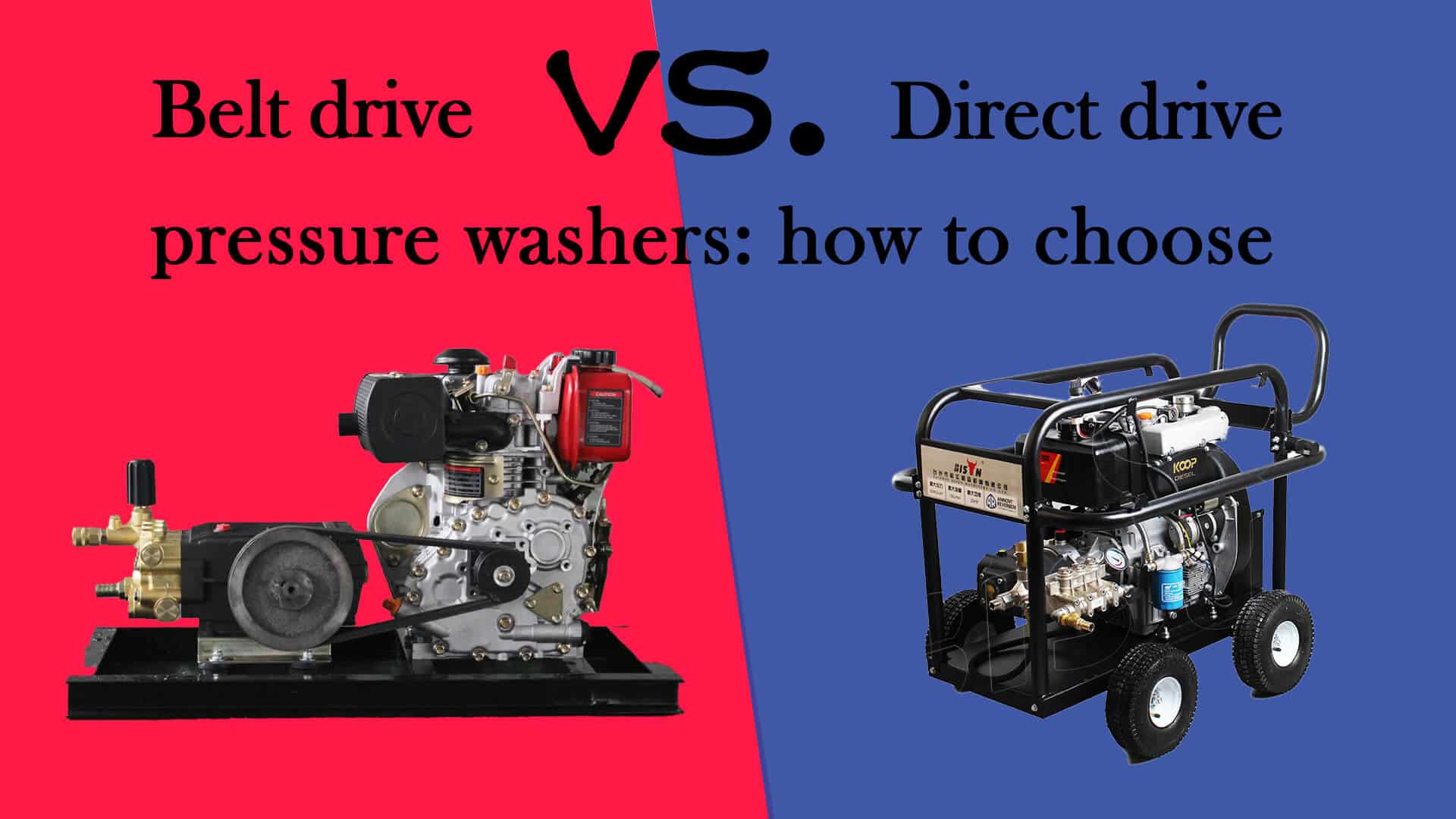
- Direct drive: Pump is mounted right against the engine or motor. The whole machine looks “tight” and compact.
- Belt drive: You’ll see a belt guard (usually a metal or plastic cover on the side). The pump sits a few inches away from the engine, connected by pulleys and a belt.
Don’t rely only on specs—look at pictures or ask the seller.
When To Upgrade: Signs You Need A Belt Drive
If you already own a direct drive washer, you may wonder if it’s time to upgrade. Here are some signs:
- You’re repairing or replacing pumps every year.
- You need to run the washer for hours without a break.
- You want to add hot water capability.
- You’re getting complaints about noise or vibration.
- You want to draw water from a tank or pond.
If you say “yes” to any of these, a belt drive is a smart investment.
Safety And Reliability
Belt drive pressure washers often have better safety features, like guards over the belt and more robust frames. This matters if your washer is used by employees or renters. A snapped belt is less likely to hurt someone than a failed direct-drive coupling.
Also, because belt drives run cooler, there’s less risk of pump failure or dangerous leaks during long jobs.
Popular Models And Brands
Some brands are known for high-quality belt or direct drive washers:
- Direct drive: Simpson, Generac, Ryobi, Karcher (home and light commercial use)
- Belt drive: Mi-T-M, Pressure Pro, Landa, Alkota (heavy-duty, commercial)
Look for CAT, General, or AR pumps—these brands make long-lasting parts for both systems.
For a deeper look at top models, the Cleaning Equipment Trade Association offers guidance and reviews.
Quick Reference: Which Pressure Washer To Choose?
Here’s a final summary to help decide:
| Situation | Best Drive Type | Why |
|---|---|---|
| Home use, < 10 hours/week | Direct Drive | Affordable, easy to store |
| Light business, < 20 hours/week | Direct Drive | Good balance of price/performance |
| Heavy-duty, > 20 hours/week | Belt Drive | Longer life, less downtime |
| Hot water cleaning | Belt Drive | Safer and more reliable |
| Tank/pond water source | Belt Drive | Better suction ability |
Frequently Asked Questions
What Is The Main Difference Between Belt Drive And Direct Drive Pressure Washers?
The main difference is how the pump is powered. Direct drive washers have the pump attached directly to the engine or motor, spinning at the same speed. Belt drive washers use a belt and pulleys to spin the pump at a slower, cooler speed, which helps the pump last longer and run quieter.
Which Type Is Better For Home Use?
For most homeowners, a direct drive pressure washer is better. It’s cheaper, smaller, and easier to maintain. Unless you’re using it for hours every day, you won’t see the benefits of a belt drive.
Are Belt Drive Pressure Washers Worth The Extra Cost?
Yes, if you use the washer for long periods or need extra durability. Belt drive washers cost more but last much longer, especially under tough, daily use. For professional cleaners or businesses, the savings on repairs and downtime make them worth it.
Can A Direct Drive Pressure Washer Use Hot Water?
Most direct drive washers are not designed for hot water. The pump spins too fast and can overheat. For hot water cleaning, always choose a belt drive machine.
How Do I Know When To Replace The Belt On A Belt Drive Washer?
Check the belt every month for cracks, fraying, or slipping. If you notice a loss of power or hear squealing noises, replace the belt. Most belts last 1–2 years, but it depends on how often you use the washer.
A good pressure washer is an investment—choose the right drive type for your needs and you’ll enjoy years of reliable cleaning power. Whether you go with a belt drive or direct drive pressure washer, understanding the differences means you’ll avoid costly mistakes and get the best value for your money.
As an Amazon Associate, We earn from qualifying purchases