
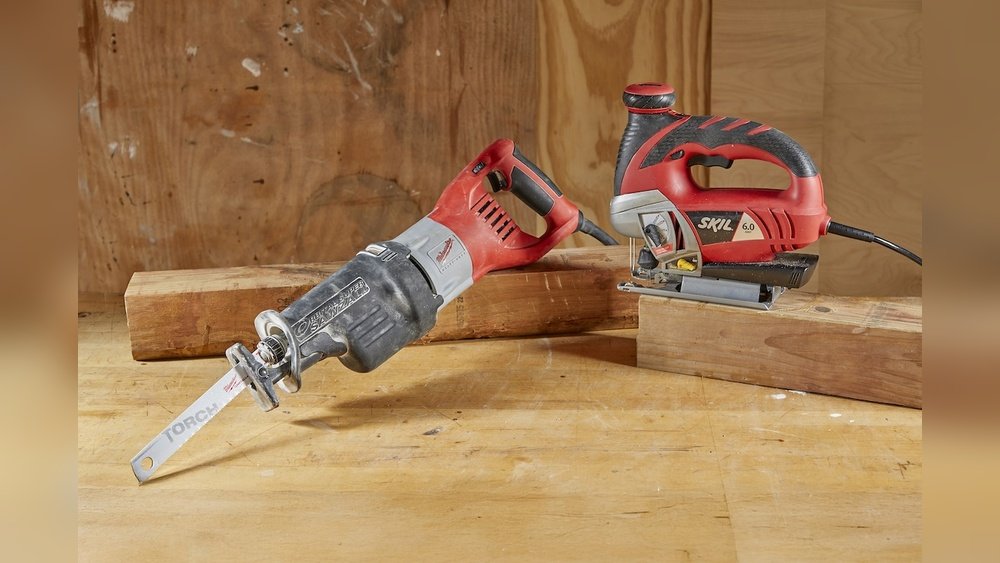
If you are planning a woodworking or renovation project, you may need to choose between a jigsaw and a reciprocating saw. These two tools often look similar, but their uses, strengths, and weaknesses are quite different. Picking the right one can save you time, money, and frustration. In this guide, you will find everything you need to know about jigsaws and reciprocating saws. We will compare their features, uses, advantages, and limitations so you can decide with confidence.
What Is A Jigsaw?
A jigsaw is a handheld power tool with a thin, straight blade that moves up and down very quickly. It is designed mainly for cutting curves and detailed shapes in wood, metal, plastic, and other materials. The blade is narrow and can turn smoothly, making it perfect for intricate cuts and patterns.
Jigsaws are lightweight and easy to control, even for beginners. Most jigsaws have a flat base called a shoe, which sits on the material and helps guide the blade. You can adjust the angle of the shoe to make beveled cuts. Jigsaws are also known for their ability to start cuts in the middle of a material by drilling a small hole and inserting the blade.
What Is A Reciprocating Saw?
A reciprocating saw is a more powerful, robust tool that uses a thicker, longer blade that also moves back and forth. This tool is sometimes called a Sawzall (a popular brand name). Reciprocating saws are best for demolition, rough cutting, and jobs where speed and power matter more than precision.
With a reciprocating saw, you can cut through wood, metal pipes, drywall, nails, and even tree branches. The blade is exposed and not guided by a shoe like a jigsaw. This makes it less accurate, but much more flexible for cutting in hard-to-reach places or unusual angles.

Key Differences Between Jigsaw And Reciprocating Saw
To make the choice clearer, see this direct comparison:
| Feature | Jigsaw | Reciprocating Saw |
|---|---|---|
| Cutting Style | Curved and straight, precise | Straight, rough, demolition |
| Blade Type | Thin, narrow, short | Thick, long, robust |
| Control | High, easy to guide | Low, harder to guide |
| Best Material | Wood, plastic, thin metal | Wood, metal, drywall, piping |
| Typical Use | Detail work, curves | Demolition, rough cuts |
| Weight | Light | Heavy |
| Price Range | $30-$200 | $40-$300 |
When To Use A Jigsaw
Jigsaws are the go-to tool for tasks that need precision and curved cuts. Here are common situations where a jigsaw shines:
1. Cutting Curves
For making round corners or artistic patterns in wood, a jigsaw’s slim blade moves easily along your line.
2. Making Bevel Cuts
Many jigsaws let you tilt the base for angled cuts, useful for decorative trim or joining pieces at an angle.
3. Internal Cuts
Need a hole in the middle of a panel for a sink or electrical outlet? Drill a starter hole and insert the jigsaw blade.
4. Working With Thin Materials
Jigsaws handle plywood, plastic, and sheet metal with ease. The fine blade prevents splintering and chipping.
5. Quiet Operation
Jigsaws are generally quieter than reciprocating saws, making them suitable for indoor use or sensitive areas.
Example Project: Cutting A Circle In Plywood
Suppose you want to make a round tabletop or a speaker hole. A jigsaw will let you follow a drawn circle with much more control than a reciprocating saw. For best results, clamp your workpiece, use a clean blade, and move slowly.
When To Use A Reciprocating Saw
A reciprocating saw is built for speed and power. These are situations where it is the better choice:
1. Demolition Work
Need to tear out a wall or cut through wood with nails in it? The reciprocating saw powers through quickly.
2. Pruning Trees
You can use a pruning blade to cut small branches or roots where a chainsaw would be overkill.
3. Tight Spaces
The long blade can reach behind walls, under floors, or in places a jigsaw cannot fit.
4. Cutting Pipes Or Metal
With a metal-cutting blade, you can slice through plumbing, conduit, or even car parts.
5. Rough Construction
Reciprocating saws are ideal for jobs where the cut does not need to be pretty—just fast and effective.
Example Project: Removing Old Window Frames
If you need to cut through nails, screws, and wood quickly, a reciprocating saw will get the job done. It can handle unexpected materials without jamming or breaking easily.
Strengths And Weaknesses
Both tools have clear strengths and weaknesses. Here is a summary:
| Tool | Strengths | Weaknesses |
|---|---|---|
| Jigsaw | – Curved and detailed cuts – Light, easy to control – Good for beginners – Low noise | – Not good for thick/hard materials – Slower for long, straight cuts – Blade can bend or break |
| Reciprocating Saw | – Cuts almost anything – Fast for demolition – Works in awkward spaces | – Rough, inaccurate cuts – Heavy, more vibration – Louder, can be tiring |

Blade Choices And Compatibility
Both tools use different blade types:
- Jigsaw blades are narrow and short. They come in different tooth designs for wood, metal, or plastic. Some jigsaws use T-shank blades, while others use U-shank. Always check your model for compatibility.
- Reciprocating saw blades are longer and thicker. There are special blades for wood, metal, demolition, or pruning. The blade attachment is usually universal, but some older models may differ.
Non-obvious tip: Using the right blade is almost as important as choosing the right tool. A wood blade in metal will dull quickly and may even break. Read the blade packaging carefully and match it to your material.
Safety Considerations
Power saws are dangerous if not used with care. Here are some safety basics for each tool:
Jigsaw Safety:
- Wear safety glasses and hearing protection.
- Secure your workpiece with clamps.
- Let the blade reach full speed before touching the material.
- Do not force the tool—let it cut at its own pace.
Reciprocating Saw Safety:
- Always wear gloves, eye, and ear protection.
- Keep both hands on the tool for control.
- Watch out for hidden wires, nails, or pipes.
- Be prepared for kickback, especially when the blade gets stuck.
Non-obvious insight: Reciprocating saws can vibrate a lot. Prolonged use may lead to hand fatigue or tingling (a condition called “hand-arm vibration syndrome”). Take breaks and use anti-vibration gloves if doing a lot of demolition.
Cost And Value
The price range for both tools overlaps, but jigsaws are usually cheaper for basic models. High-end jigsaws with orbital action and variable speed can cost as much as a mid-range reciprocating saw.
Reciprocating saws cost more due to their power and heavy-duty design. Cordless models cost extra, but they give more freedom, especially for outdoor or remote work sites.
Tip: Do not buy the most expensive tool “just in case.” Choose based on what you need now. For most home users, a quality jigsaw is a better first investment.
Which Tool Is Right For You?
Here is a simple way to decide:
- If you mostly do DIY projects, crafts, or furniture, a jigsaw is usually enough.
- If you work in construction, often do demolition, or need to cut pipes and branches, choose a reciprocating saw.
- For general home use, having both is ideal, but start with the one matching your main tasks.

Real-world Examples
- Replacing a kitchen countertop: Use a jigsaw to cut the sink hole. It gives a clean finish and can handle curves easily.
- Removing old decking: Use a reciprocating saw to slice through nails and joists quickly.
- Making children’s toys: The jigsaw’s control and curve-cutting abilities are perfect for creating shapes and patterns in wood.
- Cutting out a wall for a new door: Reciprocating saw is best—fast, powerful, and can deal with nails and hidden obstacles.
Common Beginner Mistakes
- Using the wrong blade: Always match blade type to the material.
- Forcing the cut: Let the saw do the work—pushing too hard can break blades or make rough cuts.
- Ignoring safety: Always wear protective gear and check for hidden objects before cutting.
- Expecting a jigsaw to do demolition: Jigsaws are not made for thick nails or tearing out old framing.
- Trying to cut curves with a reciprocating saw: The blade is too stiff; you will not get a clean result.
Expert Tips For Better Results
- Use fresh, sharp blades. Dull blades wander, burn, or splinter your material.
- For jigsaws, apply masking tape over your cut line to reduce chipping on wood or laminate.
- For reciprocating saws, start with a slow speed until the blade bites into the material, then speed up.
- Practice on scrap material before making final cuts.
- Keep your tools clean and oiled for longer life.
Environmental Impact
Both tools use electricity or batteries. Cordless models are convenient but require charging. Corded tools are lighter and never run out of power, but you need a nearby outlet.
Recycling blades and old tools is important. Many hardware stores accept used blades for recycling. For more on power tool recycling, see this Wikipedia page.
Summary Table: Jigsaw Vs Reciprocating Saw At A Glance
| Task | Best Tool | Why |
|---|---|---|
| Cutting curves/shapes | Jigsaw | Precision and control |
| Demolition/removal | Reciprocating Saw | Power and speed |
| Cutting pipes/metal | Reciprocating Saw | Suitable blades, power |
| Fine woodworking | Jigsaw | Clean, smooth cuts |
| Outdoor pruning | Reciprocating Saw | Reach and blade strength |
| Cutting holes in panels | Jigsaw | Internal cut capability |
Choosing between a jigsaw and a reciprocating saw does not have to be complicated. Think about the type of work you do most often and the results you want. A jigsaw is the artist’s brush; a reciprocating saw is the demolition hammer.
Both have their place—pick the one that fits your project.
Frequently Asked Questions
What Is The Main Difference Between A Jigsaw And A Reciprocating Saw?
The main difference is that a jigsaw is designed for detailed, precise cuts (especially curves), while a reciprocating saw is made for rough, straight cuts and demolition work. Jigsaws are lighter and easier to control; reciprocating saws are more powerful and versatile for cutting many materials.
Can A Reciprocating Saw Replace A Jigsaw?
Not really. A reciprocating saw can handle many jobs, but it cannot make smooth, curved cuts like a jigsaw. If you need detailed or artistic work, a jigsaw is a must. For demolition or plumbing, a reciprocating saw is better.
Is A Jigsaw Safer Than A Reciprocating Saw?
Generally, jigsaws are safer for beginners because they are lighter, vibrate less, and are easier to control. However, all power tools can be dangerous. Always use proper safety gear and follow the manual for each tool.
Which Tool Is Better For Cutting Metal?
A reciprocating saw is usually better for cutting metal, especially thick pipes or nails. Use a metal-cutting blade. Jigsaws can cut thin metal sheets but are not ideal for heavy-duty metalwork.
Should I Buy Corded Or Cordless Models?
Corded tools offer unlimited runtime and are lighter because they do not have batteries. Cordless tools give you more freedom to move around but are heavier and need charging. For home use, corded models are fine; for outdoor or job site work, cordless may be worth the cost.
By understanding the differences and strengths of jigsaws and reciprocating saws, you can make better choices for your toolbox and your next project.
As an Amazon Associate, We earn from qualifying purchases