
When you need hot air for a project, you might reach for a heat gun or a blow dryer. At first glance, these tools look similar. Both send out a stream of warm or hot air. But they are designed for very different jobs. Many people mix them up, but using the wrong one can damage your materials, or even be dangerous. If you’re a DIY fan, a homeowner, or someone who just wants to know the difference, this guide will help you make the best choice.
What Is A Heat Gun?
A heat gun is a powerful tool that blasts out very hot air. It looks a bit like a thick hair dryer, but the temperatures are much higher. Most heat guns can reach between 200°F and 1200°F (93°C to 650°C). This tool is common in workshops, garages, and construction sites.
You might use a heat gun to:
- Strip paint from wood or metal
- Shrink plastic tubing in electronics
- Loosen stuck screws or bolts
- Thaw frozen pipes
- Bend or weld plastics
- Dry paint or putty quickly
The high heat makes this tool perfect for tough jobs. But it also means you need to be careful—heat guns can cause burns or fires if not used properly.
What Is A Blow Dryer?
A blow dryer (also called a hair dryer) is a household tool found in most bathrooms. Its main job is to dry and style hair. Blow dryers blow warm or hot air, but at much lower temperatures than heat guns. Most blow dryers range from 80°F to 200°F (27°C to 93°C).
Besides drying hair, people sometimes use blow dryers to:
- Remove dust from small objects
- Dry wet shoes or clothes
- Unfreeze car locks
- Help with craft projects (like drying paint on paper)
Because blow dryers are made for use near your skin, they have safety features to prevent burns. They’re not strong enough for heavy-duty jobs, but are much safer for everyday use.
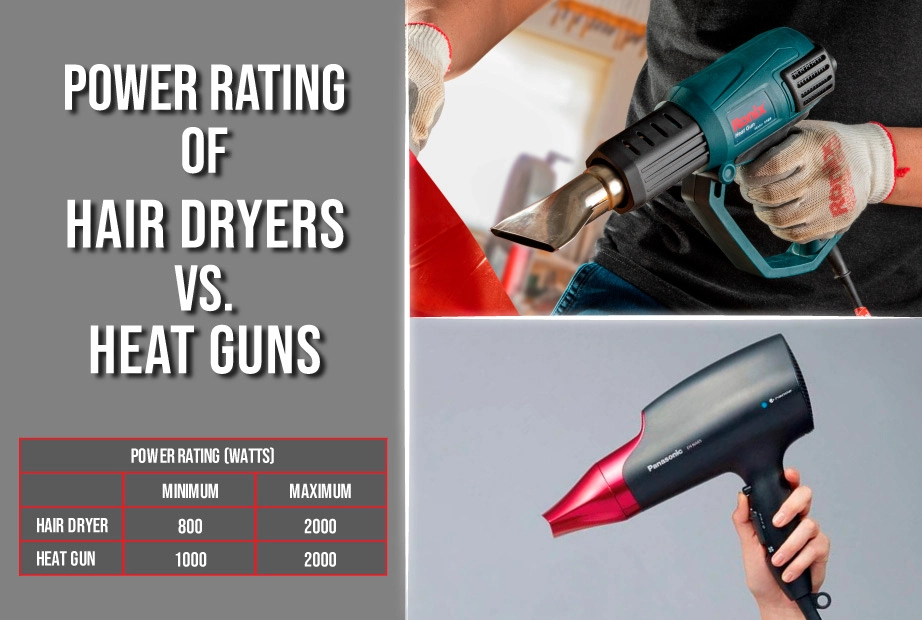
Key Differences Between Heat Guns And Blow Dryers
Heat guns and blow dryers might look similar, but they have several big differences. Let’s look closer at the main factors.
| Feature | Heat Gun | Blow Dryer |
|---|---|---|
| Max Temperature | Up to 1200°F (650°C) | Up to 200°F (93°C) |
| Main Use | Industrial/DIY tasks | Hair styling, light drying |
| Air Flow Speed | Slower, focused stream | Faster, wider stream |
| Safety Features | Few, needs caution | Many, skin-safe |
| Price Range | $20 – $200+ | $10 – $150 |
Temperature
The biggest difference is temperature. A heat gun gets much hotter than a blow dryer. For example, if you try to strip paint with a blow dryer, it might never work. But a heat gun can do this job easily.
Air Flow
Heat guns have a narrow, focused air stream. This lets you heat a small spot without affecting the area around it. Blow dryers spread air over a wide area, which is better for drying hair but not for precise work.
Safety
Blow dryers are designed for safety. They have plastic bodies, automatic shut-off features, and cool shot buttons. Heat guns are made for tough jobs, not safety. Their metal tips get extremely hot, and touching them can cause burns.
Build And Durability
Heat guns are built to survive drops and hard use. Blow dryers are lighter, often with foldable handles for travel.
When To Use A Heat Gun
You should pick a heat gun when you need high heat and focused air. Here are some common tasks:
- Paint Removal: Heat guns soften old paint so you can scrape it off. This is much faster than using chemicals or a blow dryer.
- Heat Shrink Tubing: In electrical work, heat guns shrink plastic tubing around wires for insulation. Blow dryers can’t reach the needed temperature.
- Thawing Pipes: A heat gun can thaw frozen metal pipes quickly in cold weather. But never use it on plastic pipes—they can melt.
- Crafts and DIY: Bending plastics, shaping foam, and drying thick paint all go faster with a heat gun.
- Automotive Work: Heat guns help remove car decals, tint windows, or loosen rusty bolts.
Pro tip: Always keep the heat gun moving. Holding it in one spot can burn your material or even start a fire.
When To Use A Blow Dryer
A blow dryer is best for gentler tasks, especially when safety is important. Here are some smart uses:
- Hair Styling: This is what blow dryers are built for—drying and shaping hair safely.
- Light Drying: Wet shoes, damp clothes, or small crafts can be dried quickly.
- Unfreezing Locks: In winter, a blow dryer can thaw a frozen car door lock without damaging the car’s paint.
- Removing Stickers: A blow dryer can loosen adhesive on small stickers or labels without overheating the surface.
- Household Cleaning: Blow dust out of electronics or tight spaces.
Non-obvious insight: If you use a blow dryer for crafts, the cool setting can help set paint or glue without bubbling or melting the surface.
Can You Substitute One For The Other?
This is a common question, but the answer depends on the job. For most tasks, the tools are not interchangeable.
When You Can Substitute
- If you need to dry or gently heat something (like removing a sticker or drying paint on paper), a blow dryer can sometimes stand in for a heat gun—if you have patience.
- For very gentle shrink tubing, some crafters use a blow dryer, but results can be uneven.
When You Can’t Substitute
- For jobs needing very high heat (paint stripping, bending plastic, heat-shrinking large tubing), a blow dryer will not work.
- Never use a heat gun on hair or skin. The temperature is much too high and can cause serious burns.
Important warning: Trying to use a heat gun for hair or close to skin is extremely dangerous and can cause injury.
Pros And Cons Of Heat Guns
Let’s look at the main advantages and disadvantages of heat guns.
| Pros | Cons |
|---|---|
| Very high temperature for tough jobs | Can cause burns or fires if misused |
| Great for paint, electronics, crafts | Not safe for use near skin or hair |
| Durable and built for hard use | Heavier and larger than blow dryers |
| Multiple attachments for different tasks | Usually more expensive |
Pros And Cons Of Blow Dryers
Now, let’s see the main strengths and weaknesses of blow dryers.
| Pros | Cons |
|---|---|
| Safe for use near skin and hair | Low maximum temperature |
| Lightweight and portable | Not good for heavy-duty tasks |
| Affordable and easy to find | Limited to light jobs |
| Multiple settings for temperature and airflow | Plastic body not as durable |
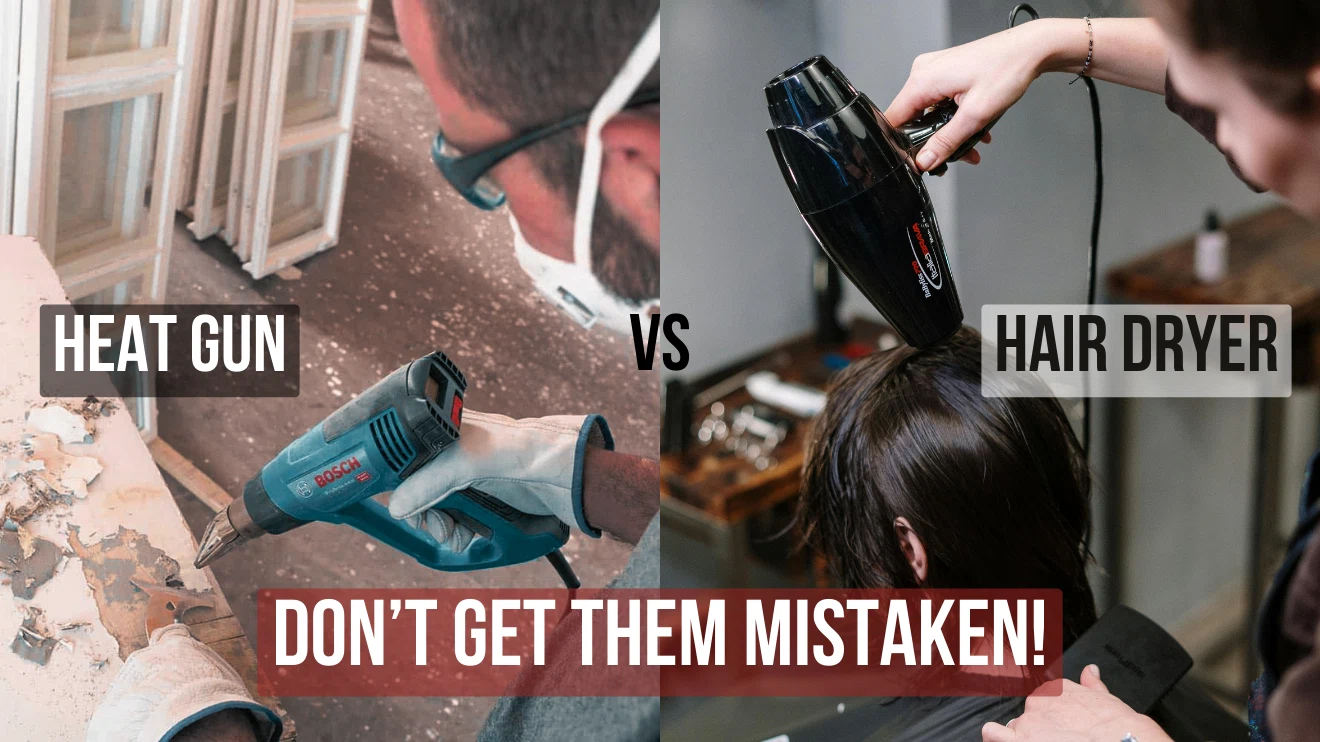
Factors To Consider When Choosing
If you’re buying one of these tools, ask yourself these questions:
1. What Job Will You Do Most?
- For hair or gentle drying, pick a blow dryer.
- For crafts, repairs, or heavy-duty work, go with a heat gun.
2. Temperature Needs
- If you need over 200°F (93°C), only a heat gun will do.
3. Safety
- If you’re worried about burns or have kids around, a blow dryer is the safer bet.
4. Price
- Heat guns are pricier but last longer. Blow dryers are cheaper and easy to replace.
5. Portability
- Blow dryers are often lighter and more portable for travel.
Non-obvious insight: Some high-end blow dryers have special ions or ceramic heaters for hair health, but these features are useless for DIY or craft projects.
Common Mistakes To Avoid
Many beginners make the same errors with these tools. Here’s how to avoid them:
- Using a heat gun for hair: This is dangerous. Heat guns get hundreds of degrees hotter than blow dryers.
- Overheating materials: Don’t hold a heat gun too close or in one spot. You can burn wood, melt plastic, or start a fire.
- Using a blow dryer for heavy-duty work: You’ll waste time and might damage your blow dryer.
- Ignoring safety gear: Always wear gloves and eye protection with a heat gun.
- Not checking voltage: Some tools bought online may not match your country’s power supply.
Real-world Examples
- Paint Stripping: John wanted to remove old paint from his window frames. He tried his wife’s blow dryer, but it only made the paint sticky. Switching to a heat gun, the paint bubbled and scraped off easily.
- Craft Projects: Lisa uses a blow dryer to speed up drying on her watercolor paintings. She once tried a heat gun and ended up warping the paper.
- DIY Car Decals: Mark used a heat gun to peel off decals from his truck. He was careful to keep the gun moving to avoid damaging the paint.
These stories show the importance of using the right tool for your task.
Which One Should You Buy?
If you style hair or need a safe, gentle drying tool, a blow dryer is best. It’s safer, cheaper, and does not overheat. For home improvement, electronics, or crafting, a heat gun is the right choice. It handles tough jobs that a blow dryer simply can’t.
For more on how heat guns work, you can check out this Wikipedia article on heat guns.

Frequently Asked Questions
What Is The Main Difference Between A Heat Gun And A Blow Dryer?
The main difference is maximum temperature. Heat guns get much hotter (up to 1200°F/650°C) and are used for industrial or DIY tasks. Blow dryers stay cooler (up to 200°F/93°C) and are designed for hair and gentle drying.
Is It Safe To Use A Heat Gun On Hair?
No, it is not safe. Heat guns are much too hot and can cause burns or even start fires. Only use a blow dryer on hair.
Can I Use A Blow Dryer To Remove Paint?
You can try, but a blow dryer is usually not hot enough to remove paint from wood or metal. For best results, use a heat gun.
Are Heat Guns Dangerous?
They can be if you’re not careful. Heat guns can cause burns or start fires. Always use gloves, keep the gun moving, and never point it at yourself or others.
Which Tool Is Better For Crafts?
It depends. For gentle crafts like paper or fabric, a blow dryer is safer. For plastic bending, shrink tubing, or tough materials, a heat gun works better.
Choosing between a heat gun and a blow dryer comes down to your project’s needs. Pick the right tool and you’ll get better results and stay safe.
As an Amazon Associate, We earn from qualifying purchases