
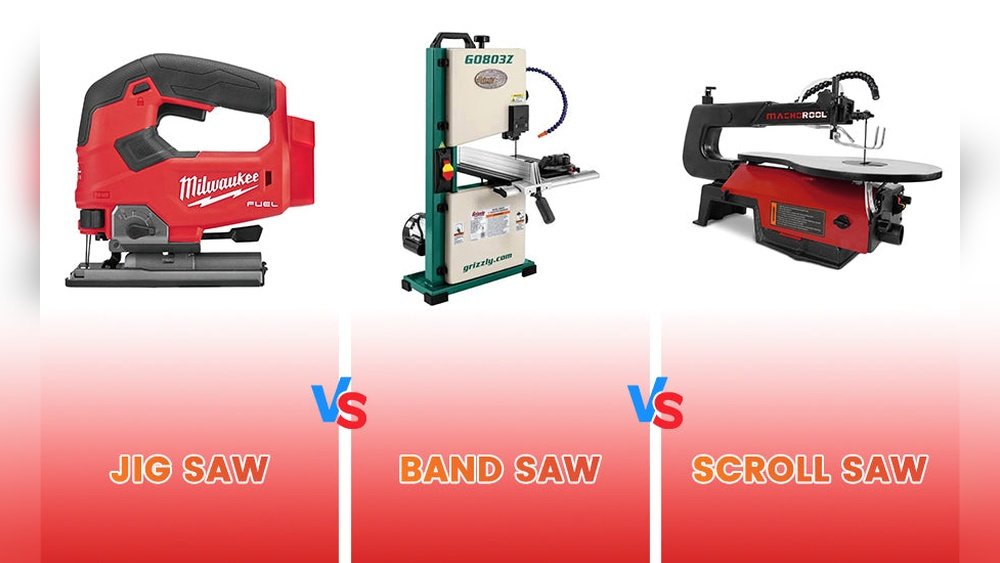
Choosing the right tool for your woodworking or DIY projects can feel confusing, especially when it comes to the scroll saw and jigsaw. Both tools are great for cutting wood and other materials, but they work in different ways and are best for different tasks. If you’re new to these tools, or just trying to decide which one fits your needs, this guide will help you make a smart choice. Let’s look at what makes each tool unique, their strengths and weaknesses, and when you should use one over the other.
What Is A Scroll Saw?
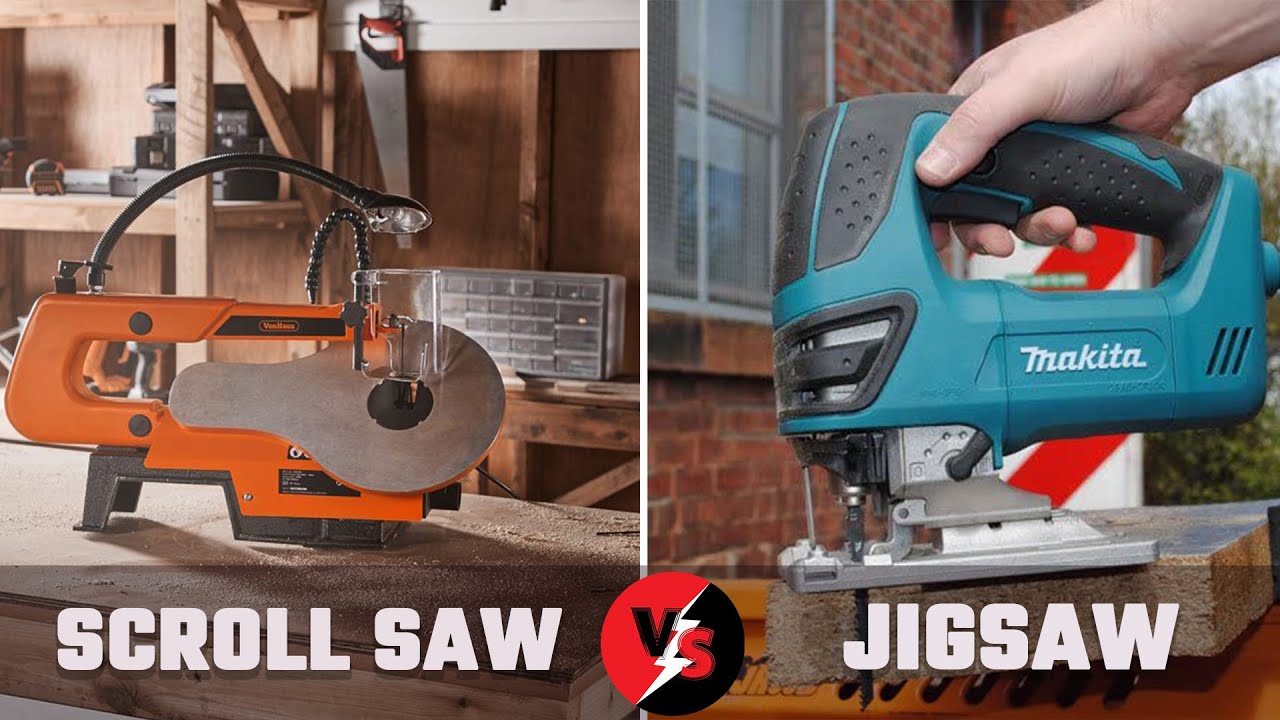
A scroll saw is a stationary power saw with a fine, thin blade that moves up and down at high speed. The blade is attached to an arm above and below the worktable, creating precise straight and curved cuts. Scroll saws are popular for making intricate shapes, detailed patterns, and inside cuts that other saws can’t handle.
You operate a scroll saw by guiding the material with your hands on a flat table. This setup gives you excellent control over the workpiece, which is important for detailed designs. Scroll saws usually have variable speed settings, allowing you to match the blade speed to the material and the complexity of your cut.
What Is A Jigsaw?
A jigsaw is a handheld power tool with a straight, narrow blade that moves up and down. You move the jigsaw over the material, guiding it along your cut lines. Jigsaws are known for their versatility—they can cut straight lines, curves, and even plunge into the middle of a board to start a cut.
Jigsaws are used for rougher work than scroll saws, but they’re still good for curves and shapes, especially in thicker materials. Many jigsaws have adjustable speed and orbital settings, which help you cut faster or make cleaner lines depending on your needs.
Main Differences Between Scroll Saw And Jigsaw
Understanding the key differences will help you decide which tool is right for you. Here’s a side-by-side comparison:
| Feature | Scroll Saw | Jigsaw |
|---|---|---|
| Design | Stationary, tabletop | Handheld, portable |
| Blade Type | Thin, fine, pinned or pinless | Wider, various tooth designs |
| Cut Detail | Very intricate and tight | Moderate, larger curves |
| Material Thickness | Usually up to 2 inches | Up to 4 inches or more |
| Ease of Use | High for detail, requires patience | Easy for general cuts, less precise |
The scroll saw is designed for stationary, highly detailed work, while the jigsaw is better for portability and general cutting.
When Should You Use A Scroll Saw?
A scroll saw shines in projects that need precision and fine detail. If your goal is to create delicate patterns, letters, or jigsaw puzzle pieces, a scroll saw is the right tool. Here are some situations where a scroll saw is your best friend:
- Intricate fretwork: Projects like decorative panels, jewelry boxes, and artistic wood shapes are easy with a scroll saw.
- Inlay and marquetry: For fitting small pieces of wood together in detailed designs, you need the scroll saw’s control.
- Inside cuts: If you need to cut out a shape from the center of a board (like a window in a door sign), you can drill a starter hole, feed the scroll saw blade through, and cut from the inside.
- Children’s puzzles and toys: The scroll saw’s precise blade makes smooth, safe edges.
Scroll saws can also cut thin plastics, soft metals, and even paper (with the right blade). However, they’re not suited for thick or very hard materials.
When Should You Use A Jigsaw?
A jigsaw is the right choice when you need flexibility and mobility. You can bring the tool to the workpiece, not the other way around. Jigsaws are ideal for:
- Cutting large sheets: If you need to trim plywood, MDF, or panels, a jigsaw can handle big pieces that won’t fit on a scroll saw table.
- Curved cuts in thick wood: Jigsaws can cut through wood up to 4 inches thick, making them suitable for curved cuts in countertops or flooring.
- Straight and bevel cuts: While not as accurate as a circular saw, a jigsaw can make straight or angled cuts (usually up to 45 degrees).
- Rough shaping: When you need to remove material quickly before sanding or finishing, a jigsaw is faster.
Jigsaws also cut metal, plastic, and laminate with the right blade. However, they don’t give the same level of detail or smoothness as a scroll saw.
Strengths And Weaknesses
Let’s break down the main strengths and weaknesses of both tools:
Scroll Saw
Strengths:
- Makes intricate, detailed cuts
- Great for tight turns and delicate patterns
- Allows for inside cuts (start from drilled holes)
- Smooth, clean edges—less sanding needed
Weaknesses:
- Limited to thin materials (usually under 2 inches)
- Not portable—workpiece must fit on the table
- Slower for long or straight cuts
Jigsaw
Strengths:
- Handles thicker materials
- Portable and easy to use anywhere
- Fast for general cutting tasks
- Accepts many blade types for different materials
Weaknesses:
- Harder to make tight curves or fine detail
- Can cause splintering or rough edges
- Needs a steady hand for straight lines
Which Tool Is Better For Beginners?
If you’re just starting, your choice depends on what you plan to make. For general DIY tasks, like cutting shapes in plywood or trimming boards, a jigsaw is a safe and flexible pick. It’s easy to learn and doesn’t require a lot of setup.
But if you’re interested in crafts, puzzles, or art projects with lots of detail, a scroll saw is worth learning. The scroll saw requires a bit more patience and practice, but you’ll be able to create much more detailed work.
A common beginner mistake is to try making detailed cuts with a jigsaw. You’ll find it frustrating, as the tool is not designed for tight turns or smooth edges at small scales. On the other hand, don’t try to force thick boards into a scroll saw—it’s not built for that and you can break the blade.
Cost And Value
Both scroll saws and jigsaws come in a wide price range, from under $50 for basic models to several hundred dollars for professional versions.
- Scroll saws: Entry models start at about $100, but expect to pay $200–$400 for smooth operation and variable speed. Blades are inexpensive but can break if used incorrectly.
- Jigsaws: Basic models start at $40–$60. Mid-range jigsaws with orbital action and quick blade change features cost $70–$150. Blades are also cheap and easy to replace.
Jigsaws are generally cheaper and more versatile for beginners or those on a budget. Scroll saws offer better value if you’ll use them for intricate work regularly.
Practical Examples
To see the difference in action, let’s look at a few real-world scenarios:
- Making a wooden name sign for a child’s room: The scroll saw lets you cut out letters with beautiful curves and smooth edges. The jigsaw would struggle with the tight turns.
- Cutting out a countertop for a kitchen sink: The jigsaw is the better choice. You can plunge-cut into the middle and follow the curved outline easily.
- Creating a decorative wooden clock face with tiny details: Only the scroll saw can handle this level of detail.
- Trimming laminate flooring to fit around a pipe: The jigsaw can quickly cut the hole, even in a tight space.
Safety Considerations
Both tools are generally safe if used correctly, but there are important differences:
- Scroll saws are safer for beginners and children (with supervision). The small, slow-moving blade is less likely to cause injury, and your hands stay on the table.
- Jigsaws can kick back or jump if the blade binds. Keep both hands on the tool and wear safety glasses. Be careful when making plunge cuts.
Never wear loose clothing or jewelry around either tool, and always use the right blade for the material.

Which One Should You Buy First?
If you can only buy one tool, think about your main projects. Choose a jigsaw if you need a versatile tool for home improvement, rough cuts, and some curves. Choose a scroll saw if your focus is on crafts, fine woodworking, or model making.
Many woodworkers eventually own both, as they complement each other well.
Key Features To Look For
Here’s what to look for when shopping for each tool:
Scroll Saw
- Variable speed control: Lets you match speed to different materials.
- Blade changing system: Quick and tool-free is best.
- Throat size: The distance from the blade to the back of the saw determines the maximum width you can cut.
- Table tilt: Allows for angled cuts.
- Dust blower/collector: Keeps the work area clean.
Jigsaw
- Orbital action: Makes faster, smoother cuts in wood.
- Tool-less blade change: Saves time and hassle.
- Variable speed trigger: More control over the cut.
- Bevel adjustment: For angled cuts.
- Comfortable grip: Important for long jobs.
Common Mistakes To Avoid
Beginners often make these errors:
- Using the wrong blade: Always match the blade to the material. Scroll saw blades are not for thick hardwood. Jigsaw blades come in different types for wood, metal, or plastic.
- Forcing the cut: Both tools work best with gentle, steady pressure. Forcing can break blades or cause rough edges.
- Ignoring safety features: Always use guards, and keep hands away from the blade path.
- Expecting perfect results from a jigsaw on fine detail: It’s not designed for very tight or small shapes.
Which Tool Is More Versatile?
The jigsaw is more versatile for general use—it can cut large sheets, straight lines, and curves, and works on many materials. The scroll saw is more specialized, but unbeatable for fine, delicate work. Some advanced woodworkers even use both on the same project: roughing out the shape with a jigsaw, then finishing details with a scroll saw.

Advanced Tips Most Beginners Miss
- For extra-smooth scroll saw cuts, use tape over your cutting line. This reduces splinters and helps the blade glide more easily.
- When using a jigsaw, clamp your workpiece firmly. Vibration is the main reason cuts wander off the line.
- Change blades often—dull blades cause burning, rough edges, and tool strain.
- Use slower speeds on both tools for plastics and metals, to prevent melting or overheating.
Real Data: Cutting Accuracy
Studies show that scroll saws can achieve tolerances of less than 1/32 inch on detailed patterns, while jigsaws usually have a margin of error around 1/8 inch on curves. This makes scroll saws the clear winner for precision.
Scroll Saw And Jigsaw: Summary Table
Here’s a quick overview:
| Task | Best Tool | Why? |
|---|---|---|
| Cutting detailed letters or shapes | Scroll Saw | Fine control and tight turns |
| Trimming large sheets of plywood | Jigsaw | Portable and handles big pieces |
| Cutting thick wood | Jigsaw | Blade length and power |
| Making puzzles or toys | Scroll Saw | Smooth, safe edges |
| Quick, rough cuts | Jigsaw | Speed and ease |
For more details, you can check the in-depth guide on the Wikipedia Scroll Saw page.
Frequently Asked Questions
What Materials Can I Cut With A Scroll Saw Or Jigsaw?
Both tools cut wood, plastic, and soft metals. Scroll saws are better for thin materials and detailed work, while jigsaws can handle thicker pieces, including some metals with the right blade.
Can A Jigsaw Replace A Scroll Saw?
Not for detailed work. Jigsaws are flexible but can’t match the scroll saw’s precision for tight curves and small shapes. For most crafts, you need a scroll saw.
Which Tool Is Safer For Children Or Beginners?
Scroll saws are generally safer because your hands are away from the moving blade and the tool is stationary. Still, adult supervision is important.
How Do I Get Smooth Edges With A Jigsaw?
Use a fine-tooth blade and cut slowly. Clamp your material and support both sides of the cut. Sand the edges after cutting for a clean finish.
Do I Need Special Blades For Different Materials?
Yes. Both scroll saws and jigsaws have many blade types. Use fine blades for metal and plastic, coarse blades for wood. Always check the manufacturer’s recommendations.
Choosing between a scroll saw and a jigsaw depends on your projects, space, and budget. If possible, try both tools before buying. Over time, you’ll learn which one fits your style best and how they can work together to expand your creative possibilities.
As an Amazon Associate, We earn from qualifying purchases