
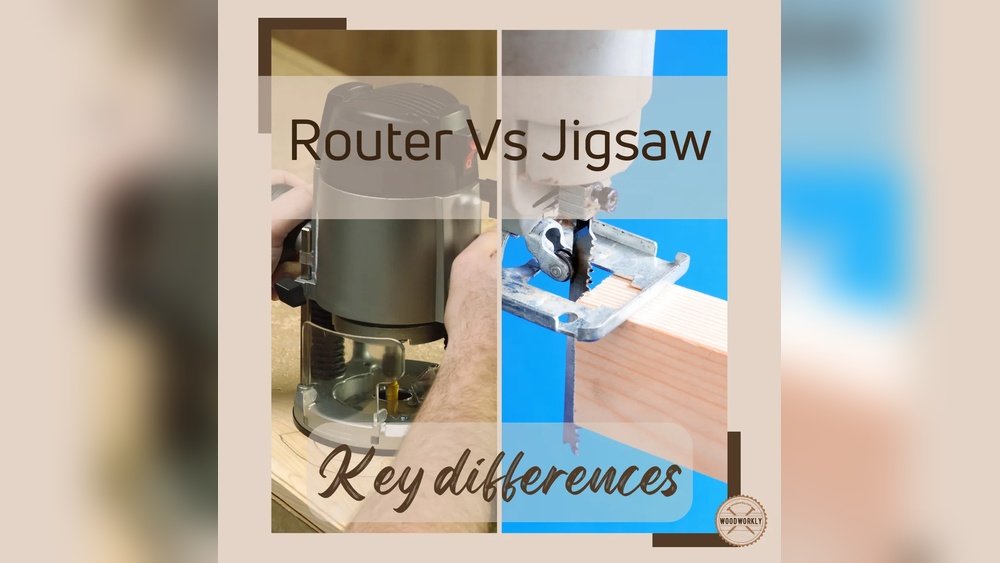
When starting a woodworking project, choosing the right tool often decides how smooth your process will be. Two tools that often confuse beginners are the router and the jigsaw. Both are power tools and both can cut wood, but their abilities, uses, and results are very different. If you’re unsure which one to buy or use for your next project, understanding their main differences will help you avoid wasted time, money, and effort.
What Is A Router?
A router is a high-speed cutting tool used to hollow out, shape, or decorate wood, plastic, and sometimes even metal. Routers use a spinning bit to carve designs, make grooves, or trim edges. Most routers have a flat base and a vertical handle, which helps you move the tool steadily over the material.
Routers come in two main types:
- Fixed-base routers: The cutting depth is set before you start and doesn’t change during use.
- Plunge routers: You can lower the bit into the wood while the router is running, which is useful for internal cuts and more complex shapes.
With a router, you can do:
- Edge profiling (decorative edges)
- Making grooves or dados (for shelves)
- Cutting slots for hinges
- Lettering or sign-making
- Creating inlays
Routers are not mainly for cutting large shapes out of boards, but for detailed shaping and joinery.
What Is A Jigsaw?
A jigsaw is a handheld power tool with a straight, thin blade that moves up and down. The blade is small, so you can turn and curve the tool easily. Jigsaws are popular for:
- Cutting curves and complex shapes in wood, metal, or plastic
- Making inside cuts by drilling a hole and starting the blade inside
- Quick straight cuts when high accuracy isn’t required
Jigsaws are easier to use for beginners and are less intimidating than circular saws. The tool is not for heavy-duty joinery or edge detailing, but for shaping and cutting sheet material.

Router Vs Jigsaw: Side-by-side Comparison
To make the differences clearer, here’s a practical comparison:
| Feature | Router | Jigsaw |
|---|---|---|
| Main Use | Shaping, edging, joinery | Cutting curves, shapes |
| Cut Type | Grooves, edges, slots | Curves, straight, plunge |
| Material Thickness | Mostly edge and surface work | Can cut through full boards |
| Skill Level | Intermediate to advanced | Beginner-friendly |
| Precision | Very precise for detail work | Moderate, best for rough shapes |
| Common Projects | Cabinet doors, sign making | Puzzles, curved panels |
When To Use A Router
A router shines when you need:
- Decorative edges: If you want to add a smooth, round, or fancy edge to a table or picture frame, a router is perfect.
- Grooves and dados: Shelves, drawers, and cabinets need grooves to fit pieces together. Routers make this precise and repeatable.
- Joinery: Making strong, hidden joints (like dovetails or mortises) is much easier with a router.
- Templates and guides: Routers can follow templates, so you can repeat the same shape or sign as many times as you need.
Pro Insight: Depth Control
One thing beginners often miss is the importance of depth adjustment. With routers, the depth of cut changes the look and strength of your project. Investing time to set the right depth before you start prevents mistakes that are hard to fix later.
Router Safety Tips
- Always wear hearing and eye protection. Routers are loud and can throw chips.
- Keep both hands on the tool for steady control.
- Move the router in the correct direction: Usually left to right along the edge (called “climb cutting”) for smoother results.
When To Use A Jigsaw
A jigsaw is the right tool if:
- You need to cut curves: No other saw is as easy for making smooth or tight curves in wood or plastic.
- You need an inside cut: For making cutouts (like a sink hole in a countertop), drill a starter hole and insert the jigsaw blade.
- You want portability: Jigsaws are lighter and easier to carry to different work sites.
- Working with many materials: With the right blade, you can cut wood, metal, plastic, even ceramic tile.
Pro Insight: Blade Choice Matters
Many new users don’t realize how much the blade type affects the cut. Thin blades give tighter curves but can bend easily. Thick blades stay straighter for long cuts. Using the wrong blade can ruin your material or even break the tool.
Jigsaw Safety Tips
- Secure your workpiece with clamps before cutting.
- Let the tool do the work; don’t force it.
- Start slow until you control the cut direction.
Tasks Both Tools Can Handle (but Differently)
Some projects can be done by both a router and a jigsaw. For example:
- Cutting out shapes: A jigsaw does this quickly, while a router needs a template and is slower, but neater.
- Making holes or slots: Both can do it, but routers make cleaner, more precise edges.
However, even when both tools can do a job, the finish, speed, and effort required will vary a lot. Choosing the right one can save you hours of sanding or fixing mistakes.
Cost And Value: Which Is A Better Investment?
Let’s look at price and long-term value:
| Tool | Average Price Range | Accessories Needed | Longevity |
|---|---|---|---|
| Router | $80–$300 | Bits, guides, templates | Very high with maintenance |
| Jigsaw | $40–$200 | Blades | High, may need more blades |
Routers usually cost more at the start, especially if you buy several bits and guides. But they last for many years with proper care. Jigsaws are cheaper, but you’ll buy many blades, especially if you cut hard materials.
A router pays off if you do a lot of woodworking, especially cabinets or furniture. For occasional home repairs or craft projects, a jigsaw may give you more value.
Versatility: Which Tool Does More?
- Router: Best for detail work, joinery, and professional-looking finishes. Not for cutting thick boards in half.
- Jigsaw: More versatile for basic home use. Cuts different materials, does both straight and curved cuts, and is easier for beginners.
A router can do some cuts with special bits, but it’s not designed for rough shaping. A jigsaw can start almost any cut, but the finish will not be as perfect.
Common Mistakes To Avoid
- Using the wrong tool for the job: Forcing a router to cut large shapes or a jigsaw to make perfect grooves will frustrate you.
- Ignoring setup time: Routers need setup for depth and guides. Jigsaws need the right blade and clamped material.
- Skipping practice cuts: Always test on scrap material. Routers and jigsaws react differently to different woods.
- Not securing your work: Unclamped material can move, ruining your cut and risking injury.
Which Tool Is Safer For Beginners?
Both tools are safe when used correctly, but the jigsaw is usually less intimidating. Routers spin at much higher speeds and can damage material quickly if mishandled. Jigsaws move slower, making mistakes easier to fix.
Still, always read the manual and wear safety gear. Never touch moving parts, and keep your hands away from the cutting area.
Real-world Examples
- Building a bookshelf: Use a router to make grooves for shelves to sit in, and a jigsaw to cut the side panels or decorative tops.
- Making a picture frame: The router makes the decorative edge, while the jigsaw can cut out the frame shape if needed.
- DIY crafts: Most small craft projects (like animal shapes or signs) start with a jigsaw. Use a router only if you want to add detail or smooth edges.
Which Should You Buy First?
If you’re new to woodworking or do mostly basic home projects, the jigsaw is more useful and less expensive. It’s a great starter tool.
If you plan to do more fine woodworking, cabinetry, or want professional-looking edges, a router is worth the investment after you master basic cuts.
Many experienced woodworkers own both. They use the jigsaw for rough shaping and the router for finishing.

How To Choose The Right Model
When shopping for a router:
- Look for adjustable speed and depth.
- Check if it fits common bit sizes (1/4″ and 1/2″).
- Consider ergonomic handles for comfort.
When shopping for a jigsaw:
- Check for orbital action (for faster cutting).
- Look for quick blade change systems.
- Test the grip—some prefer top handle, others barrel grip.
Visit trusted sources like Wikipedia’s woodworking page for more background on tool types.
Frequently Asked Questions
What Can A Router Do That A Jigsaw Cannot?
A router can create detailed edges, grooves, and joinery that a jigsaw cannot. For example, adding a rounded edge to a table or making a slot for a shelf is only possible with a router.
Can You Use A Jigsaw For Straight Cuts?
Yes, a jigsaw can make straight cuts, but it’s harder to keep perfectly straight compared to a table saw or circular saw. Using a guide rail helps improve accuracy.
Is A Router Harder To Control Than A Jigsaw?
Usually, yes. Routers spin much faster and can move quickly if not handled properly. They require more practice to master, especially for beginners.
Can You Use A Router Bit In A Jigsaw?
No, router bits and jigsaw blades are totally different. Router bits spin at high speed; jigsaw blades move up and down. They are not interchangeable.
Which Tool Is Best For Plywood?
For cutting plywood sheets, a jigsaw is better. For finishing edges or adding grooves to plywood, use a router.
Choosing between a router and a jigsaw is not just about the tool—it’s about the project. Think about the results you want, the materials you use, and your skill level. The right tool makes the work smoother, safer, and more enjoyable.
For most beginners, start with a jigsaw and add a router as your skills grow. Over time, both tools will find a place in your workshop, each excelling at tasks the other can’t match.

As an Amazon Associate, We earn from qualifying purchases