
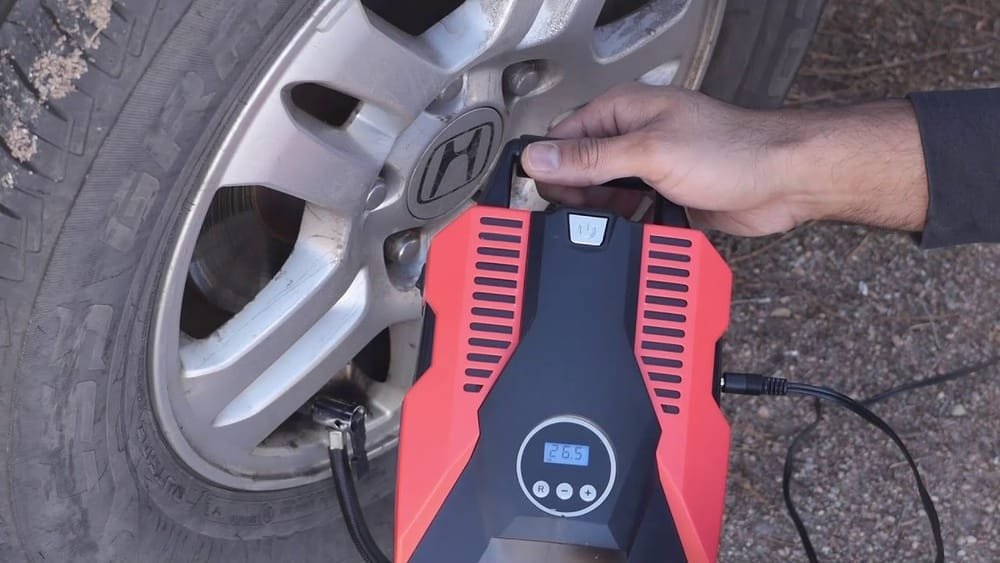
If you’ve ever found yourself at a gas station, staring at a tire with low air, you know the feeling. I’ve been there too—wondering how to use an air compressor without messing up. Over the years, I’ve learned a lot about inflating tires, both from mistakes and from doing it right.
I want to share my experience so you can use an air compressor for your tires with confidence, whether you’re at home or on the road.
Why Tire Pressure Matters
Let me start with a quick story. Once, I ignored a warning light for low tire pressure. I thought, “It’s just a little low. No big deal.” A week later, I had a flat on a busy road. I learned the hard way that tire pressure is important for safety, fuel economy, and how your car handles. Under-inflated tires wear out faster and use more gas. Over-inflated tires are risky too—they can burst or lose grip.
What You Need Before You Start
You don’t need much to inflate your tires, but missing one thing can be frustrating. Here’s what I always check before I begin:
- Air compressor (portable or garage type)
- Tire pressure gauge
- Tire valve caps
- Owner’s manual (to find the right PSI)
- Power source (for portable compressors)
One time, I forgot my gauge and had to guess. The tire was too hard, and the ride was bumpy until I fixed it. So, always have these tools handy.
Types Of Air Compressors
Not all air compressors are the same. The first time I bought one, I picked the cheapest, smallest model. It barely worked! Let me break down the main types, so you can pick the right one.
| Compressor Type | Best For | Common Power Source |
|---|---|---|
| Portable 12V | Emergencies, Road Trips | Car Cigarette Lighter |
| Plug-in Electric | Home Garage | Wall Outlet |
| Heavy-Duty/Pancake | Trucks, Tools, Frequent Use | Wall Outlet |
I use a portable 12V compressor for my car, but at home, the plug-in electric type is faster and quieter.
How To Check Your Tire Pressure
Before you add air, you need to know your tire’s current pressure. I learned early on that you can’t just “eyeball” a tire. They can look fine but still be under-inflated.
- Find the recommended PSI. It’s usually on a sticker inside the driver’s door or in the manual.
- Remove the valve cap from your tire.
- Press the gauge onto the valve stem. Hold it firmly.
- Read the number on the gauge. Compare it to the recommended PSI.
If you check the pressure after driving, it may be higher from the heat. For the most accurate reading, check when the tires are cold.
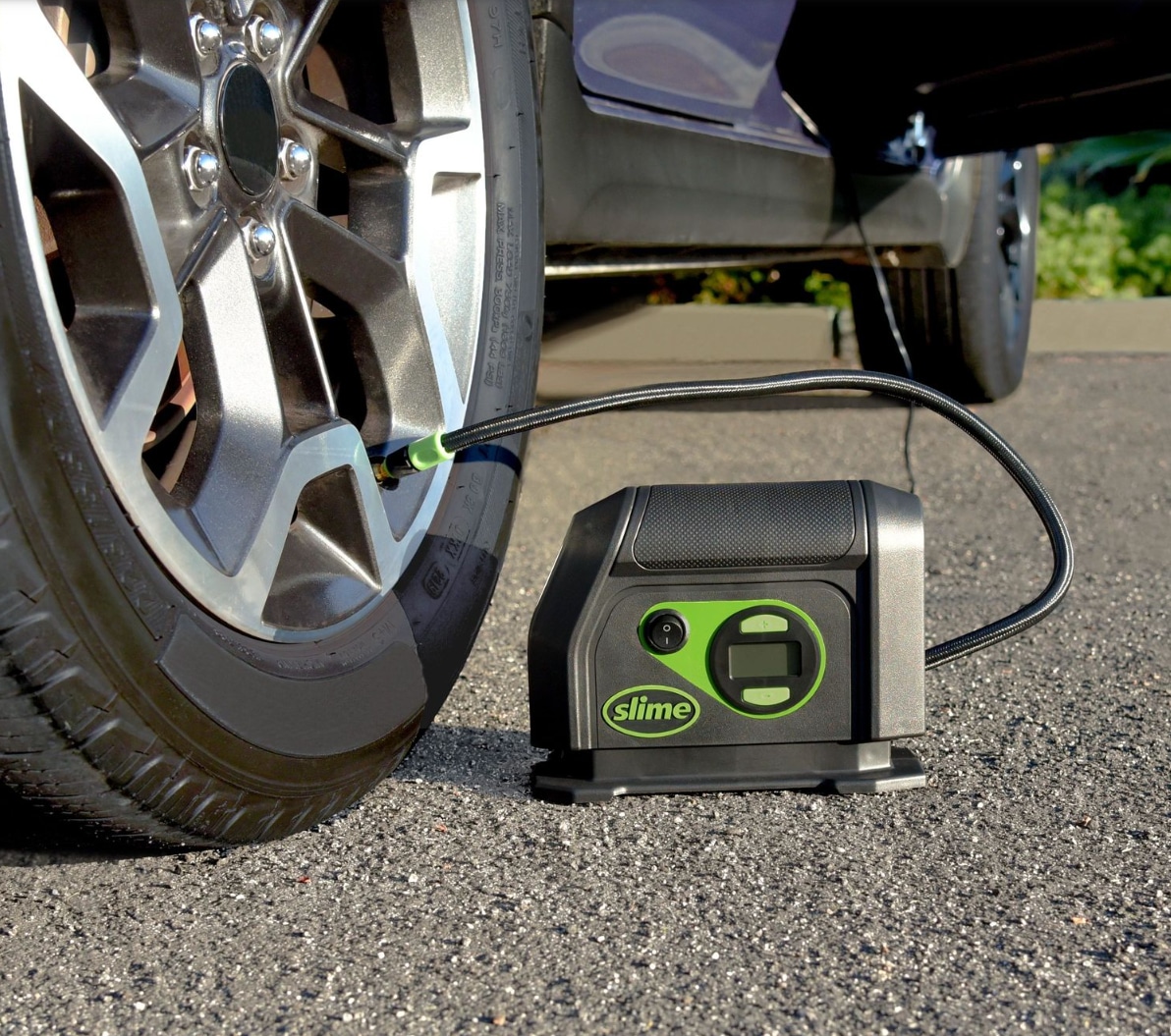
Step-by-step: How To Use An Air Compressor For Tires
Here’s how I do it, step by step. I’ll add tips that helped me avoid common mistakes.
1. Park On A Flat Surface And Turn Off The Car
This sounds simple, but it matters. I once tried to inflate a tire on a hill. The car rolled slightly, and I had to start over. So, always park flat and turn off the engine.
2. Connect The Compressor
Plug your compressor into the right power source. For a 12V portable compressor, plug it into your car’s outlet. For an electric one, use a wall socket. Make sure the hose can reach all four tires.
3. Remove The Valve Cap
Unscrew the cap from the tire’s valve stem. I keep mine in my pocket so they don’t roll away.
4. Attach The Air Hose
Press the air hose connector onto the valve stem. Some compressors have a lever to lock it in place. You’ll hear a slight hiss. If you hear a loud, constant hissing, it’s not sealed—try again.
5. Set The Pressure (if Your Compressor Has This Feature)
Some compressors let you set the target PSI. I love this feature because it stops automatically. If yours doesn’t, you’ll need to watch the gauge.
6. Start Inflating
Turn on the compressor. If it’s loud, don’t worry—that’s normal. Watch the gauge as the pressure rises. I check every 10 seconds so I don’t overinflate.
7. Stop And Check
If your compressor is manual, turn it off and read the pressure. If it’s too low, add more. If it’s too high, press the center of the valve stem to let a little air out.
8. Replace The Valve Cap
Never forget this step. Dirt or water can get inside and cause leaks. I forgot once, and the tire lost air slowly over weeks.
9. Repeat For All Tires
Check all four tires, plus your spare if you have one. I once ignored my spare—only to find it flat when I really needed it.
How Long Does It Take?
A small, portable compressor usually takes 2–5 minutes per tire. Larger, plug-in models are faster. If it’s taking much longer, the compressor may be too weak or your tire has a big leak.

Common Mistakes And How To Avoid Them
I’ve made a few mistakes over the years. Here’s what I learned, so you don’t have to repeat them.
- Overinflating: Easy to do if you’re distracted. Overinflated tires can make your car bounce and wear unevenly.
- Underinflating: Guessing instead of using a gauge leads to poor handling and more fuel use.
- Leaving the compressor running too long: Some small units overheat. I once burned out a cheap compressor by not giving it breaks.
- Not checking the spare tire: A flat spare is as bad as no spare.
- Losing valve caps: They seem unimportant but help keep air in.
- Ignoring slow leaks: If a tire keeps losing air, get it checked. It could be a nail or a bad valve.
How To Read A Tire Sidewall
Your tire’s sidewall has important info. I used to ignore it, but now I check for:
- Tire size: Helps when buying new tires.
- Maximum pressure: Do not inflate to this number unless your car’s manual says so.
- Manufacture date: Tires older than 6 years can be risky.
Air Compressor Features That Matter
Not all compressors are equal. Over time, I’ve learned which features make life easier.
| Feature | Why It Matters | My Experience |
|---|---|---|
| Automatic Shutoff | Prevents overfilling | Saved me from popping a tire once |
| Digital Gauge | Easier to read | Great for accuracy |
| Long Hose | Reaches all tires easily | No need to move the car |
| Built-in Light | Helps at night | Used it after dark once, felt much safer |
| Multiple Nozzles | Inflate bikes, balls, more | Handy for kids’ toys |
When Not To Inflate A Tire Yourself
Sometimes, using an air compressor isn’t enough. If you notice:
- A large nail or screw in the tire
- A hissing sound after inflation
- A tire wall bulge or deep crack
It’s time to visit a professional. I once tried to “patch” a sidewall cut with air—big mistake. The tire failed soon after. Never risk safety.
How To Maintain Your Air Compressor
If you use a compressor often, take care of it. Here’s what I do:
- Check the power cord for damage.
- Clean the air filter if it has one.
- Store in a dry place to avoid rust.
- Drain moisture from big compressors after use.
Good maintenance means your compressor will work when you need it—like late at night in the rain (which has happened to me).
How To Choose The Right Air Compressor
Let me give you some tips I wish I’d known before buying my first compressor.
- Portability: If you travel a lot, get a lightweight, 12V model. For home, a larger unit is fine.
- Power: A good compressor should reach at least 100 PSI for most car tires.
- Accuracy: Digital gauges are easier for beginners.
- Noise: Some compressors are loud. Check reviews if you want a quieter one.
- Price: Don’t buy the cheapest. My first “budget” compressor died in six months.
If you need more advice, there are great guides on Consumer Reports.
Non-obvious Tips For Beginners
Here are two tips I wish someone told me at the start:
- Check tire pressure when the weather changes. Cold weather drops tire pressure. I once woke up to all four tires low after a cold snap.
- Listen for leaks after inflating. Sometimes you can hear a slow leak before you see it.
And one more: Keep a small notebook or use your phone to log your tire pressure checks. Patterns help you spot slow leaks early.
Frequently Asked Questions
What Psi Should I Use For My Car Tires?
Check the sticker inside your driver’s door or your owner’s manual. Most cars are between 32–35 PSI. Don’t use the number on the tire’s sidewall unless the manual says so.
Can I Use Any Air Compressor For My Tires?
Most car tires can be filled with portable 12V or plug-in compressors. But for trucks or RVs, you might need a more powerful model. Always check the compressor’s max PSI.
How Often Should I Check My Tire Pressure?
I check mine every two weeks and before long trips. Check more often if the weather changes or if you notice a tire looks low.
What If I Overinflate My Tire?
Let out air by pressing the valve stem center with your gauge or a small tool. Do this in small steps and re-check pressure.
Is It Safe To Inflate Tires In The Rain?
Yes, but be careful. Wet ground can be slippery. Make sure your compressor stays dry to avoid shocks or damage.
Keeping your tires at the right pressure is one of the simplest ways to stay safe, save money, and enjoy driving. Using an air compressor may seem tricky at first, but with practice, it becomes second nature. If you ever feel unsure, don’t hesitate to ask for help—most people are happy to give advice, just like I am here.
Safe travels, and may you never get caught with a flat!
As an Amazon Associate, We earn from qualifying purchases