
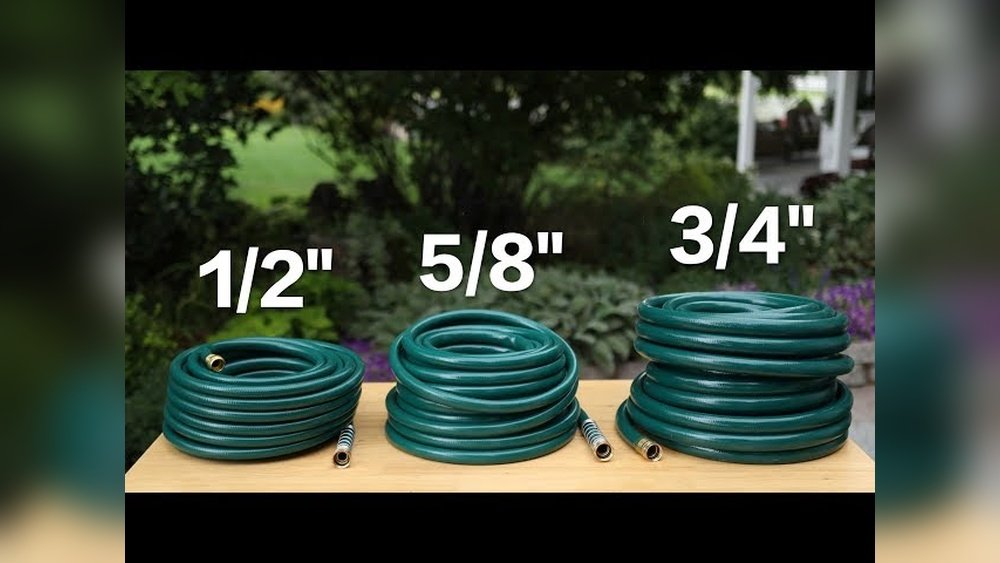
When you decide to buy a garden hose, you might be surprised by how many choices there are. Among the most common questions is whether to pick a 1/2 inch or 5/8 inch garden hose. This might sound like a small difference, but the right size can affect everything from water pressure to how easy it is to move the hose around your yard. Picking the wrong size can lead to frustration, wasted water, and even damaged plants. In this article, you’ll learn the real differences between these two popular hose sizes, how they impact your gardening, and what you should consider before making a purchase.
Understanding Hose Diameter: Why It Matters
The diameter of a garden hose is a measurement of the inside width. This number, such as 1/2 inch or 5/8 inch, tells you how much water can flow through the hose at a time. A wider hose means more water can pass through, while a narrower hose lets less water through but is often lighter and easier to handle.
You might be tempted to think bigger is always better. But there’s more to consider, including your water source, the length of the hose, and what you plan to use it for. For example, a hose that’s too wide for your water pressure may actually deliver weaker flow at the end, not stronger.
1/2 Inch Vs 5/8 Inch: What Does It Really Mean?
The difference between a 1/2 inch and a 5/8 inch garden hose is only 1/8 inch in diameter. That might seem tiny, but it has a big impact on how much water comes out and how you use the hose.
Water Flow Rates
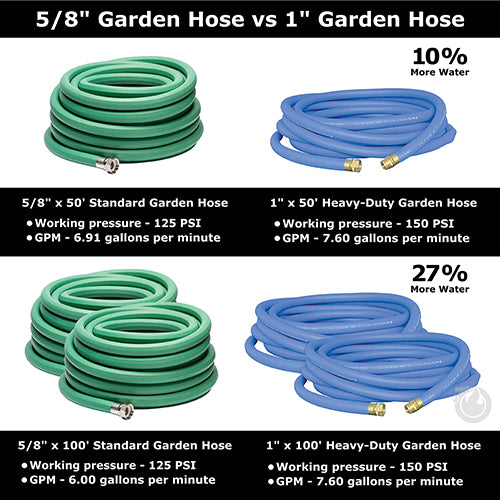
A 5/8 inch hose can carry about 30% more water compared to a 1/2 inch hose. If you are filling a large container or watering a big garden, that extra flow can save you time.
Weight And Flexibility
1/2 inch hoses are lighter and easier to move. If you have a small yard or need to carry the hose around often, the lighter hose might be a better fit.
Common Uses
- 1/2 inch hoses are great for light watering, small gardens, or balcony use.
- 5/8 inch hoses are better for large lawns, washing cars, or any job where you need more water quickly.
How Hose Diameter Affects Water Pressure And Flow
Water pressure and flow are not the same thing. Water pressure is how strong the force is, while flow is how much water actually comes out.
- With a wider hose (5/8 inch), you get more water flow.
- With a narrower hose (1/2 inch), the water might come out faster if the pressure is high, but the total amount is less.
If your home already has low water pressure, a wider hose can help you get more water to your plants. But if your water pressure is strong, a 1/2 inch hose might be enough for basic tasks.
Example: Filling A 5-gallon Bucket
Let’s say your outdoor faucet provides 8 gallons per minute (GPM) at 40 PSI:
- With a 1/2 inch hose (50 feet long), you might only get 4-5 GPM because the narrow tube restricts flow.
- With a 5/8 inch hose, you’ll get closer to the full 8 GPM.
So, filling a 5-gallon bucket:
- 1/2 inch hose: About 1 minute and 15 seconds
- 5/8 inch hose: About 40 seconds
That’s nearly twice as fast with the larger hose.
Comparing 1/2 Inch And 5/8 Inch Garden Hoses Side By Side
To make the differences clear, here’s a direct comparison:
| Feature | 1/2 Inch Hose | 5/8 Inch Hose |
|---|---|---|
| Water Flow Rate | Lower | Higher (up to 30% more) |
| Weight | Lighter | Heavier |
| Flexibility | More flexible | Less flexible |
| Best For | Small gardens, planters | Large lawns, washing cars |
| Price | Usually cheaper | Usually more expensive |
| Hose Fittings | Standard (but less common) | Standard (most common size) |

How Hose Length Changes The Equation
The length of your hose affects both water pressure and flow rate. The longer the hose, the more pressure you lose before the water reaches the end.
- A 50-foot 1/2 inch hose can lose up to 10 PSI of pressure.
- A 100-foot 1/2 inch hose can lose even more—sometimes making the flow too weak for sprinklers.
The same lengths in 5/8 inch lose less pressure, so you can use longer hoses without losing as much power. If you need a hose longer than 50 feet, the 5/8 inch is almost always better.
Practical Scenarios: Which Hose To Use?
For Watering Small Gardens Or Flower Beds
A 1/2 inch hose is usually enough. It’s light, easy to coil, and won’t tire your arms. For balcony gardens, it’s often the best choice.
For Lawns, Large Gardens, And Sprinklers
A 5/8 inch hose is almost always better. Sprinklers need a certain amount of water to work well, and the extra width helps deliver what they need. If you try to run a sprinkler with a 1/2 inch hose, you may end up with a weak spray.
For Washing Cars Or Filling Pools
You’ll want as much water as possible, as quickly as possible. The 5/8 inch hose wins here.
For Elderly Gardeners Or Those With Limited Strength
The 1/2 inch hose is lighter and easier to move. It’s much less tiring to use, especially when full of water.
Impact On Watering Tools And Accessories
Not all watering tools fit both hose sizes. Most modern nozzles, sprinklers, and hose reels are designed for 5/8 inch hoses, since it’s the most common size in the U.S.
- Some accessories might not seal tightly on a 1/2 inch hose.
- If you use a reel or storage system, check the maximum diameter it can hold.
Adapters are available, but they add cost and can sometimes leak.
Hose Material Choices: Do They Matter For Size?
Hose material (rubber, vinyl, reinforced, etc.) matters for flexibility, kink resistance, and durability, but it does not change the flow difference caused by diameter. However, a thicker-walled hose (for higher pressure) is usually heavier—making a 5/8 inch rubber hose much heavier than a 1/2 inch vinyl hose.
If you need a very long hose, consider lighter materials, especially if you choose 5/8 inch.
Water Conservation: Does Hose Size Make A Difference?
Many gardeners want to save water. You might think a smaller hose helps with conservation, but that’s not always true.
- With a 1/2 inch hose, you might spend more time watering because it delivers less water per minute. If you’re not careful, you could use more water by leaving the hose running longer.
- With a 5/8 inch hose, you can water faster, but you must be careful not to overwater.
The real key is to use a nozzle or shut-off valve to control the water, no matter what size hose you choose.
Cost Differences: What To Expect
Generally, 1/2 inch hoses are cheaper than 5/8 inch hoses of the same length and material. The difference is usually around 10-20% less. However, because 5/8 inch is the most popular size, you may find more sales and options, which can narrow the price gap.
For example:
- 1/2 inch, 50-foot vinyl hose: $18–$25
- 5/8 inch, 50-foot vinyl hose: $22–$35
Heavy-duty or kink-resistant hoses can cost much more, especially in the larger size.
Durability And Maintenance
Hose diameter does not directly affect durability, but the weight and stiffness of a 5/8 inch hose may make it more likely to kink or crack if not stored properly. Lighter hoses (1/2 inch) are easier to coil and less likely to be dragged roughly across hard surfaces.
Key maintenance tips:
- Always drain your hose after use to avoid water freezing inside.
- Store hoses in the shade to prevent sun damage.
- Coil hoses loosely; avoid sharp bends.
Common Mistakes People Make When Choosing A Hose Size
- Choosing a 1/2 inch hose for a long distance: Water flow will be weak. For hoses over 50 feet, go with 5/8 inch.
- Using a 5/8 inch hose for small planters: It’s heavier, more expensive, and overkill for the job.
- Ignoring accessory compatibility: Many tools are designed for 5/8 inch hoses.
- Thinking a bigger hose increases pressure: It increases flow, but may reduce pressure if your water source is weak.
- Not considering who will use the hose: Elderly or young users may find a 5/8 inch hose too heavy.
Real-world Examples: What Gardeners Say
Many experienced gardeners have made the mistake of buying the wrong hose size. For example, a user with a 100-foot 1/2 inch hose found that their sprinkler barely worked. After switching to a 5/8 inch hose, the coverage improved dramatically.
On the other hand, an urban gardener with a rooftop garden found the 5/8 inch hose too heavy to carry up the stairs. They switched to a 1/2 inch model and found it much easier to manage, even though watering took a little longer.
Advanced Insight: The Role Of Hose Fittings
Most U.S. garden hoses use GHT (Garden Hose Thread) fittings, but the inside diameter still matters for flow. A 5/8 inch hose with a standard fitting will always carry more water than a 1/2 inch hose with the same fitting.
If you need to connect multiple hoses together, try to keep the size consistent. Mixing a 1/2 inch and a 5/8 inch hose can lead to leaks or uneven flow.
How To Measure Your Existing Hose
If you’re not sure what size hose you have, measuring is simple:
- Remove the hose from the faucet.
- Use a ruler to measure the inside opening (not the outside).
- If it’s about 1/2 inch across, you have a 1/2 inch hose; if it’s closer to 5/8 inch, it’s the larger size.
When To Consider Other Sizes
While 1/2 inch and 5/8 inch are most common, there’s also 3/4 inch hoses available. These are mainly for commercial or heavy-duty use, like large farms or fire hoses. For home use, 5/8 inch covers nearly all needs.
Environmental And Health Considerations
Some hoses, especially older or cheaper ones, may leach chemicals into water. If you use hose water for pets, kids, or edible plants, look for “drinking water safe” hoses. These are available in both 1/2 inch and 5/8 inch sizes.
Making The Right Choice For Your Needs
Here are some quick questions to help you decide:
- How big is your garden or yard?
- How far will you need to stretch the hose?
- Who will use the hose most often?
- Do you need to run sprinklers or just a watering can?
- Is your water pressure strong or weak?
If you answer “large garden,” “long distance,” or “sprinklers,” a 5/8 inch hose is likely the best pick. For smaller, lighter jobs, the 1/2 inch hose can save money and effort.

Pros And Cons At A Glance
Here’s a simple overview:
| Size | Pros | Cons |
|---|---|---|
| 1/2 inch |
|
|
| 5/8 inch |
|
|
Expert Tips For Choosing The Right Hose
- Test your water pressure before buying. If it’s low, a larger hose may help, but sometimes a booster pump is needed.
- Consider the total weight when full of water. A 5/8 inch hose can weigh almost twice as much as a 1/2 inch hose of the same length.
- Store your hose out of direct sunlight. UV rays weaken all hose types over time.
- Look for kink-resistant hoses if you need to drag them around corners or through bushes.
- Replace washers regularly to prevent leaks at fittings.
Non-obvious Insights You Might Miss
- Hose diameter affects how well fertilizers and pesticides mix if you use a hose-end sprayer. Too little flow (from a 1/2 inch hose) can lead to uneven mixing, especially with thick solutions.
- Temperature matters: In hot weather, a wider hose warms up slower, so water stays cooler. This can be better for delicate plants, especially if you water in the afternoon.
- Long hoses amplify problems. If your hose is over 75 feet, every small issue (like kinks or a small diameter) has a much bigger effect on performance.
Alternatives: Expandable Hoses And Soaker Hoses
Expandable hoses are popular for their light weight and small storage size. Most are only available in 1/2 inch or 5/8 inch sizes. Be aware that they may not last as long as traditional hoses and can have lower flow rates.
Soaker hoses are used for drip irrigation. They usually come in 1/2 inch sizes, which is fine because they are designed for slow, steady watering.
Environmental Impact And Recycling
Both 1/2 inch and 5/8 inch hoses are usually made from PVC or rubber. Old hoses are hard to recycle, but some local hardware stores accept them for special recycling programs. Consider this when upgrading your hose.
For more on recycling, check out this guide from the EPA.
Frequently Asked Questions
What Is The Standard Garden Hose Size In The United States?
The most common size is 5/8 inch. This size works with almost all garden tools and sprinklers, and it gives a good balance between water flow and weight.
Can I Connect A 1/2 Inch Hose To A 5/8 Inch Hose?
Yes, but you’ll need an adapter. Keep in mind that the flow will drop when the water passes through the smaller hose, and you may notice leaks if the connection isn’t tight.
Will A 5/8 Inch Hose Use More Water Than A 1/2 Inch Hose?
Only if you leave it running for the same amount of time. The 5/8 inch hose delivers more water per minute, so you can finish the job faster. But if you’re not careful, it’s easy to overwater.
Is A 1/2 Inch Hose Better For Children Or Elderly Gardeners?
Yes, because it’s lighter and easier to handle. If you don’t need high flow rates, the 1/2 inch hose is a good choice for anyone who struggles with heavy equipment.
How Do I Know Which Diameter My Hose Is?
Look at the packaging or measure the inside opening of the hose. Most hoses have the size printed on them near the fittings. If not, use a ruler to check the inside diameter.
When you understand the real differences between a 1/2 inch and a 5/8 inch garden hose, making the right choice becomes much easier. Think about your yard size, who will use the hose, and what tasks you need to handle. Remember, a little planning now saves you from headaches later. For most homes, the 5/8 inch hose is the most flexible and future-proof choice, but if you value light weight and simplicity, the 1/2 inch can be perfect. Whichever you choose, proper care and the right accessories will help your hose last for years.
As an Amazon Associate, We earn from qualifying purchases