
When I first started working with air compressors, I didn’t know much about the different types. I just thought they all did the same thing—push air into a tank and help power my tools. But then I came across something called a two stage air compressor. At first, I was confused. Why would you need two stages? What’s the big deal? After using both single and two stage compressors, I realized there’s a huge difference. If you’re curious about what a two stage air compressor is and why it might matter to you, let me walk you through what I’ve learned from real experience.
What Is A Two Stage Air Compressor?
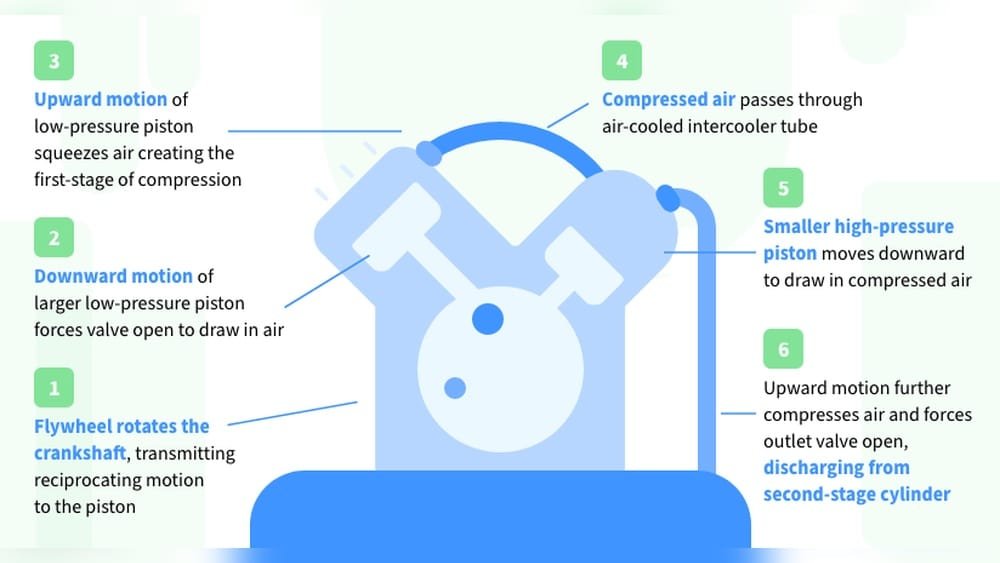
A two stage air compressor is a machine that compresses air in two steps, or “stages,” before storing it in a tank. In the first stage, the compressor draws air in and squeezes it a bit. Then, before the air goes into the tank, it gets squeezed again, even tighter, by a second piston. This process makes the air much more pressurized than in a regular, single stage compressor.
I remember the first time I saw the difference. My old single stage compressor would slow down after a while, and it got hot quickly. But when I tried a two stage model at a friend’s workshop, I noticed it kept running strong for longer jobs.
The tools felt more powerful and the air pressure stayed high, even with big jobs.
How Does A Two Stage Air Compressor Work?
Let me explain in simple steps, just like I wish someone had done for me.
- Air Intake: The compressor pulls in air from the room.
- First Compression Stage: The first piston compresses the air to a medium pressure. The air gets a bit warm.
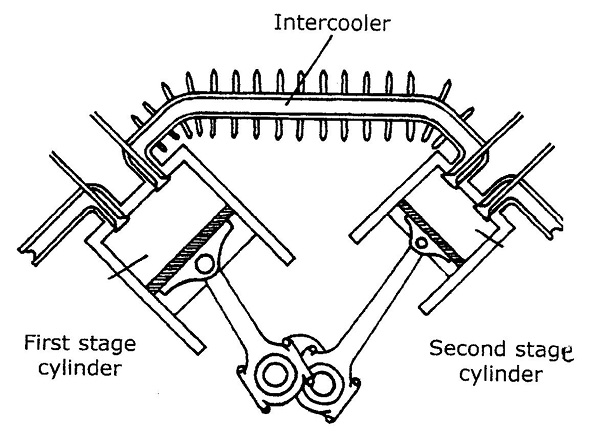
- Cooling (Intercooler): Before the air moves to the next piston, it passes through a cooling tube, called an intercooler. This cools the air down, which helps the second stage work better.
- Second Compression Stage: Now, the air goes to the second piston, which compresses it even more. This makes the air even more pressurized.
- Storage: The high-pressure air is sent to a storage tank. From here, you can use it for your tools or machines.
This two-step process is the secret to why these compressors are so efficient and reliable. The cooling step is important. If you try to compress air too much in one go, it gets very hot and can damage the machine.
By cooling it between stages, the compressor stays healthy and performs better.

Single Stage Vs Two Stage Air Compressors
I’ve used both types, so here’s a quick comparison that helped me decide what to buy.
| Feature | Single Stage | Two Stage |
|---|---|---|
| Compression Steps | 1 | 2 |
| Max Pressure (PSI) | Up to 120 PSI | Up to 175 PSI |
| Best For | Home, small shops | Industrial, heavy-duty |
| Heat Management | Less efficient | More efficient |
| Cost | Lower | Higher |
In my case, I started with a single stage because it was cheaper and smaller. But as I began using more air tools, I found myself waiting for the tank to refill. And the motor would overheat on long jobs.
When I switched to a two stage compressor, I noticed smoother operation and more power for my spray gun and impact wrench.
Why Use A Two Stage Air Compressor?
Some people ask, “Is a two stage air compressor worth it? ” Here’s what I’ve found from using one in my garage and at work.
- Higher Pressure: Two stage compressors can reach higher PSI. This means you can use heavier tools or run several tools at once.
- Better for Long Jobs: If you work with tools for hours, a two stage model won’t slow down or overheat as fast.
- More Efficient: They use energy more wisely. The cooling step between stages helps the machine last longer.
- Cleaner Air: Since the air is compressed and cooled twice, there’s usually less moisture and fewer impurities.
One thing I didn’t expect: the air coming from my two stage compressor felt “dryer.” This is great for painting or running air tools that don’t like water or oil in the line.
:max_bytes(150000):strip_icc()/aircompressor_0-8ede7f97528d4633a132cd18344d8b29.jpg)
Where Are Two Stage Air Compressors Used?
I’ve seen two stage compressors in all sorts of places. Here are some common uses:
- Auto Repair Shops: Mechanics need lots of power for tools like impact wrenches and sanders.
- Factories: Many machines need steady, high-pressure air to run.
- Spray Painting: High pressure and dry air make the paint smooth and even.
- Construction Sites: Jackhammers and other big tools often need a two stage compressor.
- Home Garages: If you’re a serious hobbyist or have several air tools, you’ll see the benefits.
When I started spray painting bikes for fun, I thought my single stage would be enough. But I kept getting uneven results because the air pressure dropped mid-job. After switching to a two stage compressor, the spray was consistent and the finish looked professional.
Key Parts Of A Two Stage Air Compressor
If you open up a two stage compressor, you’ll see it has a few important parts:
- Air Intake Valve: Lets air in from the outside.
- First Cylinder and Piston: Compresses the air the first time.
- Intercooler: A small tube or pipe that cools the air.
- Second Cylinder and Piston: Compresses the air a second time.
- Storage Tank: Holds the high-pressure air.
- Pressure Switch: Turns the machine on or off at set pressures.
- Safety Valve: Releases air if the pressure gets too high.
I once had an intercooler tube crack. The compressor started running hot and loud. After replacing that small part, everything was back to normal. It taught me how each part is important, especially in a two stage system.
How To Choose The Right Two Stage Air Compressor
If you’re thinking about buying one, here’s what I wish I knew before I made my first purchase.
1. Air Pressure (psi) And Air Flow (cfm)
Check what PSI (pounds per square inch) and CFM (cubic feet per minute) your tools need. Most home tools need 90 PSI, but sanders or grinders can need more. Two stage compressors usually offer 175 PSI and higher CFM, which means more power and the ability to use more than one tool at a time.
2. Tank Size
Bigger tanks hold more air and let you work longer without waiting. I started with a 20-gallon tank, but quickly moved up to 60 gallons for bigger jobs.
3. Power Source
You can find electric and gas-powered compressors. I use electric in my garage—it’s quieter and there’s no exhaust. On job sites without power, gas is handy, but it’s noisier.
4. Durability
Look for cast iron pumps and good cooling systems. My first cheap compressor wore out fast. Spending a bit more on quality saved me headaches later.
5. Noise Level
Two stage compressors are quieter than single stage, but it’s still smart to check decibel ratings. My neighbors thank me for choosing a quieter model.
6. Price And Maintenance
Two stage compressors cost more, but last longer and need less repair. Don’t forget to factor in the cost of oil changes and air filters.
Here’s a quick look at how these choices stack up:
| Factor | Why It Matters | My Recommendation |
|---|---|---|
| PSI/CFM | Matches tool requirements | Go higher than you think you need |
| Tank Size | Work longer, fewer stops | At least 60 gallons for workshops |
| Power Source | Fits your location | Electric for indoors, gas for outdoors |
| Durability | Machine lasts longer | Cast iron, good cooling |
| Noise | Less disturbance | Check decibel rating |
Common Mistakes When Using Two Stage Air Compressors
I made a few mistakes when I started out. Hopefully, you can avoid them.
- Ignoring Maintenance: I once forgot to check oil levels. The compressor overheated and shut off. Now, I check oil and filters every month.
- Wrong Size: My first compressor was too small. It kept running and wore out fast. Always buy a bit bigger than you think you need.
- Bad Location: I kept my compressor in a damp corner. Rust started to form. Now I keep it in a dry, well-ventilated spot.
- Not Draining the Tank: Water builds up inside the tank. If you don’t drain it, the tank can rust and leak. I set a reminder to drain it after every use.
- Skipping Safety Checks: I once used an old, cracked hose. It burst and scared me. Always check hoses and fittings for wear.
Maintenance Tips For Two Stage Air Compressors
Keeping your compressor in good shape doesn’t take much time, but it makes a big difference.
- Check and Change Oil: Oil keeps the pistons moving smoothly. Check levels often and change oil as the manual says.
- Clean or Replace Air Filter: Dirty filters make the compressor work harder. I clean mine every few weeks.
- Drain the Tank: Let out any water after each use to prevent rust.
- Inspect Hoses and Fittings: Look for cracks, leaks, or loose connections.
- Tighten Bolts: Vibrations can loosen bolts. I check them every few months.
- Listen for Odd Sounds: New noises can mean trouble. If you hear knocking or hissing, investigate right away.
- Check Safety Valves: Make sure they work and aren’t blocked.
Taking these simple steps has kept my compressor running for years. A little attention now saves a lot of trouble later.
Real-life Example: My Upgrade Story
I’ll never forget the first time I used my two stage compressor to run a sandblaster. My old single stage model would slow down and lose pressure quickly. But with the two stage, the pressure stayed steady, and I could finish the job without waiting.
It felt like moving from a slow bicycle to a powerful motorcycle.
A friend of mine runs a small auto shop. He switched to a two stage compressor and now runs four tools at once. He told me his work is faster, and he spends less time fixing leaks or waiting for the tank to fill.
That’s the kind of upgrade that pays for itself.
Two Non-obvious Insights
After years of using these machines, here are two things people often miss:
- Temperature Drop Helps Water Separation: The intercooler doesn’t just cool the air for the compressor. It also lets water vapor in the air condense, so less water ends up in your tools or paint. This means drier, cleaner air.
- Longer Tool Life: Running tools on steady, high-pressure air (from a two stage compressor) actually extends the life of your air tools. They don’t struggle with pressure drops or get hit with water and oil as much.
These details might seem small, but they make a big difference in the long run.
Frequently Asked Questions
What Is The Main Difference Between Single And Two Stage Air Compressors?
The main difference is that a two stage compressor compresses air twice, making it more powerful and efficient. A single stage does it just once. This means two stage models can reach higher pressures and handle tougher jobs.
Are Two Stage Compressors Only For Big Businesses?
No. While factories and shops use them, many hobbyists and home users choose two stage compressors for better performance, especially if they use air tools often or want more reliable results.
How Much Maintenance Does A Two Stage Air Compressor Need?
Regular oil checks, filter cleaning, and draining the tank are key. With good care, a two stage compressor can last many years. Maintenance is simple, but don’t skip it.
Can I Use A Two Stage Compressor With Regular Tools?
Yes, you can use standard tools. The compressor will run them easily, often better than a single stage model, because it keeps pressure steady even during tough jobs.
Where Can I Learn More About How Air Compressors Work?
If you want deeper technical details, I recommend reading the overview at Wikipedia. It’s a great place to get started.
If you’re thinking about getting a two stage air compressor, I can tell you from personal experience—it’s a smart choice for anyone who wants more power, reliability, and smoother results. It’s made my projects easier and my tools last longer.
If you give one a try, I think you’ll see the difference right away.
As an Amazon Associate, We earn from qualifying purchases