

Choosing the right saw for your woodworking or DIY project can be confusing. If you walk into any hardware store or browse online, you’ll see a range of power saws: table saws, miter saws, and circular saws. Each type has its own strengths, weaknesses, and best uses. If you pick the wrong one, you might struggle to get clean cuts or even risk your safety. This guide explains the differences, helps you choose the right tool, and gives practical tips that many beginners miss.
What Is A Table Saw?
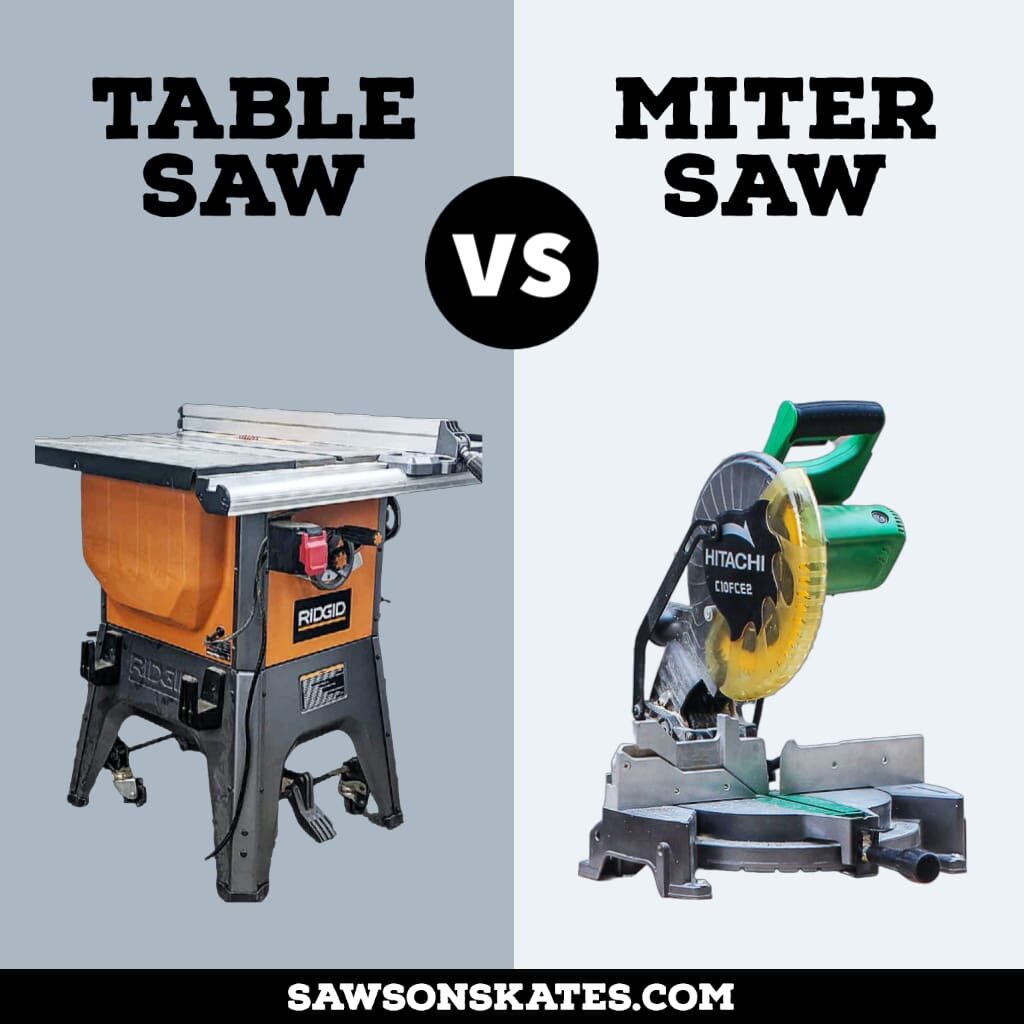
A table saw is a stationary tool with a circular blade that rises through the middle of a flat table surface. You push wood or other materials against the blade to make cuts. Table saws are common in workshops and are known for their power and accuracy.
Main Features
- Large flat table for support
- Adjustable blade height and angle
- Fence system for straight cuts
- Powerful motor
Table saws are heavy and not meant to be moved often. They’re best for making long, straight cuts (called rip cuts) and repeated, identical cuts.
Typical Uses
- Cutting large sheets of plywood or MDF
- Making precise straight cuts
- Repeated cuts with the same measurement
Advantages
- High accuracy and clean cuts
- Supports large workpieces
- Good for bulk or repetitive work
Limitations
- Takes up space in your workshop
- Not portable
- Can be dangerous if used incorrectly
Non-obvious insight: Many beginners don’t realize that the quality of the fence system on a table saw directly impacts accuracy. Cheaper saws often have fences that are hard to adjust or don’t lock square, leading to uneven cuts.
What Is A Miter Saw?
A miter saw is a specialized tool designed for making precise crosscuts and angle cuts. The saw blade is mounted on a swing arm that moves up and down, and often rotates to cut at different angles.
Main Features
- Swing arm for up-and-down movement
- Rotating base for angled cuts (miter cuts)
- Sometimes includes a sliding feature for wider boards
Miter saws sit on a bench or stand. You bring the blade down onto the wood, rather than pushing the wood into the blade.
Typical Uses
- Cutting trim and molding
- Creating picture frames
- Making quick, accurate crosscuts
Advantages
- Fast, repeatable angle cuts
- High accuracy for short workpieces
- Safer than freehand cutting
Limitations
- Can’t make long rip cuts
- Limited cut width unless it’s a sliding miter saw
- Not great for cutting large sheets
Non-obvious insight: Many users overlook the importance of blade size. A larger blade (like 12 inches) can cut thicker material, but a smaller blade (like 8 inches) is often more accurate for fine work.
What Is A Circular Saw?
A circular saw is a handheld tool with a round blade. It’s one of the most versatile and portable saws, useful for many types of cutting jobs, especially on-site or outdoors.
Main Features
- Handheld and lightweight
- Adjustable depth and angle of cut
- Available in corded and cordless models
Circular saws are great for both straight and angled cuts, but require a steady hand or guide for accuracy.
Typical Uses
- Cutting plywood or boards to size
- Framing and construction work
- Outdoor projects or jobs without a workshop
Advantages
- Highly portable
- Affordable and easy to store
- Cuts many materials (with the right blade)
Limitations
- Harder to make perfect straight cuts without a guide
- Less accurate than table or miter saws
- Not ideal for repeated precision cuts
Non-obvious insight: Many people do not realize that the quality of the blade and using a cutting guide (like a straight edge or track) can drastically improve the accuracy of a circular saw, making it almost as precise as more expensive tools.
Table Saw Vs Miter Saw Vs Circular Saw: Head-to-head Comparison
To help you see the main differences at a glance, here’s a comparison:
| Feature | Table Saw | Miter Saw | Circular Saw |
|---|---|---|---|
| Portability | Low | Medium | High |
| Best for | Long straight cuts, bulk work | Angle & crosscuts, trim | General cutting, outdoors |
| Cut accuracy | Very high | High (for crosscuts) | Medium |
| Price range | $200–$1500+ | $100–$800 | $40–$300 |
| Material size | Large sheets | Boards up to 12” wide (sliding) | Varies (depends on blade size) |
Which Saw Is Best For You?
The “best” saw depends on what you plan to build:
- If you’re making furniture or need long, straight cuts, a table saw is essential.
- For framing, molding, or picture frames, a miter saw gives the best results.
- If you need one tool for many tasks, especially outdoors, a circular saw is the most flexible.

Detailed Use Cases And Examples
Table Saw Projects
- Building cabinets, bookshelves, or tables
- Cutting panels for doors or walls
- Repeated cuts for flooring or siding
A table saw can handle large sheets (like 4’ x 8’ plywood), which is impossible with a miter saw and difficult with a handheld circular saw.
Miter Saw Projects
- Installing baseboards or crown molding
- Cutting window or door trim
- Making angled cuts for frames
A sliding miter saw can handle boards up to 12 inches wide, but not large sheets. It’s the tool of choice for anyone working with finish carpentry.
Circular Saw Projects
- Cutting lumber for decks or fences
- Sizing plywood for roof sheathing
- Quick cuts on job sites without power outlets
Cordless circular saws are especially handy for outdoor or remote work. They’re also the most affordable option for beginners.
Safety Considerations
Power saws can be dangerous if not used correctly. Here are essential safety points:
- Always wear eye protection and hearing protection.
- Use the blade guard and never remove safety features.
- Keep hands away from the blade path.
- Make sure the saw is unplugged or battery removed when changing blades.
- Use a push stick with table saws to keep fingers safe.
Practical tip: Beginners often forget to check the blade tightness before starting. A loose blade can wobble and cause accidents.
Cost And Maintenance
Each saw type has different costs—both to buy and to maintain.
| Saw Type | Initial Cost | Blade Replacement | Typical Lifespan | Maintenance Needs |
|---|---|---|---|---|
| Table Saw | $200–$1500+ | $20–$80 | 10+ years | Clean, lubricate, align fence |
| Miter Saw | $100–$800 | $15–$70 | 7–15 years | Clean, check angles |
| Circular Saw | $40–$300 | $10–$50 | 5–10 years | Clean, check cord/battery |
Pro tip: Don’t ignore blade quality. Cheap blades dull quickly and give rough cuts, no matter how good the saw.
Common Mistakes To Avoid
- Using the wrong saw for the job: For example, trying to cut long boards with a miter saw can be frustrating and unsafe.
- Ignoring blade sharpness: Dull blades lead to burns, rough edges, and can even cause the saw to kick back.
- Skipping the guide or fence: Freehand cuts with a circular saw are rarely straight. Use a guide for better results.
- Overestimating portability: Table saws are not meant to move often. If you need to carry your saw, choose a circular or compact miter saw.

How To Choose The Right Saw: Key Factors
Think about these points before you buy:
- Project size and type: Are you building furniture, framing a house, or just doing small repairs?
- Space available: Table saws need permanent space. Miter and circular saws need less.
- Budget: Set a realistic budget, including blade upgrades and accessories.
- Power source: If you don’t have easy access to outlets, cordless circular saws are a good choice.
- Skill level: Table saws offer precision but require more setup and safety awareness.
Advanced tip: If you only have space or budget for one saw, consider a high-quality circular saw with a guide track. It won’t be as fast as a table saw for bulk work, but you can do most cuts with careful setup.
Real-world Examples
- A home woodworker making cabinets would start with a table saw, adding a miter saw later for trim work.
- A contractor working on decks might rely on a circular saw for cutting joists and plywood on site.
- A DIY enthusiast installing baseboards would get the cleanest joints with a miter saw.
Seeing these tools used in real projects helps you understand their value. For more details on saw types and safety, you can visit the Wikipedia Saw page.
Frequently Asked Questions
What Is The Main Difference Between A Table Saw, Miter Saw, And Circular Saw?
The main difference is how you cut and what you cut. Table saws excel at long, straight cuts in large sheets. Miter saws are best for quick, angled crosscuts in trim or boards. Circular saws are handheld, making them portable and good for general cutting tasks.
Can A Circular Saw Replace A Table Saw Or Miter Saw?
A circular saw can do many jobs if you use guides and measure carefully, but it won’t be as fast or precise as a table saw or miter saw, especially for bulk or repeated cuts.
Which Saw Is Safest For Beginners?
A miter saw is usually safest for beginners because your hands are away from the blade and the cut is controlled. Table saws require more attention to safety procedures.
Do I Need All Three Types Of Saws?
Most beginners don’t need all three. Start with the saw that matches your main projects. You can add more specialized tools as your skills and needs grow.
How Do I Get Straight Cuts With A Circular Saw?
Use a straight edge guide or track. Mark your line carefully, clamp the guide, and keep the saw base tight against it. Using a quality blade also helps produce cleaner cuts.
Choosing the right saw makes your projects easier, safer, and more enjoyable. Take time to match the tool to your needs, and don’t hesitate to learn from experienced users. With practice, you’ll get pro-level results even as a beginner.
As an Amazon Associate, We earn from qualifying purchases