
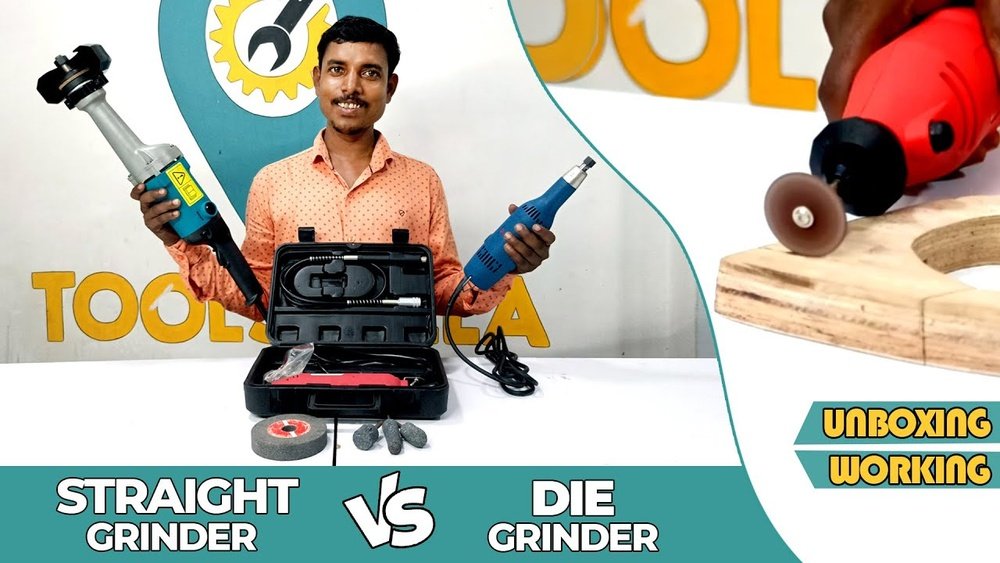
Choosing the right grinder can make a big difference in your workshop or on the job site. You may see both straight grinders and angle grinders and wonder which one you really need. While they can look similar and both are handheld power tools, their design, uses, and even the safety precautions are different. Picking the wrong tool can slow your work, damage materials, or even cause injury.
Let’s make sense of these two popular tools. We’ll cover how each works, what jobs they’re best for, safety tips, and how to choose the right grinder for your needs. If you’re new to power tools, or want to invest wisely, this guide will help you decide with confidence.
What Is A Straight Grinder?
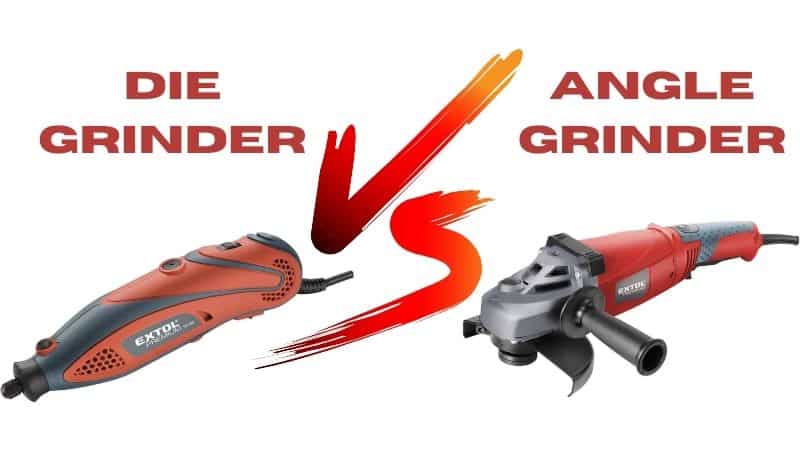
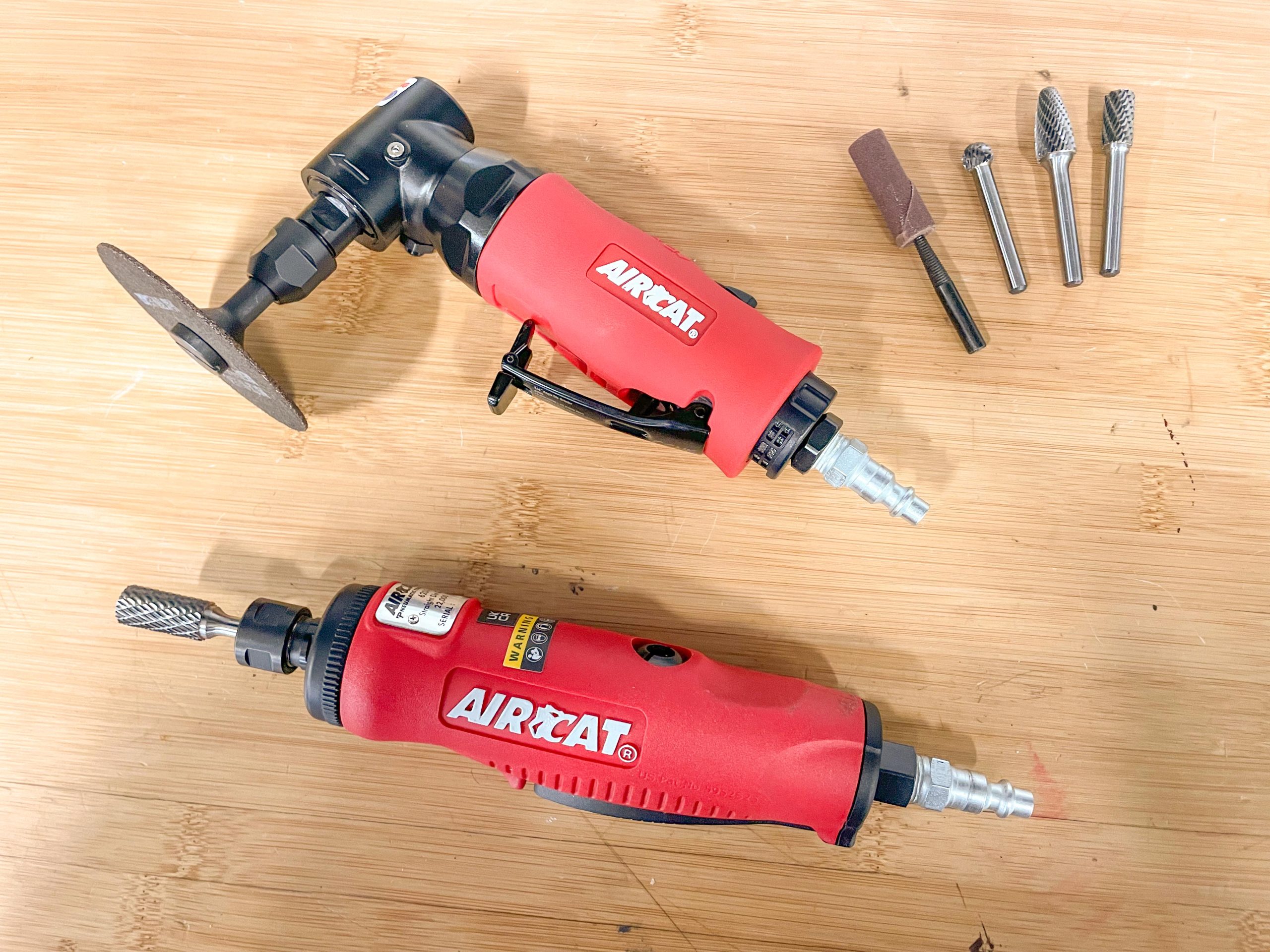
A straight grinder is a handheld power tool with a straight, barrel-like body and a rotating shaft at the front. It’s sometimes called a die grinder, especially in smaller sizes. The spinning shaft allows you to attach different accessories, like burrs, grinding stones, and sanding drums.
Straight grinders are known for their precision. They’re often used for:
- Deburring metal edges
- Polishing surfaces
- Grinding inside pipes or narrow spaces
- Sharpening tools
These grinders usually operate at high speeds, often up to 25,000 RPM (revolutions per minute). This speed makes them excellent for detailed work and finishing tasks. They’re popular in auto shops, metalworking, and tool repair.
Key Features Of Straight Grinders
- Long, slim body for better control in tight spaces
- Collet chuck for holding small bits or attachments
- Variable speed options on some models
- Lightweight (often under 5 pounds)
- Air-powered (pneumatic) or electric models
Common Materials And Applications
Straight grinders are used on:
- Metal (for smoothing welds, removing rust)
- Plastics (trimming, shaping)
- Wood (carving, engraving small details)
A less obvious use: Many jewelers and artists use straight grinders for shaping stones or fine metalwork.
What Is An Angle Grinder?
An angle grinder is a handheld tool where the grinding wheel is mounted at a right angle (usually 90 degrees) to the tool’s body. This “L” shape is where the name comes from. The side handle offers extra grip and control.
Angle grinders are workhorses for heavy-duty tasks such as:
- Cutting metal, tile, or masonry
- Grinding down welds or rough surfaces
- Sanding large flat areas (with the right disc)
- Removing paint or rust from broad surfaces
The most common disc sizes are 4. 5 inches and 5 inches, but you’ll also find 7-inch and 9-inch models for bigger jobs. Most angle grinders spin at 9,000 to 12,000 RPM—slower than straight grinders, but with much more torque.
Key Features Of Angle Grinders
- Disc or wheel mounted at 90° to the body
- Side handle for stability
- Spindle lock for quick disc changes
- Guard for user protection
- Range of attachments: Cutting discs, grinding wheels, wire brushes
Common Materials And Applications
Angle grinders handle:
- Steel (cutting rebar, grinding welds)
- Masonry (cutting bricks, tiles)
- Wood (with specialty discs)
- Concrete (surface prep, cutting slots)
A beginner mistake is using the wrong disc for the material. For example, a metal cutting disc on stone can shatter.
Straight Grinder Vs Angle Grinder: Side-by-side Comparison
Understanding how these tools differ helps you match the right grinder to your project. Here’s a quick side-by-side look:
| Feature | Straight Grinder | Angle Grinder |
|---|---|---|
| Tool Shape | Straight, pen-like | “L” shape with side handle |
| Disc/Burr Position | In line with body | At 90° to body |
| Typical Speed | Up to 25,000 RPM | Up to 12,000 RPM |
| Best For | Precision, detail work | Heavy-duty cutting, grinding |
| Common Sizes | 1/4” collet, small wheels | 4.5”, 5”, 7” discs |
| Power Source | Electric or pneumatic | Mostly electric |
| Weight | Lighter (1-5 lbs) | Heavier (4-15 lbs) |
When To Use A Straight Grinder
A straight grinder is the better choice when you need:
- Fine control and precision – For shaping small parts, cleaning up welds, or polishing.
- Access to tight spots – The slim body fits into areas an angle grinder cannot reach.
- Lightweight handling – Less tiring for jobs that require long periods of detail work.
- Versatility with attachments – Straight grinders can hold many types of burrs, points, and stones.
Some industries where straight grinders are essential:
- Automotive: Porting cylinder heads, deburring engine parts.
- Metal fabrication: Polishing intricate welds, smoothing edges.
- Tool and die making: Sharpening cutting tools, cleaning molds.
- Artisan crafts: Engraving, stone carving, jewelry making.
A hidden advantage: Pneumatic straight grinders are often safer in wet or oily conditions because they don’t use electricity.
When To Use An Angle Grinder
Choose an angle grinder if your job involves:
- Heavy cutting and grinding – Removing a lot of material quickly, such as cutting steel pipes or grinding concrete.
- Surface prep – Removing rust, paint, or adhesives from wide areas.
- Shaping large objects – Trimming tiles, slabs, or stone.
- Working with harder materials – With the right disc, angle grinders can tackle masonry and reinforced concrete.
Industries that rely on angle grinders:
- Construction: Cutting rebar, masonry, tiles.
- Shipbuilding: Removing welds, prepping steel.
- Home renovation: Demolition, surface cleaning.
- Metal recycling: Cutting scrap metal for size.
A less obvious use: With a diamond blade, an angle grinder can cut through old, set concrete—a task straight grinders simply can’t handle.
Safety Considerations
Both tools are powerful, but their risks differ. Beginners often miss the importance of matching the right accessory and safety gear to each grinder.
Safety Tips For Straight Grinders
- Always use the correct collet size. A loose bit can fly out.
- Wear eye protection and a dust mask. Fine particles can be harmful.
- Check the speed rating of attachments. Never use accessories rated for lower RPM than your grinder.
- Hold with two hands when possible for better control.
Safety Tips For Angle Grinders
- Never remove the safety guard. The guard protects you from flying debris and shattered discs.
- Use the side handle. It reduces kickback and improves grip.
- Always use the right disc for your material. Using a cutting disc to grind can cause it to break.
- Wear heavy gloves and a face shield. Fragments can be large and fast-moving.
- Let the tool stop before setting it down. Discs can keep spinning for a few seconds.
A surprising safety fact: Most grinder injuries come from using the wrong accessory, not from the tool itself. Check compatibility every time.
Pros And Cons: Straight Grinder Vs Angle Grinder
Looking at strengths and weaknesses helps you decide which tool to buy.
| Tool | Pros | Cons |
|---|---|---|
| Straight Grinder | – Excellent for detail and precision – Fits tight spaces – Lightweight, reduces fatigue – Wide range of small accessories | – Not suitable for heavy cutting – Limited disc size – Less powerful than angle grinders |
| Angle Grinder | – Cuts and grinds fast – Handles large, tough materials – Many disc sizes and types – Good for surface prep and demolition | – Heavier and bulkier – Can be less precise – More dangerous if mishandled |
Cost Differences
Straight grinders and angle grinders vary in price depending on brand, power, and size.
- Straight grinders: $60–$200 for quality electric models. Pneumatic types can be cheaper but need an air compressor.
- Angle grinders: $40–$300 depending on disc size and features. Cordless models are usually more expensive.
The real cost is not just the tool. Think about:
- Accessory prices (discs, burrs, stones, etc.)
- Maintenance (brushes, bearings)
- Safety gear (glasses, gloves, masks)
A non-obvious tip: For light, occasional use, a cheaper angle grinder may be enough. For daily, precision work, invest in a high-quality straight grinder.

Factors To Consider When Choosing
To pick the right tool, ask yourself:
- What material will I work on most? Metals, masonry, wood, or plastics.
- Do I need fine detail or brute force? Straight grinders for detail, angle grinders for power.
- How often will I use the tool? Frequent use justifies higher quality.
- What attachments do I need? Check compatibility and availability.
- Is space limited? Straight grinders fit in tight spots.
- What power source is available? Pneumatic needs an air compressor; electric needs outlets or batteries.
- What safety gear do I have? Some jobs need face shields or special gloves.
A common mistake: Buying a “bigger” tool for all jobs. In reality, using a large angle grinder for detail work is frustrating and unsafe.
Real-world Examples
- Automotive shop: A mechanic removes rust with an angle grinder, then uses a straight grinder to polish inside a wheel hub.
- Home DIYer: Cuts tiles for a bathroom with an angle grinder, then engraves a custom design with a straight grinder.
- Metal artist: Shapes large steel pieces with an angle grinder, then adds fine details using a straight grinder.
You’ll often see both tools side by side in professional shops—each has its place.
Care And Maintenance Tips
Proper care extends tool life and keeps you safe:
- Clean after use. Dust and debris shorten tool life.
- Check for wear. Replace brushes, bearings, or collets as needed.
- Lubricate moving parts. Especially for pneumatic grinders.
- Store safely. Keep tools dry and discs in original packaging.
- Inspect accessories before every use. Cracked discs or burrs are dangerous.
A less-known practice: Let the tool run at full speed for a few seconds before touching the workpiece. This checks for vibrations, which can mean a damaged accessory.
Environmental And Health Concerns
Both grinders create dust and noise. Use:
- Dust extraction or a shop vacuum where possible.
- Hearing protection—even a few minutes of grinding can damage hearing.
- Respirators for long grinding sessions, especially with metal or masonry.
Some materials (like fiberglass, beryllium, or old paint) can release toxic dust. Always check the material safety data before grinding.
For more detailed safety and health recommendations, you can visit the OSHA PPE guidelines.
Frequently Asked Questions
What Is The Main Difference Between A Straight Grinder And An Angle Grinder?
The main difference is the position of the grinding attachment. A straight grinder’s accessory is in line with the tool body, making it good for detail work and tight spaces. An angle grinder’s disc is at a right angle, which is better for cutting and heavy grinding.
Can You Use A Straight Grinder For Cutting Metal?
It’s possible, but not recommended for thick or hard metals. Straight grinders are mainly for precision grinding, polishing, and deburring. Use an angle grinder with a cutting disc for metal cutting jobs.
Are Straight Grinders Safer Than Angle Grinders?
Straight grinders are generally safer for detail work because they are lighter and create less kickback. However, all grinders can be dangerous if not used correctly. Always match the accessory and use proper safety gear.
What Size Discs Or Burrs Do Straight Grinders And Angle Grinders Use?
Straight grinders usually use small burrs and stones (1/8” to 1/4” shank). Angle grinders use larger discs (4.5”, 5”, 7”, or 9” diameter) for cutting, grinding, or sanding.
Can I Use Accessories From One Grinder Type On The Other?
Usually, no. The mounting method and size are different. Some specialty adapters exist, but it’s safer and more effective to use the correct accessory for each tool.
Choosing between a straight grinder and an angle grinder depends on your work, materials, and comfort. Both tools are valuable in the right hands. Remember, the right grinder not only makes your job easier—it keeps you safe and gets better results.
As an Amazon Associate, We earn from qualifying purchases