
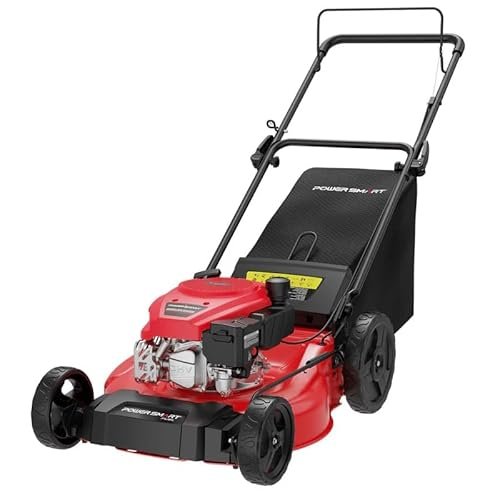
Choosing the right lawn mower often comes down to how your yard is laid out and how much effort you want to expend on a Saturday morning. I have tested both drive systems on various terrains, putting rear-wheel-drive and front-wheel-drive models through their paces on thick turf, steep slopes, and tight corners. In this guide, I will break down the real-world differences between these two setups so you can decide which drive system will make your yard work feel like less of a chore.
rwd vs fwd push mower: At a Glance
| Rear-Wheel-Drive Push Lawn Mower | Front-Wheel-Drive Push Lawn Mower | |
|---|---|---|
| Drive Mechanism | Pushes the mower forward from the rear wheels | Pulls the mower forward from the front wheels |
| Traction on Hills | Excellent; weight shifts to rear wheels for better uphill grip | Poor; front wheels lose traction when pushing uphill |
| Maneuverability | Requires disengaging drive or lifting rear to turn sharply | Excellent; simply push down on handlebars to lift wheels and pivot |
| Handling with Bag attached | Maintains great traction as filled bag adds rear weight | Reduced traction as filled bag lifts front drive wheels |
| Best Terrain Fit | Hilly, sloped, or uneven yards with thick turf | Flat lawns with many obstacles, flowerbeds, and tight corners |
| User Effort Required | Minimal effort on slopes; mower does the heavy climbing | More physical effort required to assist on inclines |
| Typical Cost | Generally more expensive due to complex drive shafts | Typically more budget-friendly and simpler in design |
Complete Comparison: Rear-Wheel-Drive Push Lawn Mower vs Front-Wheel-Drive Push Lawn Mower
| PowerSmart 21-Inch Gas Push Lawn Mower | SENIX 21” Self-Propelled Gas Lawn Mower | |
|---|---|---|
| Product Image | 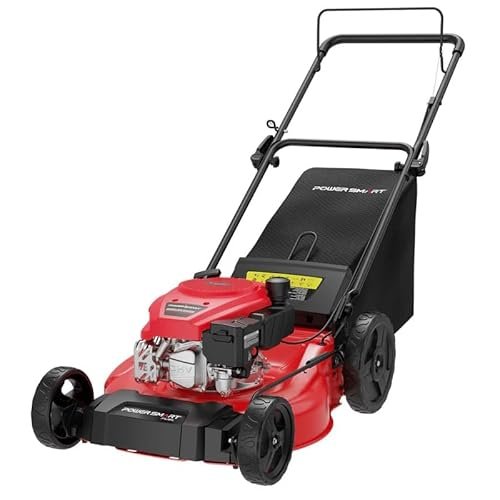 | 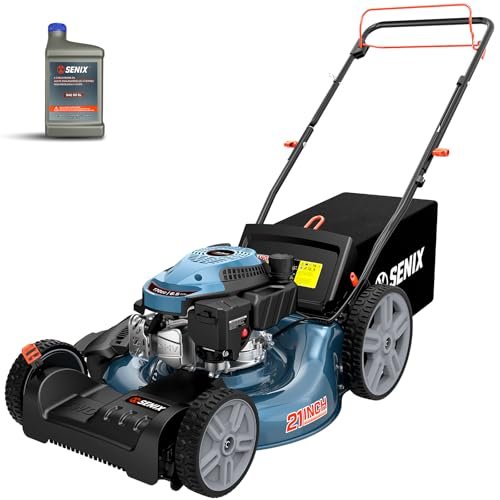 |
| Price | View On Amazon | View On Amazon |
| Category | Budget / Mid-Range Push Mower | Mid-Range Self-Propelled Mower |
| Engine Displacement | 140cc OHV Engine | 170cc OHV Engine (3.8 HP / 6.5 ft-lb torque) |
| Drive System & Control | Rear-Wheel Drive (RWD) Push | Front-Wheel Drive (FWD) Self-Propelled |
| Cutting Deck & Width | 21-inch durable steel deck | 21-inch steel deck with vortex tunnel design |
| 3-in-1 Capabilities | Mulch, Rear Bag, & Rear Discharge | Mulch, Rear Bag, & Side Discharge |
| Grass Catcher Capacity | 1.4-bushel bag | 1.7-bushel bag |
| Cutting Height Positions | 6 positions (1.5″ to 3.9″) via single lever | 6 positions (1.25″ to 3.75″) via dual levers |
| Wheels & Maneuverability | Standard wheels with rear-wheel drive traction | 8-inch front / 11-inch rear wheels |
| Warranty | Standard manufacturer warranty | 2-year limited warranty |
| Best For | Slopes, hills, and budget-conscious yards | Flat yards up to 1/3 acre with minimal pushing effort |
| Amazon Link | View On Amazon | View On Amazon |
| Overall Winner | Runner-Up | Winner |
PowerSmart 21-Inch Gas Push Lawn Mower (RWD)
The PowerSmart 21-Inch Gas Push Lawn Mower uses a rear-wheel-drive system that pushes the machine forward from the back, providing excellent traction when you are working on hills or slopes. Under the hood, the powerful 140cc OHV engine delivers consistent starting power and reliable performance through thick patches of grass. The durable 21-inch steel deck helps you cover a wide path with each pass, which significantly cuts down your total mowing time. With its 3-in-1 functionality, you can quickly switch between bagging with the 1.4-bushel rear bag, mulching to feed your soil, or using the rear discharge option. Adjusting your cutting height is simple thanks to a 6-position height adjustment single lever that lets you set the blade anywhere from 1.5 to 3.9 inches.
Key Features
- Reliable 140cc OHV engine offers consistent power and a smooth pull-start mechanism.
- 21-inch cutting width on a heavy-duty steel deck reduces the number of passes needed to finish your yard.
- Rear-wheel-drive system delivers superior traction by using the weight of the mower to keep the rear tires planted.
- 3-in-1 grass management lets you easily bag, mulch, or rear-discharge your lawn clippings.
- Single-lever height adjustment makes it easy to set the cutting height across 6 positions ranging from 1.5 to 3.9 inches.
Pros
- Excellent traction on steep hills and damp inclines because weight naturally shifts to the rear wheels.
- Simple single-lever mechanism makes height changes quick and painless.
- Steel deck feels incredibly durable and deflects small rocks or debris easily.
- Compact 1.4-bushel bag is lightweight and easy to detach when full.
Cons
- Harder to pivot quickly around tight garden beds because you have to disengage the drive or muscle the rear wheels.
- Rear bag can get heavy and make the front end feel light when it is completely full of wet grass.
- 140cc engine can occasionally bog down in exceptionally tall, wet weeds.
Best for:
Homeowners with sloped, hilly, or uneven lawns who need maximum uphill traction and prefer a heavy-duty steel deck that can handle rougher terrain.
Expert Opinion: The rear-wheel-drive design on this PowerSmart model is a lifesaver for hilly properties because it prevents the wheels from spinning out when you are climbing inclines.
SENIX 21-Inch Self-Propelled Gas Lawn Mower (FWD)
The SENIX 21-Inch Self-Propelled Gas Lawn Mower features a front-wheel-drive system that pulls the machine forward, making it incredibly easy to maneuver. It is equipped with a powerful 170cc OHV engine that delivers a hefty 3.8 HP and 6.5 ft-lb of torque, providing plenty of muscle for thick turf. The versatile 3-in-1 cutting system supports mulching, side discharge, and rear bagging with an extra-large 1.7-bushel grass bag. This model features a 6-position height adjustment system controlled by dual levers, allowing you to set the cutting height from 1.25 to 3.75 inches. Its design includes 8-inch front wheels and larger 11-inch rear wheels, combined with a unique vortex tunnel deck that reduces grass buildup on the underside.
Key Features
- Powerful 170cc OHV engine produces 3.8 HP for reliable cutting through dense grass.
- Front-wheel-drive system pulls the mower forward, allowing you to easily pivot by pushing down on the handlebar to lift the drive wheels.
- 21-inch steel deck with vortex design optimizes airflow to prevent wet clippings from clogging the underside.
- Generous 1.7-bushel grass bag holds more clippings, meaning fewer trips to the compost pile.
- Dual-lever height adjustment offers 6 distinct cutting positions ranging from 1.25 to 3.75 inches.
Pros
- Exceptional maneuverability around flower beds and trees because you can easily lift the front wheels to spin the mower.
- Large 11-inch rear wheels roll smoothly over bumps, divots, and rough patches of turf.
- 170cc engine offers impressive torque and rarely struggles in overgrown grass.
- Front-wheel-drive mechanism makes it easy to stop forward self-propulsion instantly.
Cons
- Loses traction on steep uphill climbs because weight shifts off the front drive wheels.
- Dual-lever height adjustment requires adjusting two separate points instead of one simple lever.
- Slightly heavier overall package due to the larger engine block.
Best for:
Homeowners with flat yards containing lots of landscaping, flower beds, and trees who want effortless pivoting and a highly maneuverable self-propelled experience.
Expert Opinion: The front-wheel-drive setup on the SENIX is perfect for flat yards with intricate landscaping, as it allows you to steer around obstacles without constantly fighting the transmission.
RWD vs FWD Push Mower: Key Differences That Matter
Performance Comparison
When comparing a rwd vs fwd push mower, the way power is delivered to the ground changes how the machine handles different terrains. Rear-wheel-drive mowers shine on hills. When you push a mower uphill, gravity naturally shifts the weight to the rear axle. This downward force increases tire grip, preventing the wheels from spinning uselessly in the dirt.
Front-wheel-drive mowers pull the machine from the front. If you try to go up a steep incline with a front-wheel-drive model, the front wheels lose contact pressure and tend to slip on the grass. However, on flat ground, the front-wheel-drive system is incredibly efficient and requires much less effort to steer.
Price and Value Analysis
Generally, front-wheel-drive mowers tend to be slightly more affordable to purchase and maintain. The drive systems are mechanically simpler, which often translates to a lower price tag at the hardware store. Rear-wheel-drive transmissions are more complex because they must handle the shifting weight of the mower and the filling grass bag. While RWD models might cost a bit more upfront, the investment is worth it if you have a hilly yard that would otherwise wear you out.
Build Quality Comparison
Both the PowerSmart and the SENIX feature rugged steel decks that can withstand years of bumps and flying debris. The difference lies in the wheel configurations and drive components. The SENIX uses high rear wheels to improve stability over bumpy ground, which complements its front-wheel-drive setup. The PowerSmart relies on a more traditional wheel layout but focuses its engineering on a robust rear transmission that can handle the extra stress of pushing the entire machine uphill under load.
User Experience Differences
Operating these two drive styles feels completely different in the backyard. With the front-wheel-drive SENIX, you can guide the mower right up to a tree trunk, push down on the handlebar to lift the spinning front wheels off the ground, and pivot the machine 180 degrees. The drive wheels keep spinning in the air, and when you set them back down, the mower immediately pulls forward again.
With the rear-wheel-drive PowerSmart, pivoting requires you to release the drive lever first. If you try to force a turn while the rear wheels are powered, the mower will fight you and tear up your turf. However, when you are mowing a long, straight line on a side-hill, the rear-wheel-drive system keeps the machine tracking perfectly straight without sliding down the slope.
Which Should You Choose?
Selecting between these two machines depends entirely on the topography of your lawn and how your landscaping is arranged.
You should choose the PowerSmart RWD mower if your yard has significant slopes, ditches, or terraced levels. The rear-drive traction ensures you will not have to push the machine manually when going uphill. It is also the ideal choice if you prefer a single-lever height adjustment and want a traditional, heavy-duty mowing experience.
You should choose the SENIX FWD mower if your yard is mostly flat but filled with gardens, trees, playsets, and patio corners. The ability to pivot on the spot by lifting the front wheels makes negotiating obstacles incredibly fast. The larger 170cc engine also makes it the better pick if you often let your grass grow tall before cutting it.
Final Verdict
If I had to choose one drive system for a standard suburban yard with flat ground and standard landscaping, the front-wheel-drive SENIX is hard to beat for pure convenience and maneuvering speed. But for anyone facing a yard with rolling hills or steep slopes, the rear-wheel-drive PowerSmart is the only choice that will save your back and keep you moving forward safely.
Frequently Asked Questions
Q: Is a rwd vs fwd push mower better for steep hills?
A: A rear-wheel-drive mower is much better for steep hills. When mowing uphill, weight shifts to the back of the machine, which gives the rear wheels the grip they need to push the mower up the slope without slipping.
Q: Can I manually push a front-wheel-drive mower if the engine is off?
A: Yes. You can easily push a front-wheel-drive mower forward or backward manually when the engine is off or when the drive lever is disengaged.
Q: Why do the wheels slip on my front-wheel-drive mower?
A: Front-wheel-drive wheels usually slip when you are going uphill, trying to turn too quickly, or when the rear grass bag is completely full. The heavy grass bag weighs down the rear of the mower, which lifts weight off the front drive wheels and reduces traction.
Q: How do I turn a corner with a rwd vs fwd push mower?
A: With a front-wheel-drive mower, you simply push down on the handle to lift the front drive wheels off the ground and pivot. With a rear-wheel-drive mower, you must release the self-propelled drive lever before turning, otherwise the rear wheels will push against your turn and potentially damage the lawn.
Q: Do rear-wheel-drive mowers require more maintenance?
A: Rear-wheel-drive systems can require slightly more maintenance over time because the drive belts and transmissions are more complex and carry more of the machine’s weight load during operation.
Q: Which drive system is better for thick, tall grass?
A: The drive system itself does not affect cutting power, but the engine size does. However, because cutting thick grass requires a steady forward pace, a rear-wheel-drive mower can sometimes offer more consistent forward movement without slipping in heavy patches.
As an Amazon Associate, We earn from qualifying purchases