
I have spent years pushing, pulling, and steering all kinds of mowers across different types of turf. In my experience, choosing between a rotary lawn mower and a reel lawn mower comes down to how much effort you want to put in and how healthy you want your grass to look. This hands-on comparison will break down the real-world differences between these two cutting styles so you can make the right choice for your yard.
rotary vs reel lawn mower: At a Glance
| Rotary Lawn Mower | Reel Lawn Mower | |
|---|---|---|
| Cutting Action | Uses a fast-spinning horizontal blade that chops and tears grass | Uses a spinning cylinder of blades for a clean scissor-like cut |
| Grass Health Impact | Can tear grass tips, leading to brown, frayed edges | Slices cleanly, promoting healthier growth and reducing disease risk |
| Power Source | Typically powered by gas, electricity, or batteries | Usually manual (push-powered), though some motorized options exist |
| Maintenance | Requires regular engine upkeep and simple blade sharpening | Requires precise blade alignment and specialized reel sharpening |
| Handling of Tall Grass | Easily cuts through tall, thick grass and weeds | Struggles with tall grass, which often gets flattened instead of cut |
| Noise and Emissions | Loud operation with potential exhaust emissions (gas models) | Extremely quiet and completely eco-friendly with zero emissions |
| Physical Effort | Low physical effort, especially with self-propelled models | Requires significant physical exertion and manual pushing |
Complete Comparison: Rotary Lawn Mower vs Reel Lawn Mower
| American Lawn Mower 1415-16SK2 16-Inch 5-Blade | American Lawn Mower 1204-14 14-Inch 4-Blade | |
|---|---|---|
| Product Image | 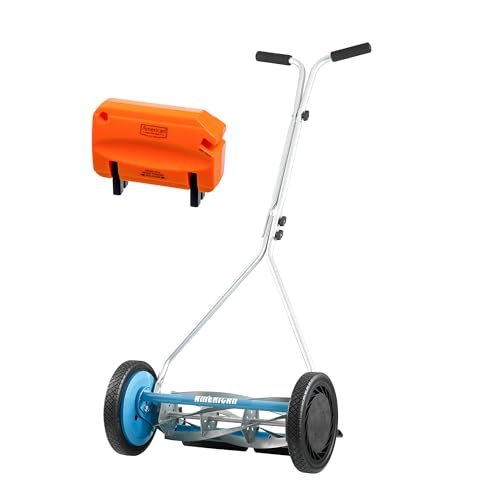 | 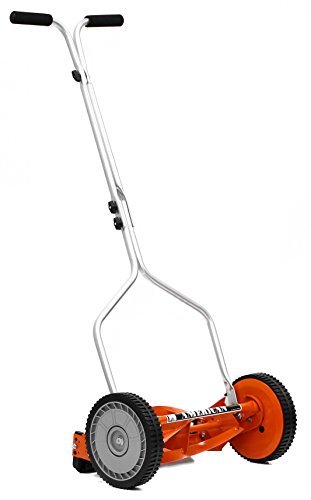 |
| Price | View On Amazon | View On Amazon |
| Category | Mid-Range Reel Mower | Budget Reel Mower |
| Blade Count & Reel Type | 5-Blade reel | 4-blade reel |
| Cutting Width | 16 inches | 14 inches |
| Wheel Diameter & Type | 10-inch polymer wheels | 8.5-inch polymer wheels |
| Included Accessories | Hand Sharpener Included | None |
| Cutting Height Range | Adjustable (optimal for grass under 4 inches) | 0.5″ – 1.75″ (for grass up to 4 inches) |
| Weight & Maneuverability | Lightweight and highly maneuverable | Extremely lightweight at 19 lbs |
| Best For | Medium-sized lawns needing a wider, cleaner 5-blade cut with self-maintenance capabilities | Small lawns and turf grasses requiring an ultra-lightweight, compact mower |
| Amazon Link | View On Amazon | View On Amazon |
| Overall Winner | Winner (More blades, wider cut, larger wheels, and included sharpener) | Runner-up (Ultra-lightweight and highly compact budget option) |
American Lawn Mower 1415-16SK2 16-Inch Reel Mower
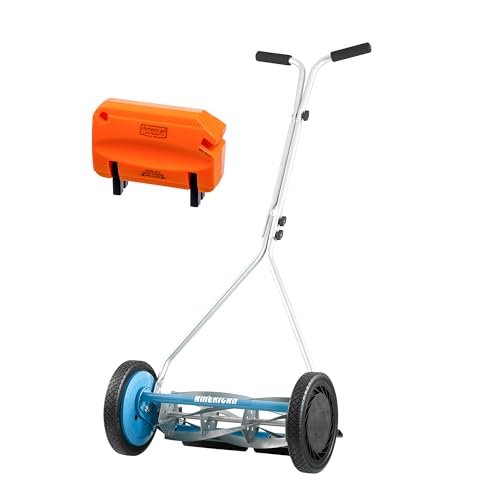
I spent a few weeks putting this model through its paces on a quarter-acre lot. The 5-blade reel spins smoothly, using a scissor-like shearing action that slices the grass cleanly rather than tearing it. This specific model features a 16-inch cutting width which strikes a nice balance between covering ground quickly and squeezing through tight garden gates. I found the 10-inch polymer wheels robust enough to glide over minor lawn divots without sinking. The manufacturer includes a hand sharpener in the box, which is a massive bonus for maintaining that clean cut over the seasons. Because it relies purely on your own muscle power, this is a completely pollution-free and noise-free tool that lets you cut the grass at sunrise without waking up the neighborhood.
- 5-blade reel design with a 16-inch cutting path for efficient backyard coverage.
- 10-inch polymer wheels provide excellent traction and maneuverability on uneven soil.
- Hand sharpener included in the package to extend the lifespan of the blades.
- Eco-friendly operation produces zero emissions and runs completely silent.
- Scissor-cut action prevents bruising and browning on the tips of your grass blades.
Pros
- Scissors the grass cleanly instead of ripping it, leading to a greener, healthier lawn.
- Extremely lightweight and takes up very little storage space in the garage.
- Zero engine maintenance, spark plugs, gas, or battery charging to worry about.
- Included sharpener saves you a trip to the local hardware repair shop.
Cons
- Requires physical effort and will give you a serious cardiovascular workout.
- Struggling through tall weeds or twigs can jam the reel unexpectedly.
- Wet grass will clump up and cause the blades to slide rather than cut.
Best for:
Homeowners with medium-sized lawns who want a perfectly manicured look, enjoy physical exercise, and prefer quiet, eco-friendly yard tools.
Expert Opinion: This 16-inch reel mower is a fantastic choice for those who actually enjoy the process of lawn care. If you mow frequently and hate the smell of gasoline, this tool will reward you with a golf-course finish.
American Lawn Mower 1204-14 14-Inch Push Reel Mower
If you have a smaller yard with tight corners, this compact model is incredibly nimble. Weighing in at only 19 pounds, it feels as light as a vacuum cleaner when you push it across the lawn. The 4-blade reel has a 14-inch cutting width paired with 8.5-inch polymer wheels, making it exceptionally easy to steer around flower beds and trees. I appreciate the adjustable blade height of 0.5 inches to 1.75 inches, which lets you scalping-cut certain warm-season grasses or leave cool-season grass a bit longer. Like its larger sibling, this manual tool is completely pollution-free, noise-free, and low maintenance. Just remember that you need to overlap your passes and cut regularly, as reel mowers perform poorly once the grass gets tall and unruly.
- 4-blade reel system is ideal for bending and cutting common turf grasses.
- Ultra-lightweight build at just 19 pounds makes it easy to lift and hang on a wall hook.
- Adjustable cutting height ranges from 0.5 inches to 1.75 inches for customized lawn heights.
- 8.5-inch polymer wheels reduce the overall footprint for maximum agility in tight spaces.
- Manual push design requires no gas, oil, extension cords, or heavy batteries.
Pros
- Incredibly easy to push and turn, even for youth or seniors.
- Budget-friendly price point makes it highly accessible for first-time homeowners.
- Clean scissor cut keeps the grass roots healthy and disease-resistant.
Cons
- Narrow 14-inch deck means you have to walk more passes to finish the yard.
- Completely useless on tough, woody weeds or grass taller than four inches.
- Lacks an included sharpening kit, unlike the 16-inch model.
Best for:
Urban dwellers with small patch lawns, townhome owners, and anyone who struggles to push heavy gas-powered machinery.
Expert Opinion: The 1204-14 is the ultimate minimalist mowing machine. It simplifies lawn care down to the absolute basics, making it perfect for small, flat yards that only take ten minutes to cut.
Rotary vs Reel Lawn Mower: Key Differences That Matter
Understanding the mechanics of a rotary vs reel lawn mower will save you hours of frustration in the yard. These tools look different, handle differently, and treat your grass blades in completely distinct ways.
Performance comparison
A rotary mower uses a single, horizontally spinning blade that slices through grass using sheer rotational speed. It behaves like a machete, hacking the tops off the grass blades. This high-impact collision often tears the grass tip, leaving a ragged edge that turns brown and invites disease.
In contrast, a reel mower utilizes a spinning cylinder of curved blades that traps the grass against a stationary bedknife. This creates a clean scissor cut. The grass heals faster, stays greener, and resists pests much better.
However, rotary mowers excel at chopping down tall weeds, dandelion stems, and neglected lawns. A reel mower will simply roll over tall weeds or get jammed by small twigs.
Price/Value analysis
Manual reel mowers are incredibly affordable. You pay a small upfront cost, and your operating expenses drop to zero. There are no oil changes, spark plugs, air filters, or battery replacements to purchase down the road.
Rotary mowers, whether gas-powered or battery-operated, require a much larger initial investment. Gas models need fuel, oil, and regular engine servicing. Battery models eventually require expensive replacement batteries when the original cells degrade. Over a five-year period, a manual reel mower costs a fraction of what you would spend maintaining a rotary machine.
Build quality comparison
The manual reel mowers reviewed here feature simple, mechanical designs with very few moving parts. The frames are made of steel, and the wheels are made of high-impact polymer. Because there are no engines, carburetors, or electrical wiring systems, there is very little that can actually break down.
Rotary mowers are far more complex. They have plastic decks that can crack, engines that can seize, and safety switches that can fail. While a high-end rotary mower can last a decade with proper care, a simple reel mower can easily survive for decades with occasional blade sharpening and lubrication.
User experience differences
Pushing a manual reel mower is a peaceful, sensory experience. You hear the rhythmic snapping of the blades and smell the freshly cut grass without the roar of an engine or the inhalation of exhaust fumes. It is an active physical workout that keeps you moving.
Rotary mowers offer a different kind of convenience. Self-propelled rotary models do the heavy pushing for you, which is helpful if you have steep hills. They also bag leaves and vacuum up yard debris, whereas a reel mower leaves everything on the ground as mulch.
Which Should You Choose?
If you have a flat, modest yard under a quarter-acre and you actually enjoy the physical exercise of yard work, a manual reel mower is the superior choice. You will get a healthier, greener lawn that looks like a golf course fairway, all while saving money and keeping the neighborhood quiet.
If you have a large yard, steep hills, or a busy schedule that prevents you from mowing every single week, a rotary mower is the practical choice. It has the brute power to tackle tall grass, chop through thick weeds, and clear out autumn leaves without breaking a sweat.
My final verdict is to choose the American Lawn Mower 16-inch reel mower if you want a healthy, scissor-cut lawn on a budget. Go with a rotary mower if you want convenience and the ability to reclaim an overgrown yard.
Frequently Asked Questions
Q: When comparing a rotary vs reel lawn mower, which one is better for wet grass?
A: A rotary mower handles wet grass much better than a reel mower. Reel mowers will simply slide over wet blades of grass instead of cutting them, resulting in an uneven yard and a jammed cutting cylinder.
Q: How often do I need to sharpen the blades on a rotary vs reel lawn mower?
A: Rotary blades should be sharpened at least twice a season because they dull quickly from hitting debris. Reel mower blades hold their edge much longer and often only need sharpening or backlapping once every two to three years.
Q: Can a manual reel mower handle twigs and pinecones?
A: No, small twigs, stones, and thick pinecones will instantly jam the spinning reel. You must clear your yard of debris before using a manual push mower to prevent damaging the blades.
Q: Why does my grass look brown at the tips after using a rotary mower?
A: Rotary mowers tear the grass rather than slicing it clean. This tearing action bruises the plant tissue, causing the tips of the grass blades to dry out, turn brown, and become susceptible to fungal infections.
Q: Is it harder to push a reel mower than a gas rotary mower?
A: Pushing a manual reel mower requires more physical effort because you are the engine. However, because reel mowers are incredibly lightweight, they can actually feel easier to maneuver in tight spaces than heavy, non-propelled rotary mowers.
Q: What is the maximum grass height a reel mower can cut?
A: Reel mowers work best on grass that is four inches tall or shorter. If your lawn gets longer than that, the blades will simply push the grass flat against the ground instead of cutting it.
As an Amazon Associate, We earn from qualifying purchases