
Choosing the right tool for your lawn can feel like a balancing act between physical effort and mechanical complexity. I have spent years testing different turf maintenance tools, putting both manual push mowers and heavy-duty gas machines through their paces on various grass types. In this comprehensive comparison, I will share my hands-on experience with a classic manual push model and a commercial-grade gas-powered unit to help you decide which tool fits your yard size, grass species, and lifestyle.
reel mower vs gas mower: At a Glance
| Reel Mower | Gas-Powered Reel Mower | |
|---|---|---|
| Power Source | 100% manual, powered entirely by user pushing | Gasoline engine powers the reel and propulsion |
| Cutting Precision | Clean scissor-cut, best on short and thin grass | Commercial-grade scissor-cut, handles dense turf easily |
| Physical Effort | Requires significant physical exertion to push and cut | Minimal effort due to self-propelled gas engine |
| Maintenance Requirements | Low; occasional blade sharpening and lubrication | High; engine tune-ups, oil changes, and fuel management |
| Noise Level | Nearly silent, only the sound of blades cutting | Loud, requires hearing protection during operation |
| Weight and Maneuverability | Lightweight and easy to turn in tight spaces | Heavy and bulky, harder to maneuver manually |
| Environmental Impact | Zero emissions, highly eco-friendly option | Produces exhaust emissions and uses fossil fuels |
| Ideal Yard Size | Best for small, flat yards under 1/4 acre | Excellent for medium to large lawns and estates |
Complete Comparison: Reel Mower vs Gas-Powered Reel Mower
| American Lawn Mower 1415-16 16-Inch 5-Blade | Genuine OEM Gas Powered 20 in. | |
|---|---|---|
| Product Image | 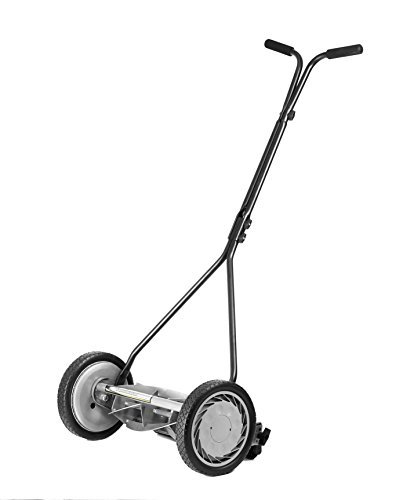 | 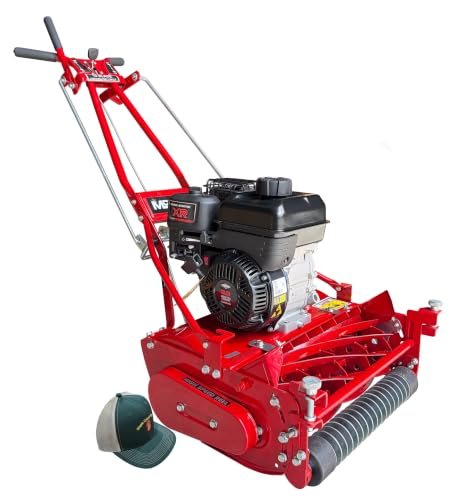 |
| Price | View On Amazon | View On Amazon |
| Category | Budget (Manual Push) | Premium (Gas-Powered Commercial) |
| Power Source & Engine | Manual (Push-powered, emission-free & noise-free) | Gas-powered (5.5 GT Briggs & Stratton Engine) |
| Cutting Width | 16 inches | 20 inches |
| Reel Blade Count | 5-Blade ball bearing reel (4 spider) | 10-Blade reel with front throw |
| Cutting Height Range | 0.5″ to 2.5″ (Capable of cutting grass up to 4″ tall) | 1/8″ (0.125″) to 2-1/8″ (2.125″) |
| Blade & Construction | Tempered alloy steel blades, unbreakable steel side plate | Induction heat-treated bed knife & reel, heavy-duty steel chassis |
| Drive & Wheel System | 10″ polymer composite wheels with radial tread tires | Rear roller drive (powered traction) & grooved front roller |
| Grass Collection | Not included | Grass catcher included |
| Maintenance & Weight | Low maintenance, ultra-lightweight and easy to push | Heavy-duty commercial build, requires standard gas engine maintenance |
| Country of Origin | Imported | Made in the USA |
| Best For | Eco-conscious homeowners with small, flat lawns seeking low maintenance | Professionals and homeowners seeking a golf-course finish on large, flat turf |
| Amazon Link | View On Amazon | View On Amazon |
| Overall Winner | Runner-up (Best Budget Eco-Option) | Winner (Best High-End Performance) |
American Lawn Mower Company 1415-16 Manual Reel Mower
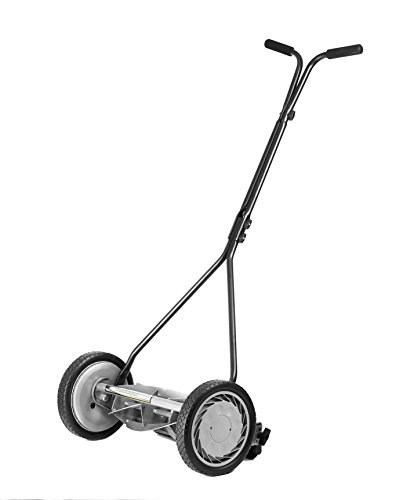
The American Lawn Mower 1415-16 is a classic, scissor-action manual push mower designed for simplicity and quiet operation. During my testing, the first thing I noticed was how light and nimble the machine feels on flat turf. It features a 16-inch cutting width and a 5-blade reel that slices through grass blades rather than shredding them. The 10-inch polymer wheels provide decent traction on dry lawns, and the entire unit weighs a mere 20 pounds. It easily handles heights between 0.5 inches and 2.5 inches, making it ideal for cool-season grasses that do not need to be scalped. Because it uses heat-treated alloy steel blades, it maintains its cutting edge for multiple seasons without needing a trip to the sharpener.
- 16-inch cutting width with a lightweight, maneuverable frame
- 5-blade ball-bearing reel made of heat-treated alloy steel
- Adjustable cutting height range of 0.5 inches to 2.5 inches
- Quiet, pollution-free manual operation with low maintenance needs
- 10-inch polymer wheels for easy pushing across flat terrain
Pros
- Exceptionally quiet operation allows you to mow at dawn without disturbing neighbors
- Extremely lightweight frame makes it easy to hang on a garage wall
- Scissor-like cut promotes healthier, greener grass tips compared to rotary mowers
- Zero fuel, oil, or electrical maintenance costs
Cons
- Struggles significantly with twigs, thick weeds, and tall dandelions
- Requires physical stamina to push through thick turf patches
Best for:
This manual mower is best for homeowners with small, flat lawns under a quarter-acre who grow cool-season grasses like Kentucky Bluegrass or Fescue. It is perfect for those who enjoy a quiet backyard workout and prefer a low-maintenance tool.
Expert Opinion: The cutting action of this manual reel mimics a pair of sharp scissors, which helps prevent grass tips from turning brown and vulnerable to disease.
McLane 20-Inch Greens Keeper Gas-Powered Reel Mower
The McLane 20-Inch Greens Keeper is a commercial-grade machine built for homeowners who want a golf-green finish on low-cut turf. Powered by a reliable 5.5 GT Briggs & Stratton engine, this self-propelled beast takes the physical labor out of reel mowing. The 10-blade reel works in tandem with an induction heat-treated bed knife to deliver an incredibly clean shave, cutting as low as 1/8 inch up to 2-1/8 inches. I found the grooved front roller highly effective at keeping the grass upright before the cut, preventing the flattening effect often caused by heavy wheels. The rear roller drive provides excellent traction on slopes, while the included front-throw grass catcher keeps the clippings from cluttering your pristine lawn.
- Powerful 5.5 GT Briggs & Stratton gas engine for self-propelled drive
- 10-blade reel designed for ultra-low cutting heights down to 1/8 inch
- Grooved front roller minimizes lawn roll-down and prevents scalping
- Heavy-duty rear roller drive provides consistent traction on uneven ground
- Includes a front-throw grass catcher to collect fine clippings
Pros
- Powers through thick, dense warm-season grasses like Bermuda and Zoysia with ease
- Self-propelled drive system eliminates the physical strain of pushing a heavy mower
- Extremely low cutting height options allow you to achieve a true putting-green look
- Solid steel construction is built to last for decades with proper maintenance
Cons
- Heavy machine that is difficult to lift and transport without ramps
- High maintenance requirements including oil changes, spark plugs, and reel backlapping
Best for:
This gas-powered machine is best for lawn enthusiasts with warm-season grasses who want to maintain their lawn at an extremely low height. If you have a medium to large yard and want a golf-course finish without the physical exhaustion of a manual push, this is your tool.
Expert Opinion: The combination of a 10-blade reel and a grooved front roller makes this machine the gold standard for taming stubborn, horizontal-growing Bermuda grass.
Manual Reel Mower vs Gas Mower: Key Differences That Matter
Performance Comparison
When comparing the performance of a manual reel mower vs gas mower, the differences come down to power and grass type. The manual American Lawn Mower cuts using your physical momentum. If you hit a patch of dense, thick grass, the reel slows down, which can result in missed blades. The gas-powered McLane mower maintains a consistent, high-speed reel rotation regardless of how fast you walk. The 10-blade gas reel cuts fine-bladed grasses into tiny, clean pieces, whereas the 5-blade manual reel is better suited for taller, sparser cool-season lawns.
Price and Value Analysis
The financial investment required for these two mowers sits at opposite ends of the spectrum. The manual push reel is incredibly affordable, requiring a small upfront investment and virtually zero ongoing costs. You only need to purchase a simple backlapping kit every few years to keep the blades sharp. The McLane gas mower is a premium, commercial-grade machine that costs significantly more upfront. You must also budget for gasoline, engine oil, spark plugs, air filters, and professional blade sharpening, which can be expensive due to the complex 10-blade configuration.
Build Quality Comparison
The manual push mower features a simple design with fewer moving parts, utilizing a mix of alloy steel blades and polymer wheels. It is durable for its weight, but it lacks the heavy-duty metal components found on the gas model. The McLane Greens Keeper is constructed with a rugged steel frame, heavy-duty chains, and heat-treated steel rollers. The engine is a reliable Briggs & Stratton workhorse. This gas mower is built like a tank, designed to handle daily use for years, though its complexity means there are more parts that can wear out over time.
User Experience Differences
Operating these two mowers provides completely different experiences in the yard. With the manual mower, you enjoy a peaceful, quiet chore. You can hear the birds chirping and the satisfying “snip-snip” of the blades. It is a physical workout, but the machine is light enough to maneuver around tight flower beds and trees. The gas McLane mower is loud, heavy, and smells of exhaust. The self-propelled roller drive pulls the machine forward, which reduces pushing effort, but wrestling the heavy frame around tight corners requires some upper-body strength.
Which Should You Choose?
Your choice between these two mowing styles should depend on your grass type, yard size, and how much time you want to spend on maintenance.
If you have a modest lawn of Fescue, Ryegrass, or Bluegrass, the manual push mower is the most sensible choice. It is affordable, quiet, and takes up minimal space in your garage. You can quickly pull it out for a quick mid-week trim without messing with gas cans or pull cords.
If you are trying to cultivate a dense, low-cut lawn of Bermuda, Bentgrass, or Zoysia, the gas-powered reel mower is the superior tool. It has the engine power to slice through thick, creeping turf without bogging down. The low-cutting capability of the 10-blade reel will allow you to achieve that velvet-like golf course look that a manual mower simply cannot replicate.
For the average homeowner with a small yard who values simplicity and quiet mornings, the American Lawn Mower 1415-16 is the ideal fit. For the dedicated lawn hobbyist who treats turf care as a serious sport, the McLane Greens Keeper is well worth the investment.
Frequently Asked Questions
Q: Can a manual reel mower handle tall grass?
A: No, manual reel mowers struggle with tall grass. The American Lawn Mower 1415-16 is rated for grass up to 4 inches tall, but it performs best when cutting thin slices off a lawn that is already relatively short. If your lawn grows past 5 inches, the blades will push the grass over rather than cutting it.
Q: How often do I need to sharpen the blades on a manual reel mower vs gas mower?
A: A manual reel mower typically needs its blades backlapped once every two to three years depending on your lawn size and soil conditions. A gas-powered reel mower operates at much higher speeds and should be backlapped annually, with professional relief grinding required every few years to maintain the precise cutting angles of the 10 blades.
Q: Will a reel mower cut weeds like dandelions and crabgrass?
A: Reel mowers are designed for uniform grass blades. Tall, thick-stemmed weeds like dandelions tend to bend forward under the mower frame and pop back up uncut. Gas reel mowers handle low-growing weeds better due to their high-speed reel rotation, but neither machine is ideal for a weed-infested lawn.
Q: Is it harder to push a manual reel mower vs gas mower on uneven ground?
A: Yes, manual reel mowers can be frustrating to use on bumpy or rutted lawns because the wheels can lose traction, causing the reel to stop spinning. The gas-powered McLane uses a heavy rear roller drive that bridges small dips and maintains constant traction, though the heavy machine can still be physically demanding to steer on slopes.
Q: Can I use a gas reel mower on a lawn with lots of twigs and rocks?
A: Absolutely not. Hitting a rock or a thick twig can nick the bed knife or bend the delicate blades on a gas reel mower, resulting in an expensive repair bill. Both manual and gas reel mowers require you to clear your lawn of all debris before you begin mowing.
Q: What is the main benefit of the front-throw grass catcher on the gas model?
A: A front-throw catcher collects the grass clippings before the heavy rear wheels or rollers can pack them down into the turf. This keeps the lawn surface incredibly clean and prevents clippings from clumping, which is critical when maintaining grass at putting-green heights.
As an Amazon Associate, We earn from qualifying purchases