
As a dedicated lawn enthusiast, I have spent years testing different ways to achieve that perfect, golf-course look at home. In my quest for the cleanest cut, I have logged countless hours behind both manual push mowers and heavy-duty gas machines. Today, I am breaking down the differences between two highly regarded representatives of these styles so you can decide which one fits your yard, your budget, and your lifestyle.
push reel mower vs gas: At a Glance
| Push Reel Mower | Gas-Powered Reel Mower | |
|---|---|---|
| Power Source | 100% manual, powered entirely by user push-power | Gasoline-powered internal combustion engine |
| Weight and Maneuverability | Extremely lightweight and highly agile in tight spaces | Heavy and bulky, requiring more effort to turn |
| Noise Level | Virtually silent, producing only a quiet snipping sound | Very loud, requiring hearing protection during operation |
| Maintenance Requirements | Minimal; only requires occasional blade sharpening and lubrication | High; requires oil changes, spark plugs, and fuel management |
| Cutting Power | Best for short, thin grass; struggles with tall weeds | High power; easily cuts through thick, tall, or dense turf |
| Environmental Impact | Zero emissions and completely eco-friendly | Produces exhaust emissions and relies on fossil fuels |
| Ideal Yard Size | Best for small, flat lawns under 1/4 acre | Suitable for large lawns, estates, and professional turf |
Complete Comparison: Push Reel Mower vs Gas-Powered Reel Mower
| American Lawn Mower 1204-14 14-Inch 4-Blade | Genuine OEM Gas Powered 20 in. | |
|---|---|---|
| Product Image | 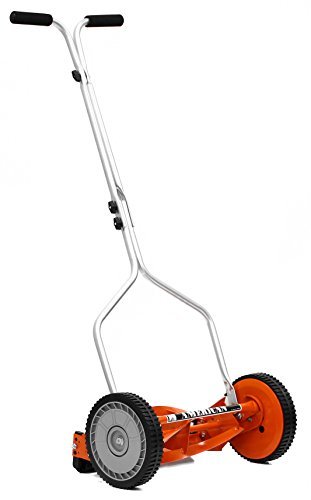 | 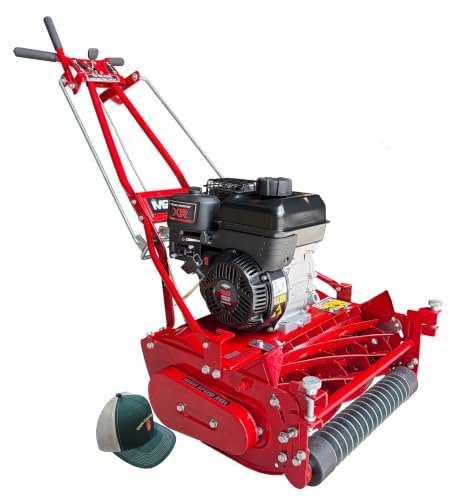 |
| Price | View On Amazon | View On Amazon |
| Category | Budget / Entry-Level | Premium Professional |
| Power Type & Engine | Manual push, human-powered (pollution-free and noise-free) | Gas-powered (5.5 GT Briggs & Stratton engine) |
| Cutting Width & Blades | 14-inch cutting width with 4-blade reel | 20-inch cutting width with 10-blade reel |
| Cutting Height Range | 0.5″ to 1.75″ (best for grass under 4″ tall) | 1/8″ (0.125″) to 2-1/8″ (2.125″) |
| Chassis & Wheel Build | Lightweight 19 lbs frame with 8.5″ polymer wheels | Heavy-duty steel chassis, tubular steel handle, and grooved front roller |
| Drive & Traction | Manual push, no drive assist | Powered rear roller drive for enhanced traction |
| Grass Collection | Not included | Front throw grass catcher included |
| Maintenance & Eco-Friendliness | Zero emissions, zero noise, and ultra-low maintenance | Requires gas, oil, and regular engine maintenance |
| Best For | Small yards, eco-conscious buyers, and budget-friendly turf care | Large lawns, professional greenskeeping, and achieving an ultra-low, golf-course finish |
| Amazon Link | View On Amazon | View On Amazon |
| Overall Winner | Runner-Up (Best Eco/Value) | Winner (Best Performance & Precision) |
American Lawn Mower 1204-14 14-Inch 4-Blade Push Reel Lawn Mower
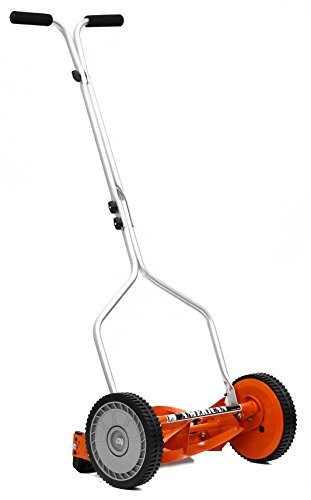
I have spent several weekends pushing this nimble little machine around smaller suburban yards. The American Lawn Mower 1204-14 is a classic 4-blade reel mower that relies entirely on your own physical power to spin the blades and cut the grass. Weighing in at a mere 19 pounds, it feels incredibly light and easy to maneuver around tight garden beds. The 8.5-inch polymer wheels provide decent traction on flat ground, while the adjustable cutting height of 0.5 inches to 1.75 inches lets you keep your turf quite low. It is designed specifically for flat, smaller lawns and works best on cool-season grasses that do not grow too thick or tall.
- 14-inch cutting width offers excellent maneuverability in tight spaces and narrow garden paths.
- Lightweight 19-pound design makes it easy to lift, transport, and hang on a garage wall.
- 4-blade heat-treated alloy steel reel scissor-cuts the grass blades instead of tearing them.
- Adjustable cutting height from 0.5 to 1.75 inches allows for a clean, low-profile finish.
- Eco-friendly operation requires zero gas, oil, spark plugs, or battery charges.
Pros
- Virtually silent operation allows you to mow at dawn without waking up your neighbors.
- Zero maintenance requirements beyond occasional blade sharpening and lubrication.
- Scissor-like cutting action prevents grass tips from fraying and turning brown.
- Extremely easy to push and turn, even for those with limited upper body strength.
Cons
- Struggles significantly with twigs, thick weeds, and grass taller than four inches.
- Requires frequent, disciplined mowing schedules to prevent the lawn from getting too tall for the blades.
- Lightweight polymer wheels can slip on damp grass or uneven patches of soil.
Best For
This manual push mower is ideal for homeowners with small, flat lawns under 2,000 square feet who want a quiet, zero-emission tool and do not mind mowing once or twice a week to keep the grass short.
Expert Opinion: I highly recommend this tool for small city lots because it delivers a surprisingly clean cut without any of the noise, fumes, or maintenance headaches of a motor.
Genuine OEM Gas Powered 20 in. Greens Keeper McLane Reel Mower
When I transitioned to a larger property with delicate warm-season hybrid Bermuda grass, I needed a machine with serious muscle. The McLane Greens Keeper 20-5.50GT-10-GK is a professional-grade, front-throw reel mower powered by a 5.5 GT Briggs & Stratton engine. This beast features a massive 10-blade reel that can cut grass down to an incredibly low 1/8 inch, allowing you to create a true putting-green appearance in your backyard. The heavy-duty rear roller drive provides excellent traction and propels the machine forward, taking the physical strain off your shoulders. A grooved front roller helps glide over uneven turf, minimizing the risk of scalping your lawn as you mow.
- 10-blade induction heat-treated reel delivers an ultra-fine, high-frequency cut rate.
- 5.5 GT Briggs & Stratton engine provides reliable gas power for thick, dense turf.
- Ultra-low cutting height ranges from 1/8 inch to 2-1/8 inches for golf-course quality.
- Rear roller drive system propels the heavy machine forward with minimal operator effort.
- Grooved front roller prevents the mower from flattening the grass before the reel cuts it.
Pros
- Powerful engine cuts through dense warm-season grasses like Bermuda, Zoysia, and Bentgrass without bogging down.
- Heavy-duty steel construction and heat-treated blades offer outstanding long-term durability.
- Front-throw design with an included grass catcher keeps clippings off your shoes and your lawn.
- Self-propelled drive system handles slopes and large yards without requiring manual pushing power.
Cons
- Requires regular engine maintenance including oil changes, spark plug replacements, and winterization.
- Very heavy and cumbersome to turn around at the end of each pass.
- High initial purchase price represents a significant financial investment.
Best For
This commercial-grade machine is best for dedicated lawn hobbyists with large, flat lawns who want to maintain premium warm-season turf at putting-green heights.
Expert Opinion: The McLane 10-blade is a precision instrument that turns a standard yard into a showcase, though it requires mechanical comfort and a commitment to regular engine maintenance.
Understanding the push reel mower vs gas Dynamic
Performance Comparison
The cutting performance of these two mowers belongs to entirely different categories. The manual American Lawn Mower relies on your walking speed to spin the reel. If you slow down, the blades spin slower, which can lead to tearing if you are walking through thick patches. The gas-powered McLane maintains a high, consistent blade speed regardless of how fast you walk. This constant power, combined with its 10-blade reel, produces a much smoother finish. It cuts the grass with surgical precision, whereas the 4-blade manual model can leave stray seedheads or tall stalks behind if you walk too slowly.
Price and Value Analysis
Your budget will likely play a massive role in this decision. The manual push reel mower is incredibly inexpensive to purchase and costs virtually nothing to run over its lifetime. You only need to spend money on occasional blade sharpening kits or lubricating spray. The gas-powered McLane represents a major financial investment. Beyond the steep upfront price tag, you must factor in the ongoing costs of gasoline, engine oil, air filters, and professional reel grinding, which is required to keep a 10-blade reel performing at its peak.
Build Quality Comparison
The manual mower uses lightweight materials like polymer wheels and a thin steel frame to keep the weight down to 19 pounds. While it is durable enough for light yard duty, it can feel a bit fragile if you hit a thick root or a hidden stone. The McLane is built like a tank with heavy-gauge steel, a cast-iron chassis, and induction heat-treated components. It is designed to endure years of commercial use, but this heavy construction makes the machine very heavy to lift and transport.
User Experience Differences
Operating these two mowers feels completely different. Pushing the 19-pound manual mower around is quiet, peaceful, and double-functions as a light aerobic workout. You can hear the birds chirping and chat with neighbors while you work. Operating the McLane is a loud, sensory-heavy experience. The engine roars, the chains clatter, and you will smell exhaust fumes during your session. However, the self-propelled drive system means you do not have to exert yourself to move the machine forward, which is a massive relief on hot summer afternoons.
Which Should You Choose?
Selecting the right machine comes down to your lawn size, grass type, and how much effort you want to invest in yard maintenance.
If you have a small yard under 2,000 square feet, plant cool-season grass, and want a simple, quiet routine, the manual push mower is the perfect fit. It is easy to store, requires no maintenance, and gets the job done quickly.
If you are trying to cultivate a dense, low-cut lawn using Bermuda or Zoysia grass over a larger area, the gas-powered reel mower is the only way to achieve your goals. It has the power to slice through thick turf at extremely low heights without stalling.
My recommendation is to go with the American Lawn Mower if you view lawn care as a quick weekend chore, but choose the McLane if you view lawn care as a serious, rewarding hobby.
Frequently Asked Questions
Q: In a push reel mower vs gas comparison, which one is better for wet grass?
A: Neither machine performs well on wet grass, but the gas mower is particularly troublesome on damp turf because its heavy weight can sink into the soil and leave deep ruts. The manual mower will simply slide over wet blades without cutting them cleanly, so you should always wait for dry conditions before using either tool.
Q: How often do I need to sharpen the blades on these mowers?
A: The manual push mower can usually go two to three seasons before needing a simple backlapping paste treatment. The 10-blade gas mower requires much more precise alignment and typically needs professional relief grinding once a year to maintain its surgical cutting ability.
Q: Can the manual push reel mower handle twigs and pinecones?
A: No, small twigs and pinecones will instantly jam the manual reel, bringing the mower to a sudden, jarring halt. You must clear your yard of all debris before using a manual push mower.
Q: Is the push reel mower vs gas difference noticeable in the health of the grass?
A: Both styles offer a healthier cut than a standard rotary mower because they scissor-cut the grass instead of shredding it. However, the high blade count of the gas mower creates a cleaner cut at extremely low heights, which reduces the risk of brown, frayed tips on warm-season lawns.
Q: How difficult is it to turn the gas-powered McLane mower?
A: It requires some physical effort to turn because of its heavy weight and solid rear roller. You must disengage the drive clutch, push down on the handlebars to lift the front roller, and pivot the machine manually at the end of each pass.
Q: Will the manual push mower cut tall weeds like dandelions?
A: No, tall weeds with thick, flexible stems tend to bow forward under the mower frame and pop back up after the reel passes over them without being cut at all. You will need to pull these weeds by hand or use a trimmer.
As an Amazon Associate, We earn from qualifying purchases