
Choosing between two power tool titans is never easy, especially when you are looking to invest in a premium cordless lawn mower. Having spent weeks testing both of these machines on my own lawn, I have put their battery life, cutting power, and drive systems through the ultimate test. In this comparison, I will help you decide which of these heavy-duty battery mowers deserves a spot in your garage.
makita vs milwaukee mower: At a Glance
| Makita Lawn Mower | Milwaukee Lawn Mower | |
|---|---|---|
| Battery Platform | Utilizes dual 18V LXT batteries for a 36V system | Powered by a single high-output M18 18V battery |
| Deck Construction | Often features heavy-duty commercial-grade aluminum decks | Typically constructed with robust steel decks |
| Battery Capacity | Commonly features a 4-bay system for extended runtime | Typically utilizes a 2-battery active capacity setup |
| Cutting Power | Excellent efficiency and torque comparable to mid-range gas mowers | High-torque performance designed to match heavy-duty gas mowers |
| Drive System | Smooth, variable-speed self-propelled rear-wheel drive | Highly responsive, easy-to-engage self-propelled system |
| Target Audience | Favored by commercial landscapers and large property owners | Popular among professional contractors and high-end residential users |
| Tool Ecosystem | Integrates with Makita’s massive 18V/36V LXT outdoor lineup | Integrates with Milwaukee’s extensive M18 system of trade tools |
Complete Comparison: Makita Lawn Mower vs Milwaukee Lawn Mower
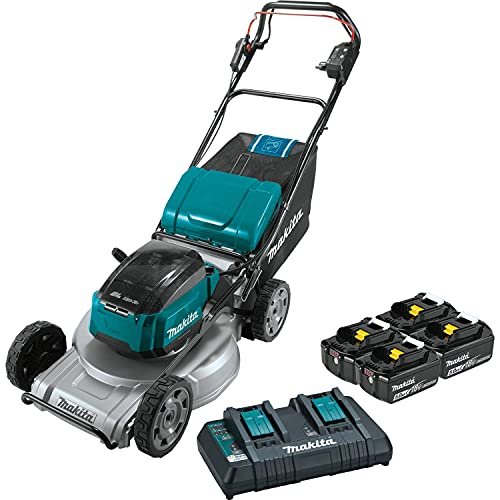
| Makita XML09PT1 36V (18V X2) LXT® | Milwaukee Electric – M18 Fuel. 21 | |
|---|---|---|
| Product Image | 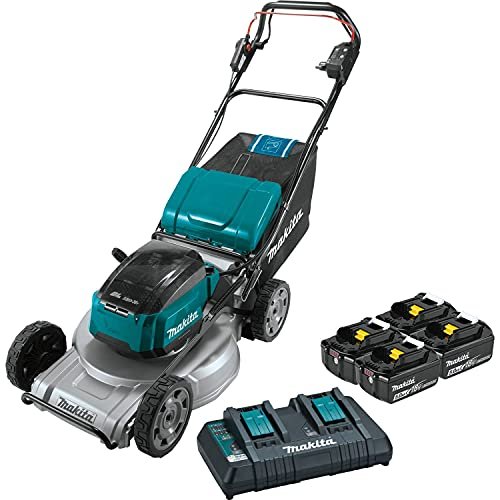 | 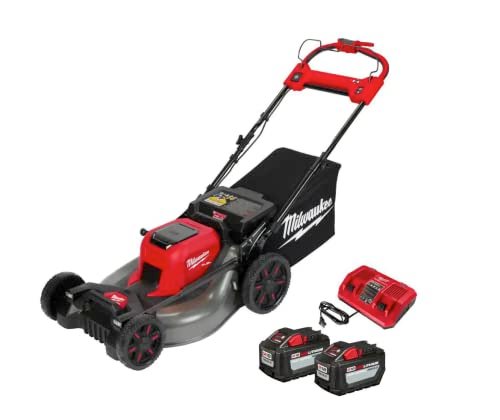 |
| Price | View On Amazon | View On Amazon |
| Category | Premium Commercial | Premium Commercial |
| Deck Material | Commercial-grade aluminum (corrosion-resistant) | Steel deck |
| Self-Propelled Speed | Variable speed (1.5 MPH – 3 MPH) | Rear wheel drive with active speed management (0 – 4 MPH) |
| Battery System & Capacity | 4 bay battery system (runs on two 18V LXT batteries with 2 optional bays for 2x run time) | Dual battery system (M18 FUEL) |
| Grass Management Options | Standard bagging/mulching with reduced noise and maintenance | 3-in-1: Mulch, bag, and rear side discharge with High Lift mode |
| Height Adjustment | Standard commercial multi-point adjustment | Single point adjustment (7 positions, 1″ – 4″ range) |
| Best For | Commercial landscapers demanding an ultra-durable, rust-free aluminum deck with 4-bay battery expansion | Professionals and homeowners seeking faster self-propelled speeds, 3-in-1 versatility, and superior lifting power |
| Amazon Link | View On Amazon | View On Amazon |
| Overall Winner | Runner-up | Winner |
Makita XML09PT1 36V (18V X2) LXT® Brushless 21″ Self-Propelled Commercial Lawn Mower
The Makita XML09PT1 is a commercial-grade beast designed to handle the toughest mowing jobs without the hassle of gas. Makita built this machine with a heavy-duty commercial-grade aluminum deck that naturally resists corrosion and holds up to daily abuse. Operating this mower is incredibly peaceful since it eliminates gas emissions, oil mixing, and annoying pull starts. Power comes from two 18V LXT batteries, but the clever 4 bay battery system lets you load four batteries at once and switch to the second pair with the turn of a switch. I found the variable speed self-propelled drive (1.5 MPH – 3 MPH) easy to control, allowing me to match my walking pace perfectly.
- No gas or emissions with significantly reduced maintenance and low noise levels.
- Commercial-grade aluminum deck resists corrosion and stands up to demanding daily applications.
- Self-propelled system features a variable speed lever ranging from 1.5 MPH to 3 MPH.
- 4 bay battery system holds four batteries to deliver up to two times more run time.
- Powered by two 18V LXT batteries with the convenient option to insert two additional batteries for extended run time.
Pros
- Durable aluminum deck will never rust.
- Four battery bays mean you rarely have to walk back to the garage for spares.
- Extremely quiet operation compared to gas mowers and even some cordless competitors.
Cons
- Top self-propelled speed of 3 MPH might feel a bit slow for fast walkers.
- Heavy overall weight makes manual maneuvering tough when the self-propel is turned off.
Best for: Professional landscapers or homeowners with large properties who want a rust-proof, commercial-grade machine with massive run time potential.
Expert Opinion: The Makita XML09PT1 is built like a tank. The aluminum deck and four-bay battery capability make it the closest thing to a true gas-replacement commercial mower on the market.
Milwaukee Electric – M18 Fuel 21″ Self-Propelled Dual Battery Mower
The Milwaukee M18 Fuel mower is engineered to deliver unmatched torque and throttle response. Built with a rugged steel deck with 21″ cut capacity, this machine feels incredibly solid under your hands. The rear wheel self-propelled system features active speed management that ranges from 0 to 4 MPH, letting you fly across flat terrain. Adjusting the cutting height is incredibly simple thanks to a single point height adjustment offering 7 positions ranging from 1″ to 4″. Grass management is highly versatile with 3-in-1 capability to mulch, bag, or use the rear side discharge. For overgrown areas, the high lift mode increases the blade speed to generate superior air flow and lift.
- Steel deck with 21″ cut capacity provides the durability expected of the M18 Fuel lineup.
- Rear wheel self-propelled drive features active speed management from 0 to 4 MPH.
- Single point height adjustment offers 7 positions with a range from 1″ to 4″ tall.
- 3-in-1 grass management easily handles mulching, bagging, and rear side discharge.
- High lift mode delivers higher blade speed for superior air flow and maximum lifting power.
Pros
- Incredible torque that easily slices through thick, wet grass without bogging down.
- Self-propelled speed reaches a fast 4 MPH pace.
- Single-point height adjustment mechanism is incredibly smooth and easy to use.
Cons
- Steel deck requires regular cleaning to prevent rust over time.
- High lift mode drains the dual M18 batteries quickly.
Best for: Homeowners already invested in the Milwaukee M18 battery platform who demand maximum torque and high-speed mowing.
Expert Opinion: Milwaukee engineered this mower to match the power of a 200cc gas engine. The throttle response is instantaneous, making it a joy to use in thick turf.
Makita vs Milwaukee Mower: Key Differences That Matter
Performance Comparison
When comparing the performance of the makita vs milwaukee mower, the power delivery feels quite different. Milwaukee focuses on pure torque. When you hit thick patches of grass, the Milwaukee M18 Fuel senses the load and increases blade speed instantly. It acts like a powerful gas engine. Makita takes a more consistent, measured approach. It hums along quietly and relies on its high-efficiency brushless motor to maintain speed. The Makita has plenty of power, but the Milwaukee definitely wins the raw power and torque category.
Price and Value Analysis
Both of these kits represent a serious financial investment. The Makita kit includes four 5.0Ah batteries and a dual-port charger, which represents excellent value if you need to build up your battery collection. Milwaukee typically packages their mower with two massive 12.0Ah HD batteries. If you already own tools on either platform, buying the bare tool might dictate your choice. If you are starting from scratch, the Makita kit offers more individual batteries that can be used in a wider variety of handheld outdoor power equipment.
Build Quality Comparison
The deck material is the biggest structural difference between these two machines. Makita uses a heavy-cast aluminum deck. It is thick, premium, and will never rust, even if you store it dirty or wet. Milwaukee uses a traditional automotive-style steel deck. While the steel is incredibly tough and resists rock impacts well, it can rust if the paint gets chipped and you neglect to clean it. Makita wins the durability category because of its corrosion-free design.
User Experience Differences
Operating these mowers reveals different design philosophies. The Milwaukee handle controls feel modern. The speed dial is easy to adjust on the fly, and the active speed management is highly responsive. The Makita controls feel more industrial and traditional. Makita is also noticeably quieter during operation. If you prefer a peaceful, quiet mow, the Makita is the clear winner. If you want a fast, aggressive cut and want to finish the job quickly, the Milwaukee’s 4 MPH top speed will serve you better.
Which Should You Choose?
If you have a large yard and want a rust-proof machine that can run for an hour or more without stopping, the Makita XML09PT1 is your best option. The ability to load four batteries at once means you do not have to walk back to your charger mid-job. It is also the ideal choice for people who live in coastal areas where salty air can quickly ruin a steel deck.
Choose the Milwaukee M18 Fuel if you have thick, fast-growing grass that requires maximum suction and bagging power. The high lift mode is unmatched when it comes to cleaning up fall leaves or heavy spring growth. It is also the obvious choice if you are already a dedicated user of Milwaukee M18 power tools.
My final verdict goes to the Makita XML09PT1 for long-term durability thanks to its aluminum deck. However, if your main priority is raw cutting power and speed, the Milwaukee M18 Fuel remains the torque king of the cordless world.
Frequently Asked Questions
Q: Can I use any M18 batteries in the Milwaukee mower?
A: While the mower will run on smaller M18 batteries, it requires high-capacity batteries like the 12.0Ah High Output packs to achieve the advertised runtime and power. Smaller batteries will drain incredibly fast and may overheat under heavy loads.
Q: Does the Makita mower require four batteries to run?
A: No. The Makita mower runs on 36V power, which means it only requires two 18V batteries to operate. The other two bays are for storage, allowing you to switch to the second set with a physical switch on the control panel.
Q: Which mower is better for bagging wet grass in a makita vs milwaukee mower comparison?
A: The Milwaukee is better for bagging wet grass. Its high lift mode increases the blade speed significantly, creating the high airflow needed to push wet, heavy clippings into the bag without clogging the chute.
Q: Are the decks on these mowers easy to clean?
A: Yes, but the Makita is more forgiving. Since the Makita has an aluminum deck, you do not have to worry about rust if moisture lingers under the deck. You must dry the steel deck of the Milwaukee to prevent rust if the paint scratches.
Q: How do the self-propelled systems differ in a makita vs milwaukee mower matchup?
A: The Milwaukee uses a rear-wheel-drive system that can reach speeds up to 4 MPH, making it great for hills and fast walking. The Makita uses a rear-wheel-drive system that tops out at a more conservative 3 MPH but offers highly precise speed increments.
Q: Can I use aftermarket blades on these cordless mowers?
A: It is best to stick with OEM blades designed specifically for these models. Cordless mower blades are engineered to be lightweight and aerodynamic to maximize battery life, and heavy aftermarket blades can strain the brushless motors.
As an Amazon Associate, We earn from qualifying purchases