
I remember the first time my lawn mower string refused to pull. I was ready to tackle the overgrown grass, but when I grabbed the handle and gave it a yank—nothing happened. It felt stuck, and for a moment, I thought I had broken something important.
If you’ve been in this spot, I know how annoying and confusing it can be. Over the years, I’ve faced this issue more than once, and I’ve learned a lot about what causes it and how to fix it. Let me walk you through what I’ve discovered, so you don’t have to waste time guessing.
What Causes A Lawn Mower String To Not Pull?
In my experience, several things can stop the pull cord from moving. Some are simple, and others take more work. Here are the main reasons I’ve come across:
1. Cord Is Jammed Or Tangled
Sometimes, the string gets caught inside the starter assembly. This can happen if the cord rewinds incorrectly, or if it’s old and starts to fray.
2. Engine Is Seized Or Locked Up
If the mower has not been used in a while, the engine might seize. This means the parts inside are stuck together and can’t move.
3. Blade Obstruction
Rocks, sticks, or even thick clumps of grass can stop the blades from turning. Since the string is connected to the engine, which turns the blade, anything that blocks the blade will stop the cord.
4. Damaged Starter Mechanism
Inside the mower, there’s a small device called the recoil starter. If it’s broken or worn out, the string won’t pull.
5. Low Oil Or Wrong Oil
I once tried to start my mower after adding the wrong oil. The engine locked up, and the string would not move at all. Oil is more important than many people think.
6. Rust Or Dirt Build-up
Dirt, rust, and old grass can gather in the starter assembly. This can make the parts stick together.
7. Broken Or Stuck Flywheel Brake
Most mowers have a lever you hold down to start them. This controls a brake on the flywheel. If this part sticks, the cord won’t pull.
Knowing what causes the problem is the first step. Let’s dive into how I check each part and what you can do to fix it.
Step-by-step: What I Do When The String Won’t Pull
When my mower string wouldn’t pull, I learned to follow a simple process. This helped me avoid breaking anything and saved me trips to the repair shop.
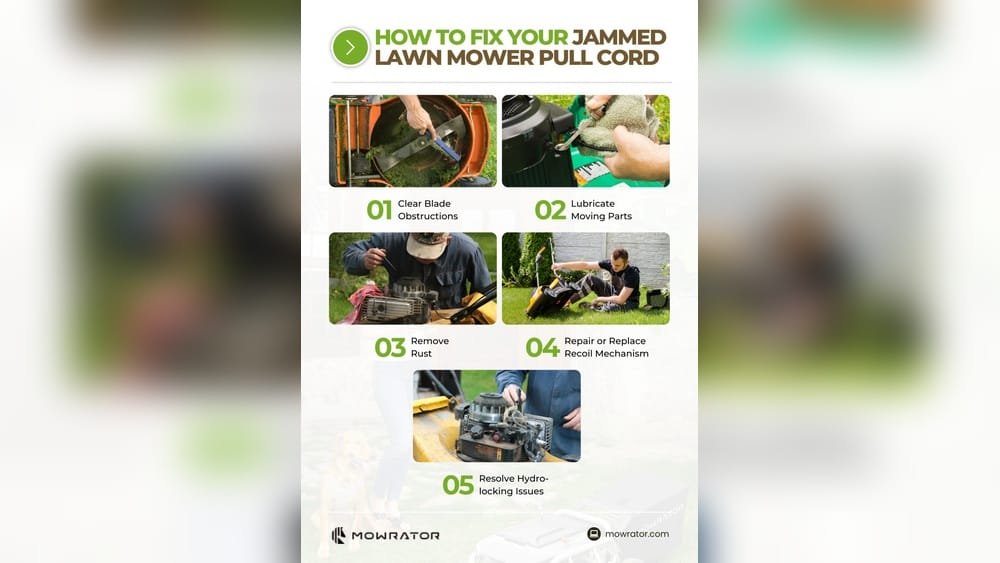
1. Stay Safe First
Before touching anything, I always disconnect the spark plug wire. This stops the engine from starting by accident. It’s a quick step, but very important.
2. Check For Obvious Blockages
I tip the mower on its side (carburetor side up to avoid fuel leaks) and look under the deck. If a stick, rock, or thick grass is jammed near the blade, it can stop everything from moving.
3. Try Moving The Blade By Hand
With gloves on, I try to gently turn the blade. If it moves, the engine is not seized. If it doesn’t budge, something bigger is wrong, like a seized engine or a major blockage.
4. Inspect The Starter Assembly
If the blade moves but the cord still won’t pull, I take off the cover where the cord goes in. Sometimes the cord itself is tangled, or the recoil spring is broken. If I see frayed string or broken plastic, it means I need a replacement.
5. Look At The Flywheel Brake
If your mower has a safety lever you must hold down, make sure it’s working. Sometimes the cable comes loose, and the brake stays on. If you don’t hear a “click” when squeezing the lever, check the cable and adjust it if needed.
6. Check The Oil Level And Condition
Low or dirty oil can cause the engine to lock up. I always check the dipstick. If the oil is dark or gritty, I change it. If it’s low, I fill it up with the right type.
7. See If The Engine Is Seized
If the blade and starter won’t move at all, I suspect the engine is seized. This happened to me after my mower sat through a wet winter. Freeing a seized engine takes time and patience, and sometimes, professional help.
How I Fixed The Problem: Real Examples
Let me share a few real situations where my lawn mower string wouldn’t pull, and how I solved them.
Jammed Cord
Once, the pull cord felt stuck. I opened the starter assembly and saw the cord had wound itself around the spindle in a weird way. I untangled it, rewound it carefully, and it worked again. Since then, I try not to yank the cord too hard or let it snap back.
Obstructed Blade
Another time, after mowing a rough patch, the string wouldn’t pull at all. I looked underneath and found a thick stick jammed between the blade and the deck. I removed it, and the mower started right up.
Seized Engine
The worst case was when the engine was completely seized. I tried turning the blade, but it wouldn’t move. I added a little oil through the spark plug hole and let it sit overnight. Next day, the blade moved slightly.
With gentle rocking, I freed the engine, then changed the oil and ran it carefully. It took patience, but the mower survived.
Comparing Common Causes And Solutions
To help you see what’s most likely, here’s a comparison of common reasons the string won’t pull, how hard they are to fix, and what tools you might need.
| Problem | DIY Difficulty | Tools Needed | Time to Fix |
|---|---|---|---|
| Blade Obstruction | Easy | Gloves | 5 minutes |
| Jammed Cord | Medium | Screwdriver | 10-20 minutes |
| Seized Engine | Difficult | Wrench, Oil | Several hours |
| Flywheel Brake Issue | Easy | None or Screwdriver | 5-10 minutes |
| Starter Mechanism Broken | Medium | Screwdriver, Replacement Parts | 30-60 minutes |
How To Prevent The String From Getting Stuck Again
After fixing the problem a few times, I realized it’s much better to prevent it from happening at all. Here’s what works for me:
- Keep the Deck Clean: After mowing, I tip the mower and remove grass clumps. This stops blockages and rust.
- Use the Right Oil: Always check your manual for oil type and change it when needed.
- Don’t Yank the Cord Too Hard: A smooth, steady pull works better than a fast jerk.
- Store Indoors: Keeping the mower in a dry place helps prevent rust and engine problems.
- Inspect the Cord: If it looks frayed or worn, replace it before it snaps.
- Check the Safety Lever: Make sure the cable and brake work smoothly every time.
- Do Regular Maintenance: A quick check before each mowing session saves a lot of headaches.
What You Should Never Do
In my early days, I made some mistakes that only made things worse. I want to save you from repeating them.
- Don’t Force the Cord: Pulling harder can snap the cord or break the starter. Always check for blockages first.
- Don’t Ignore Strange Noises: If you hear grinding or crunching, stop and look for the cause.
- Don’t Skip Maintenance: A few minutes spent checking the mower can prevent big problems.
When To Call A Professional
Sometimes, despite my best efforts, I couldn’t fix the problem myself. If you try the steps above and nothing works, or if the engine is truly seized, it’s time to see a repair shop. Also, if you see oil leaking, hear metal scraping, or the pull cord recoils too loosely, let a pro handle it.
It might cost a bit, but it can save your mower from bigger damage.
Real-world Stats: How Often Does This Happen?
You might wonder if this problem is common. Based on surveys from mower repair shops, about 20% of lawn mowers brought in for service have issues with the pull cord or starter. In my neighborhood, almost everyone I know has had this problem at least once. Most cases are easy fixes, but a few need expert help.
Here’s a quick look at how often different causes show up, based on what I’ve seen and what repair pros say:
| Cause | How Common (%) |
|---|---|
| Blade Obstruction | 35 |
| Jammed Cord | 25 |
| Engine Seized | 15 |
| Starter Mechanism Broken | 10 |
| Other (brake, oil, etc.) | 15 |
These numbers may change with different mower brands and how often you mow, but they match my own experience pretty closely.

Tips I Wish I Knew Sooner
When I started mowing my own lawn, I didn’t know how much a little care could save me trouble later. Here are two things I wish someone had told me:
- Lubricate Moving Parts: Once a season, I spray a little lubricant on the starter assembly and blade shaft. This keeps everything moving smoothly and stops rust.
- Don’t Ignore a Sticky Cord: If the cord feels rough or doesn’t rewind fully, fix it right away. It usually gets worse, not better.
I also learned that most small repair parts are cheap and easy to find. You can often find guides online, or even watch a quick video, to help you fix things yourself.
Quick Comparison: Diy Vs. Professional Repair
If you’re not sure whether to fix it yourself or get help, here’s how I decide:
| Repair Type | DIY Cost | Shop Cost | Time Needed |
|---|---|---|---|
| Replace Pull Cord | $5 – $15 | $40 – $70 | 20-30 minutes |
| Unjam Blade | $0 | $30 – $50 | 5 minutes |
| Starter Mechanism | $10 – $30 | $60 – $100 | 1 hour |
Fixing things yourself can save a lot, but don’t be afraid to get help if you feel stuck.

Frequently Asked Questions
Why Does My Lawn Mower String Feel Stuck Halfway?
Most of the time, this means the blade is hitting something or the cord is tangled inside. Check under the mower deck first, then look inside the starter assembly.
Can I Use Wd-40 On My Mower Starter?
Yes, a small amount helps keep the moving parts smooth. Don’t spray too much, and avoid getting it on belts or the air filter.
How Often Should I Replace The Pull Cord?
If the cord looks frayed, thin, or doesn’t rewind well, replace it right away. In my experience, a good pull cord lasts 2-4 years with regular use.
What Should I Do If My Engine Is Seized?
Add a bit of oil through the spark plug hole and let it sit overnight. Try gently moving the blade or flywheel. If it doesn’t move, get professional help.
Does It Matter What Oil I Use In My Mower?
Yes! Always use the oil type suggested in your manual. The wrong oil can cause engine damage. For more, check the official Lawn Mower Guide.
I hope sharing my own mistakes and solutions saves you time and trouble. Fixing a lawn mower string that won’t pull can feel tricky, but with a little patience, you can get back to mowing and enjoy a healthy, green yard.
And if you ever feel stuck, don’t be afraid to ask for help—everyone has been there at least once!
As an Amazon Associate, We earn from qualifying purchases