
Is 100Psi Air Compressor Enough for a Framing Nailer? My Hands-On Experience
The first time I tried to use my framing nailer, I had one big question: Is a 100psi air compressor enough? I didn’t want to buy the wrong tool or waste money. If you’re reading this, you probably have the same worry. I’ve worked with framing nailers for years, and I’ve tried them with all kinds of compressors. Let me share what I learned, what worked, and what didn’t—so you can avoid my mistakes.
What Does A Framing Nailer Need?
A framing nailer is a tough tool. It shoots big nails into wood fast. To do that, it needs air—compressed air. But how much?
Most framing nailers have these needs:
- Operating pressure: 70 to 120 psi (pounds per square inch)
- Air flow (CFM): 2 to 4 CFM (cubic feet per minute), depending on brand and model
Your air compressor must meet both. If it does not, the nailer can jam, misfire, or drive nails too shallow.
When I first started, I didn’t know these numbers. I thought “psi” was all that mattered. I learned fast that’s only half the story.
What Does 100psi Mean For Air Compressors?
Let’s break it down. Psi is a measure of air pressure. If your compressor says “100psi,” that’s the maximum pressure it can put out.
But here’s the thing: that’s not the only number you need to check. The CFM rating is just as important, maybe more. I’ll explain this soon.
When I got my first compressor, it was a small one. The box said 100psi max. I thought, “Great! That’s enough for any nailer. ” But I found that psi alone doesn’t tell the whole story.
My Experience: 100psi Compressor And A Framing Nailer
I’ve used my framing nailer with both small and large air compressors. Let me share what happened when I used a 100psi compressor.
The Setup
Here’s what I had:
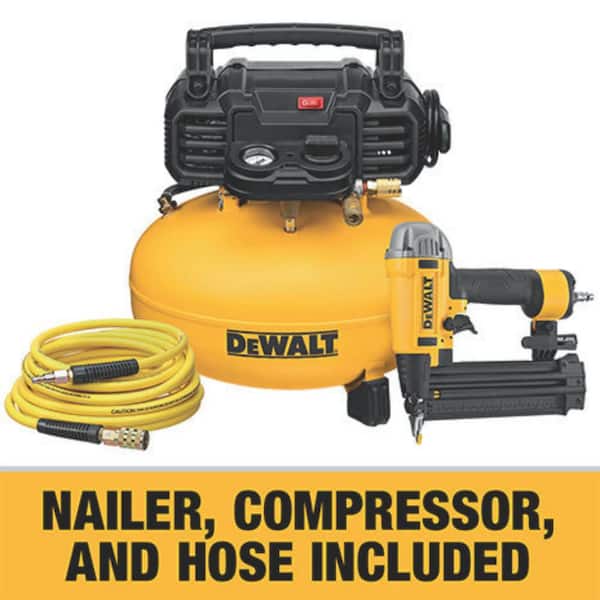
- A 100psi, 2-gallon compressor
- My trusty framing nailer
- Standard air hose (25 feet)
- 3-inch nails
I hooked everything up and started on a deck-building project.
What Happened?
At first, the nailer fired well. The first few nails went in smooth. But after 10-15 shots, I noticed the nails started to go less deep. Some stuck out a little. Then, the compressor kicked in and ran for a few minutes to build up pressure again.
It felt like I had to wait for the compressor after every short burst. If I tried to work fast, the nailer got weaker. Once, a nail even jammed, and I had to stop and fix it.
What Did I Learn?
I realized a key thing: It’s not just about psi. My compressor could hit 100psi, but it didn’t deliver enough air (CFM) to keep up with the nailer when I worked quickly. The air tank was small, so the pressure dropped fast.
If you only fire a nail every minute, it’s fine. But if you’re doing real framing work and want to move fast, you need more than just 100psi.
How Psi, Cfm, And Tank Size Work Together
Let’s clear up some confusion. I wish someone had explained this to me earlier.
- Psi is the pressure. Your nailer needs at least 70-120psi to work right.
- CFM is the air flow. It shows how much air the compressor can give, every minute.
- Tank size is how much compressed air is stored, like a water tank.
If your tank is small and your CFM is low, your compressor will run often and may not keep up if you work quickly.
Here’s a simple comparison of what I found in real use:
| Compressor Type | Max Psi | CFM | Tank Size | Performance with Framing Nailer |
|---|---|---|---|---|
| Small (2-gal) | 100psi | 1.5 CFM | 2 gal | Good for slow work, struggles with fast nailing |
| Medium (6-gal) | 150psi | 2.6 CFM | 6 gal | Handles most jobs, less waiting |
| Large (20-gal+) | 175psi | 5+ CFM | 20 gal+ | Never slows down, great for big jobs |
From my experience, the small compressor was only okay if I took my time. For any real framing project, I wanted a bigger compressor.

Real-world Example: Building A Shed
One weekend, I built a small shed. I tried to use my 100psi, 2-gallon compressor because it was easy to carry. Here’s what happened:
- At the start, the nailer worked fine.
- After a few nails, I had to wait for the compressor.
- If I worked too fast, nails didn’t go in all the way.
- I wasted time waiting and fixing jams.
I switched to a friend’s 6-gallon, 150psi compressor. The difference was huge. I could work faster, and every nail sank in perfectly. No jams, no waiting.
Choosing The Right Compressor For Your Framing Nailer
If you’re shopping for a compressor, here’s what I would look for (based on my mistakes):
- Check the psi: Make sure your compressor’s max psi is at least 100, but 120 or more is better.
- Look at the CFM: Find out your nailer’s CFM need (usually 2-4 CFM). Your compressor should match or beat that.
- Tank size matters: A bigger tank (at least 6 gallons) means less waiting.
- Portability vs. Power: Small compressors are easy to carry but may not keep up for big jobs. Decide what matters most for you.
- Duty cycle: Some compressors are not made to run non-stop. If you push them hard, they overheat.
Here’s a quick guide to typical compressor needs for framing nailers:
| Project Type | Recommended Psi | Recommended CFM | Minimum Tank Size |
|---|---|---|---|
| Light repairs (few nails) | 90-100psi | 1.5+ CFM | 2 gal |
| Deck building, small framing | 100-120psi | 2+ CFM | 6 gal |
| Full house framing | 120psi+ | 4+ CFM | 20 gal |
If you only have a 100psi compressor, you can get away with small jobs, but you’ll work slower.
Common Mistakes I Made (so You Don’t Have To)
- Ignoring CFM: I only looked at psi, and that was a mistake. Always check both.
- Using too small a tank: The compressor cycled on and off all the time. It slowed me down and annoyed the neighbors.
- Long air hoses: A 50-foot hose dropped my pressure even more. If you can, use a shorter hose.
- Not draining water: Compressors collect moisture. Once, water in my hose made the nailer misfire. Drain your tank often.
- Trying to rush: If you fire nails too fast, the compressor can’t keep up. Slow down or upgrade your setup.
Non-obvious Insights I Wish I Knew Earlier
- Ambient temperature matters: Cold air is denser, so your compressor works harder in winter. Sometimes my compressor took longer to recover when it was cold.
- Regulator accuracy: The gauge on your compressor might not show true pressure at the tool. Buy a small inline pressure gauge for your nailer. That way, you know you’re getting the psi you need at the end of the hose.
Will 100psi Work For Your Framing Nailer?
Here’s my honest answer:
- Yes, if you’re doing small jobs, working slowly, or only firing a few nails at a time.
- No, if you want to work fast, do big projects, or use longer nails in tough wood.
You can use a 100psi compressor, but you’ll spend more time waiting. You might get frustrated if you’re framing walls or building decks. For serious work, a compressor with at least 120psi and 2. 5 CFM (or higher) is much better.
If you’re not sure, check your nailer’s manual. It will tell you the minimum air needs. Don’t just trust the store clerk. And if you’re thinking about renting or borrowing a compressor, aim for a bigger one.
Should You Upgrade Your Compressor?
When I finally upgraded to a 6-gallon, 150psi compressor, my work changed overnight. I finished jobs faster, with less hassle. My nailer worked better, and I didn’t have to fix jams as often.
If you plan to do more carpentry, I think it’s worth saving up for a better compressor. You don’t need the biggest model, but don’t go too small. The right compressor feels like having a helper who never gets tired.
For more technical info, check out this detailed guide at Wikipedia.

Frequently Asked Questions
What Is The Minimum Psi For A Framing Nailer?
Most framing nailers work with 70 to 120psi. Always check your nailer’s manual. Lower than 90psi can lead to shallow nails or jams, especially with longer nails.
Does Cfm Matter As Much As Psi?
Yes, CFM is just as important as psi. If your compressor can’t deliver enough air flow (CFM), the nailer will slow down or misfire, even if the pressure is high enough.
Can I Use A Pancake (small) Compressor For Framing?
You can use a pancake compressor for small jobs. But for big projects, the small tank and lower CFM will slow you down. You’ll have to wait for the compressor to catch up.
What Happens If My Compressor Is Too Small?
If your compressor is too small, nails may not go in all the way. The nailer could jam, or you’ll need to stop and let the compressor recover often. This makes jobs take much longer.
Is It Bad To Run A Compressor At Max Psi All The Time?
Running a compressor at max psi all the time can wear it out faster. It may overheat or fail sooner. It’s better to have a compressor that easily meets your tool’s needs, instead of pushing it to the limit.
If you’re like me, you want your tools to work well and jobs to go smooth. Picking the right compressor makes a huge difference. I learned the hard way so you don’t have to. Good luck—and happy building!