
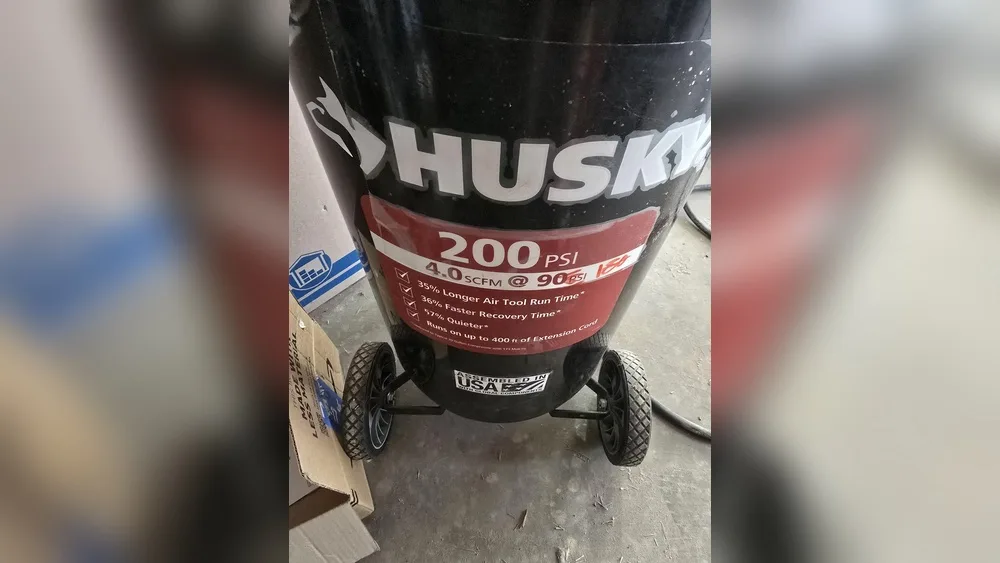
If you’re reading this, you probably know the pain I felt when my Husky air compressor stopped building pressure. I remember the first time it happened. I was in the middle of a project, everything was going fine, then… nothing. The motor ran, but the tank needle just sat there. No pressure. If you’re dealing with this, you’re not alone. I want to walk you through what I learned, what usually causes this issue, and how you can fix it yourself—without feeling lost or overwhelmed.
How I Noticed The Problem
My Husky air compressor had always been reliable. I used it for everything—filling tires, cleaning tools, even painting. One Saturday, I fired it up, expecting the familiar hum and quick build-up of pressure. Instead, the motor just kept running. The gauge didn’t move.
At first, I thought maybe the extension cord was too long or something silly. But after checking the basics, I realized something deeper was wrong.
Common Reasons Your Husky Air Compressor Won’t Build Pressure
After spending hours reading manuals, watching videos, and talking to more experienced friends, I found several reasons why a Husky compressor won’t build pressure. Here’s what I learned, step by step.
1. Air Leaks
Leaks are probably the most common reason. I once had a tiny leak near the pressure switch fitting. Even a small leak can stop your compressor from reaching full pressure. I sprayed soapy water on all the joints and fittings.
Bubbles appeared near the tank drain valve—a classic sign of a leak.
2. Faulty Check Valve
The check valve keeps air in the tank. If it goes bad, air flows back into the pump. I removed the valve, found dirt inside, and cleaned it. In my case, this helped, but sometimes you need to replace the valve.
3. Broken Pressure Switch
The pressure switch tells the compressor when to start or stop. If it’s not working, the compressor may not know what to do. I noticed clicking sounds but no pressure build-up. Swapping out the switch fixed it once for me.
4. Failed Compressor Gaskets
I learned that gaskets inside the pump can wear out or break. When this happens, air escapes inside the pump, and the tank never fills. You’ll often hear the motor working harder, but the needle won’t climb.
5. Damaged Piston Rings
The piston rings seal the air in the cylinder. If they’re damaged, the compressor can’t compress air properly. I once opened the pump and saw worn rings. Replacing them took time, but it solved my issue.
6. Clogged Air Filter
A dirty or clogged air filter restricts airflow. I used to ignore the filter, thinking it was “just a filter.” But when I replaced a very dirty one, the difference was huge.
7. Malfunctioning Unloader Valve
The unloader valve releases pressure when the compressor stops. If it sticks open, air escapes instead of building up. I had to clean mine and lubricate it. Sometimes, it needs replacement.
8. Broken Reed Valve
The reed valve controls air movement in the pump. If it cracks or breaks, the compressor won’t build pressure. When I checked mine, I found a broken reed. After replacing it, my compressor worked again.
9. Loose Fittings Or Connections
Sometimes, fittings loosen over time from vibration. I found one loose fitting just by wiggling it with my hand. Tightening all connections is quick and can save hours of frustration.
10. Worn Out Pump
If you’ve checked everything else and the compressor still won’t build pressure, the pump might be at the end of its life. I had to replace a pump once after years of heavy use.
How I Troubleshot My Husky Air Compressor
Let me walk you through my process. I hope this helps you avoid wasted time.
1. Visual Check
I started by unplugging the compressor and inspecting the outside. I looked for obvious damage, loose wires, or broken parts.
2. Listen For Leaks
After plugging the unit in, I listened for hissing sounds. Leaks can be hard to spot, but your ear is often the best tool.
3. Soap Test
I mixed a little dish soap with water and brushed it on every fitting. Bubbles mean there’s a leak.
4. Check The Gauges
I watched the tank and regulator gauges. If the motor runs but the tank gauge stays at zero, there’s likely a serious internal issue.
5. Test The Air Filter
I removed the filter and tried running the compressor. If it builds pressure, the filter is clogged.
6. Inspect The Unloader And Check Valves
I removed and cleaned both valves. Sometimes, a little dirt can block them.
7. Open The Pump (if Needed)
If nothing else worked, I carefully opened the pump to check the reed valve, gaskets, and piston rings.
Key Signs To Watch For
From my experience, certain signs point to specific problems. Here’s a quick reference:
| Symptom | Likely Cause |
|---|---|
| Motor runs, no pressure | Reed valve, piston rings, air leaks |
| Slow pressure build-up | Dirty filter, small leaks, worn gaskets |
| Pressure drops after filling | Bad check valve, leaks |
| Hissing sound | Leaks at fittings or valves |

Simple Fixes You Can Try First
Many issues have easy fixes. Here’s what worked for me, and you can try these before calling a pro.
Tightening Fittings
Just go over every fitting with a wrench. I found that even a quarter turn can make a big difference.
Replacing The Air Filter
I bought a new filter for less than $10. It took two minutes to swap and fixed my low-pressure issue once.
Cleaning Valves
Remove, clean, and reinstall the check and unloader valves. Be gentle—these parts can be delicate.
Sealing Leaks
Teflon tape is your friend. I wrapped it around any threads that looked suspect. This stopped small leaks right away.
When You Need To Replace Parts
Sometimes, cleaning or tightening isn’t enough. Here’s a quick look at the parts that often need replacing.
| Part | Average Cost (USD) | Difficulty |
|---|---|---|
| Check valve | $10 – $25 | Easy |
| Pressure switch | $15 – $30 | Easy |
| Piston rings | $20 – $50 | Medium |
| Reed valve | $10 – $40 | Medium |
| Pump assembly | $60 – $150 | Hard |

Expert Tips I Learned The Hard Way
1. Don’t Overlook The Obvious
Sometimes, the power supply or extension cord is the problem. Use a short, heavy-duty cord.
2. Document Everything
Take photos before you take things apart. It’s easy to forget where parts go.
3. Use Genuine Parts
I tried using a cheap replacement reed valve once. It failed after a week. Official parts last longer.
4. Check The Manual
Husky compressors have model-specific quirks. Your manual is worth reading.
5. Listen To The Sounds
Weird noises can tell you a lot. A metallic clang usually means something is loose inside.
Mistakes I Made (so You Don’t Have To)
I wasted hours on some simple mistakes:
- Ignoring the air filter for too long
- Forgetting to check the drain valve (if it’s open, the tank won’t fill)
- Using the wrong oil (if your unit is oil-lubricated, check the specs)
- Not checking for leaks before replacing expensive parts

Knowing When To Call A Pro
Most of the time, you can fix a Husky compressor yourself. But if you hear grinding noises, see smoke, or can’t find the problem after trying these steps, it might be time for a professional. I once had a pump seize up because I ignored a strange sound.
That repair cost me much more than if I’d stopped and called for help earlier.
How Often Should You Maintain Your Compressor?
I now check my compressor every month. Here’s what I do:
- Drain the tank to remove water
- Inspect and clean the air filter
- Check all fittings for leaks
- Run the compressor and listen for odd sounds
- Oil the pump (if required for your model)
Regular checks keep your compressor healthy. It only takes ten minutes, but it can save you hundreds in repairs.
Real-world Results: Before And After Fixing
I want to share how much difference simple maintenance made for me.
| Before Fixing | After Fixing |
|---|---|
| Tank took 7 minutes to fill Pressure stopped at 45 PSI Compressor ran nonstop | Tank fills in 2 minutes Pressure reaches 125 PSI Compressor stops automatically |
You can see, even small issues make a huge difference. Once I cleaned the valves, replaced the air filter, and tightened a few fittings, my compressor worked like new again.
Where To Find More Help
If you want more technical details, I found the Wikipedia page on air compressors helpful for understanding the basics. For Husky-specific parts, the Home Depot website has diagrams and part numbers.
Frequently Asked Questions
Why Does My Husky Air Compressor Run But Not Build Pressure?
This usually means there’s an internal problem. Common causes are air leaks, a broken reed valve, or bad piston rings. Check for leaks first, then move on to the internal parts if needed.
How Do I Find Air Leaks In My Compressor?
I use soapy water on all joints and fittings. If you see bubbles form while the compressor runs, you’ve found a leak. Fix it by tightening connections or using Teflon tape.
Can A Dirty Air Filter Stop Pressure From Building?
Yes, a clogged air filter restricts airflow. This makes it hard for the compressor to pull in air and build pressure. Replace the filter regularly for best results.
Is It Safe To Open The Compressor Pump Myself?
If you’re comfortable with tools, you can open the pump. Always unplug the compressor first. Take photos as you go. If you feel unsure, ask a friend or a professional for help.
How Often Should I Service My Husky Compressor?
I recommend checking the filter, fittings, and tank every month. Drain the tank after each use to prevent rust. Replace worn parts as soon as you notice a problem.
If you’re facing the same headache I did, don’t worry. Most Husky air compressor issues are fixable with patience and a little know-how. If you follow these steps, you’ll have your compressor back in action—and maybe even working better than before.
As an Amazon Associate, We earn from qualifying purchases