
It is 10:00 AM on a Saturday. You are under the kitchen sink, and things are not going well. You can smell the rust and that strong smell of old drain water.
You are trying to remove an old metal pipe, but it just won’t move. You tried your normal pliers, but they keep slipping off the metal. You are tired, your hand hurts, and the leak is still dripping.
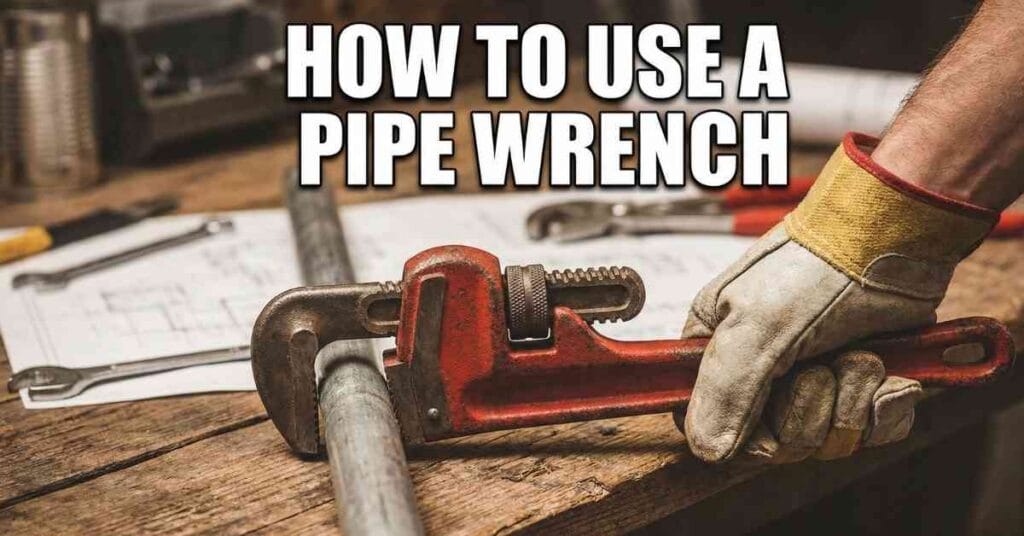
Pliers won’t work well here. You need the heavy tools for this job. You need to learn how to use a pipe wrench. This tool, often called a Stillson wrench, isn’t just a heavy hammer. It is a fine tool for gripping round objects.
Knowing how to set the “bite” right is very key. It is often the only difference between a fixed leak and a smashed finger. Let’s get you set up so you can finish this job.
Getting to Know Your Wrench
If you use this tool wrong, you will strip the pipe bare. But if you use it right, it feels like a part of your own arm. It just takes a little time to get the feel of it.
The Anatomy of a Bite
Take a look at the jaws. You have the top “hook jaw” and the bottom “heel jaw.” Both are covered in sharp teeth. These teeth are made to dig into round metal, unlike the flat jaws of other tools.
Then you have the nut. This is the ring that spins to control the size of the mouth. It should spin fast if your tool is in good shape.
Finally, notice the “floppy” top jaw. I recall thinking my first wrench was broken because the top moved. It is not broken. That movement creates a wedge force that adds grip as you push.
Steel vs. Aluminum
The metal of your wrench makes a huge change in how you feel at the end of the day. A plain steel rigid wrench is heavy. It feels like holding a boat anchor after five minutes of high work.
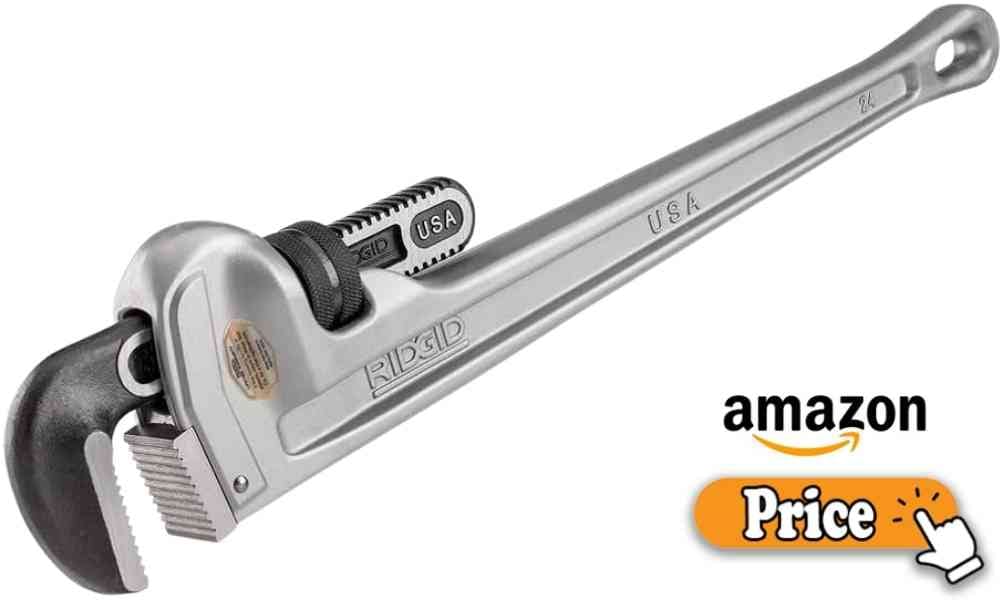
I now use aluminum wrenches for bigger jobs. Brands like Milwaukee or Ridgid make aluminum models that weigh almost nothing. They are great helps for all-day projects.
If you are just fixing one sink, heavy steel is quite fine. But if you are fixing a whole basement, do your arms a favor and go with aluminum.
Which Wrench Do You Need?
Size matters here. It isn’t just about how wide the jaws open. It is mostly about the power you get from the handle length.
Common Sizes for Homeowners
For most home tasks, a 10-inch to 14-inch wrench is the best choice. These fit nicely into tight spaces under sinks. They handle typical 1/2″ or 3/4″ home gas and water lines with ease.
If you are dealing with a main water valve or a stuck 1″ pipe, step up to an 18-inch model. The extra handle length gives you huge turning power.
I follow the “Two-Wrench” rule. You almost always need two wrenches. Use one to turn the pipe and the second one to hold the fitting. This “backup” wrench makes sure you don’t twist the pipes inside the wall.
How to Use a Pipe Wrench Properly
There is a beat to plumbing work. It goes: clamp, tighten, push, reset. It should not feel like a fight. If you are fighting the tool, stop and reset.
Setting the Gap
Start by placing the wrench on the pipe. Spin the nut until both jaws touch the pipe walls softly. Don’t crank it down just yet.
Now, look at the back of the hook jaw. You need a gap between the pipe and the back of the wrench. Aim for about half an inch of space. If the pipe hits the back, the teeth can’t bite down.
Direction of Pull
There is only one way to turn a pipe wrench. Always turn the handle toward the opening of the hook jaw. This forces the jaws to close tighter as you pull.
If you push the other way, the jaws will open up. The wrench will slip off the pipe fast. This often leads to you punching a floor joist, which hurts a lot.
Applying Torque
Stand with your feet firm. If you can, pull the handle toward you rather than pushing it away. If the wrench slips while you are pushing, you can lose your balance and fall.
Apply steady force. You aren’t trying to snap it; you are trying to move it. When that rusted joint finally breaks free, you’ll hear a nice “creak.” It is the best sound in the world.
Rookie Mistakes That Ruin Projects
I have learned these tips the hard way. They often involved a curse word and a quick trip to the store.
Using it on Hex Nuts
Never use a pipe wrench on hex nuts. I see people do this on bolts all the time. The sharp teeth will chew the corners right off the nut.
You will be left with a round mess that is hard to remove. For hex nuts, stick to a standard wrench or pliers. Keep the pipe wrench for round pipes only.
The “Cheater Bar” Risk
You might have seen someone slip a steel pipe over the wrench handle for extra power. We call this a “cheater bar.” Safety guides say do not do this.
It puts too much stress on the tool. You can snap the handle or crush the pipe you are working on. If you need that much force, use spray oil or get a bigger wrench.
Marring Fancy Pipes
Remember those sharp teeth I mentioned? They leave marks. Deep ones. If you grab a nice chrome shower arm with a bare wrench, you will ruin the finish.
To avoid this, wrap the pipe in a thick cloth or an old leather belt first. Then clamp the wrench over the leather. This saves the chrome while still giving you grip.
Maintenance
A rusty wrench with dirty teeth is no good. It is about as useful as using a spoon to loosen a pipe. Take care of your tools, and they will take care of you.
Cleaning the Teeth
After a dirty job, check the teeth. Use a wire brush to clean out dust, putty, or metal bits. Clean teeth grip better.
Lubrication
Put a drop of oil on the nut. Spin it back and forth a few times. This keeps it from freezing up. You will thank me next winter when you need to fix a frozen pipe fast.
READ MORE: How Do You Use a Torque Wrench
Conclusion
The pipe wrench is a blunt tool, but it is great at what it does. It gets you out of jams that no other tool can handle.
Now that the pipe is loose, you are ready for the next step. Clean off those threads and put on some new tape. You have got this.
FAQs – How to Use a Pipe Wrench
How do I choose the right size pipe wrench?
Measure the pipe size first. For most home tasks, a 14-inch wrench works best. It fits 1/2-inch and 3/4-inch pipes well and gives you the right grip.
Can I use a pipe wrench on hex nuts?
No, do not use it on hex nuts. The sharp teeth will chew up the flat sides. Use a smooth wrench or pliers on nuts to keep them safe and in good shape.
Which way should I turn the pipe wrench?
Turn the handle toward the open mouth of the jaw. This makes the teeth bite down hard. If you push the other way, the tool will slip and not grip at all.
Why does the top jaw of my wrench wiggle?
The wiggle is there on purpose, not a flaw. It helps the jaw wedge tight on the pipe. It gives you much more grip when you add force to the handle.
How do I protect chrome pipes from scratches?
Wrap the pipe in a thick cloth or an old belt. This guards the soft chrome finish. Then clamp the wrench over the cloth to get a safe, strong grip.