
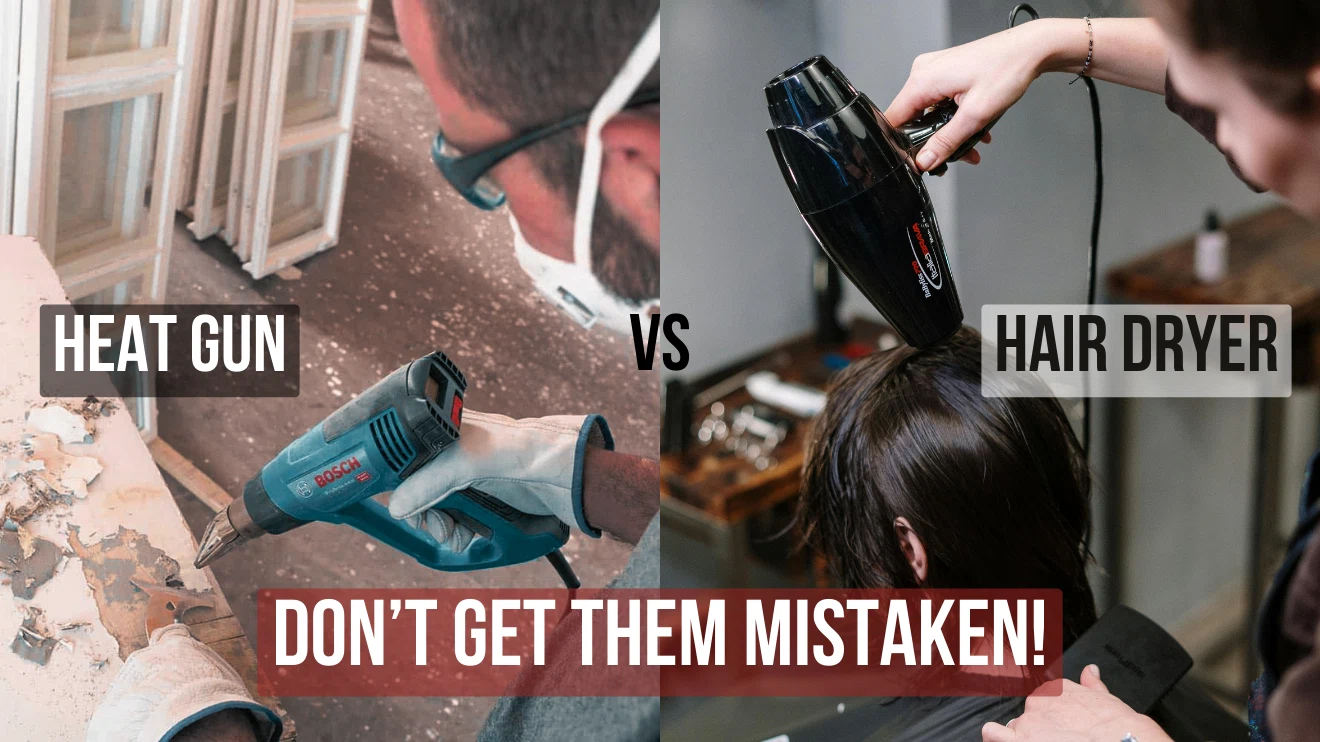
When you look at a heat gun and a hair dryer, they might seem similar. Both blow hot air, both have a handle, and both plug into the wall. But are they really the same? Many people wonder if you can swap one for the other. Maybe you want to strip paint but only have a hair dryer. Or you need to dry your hair fast and see a heat gun in the garage. The truth is, these tools are designed for very different jobs—and using the wrong one can lead to poor results or even dangerous accidents.
Let’s explore the differences between heat guns and hair dryers, including how they work, what they’re used for, safety concerns, and real-life scenarios. By the end, you’ll know exactly which tool is right for your needs, plus a few things most people never realize until it’s too late.
Understanding The Basics
Both heat guns and hair dryers use a fan to blow air across a heating element. The air warms up and comes out of the nozzle. That’s where the similarities end.
A heat gun is a powerful tool. It produces very hot air, usually from 200°F (93°C) up to 1200°F (649°C). These high temperatures can melt paint, shrink plastic, soften glue, and even thaw frozen pipes.
A hair dryer is designed for safety and comfort. Most models go from 80°F (27°C) to 140°F (60°C) at the highest. This is enough to dry hair without burning your scalp. Hair dryers usually have more airflow but much less heat.
Heat Gun: Features And Uses
Heat guns are used by professionals and DIYers for many tasks. Here are some key facts:
- Temperature range: 200–1200°F (93–649°C)
- Airflow: Lower than hair dryers, but more focused
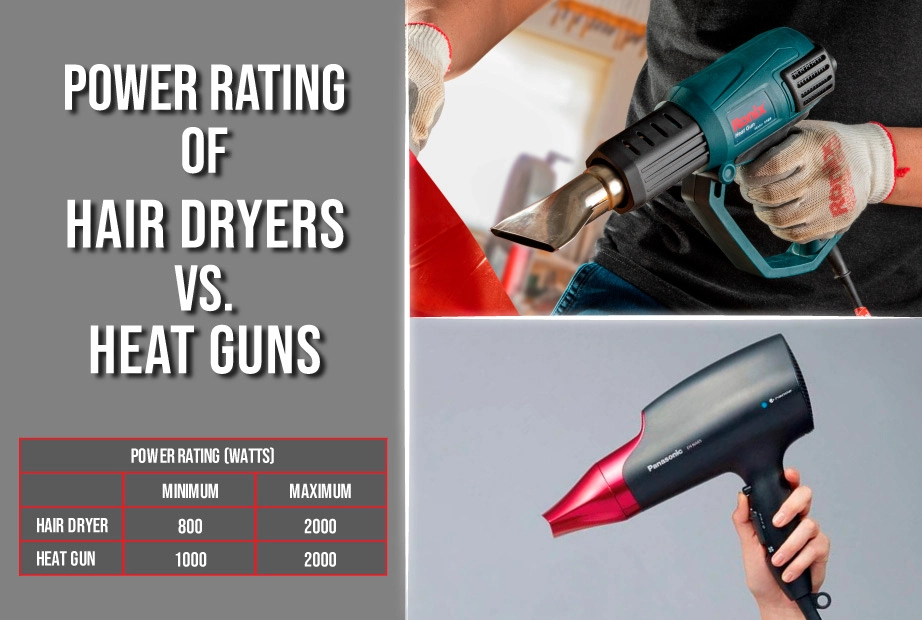
- Power: 1000–1800 watts
- Nozzle types: Flat, cone, reflector, and more
- Weight: Usually heavier than hair dryers
Common Uses For Heat Guns
- Paint Removal – Soften old paint to scrape it off easily.
- Shrink Wrapping – Shrink plastic film for packaging or electrical insulation.
- Thawing Frozen Pipes – Gently warm metal pipes to melt ice inside.
- Loosening Adhesives – Soften glue for easy removal from surfaces.
- Crafts and Hobbies – Shape plastic, emboss paper, or bend PVC pipes.
- Drying Paint or Putty – Speed up the curing process.
- Electronics Repair – Desoldering circuit components (with caution).
Non-obvious insight: Many beginners do not realize that heat guns can set off smoke detectors if used indoors without ventilation. The high heat can also damage surfaces that seem tough, like tile grout or laminate.

Hair Dryer: Features And Uses
Hair dryers are made for personal care and styling. Let’s look at the main features:
- Temperature range: 80–140°F (27–60°C)
- Airflow: Higher volume, less focused
- Power: 800–2000 watts (but lower heat output)
- Nozzle types: Diffusers, concentrators
- Weight: Lightweight, easy to hold for long periods
Common Uses For Hair Dryers
- Drying Hair – The main use, with adjustable heat and speed.
- Styling – Use with brushes, diffusers, or attachments for different looks.
- Quick Drying – Speed up drying of nail polish or wet clothes.
- Defogging Mirrors – Blow warm air on a bathroom mirror to clear fog.
- Removing Stickers – Gentle heat softens glue for easier peeling.
Non-obvious insight: Many people do not know that using a hair dryer on its hottest setting for too long can cause scalp burns or hair damage, especially with thin or fine hair.
Key Differences: Side-by-side Comparison
Let’s see how heat guns and hair dryers measure up in a simple comparison.
| Feature | Heat Gun | Hair Dryer |
|---|---|---|
| Max Temperature | 1200°F (649°C) | 140°F (60°C) |
| Airflow | Low, focused | High, wide |
| Main Use | Industrial / DIY tasks | Personal care |
| Weight | Heavier | Lighter |
| Safety Features | Few (sometimes none) | Many (auto shut-off, cool shot) |
When Can You Swap Them?
Sometimes people try to use a hair dryer instead of a heat gun, or the other way around. Is this safe or effective?
Using A Hair Dryer As A Heat Gun
If you need to remove stickers or soften a little glue, a hair dryer can work. But for paint stripping, shrinking plastic, or thawing pipes, a hair dryer usually can’t get hot enough. It will take much longer, and you may not get the result you want.
Example: If you try to shrink heat-shrink tubing with a hair dryer, the plastic may not shrink fully. Or it may take 10–15 minutes instead of 30 seconds with a heat gun.
Using A Heat Gun As A Hair Dryer
This is dangerous. Even on the lowest setting, a heat gun is too hot for hair and skin. You can burn yourself, melt plastic combs, or even start a fire. Never use a heat gun to dry hair or on people or pets.
Example: Some people have tried to use a heat gun for quick hair drying during cosplay costume changes. This can cause severe burns and damage to wigs or real hair.
Safety Considerations
Both tools have risks, but heat guns are much more dangerous if misused.
Heat Gun Safety Tips
- Always wear gloves and eye protection.
- Keep the nozzle away from flammable items.
- Never point a heat gun at yourself or others.
- Let the gun cool before storing.
- Use in a well-ventilated area—high heat can release fumes from paint or plastics.
Hair Dryer Safety Tips
- Keep away from water to avoid electric shock.
- Don’t block the air intake. It can overheat.
- Unplug after use. Many fires start from forgotten appliances.
- Clean the filter regularly to keep airflow strong.
Practical tip: Heat guns often have metal nozzles that stay hot for several minutes after use. Beginners sometimes set the tool down, not realizing it can scorch a table or carpet.
Cost And Availability
Most homes have a hair dryer, but not a heat gun. Here’s what you can expect to pay.
| Tool | Low Price | High Price | Where to Buy |
|---|---|---|---|
| Heat Gun | $20 | $150+ | Hardware stores, online |
| Hair Dryer | $10 | $100+ | Pharmacies, supermarkets, online |
Professional heat guns cost more, especially those with adjustable temperature, digital displays, or special nozzles.
Which One Should You Choose?
The answer depends on your task:
- For hair styling, drying, or light glue removal, use a hair dryer.
- For DIY projects, crafts, paint removal, or heavy-duty jobs, use a heat gun.
- Never substitute a heat gun for a hair dryer for personal care.
Common mistake: Some people buy a cheap heat gun for a one-time job, then use it for other things without reading the manual. Each job (like embossing, electronics, paint) may need a special nozzle or heat setting. Learn your tool’s features before starting.
Advanced Features To Consider
If you’re buying a tool, look for these features:
For Heat Guns
- Adjustable temperature settings for better control.
- Interchangeable nozzles for different tasks.
- Built-in stand to keep hot nozzle off surfaces.
- Cool-down mode to help the gun cool safely.
For Hair Dryers
- Multiple speed and heat settings for different hair types.
- Ionic technology to reduce frizz.
- Removable air filter for easy cleaning.
- Overheat protection for safety.
Real-life Scenarios
Let’s look at a few examples where you must pick the right tool:
Scenario 1: You want to remove old paint from a window frame.
- Use a heat gun. A hair dryer won’t get hot enough to soften the paint.
Scenario 2: You’re crafting at home and want to emboss a greeting card.
- Use a heat gun, but on a low setting and at a distance. A hair dryer blows too much air and can scatter embossing powder.
Scenario 3: Your bathroom mirror is foggy after a shower.
- Use a hair dryer. It’s gentle and safe for glass.
Scenario 4: You need to thaw a frozen copper pipe under the kitchen sink.
- Use a heat gun, carefully and in short bursts. Never use a hair dryer near standing water.
Scenario 5: You spilled wax on a table and want to remove it.
- Use a hair dryer to gently warm the wax, then wipe it up.
Environmental Impact
Heat guns use more energy per minute because of higher temperatures, but hair dryers are used for longer periods. If energy use matters to you, check the wattage and try to use the lowest setting that works for your job.
Extra tip: Some heat guns can release toxic fumes if used on plastics or painted surfaces. Always check what materials you’re heating.
Expert Advice
If you’re new to DIY, start with a basic hair dryer for light tasks. Invest in a heat gun only if you need high heat. Read the manual, watch online tutorials, and practice on scrap material before working on something important.
For more information on safe usage, the U.S. Consumer Product Safety Commission has helpful tips on preventing electrical fires at home.
Frequently Asked Questions
What Is The Main Difference Between A Heat Gun And A Hair Dryer?
The main difference is maximum temperature. A heat gun can reach 1200°F (649°C), while a hair dryer tops out around 140°F (60°C). Heat guns are for industrial or craft jobs, while hair dryers are for personal hair care.
Can I Use A Hair Dryer Instead Of A Heat Gun For Shrink Wrap?
You can try, but results may be poor. A hair dryer often can’t get hot enough for tight shrinking, especially for thicker plastics or large items. It may work for small, thin plastic, but expect slower and less even results.
Is It Safe To Use A Heat Gun On Hair?
No. Heat guns are far too hot for hair or skin. They can cause burns, melt wigs, or start fires. Only use a hair dryer for drying hair.
Why Do Heat Guns Not Have The Same Safety Features As Hair Dryers?
Heat guns are made for careful, controlled tasks—often by professionals. Hair dryers are used daily by the public, so they include more safety features like automatic shut-off, cool shot, and overheat protection.
How Do I Know Which Tool To Use For My Project?
Think about temperature needs. If you need high heat (paint removal, shrink wrap, thawing pipes), use a heat gun. For personal care or gentle drying, use a hair dryer. When in doubt, check the tool’s manual or ask an expert.
Using the right tool can save time, avoid damage, and keep you safe. Now you have the knowledge to make the smart choice for your next project.
As an Amazon Associate, We earn from qualifying purchases