
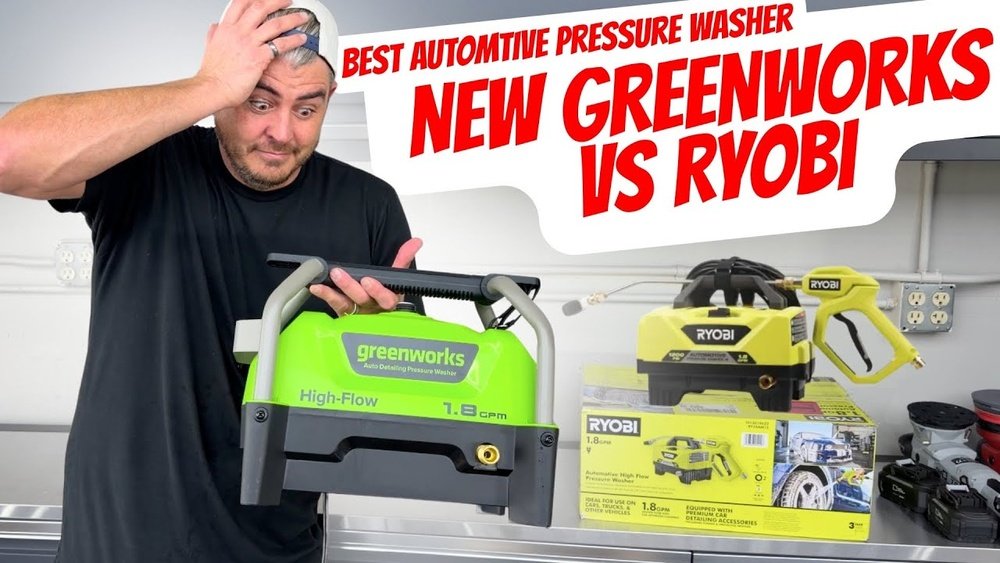
When you want to clean your driveway, patio, car, or even your home’s siding, a pressure washer is a fast and powerful tool. Two brands often come up for homeowners and DIY fans: Greenworks and Ryobi. Both offer electric pressure washers that promise to make cleaning easier, but which one is right for you? The answer is not simple, because both brands have strong points and a few weak spots. Many people get stuck choosing between Greenworks vs Ryobi pressure washer, wondering which delivers better cleaning, lasts longer, or gives more value for money.
This article breaks down everything you need to know. We’ll look at how each brand performs, their key models, strengths, weaknesses, and what really matters before you buy. You’ll get clear, side-by-side comparisons and real-world examples. By the end, you’ll know exactly which pressure washer fits your needs.
Brand Overview: Greenworks And Ryobi
Greenworks: Focus On Electric Power
Greenworks is known for making reliable, eco-friendly outdoor tools. The company focuses almost entirely on electric (battery and corded) equipment, from lawn mowers to pressure washers. Their washers are built for easy use at home, with a simple design and less noise than gas models.
A unique thing about Greenworks: They have a strong reputation for tool compatibility. If you own other Greenworks products, you might use the same batteries or chargers, saving money and space.
Ryobi: Broad Range And Versatility
Ryobi is a bigger name in the power tool world, offering both gas and electric washers. They’re famous for making tools that are affordable but still well-built, with lots of attachments and accessories. Ryobi’s pressure washers are usually sold at Home Depot and have a reputation for being easy to repair, with parts widely available.
Ryobi’s ONE+ battery system is a major plus if you like to use the same battery with many tools. If you already own Ryobi gear, this could make your choice easier.
Comparing Key Features
Let’s break down the main features that matter most when comparing Greenworks vs Ryobi pressure washer.
Cleaning Power (psi And Gpm)
- PSI (pounds per square inch): Shows how hard the water hits. Higher PSI = more power to remove dirt.
- GPM (gallons per minute): Shows how much water flows. Higher GPM = faster cleaning over large areas.
Most Greenworks and Ryobi models for home use offer 1700 to 2300 PSI and 1.2 to 2.3 GPM. That’s enough for cars, decks, fences, and even some concrete cleaning.
Motor Type
Both brands mainly use universal (brushed) motors in entry-level models and induction (brushless) motors in higher-end models. Induction motors last longer, run quieter, and need less maintenance.
Nozzle Options
Every pressure washer comes with nozzles for different spray patterns. Greenworks tends to include more nozzles, while Ryobi often gives a 5-in-1 adjustable nozzle on some models. Both are useful—separate nozzles give you more control, but the 5-in-1 is quick to switch.
Hose And Cord Length
Longer hoses and cords mean less moving your washer around. Greenworks usually includes 20–25 ft hoses and 35 ft cords. Ryobi often gives 25 ft hoses and 35 ft cords as well, but check the specs—some models are shorter.
Portability And Storage
Greenworks washers are often more compact and lighter, making them easier to lift and store. Ryobi focuses on sturdy frames with larger wheels, better for rolling over rough ground.
Comparing Popular Models
Below is a direct comparison of top models from each brand. This helps you see real differences, not just specs.
| Model | Brand | Max PSI | GPM | Motor | Hose Length | Weight |
|---|---|---|---|---|---|---|
| GPW2002 | Greenworks | 2000 | 1.2 | Induction | 25 ft | 37 lbs |
| RY141900 | Ryobi | 2000 | 1.2 | Induction | 25 ft | 32 lbs |
| GPW1702 | Greenworks | 1700 | 1.2 | Universal | 20 ft | 17 lbs |
| RY141612 | Ryobi | 1600 | 1.2 | Universal | 20 ft | 16 lbs |
Notice that both brands offer very similar specs in the same price range. The difference often comes down to design, features, or included accessories.
Performance In Real-world Cleaning
Cleaning Your Car
Both Greenworks and Ryobi mid-range models (1600–2000 PSI) are safe for car washing. If you use the 25-degree or soap nozzle, you’ll avoid stripping paint or damaging trim. Ryobi’s 5-in-1 nozzle makes switching from wide spray to soap very fast. Greenworks sometimes includes a better foam cannon for thicker soap.
Concrete, Patios, And Decks
For tough jobs like concrete or large decks, more PSI and a turbo nozzle help. Greenworks often includes a turbo nozzle in the box, while Ryobi sometimes sells it separately. Both can do the job, but you may clean faster with Greenworks’ included turbo tip.
Siding And Fences
Both brands have enough power for wood and vinyl siding. Use a wide-angle nozzle to avoid damage. Ryobi’s longer spray wand can help reach higher spots without a ladder.
Noise Level
Greenworks’ induction motor models are often a bit quieter than Ryobi’s universal motor models. Both are much quieter than gas washers.
Durability And Build Quality
Materials
Greenworks uses a lot of plastic, making their washers lighter but sometimes less sturdy if dropped. Ryobi uses more metal in frames and handles, which adds weight but helps the washer survive tough handling.
Motor Life
Induction motors (found in higher-end models of both brands) usually last 2–3 times longer than universal motors. If you plan to use your washer often, invest in an induction motor model for longer life.
Hose Quality
Greenworks hoses are softer and less likely to kink, but a bit less tough. Ryobi hoses are stiffer, which can make them harder to manage but more resistant to cuts and punctures.
Price And Value For Money
Let’s look at how much you’ll spend, and what you get.
- Greenworks 1700 PSI models: $110–$140
- Greenworks 2000 PSI models: $160–$230
- Ryobi 1600 PSI models: $100–$130
- Ryobi 2000 PSI models: $170–$210
Ryobi and Greenworks are often within $10–$30 of each other for similar PSI. Greenworks sometimes bundles more nozzles and a better foam blaster, while Ryobi adds a longer warranty or more accessories.

Warranty And Customer Support
Greenworks offers a 3-year warranty on most pressure washers, with simple online claims. Ryobi gives a 3-year warranty too, but their customer support is often faster if you buy from Home Depot (in-store service).
A key insight: Ryobi replacement parts are easier to find, especially for older models. Greenworks parts sometimes require special order from their website.
Accessories And Expansion
Both brands offer a range of add-ons, but their focus differs.
- Greenworks: Turbo nozzles, surface cleaners, and foam cannons are often included.
- Ryobi: Offers more attachments, including telescoping wands, gutter cleaners, and specialty brushes.
If you like to upgrade or add tools, Ryobi’s accessory range is wider and usually works across models.
User Experience And Setup
Assembly
Greenworks pressure washers are known for quick setup—snap in the hose, plug in the nozzle, and you’re ready to go. Ryobi’s instructions are also clear, but some models need a screwdriver for assembly.
Storage
Greenworks’ compact models fit easily on a shelf or in a car trunk. Ryobi’s upright design and cord/hose management systems help keep things tidy, but take up more floor space.
Mobility
Ryobi’s large wheels roll over grass and gravel better. Greenworks’ smaller wheels are fine for flat surfaces, but can be tricky on uneven ground.
Energy Use And Eco-friendliness
Both brands use less electricity than gas washers use fuel. Greenworks positions itself as the eco-friendly choice, using less water and power, with no gas engine emissions. Ryobi’s electric models are also clean, but the company’s broader product range includes gas washers too.
Safety Features
Both brands include:
- Total Stop System (TSS): Shuts off the motor when the trigger is released, saving energy and preventing overheating.
- GFCI plug: Reduces electric shock risk, especially when used outdoors.
- Lock-off switch: Prevents accidental spraying.
Pros And Cons: Greenworks Vs Ryobi Pressure Washer
Here’s a side-by-side summary to make things even clearer.
| Feature | Greenworks | Ryobi |
|---|---|---|
| Included Nozzles | Usually more, including turbo | Often 3 or 5-in-1 nozzle |
| Hose Quality | Softer, flexible | Stiffer, more durable |
| Weight | Lighter | Heavier, more stable |
| Accessory Range | Good, but less variety | Wider selection |
| Storage | Compact | Upright, organized |
| Noise | Usually quieter | Quieter with induction motor |
| Customer Support | Online, slower for parts | Fast, Home Depot support |

What Really Matters When Choosing
Most people focus too much on PSI and not enough on other factors. Here’s what actually matters:
- What will you clean?
- Cars, bikes: 1600–1800 PSI is enough.
- Decks, patios, fences: 1800–2000 PSI is ideal.
- Concrete, tough stains: 2000+ PSI and a turbo nozzle.
- How often will you use it?
- For once-a-month use, a universal motor is fine.
- For weekly use, get an induction motor—it lasts longer.
- Where will you store it?
- Small garage or shed: Greenworks’ compact design wins.
- Lots of tools, need organization: Ryobi’s upright storage is better.
- Do you already own tools from one brand?
- Using the same battery or charger saves money and space.
- Do you want to upgrade later?
- Ryobi’s accessory range gives more options for future add-ons.
Common Mistakes When Buying
People often make these errors:
- Choosing too much power: Higher PSI can damage wood, paint, or car finishes.
- Ignoring hose length: Short hoses mean moving the washer more often.
- Skipping the warranty details: Not all models have the same coverage.
- Forgetting about weight: Heavier models can be hard to move up stairs.
- Overlooking noise: Some models are much louder than others.
Expert Insights: What Beginners Miss
- Motor type matters more than you think. Induction motors are not just a luxury—they give smoother operation, less noise, and longer life. Many buyers regret buying the cheapest model when the motor wears out quickly.
- Check for replacement parts and accessories before you buy. Ryobi often wins here, especially if you like to add tools or want to keep your washer running for years.
- Nozzle quality changes cleaning results. A good turbo or soap nozzle can save half your cleaning time, even with the same PSI.
Real-world User Feedback
Greenworks Owners Say:
- Setup is fast—“Out of the box and cleaning in 10 minutes.”
- Quiet operation—“Doesn’t wake the neighbors.”
- Some wish for stronger hose durability.
Ryobi Owners Say:
- Love the 5-in-1 nozzle—“No losing parts in the yard.”
- Easy to find parts at Home Depot.
- Heavier models can be tough to lift for older users.
Which Should You Buy?
If you want a compact, lightweight washer for light to medium home use, Greenworks is a top pick. It’s easy to store, quiet, and often includes more cleaning nozzles out of the box. It’s perfect for smaller spaces and quick jobs.
If you need a tougher, more versatile washer with more accessories, or if you plan to clean large areas, Ryobi is a smart choice. The parts are easier to find, and the build is a bit more rugged. It’s a better fit for those who want to expand or upgrade in the future.
Where To Buy And Price Trends
Both Greenworks and Ryobi pressure washers are sold online and in stores, but Ryobi has a stronger presence at Home Depot. Greenworks is found at Lowe’s, Amazon, and direct from their site. Prices tend to drop in spring sales and around Black Friday.
If you want to see the latest pricing and reviews, check the Consumer Reports website for updated test results.
Frequently Asked Questions
How Much Psi Do I Need For Home Use?
For most home cleaning—cars, decks, patios—1600 to 2000 PSI is perfect. More PSI can be useful for concrete, but it’s not always better. Too much pressure can damage paint or softer wood.
Can I Use Hot Water With Greenworks Or Ryobi Pressure Washers?
No, both brands are designed for cold water only. Using hot water can damage the seals and pump. If you need hot water, look for a commercial washer.
Are Electric Pressure Washers Safe To Use Outside?
Yes, as long as you use a GFCI outlet and follow the instructions. Never use indoors or in standing water. Both brands have safety features, but always keep the plug dry.
How Long Do Greenworks And Ryobi Pressure Washers Last?
With normal home use (once a week or less), expect 5–8 years from an induction motor model, or 2–4 years from a universal motor model. Regular maintenance (cleaning the filter, draining water) will extend life.
Can I Use Cleaning Chemicals Or Soap?
Yes, both Greenworks and Ryobi washers have a detergent tank or hose for soap. Always use soap made for pressure washers—never bleach or harsh chemicals, as these can damage the pump.
Final Thoughts
Choosing between Greenworks vs Ryobi pressure washer is not about which is “best” for everyone, but which fits your cleaning needs, storage space, and future plans. Greenworks gives you a lighter, quieter tool with more included accessories—great for quick jobs and smaller homes. Ryobi’s models are tougher, offer more add-ons, and are easy to service—ideal for bigger cleaning projects or people who want a tool that can grow with their needs.
No matter which you choose, both brands offer reliable cleaning power, good warranties, and lots of support. Focus on how you’ll actually use your washer, and you’ll make the right choice for your home.
As an Amazon Associate, We earn from qualifying purchases