
As a seasoned lawn care enthusiast, I have spent countless weekends behind different types of mowers to find the perfect cut. In my experience, choosing between a front-wheel-drive (FWD) and a rear-wheel-drive (RWD) self-propelled mower is the single most important decision you will make for your physical comfort. I have tested both drive systems on flat lawns, steep slopes, and obstacle-ridden properties to help you understand which setup will save your back and elevate your curb appeal.
fwd vs rwd self propelled mower: At a Glance
| Front-Wheel-Drive Self-Propelled Lawn Mower | Rear-Wheel-Drive Self-Propelled Lawn Mower | |
|---|---|---|
| Best Terrain | Flat lawns and level ground with minimal slopes. | Hilly terrain, steep slopes, and uneven ground. |
| Maneuverability | Highly maneuverable; tip back on rear wheels to stop forward drive. | Requires releasing the drive clutch to turn or pivot manually. |
| Traction | Can lose traction on slopes or when the grass bag is full. | Excellent traction; weight is pushed onto drive wheels for better grip. |
| Steering and Turning | Effortless pivoting around obstacles, flowerbeds, and tight corners. | Requires more effort to turn while the drive is engaged. |
| Bagger Impact | Heavy rear bag lifts front wheels, reducing drive traction. | Heavy rear bag increases weight on drive wheels, improving traction. |
| Ease of Use | Intuitive and physically easier for flat yards with heavy landscaping. | Provides better assistance and control on difficult, sloping lawns. |
| Typical Cost | Generally more budget-friendly and simpler in design. | Often slightly more expensive due to complex drive systems. |
Complete Comparison: Front-Wheel-Drive Self-Propelled Lawn Mower vs Rear-Wheel-Drive Self-Propelled Lawn Mower
| SENIX 21” Self-Propelled Gas Lawn Mower | PowerSmart 22 in. 170cc Self Propelled | |
|---|---|---|
| Product Image | 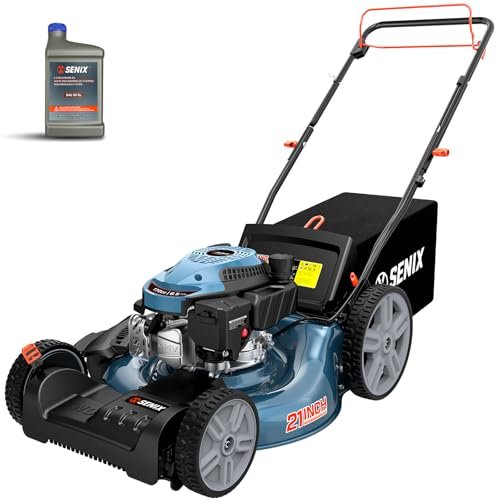 | 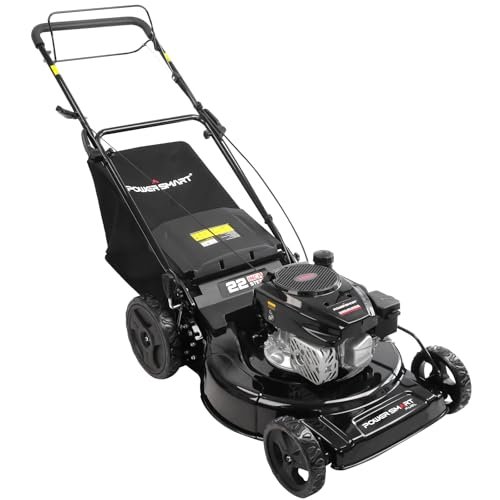 |
| Price | View On Amazon | View On Amazon |
| Category | Mid-Range FWD Gas Mower | Mid-Range RWD Gas Mower |
| Engine Displacement | 170cc 4-Cycle OHV (3.8 HP / 6.5 ft-lb torque) | 170cc Gas Engine (Recoil start / Auto choke) |
| Drive System & Terrain | Front-Wheel-Drive (FWD); Best for flat yards and pivoting around obstacles | Rear-Wheel-Drive (RWD); Best for traction on slopes and uneven terrain |
| Cutting Deck Width | 21-inch steel deck | 22-inch steel deck |
| 3-in-1 Capabilities | Mulching, Side Discharge, Rear Bagging (1.7 Bushel / ~60L bag) | Mulching, Rear Discharge, Rear Bagging (60L bag) |
| Height Adjustment | 6-position dual-lever (1.25 to 3.75 inches) | 6-position rear-wheel adjustment |
| Wheel Sizes & Maneuverability | 8-inch front / 11-inch rear wheels; Vortex tunnel reduces deck buildup | Standard wheels; No-tool assembly handle |
| Best For | Flat yards up to 1/3 acre with landscaping obstacles | Hilly or uneven yards requiring maximum traction |
| Amazon Link | View On Amazon | View On Amazon |
| Overall Winner | Winner (Best for standard suburban flat yards & easy pivoting) | Runner-Up (Best for slopes) |
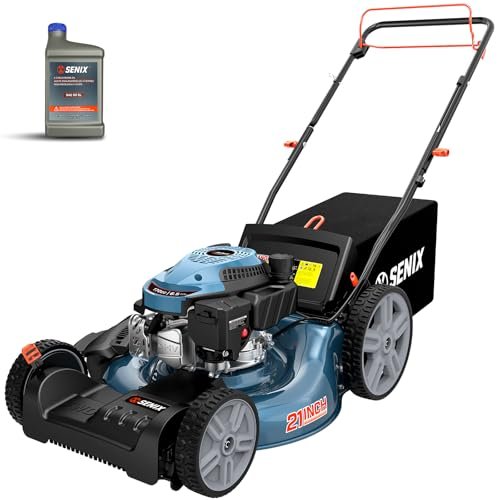
SENIX 21” Self-Propelled Gas Lawn Mower (FWD)
The SENIX 21-inch FWD mower is designed to take the sweat out of maintaining flat, manicured suburban yards. Driven by a powerful 170cc 4-cycle OHV gas engine, this machine delivers 3.8 HP and 6.5 ft-lb of torque to slice through thick grass without bogging down. I found the front-wheel-drive system highly intuitive for yards with heavy landscaping because you can easily stop the forward momentum by pushing down on the handlebar to lift the drive wheels off the ground. The durable high-strength steel deck features a 21-inch cutting width that makes quick work of 1/3-acre lots. It also features a versatile 3-in-1 cutting system allowing you to switch between mulching, side discharge, and bagging with the included 1.7-bushel grass bag. For uneven turf, the combination of 8-inch front and 11-inch rear wheels works alongside a 6-position height adjustment system to deliver an even cut every time.
- Powerful 170cc OHV Engine: Delivers 3.8 HP with a fuel consumption rate of roughly 27 oz per hour.
- Front-Wheel-Drive Traction: The front wheels pull the mower forward, making it simple to pivot around flower beds by lifting the front end.
- Vortex Tunnel Design: Prevents wet clippings from clogging the underside of the steel deck.
- Dual-Lever Height Adjustment: Quickly adjusts the cutting height across 6 positions ranging from 1.25 to 3.75 inches.
- Complete 3-in-1 Versatility: Allows for seamless swapping between bagging, mulching, and side discharging.
Pros
- Incredibly easy to maneuver and turn around obstacles without shutting off the drive bail.
- The high-wheel rear design rolls smoothly over small ruts and divots.
- Arrives with pre-filled oil for quick startup out of the box.
Cons
- Loses traction on steep inclines as the weight shifts to the back of the mower.
- The grass bag can feel heavy and off-balance when filled to its 1.7-bushel capacity.
Best for:
Homeowners with flat yards up to 1/3 acre who have lots of trees, flower beds, and tight corners to navigate.
Expert Opinion: The SENIX FWD is a maneuverability champion for flat properties. It turns on a dime and eliminates the wrestling match usually associated with heavy gas mowers around landscaping.
PowerSmart 22 in. 170cc Self-Propelled Gas Lawn Mower (RWD)
The PowerSmart 22-inch RWD lawn mower is a heavy-duty workhorse built to dominate hilly terrain and tough slopes. Under the hood sits a 170cc gas engine equipped with a recoil starter and an auto choke, meaning you get reliable starting power without priming. The star of the show is the self-propelled RWD system, which digs in and pushes the mower from behind to maintain traction even when the grass bag is completely full. With a wider 22-inch all-steel deck, you can cover more ground in fewer passes to finish your chores quickly. This model also provides a 3-in-1 cutting system with a generous 60L mower bag that reduces your trips to the compost pile. A single-lever 6-position adjustable cutting height lets you tailor the cutting height to your grass type with minimal effort.
- Self-Propelled RWD System: Delivers superior traction on steep hills and damp, slippery grass.
- 22-Inch Steel Deck: Heavy-duty steel construction with a wide cutting path to reduce overall mowing time.
- 170cc Auto-Choke Engine: Delivers consistent starting and high-torque performance without the need to prime the engine.
- Large 60L Grass Bag: Holds more clippings to keep you mowing longer between empty stops.
- Single-Lever Height Adjustment: Easily changes the deck height across 6 distinct cutting levels.
Pros
- Exceptional hill-climbing power that prevents the wheels from slipping on slopes.
- The 22-inch cutting deck cuts down on the number of passes needed for larger yards.
- Auto-choke system ensures painless one-pull starts in most weather conditions.
Cons
- Harder to turn around obstacles because you must release the drive lever to pull the mower backward.
- Weighs more than FWD models, making manual pushing tiring if the self-propel is disengaged.
Best for:
Property owners with hilly, uneven lawns or large open areas who need maximum traction and a wider cutting path.
Expert Opinion: If your yard has any kind of slope, the PowerSmart RWD is the obvious choice. The rear-wheel traction pushes through challenging topography where other mowers simply spin their wheels.
fwd vs rwd self propelled mower: Key Differences That Matter
Performance comparison
When comparing a fwd vs rwd self propelled mower, performance is entirely dictated by your yard’s topography. Front-wheel-drive mowers rely on the weight of the engine to press the front wheels into the ground for traction. However, when you walk uphill or bag grass, the center of gravity shifts to the rear. The front wheels on the SENIX will spin and slip on slopes under these conditions. The PowerSmart RWD excels here. By pushing from the rear, it utilizes the natural weight shift and the added weight of a full grass bag to dig the tires deeper into the turf, giving you relentless climbing power.
Price/Value analysis
FWD models generally offer a slightly friendlier price point for budget-conscious buyers. The drive mechanism on FWD mowers is less complex, which often translates to a lower initial purchase price and fewer maintenance headaches down the road. RWD mowers require a more robust drive shaft and transmission system to handle the rear-wheel torque. This makes the PowerSmart slightly more of an investment, but the extra cost is justified if you have hilly terrain that would make a FWD mower useless.
Build quality comparison
Both machines feature rugged steel decks, but they distribute their weight differently. The SENIX FWD feels lighter up front, which makes the chassis feel highly agile but slightly more prone to bouncing on rough pasture grass. The PowerSmart RWD is built like a tank. The rear drive axle is beefier to support the weight of the larger 22-inch deck and the massive 60L collection bag.
User experience differences
The physical act of mowing feels completely different with these two drive systems. With the SENIX FWD, you can keep the self-propelled drive engaged constantly. When you reach the end of a row, you simply push down on the handlebar, lift the spinning front wheels off the grass, pivot the mower, and drop it back down to keep going. With the PowerSmart RWD, you cannot do this. You must release the drive bail, manually turn the machine, and re-engage the drive. This extra step can feel tedious if your yard is packed with trees and flower beds.
Which Should You Choose?
Your choice boils down to the layout of your property.
If your yard is mostly flat and features tight corners, garden beds, and intricate landscaping, the SENIX 21” FWD mower is your best match. It allows you to pivot effortlessly without stopping and starting the drive system constantly.
If your property has rolling hills, terraced slopes, or slick, uneven soil, the PowerSmart 22 in. RWD mower is the correct tool for the job. It will save your shoulders and legs from the exhaustion of pushing a slipping mower up an incline.
My final verdict is to inspect your backyard. Do not buy traction you do not need, but do not sacrifice the grip required to conquer your hills safely.
Frequently Asked Questions
Q: Is a fwd vs rwd self propelled mower better for hills?
A: A rear-wheel-drive (RWD) mower is vastly superior for hills. As you walk up an incline, gravity shifts the weight of the mower to the rear wheels, giving them more traction. A front-wheel-drive (FWD) mower will lose grip and spin its wheels on slopes.
Q: Can you pull a FWD self-propelled mower backward easily?
A: Yes. Because the drive system is in the front, you can easily pull the mower backward by releasing the drive lever. The rear wheels spin freely without any resistance from the transmission.
Q: What is the main maintenance difference when looking at a fwd vs rwd self propelled mower?
A: FWD mowers generally have simpler belt and pulley configurations under the deck cover, making belt replacements easier for DIYers. RWD mowers have more complex drive shafts and gearboxes near the rear axle, which can sometimes require more effort to clean and service.
Q: Does bagging grass affect FWD and RWD mowers differently?
A: Yes, dramatically. As the grass bag fills with clippings, it adds significant weight to the back of the mower. This extra weight lifts the front wheels of a FWD mower, causing a loss of traction. Conversely, this added weight actually improves the traction of an RWD mower.
Q: Is FWD or RWD better for yards with lots of trees and flower beds?
A: FWD is much better for landscaped yards. You can leave the drive engaged, push down on the handles to lift the front drive wheels, and pivot around obstacles without stopping. With an RWD mower, you must constantly disengage the drive to make tight turns.
Q: Can I use an RWD mower on a flat lawn?
A: Absolutely. An RWD mower works perfectly fine on flat lawns. However, you might find it slightly more fatiguing to turn at the end of each pass compared to a nimble FWD model.
As an Amazon Associate, We earn from qualifying purchases