
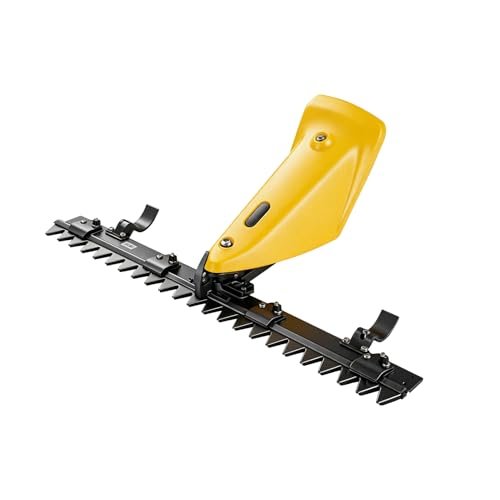
Choosing the right implement to reclaim an overgrown property can feel like a gamble. Having put both of these tools through their paces in thick brush, tangled pastures, and steep ditches, I know how much the right design matters. In this comparison, we will look at how a walk-behind sickle bar mower stacks up against a tractor-mounted flail mower so you can invest in the exact cutting action your land requires.
flail mower vs sickle bar: At a Glance
| Sickle-Bar Flail Mower | Flail Mower | |
|---|---|---|
| Cutting Action | Slices cleanly at the base like hedge shears | Shreds and pulverizes material using spinning Y- or T-shaped blades |
| Ideal Vegetation | Tall, standing grasses, weeds, and thin saplings | Thick brush, overgrown brambles, and dense woody debris |
| Power Source & Mobility | Typically walked-behind, powered by a two-wheel tractor | Tractor-mounted, powered by a rear Power Take-Off (PTO) |
| Terrain Suitability | Excellent for steep slopes, tight spaces, and wet areas | Best for wide, open acreage and rough, uneven fields |
| Clog Resistance | Highly resistant to wrapping and tangling from tall fibers | Can occasionally wrap extremely long, fibrous weeds around the rotor |
| Finished Cut Quality | Lays vegetation down intact, ideal for hay harvesting | Mulches material finely, distributing it evenly across the ground |
| Maintenance Needs | Requires regular blade sharpening and adjustment of wear plates | Low maintenance, though individual flail blades occasionally need replacing |
Complete Comparison: Sickle-Bar Flail Mower vs Flail Mower
| 47″ Sickle Bar Mower Attachment for | BILT HARD 53 inch 3 Point | |
|---|---|---|
| Product Image | 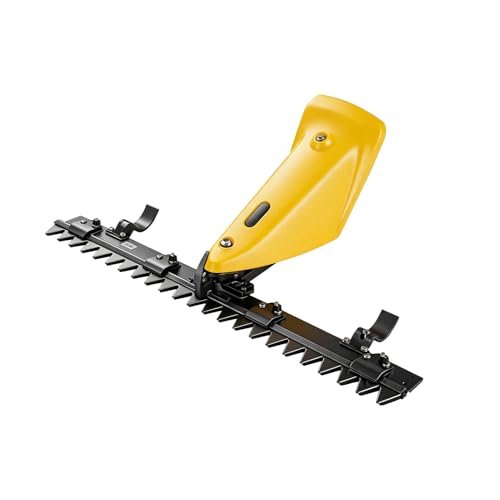 | 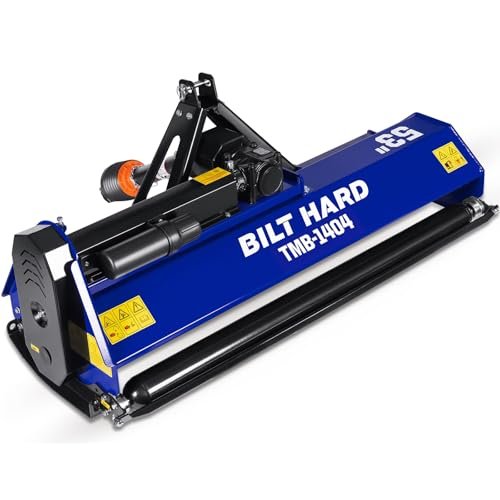 |
| Price | View On Amazon | View On Amazon |
| Category | Walk-Behind Tractor Attachment | 3-Point Hitch Tractor Attachment |
| Cutting Width | 47 inches | 53 inches |
| Cutting Capacity | Up to 1″ thick saplings and dense grass | Up to 0.75″ thick vegetation and brush |
| Compatibility | FORGLO 420cc 13.5HP and most 2-wheel walking tractors | 15-35 HP tractors (Category 1 3-point hitch, 540 RPM PTO) |
| Cutting Mechanism | Single-action floating sickle cutter bar | 18 forged 40Cr alloy steel flail hammer blades |
| Terrain Adaptability | Swivel joint design floats over slopes, ditches, and edges | Adjustable rear roller for stable height over uneven ground |
| Safety Shielding | Standard open bar exposure | Reinforced front shielding with safety flaps |
| Best For | Mowing tall grass, hay, weeds, and light brush on slopes/fences | Mulching dense debris, brush, and pastures on large acreage |
| Amazon Link | View On Amazon | View On Amazon |
| Overall Winner | Runner-up (Best for Tall Fodder & Slopes) | Winner (Best for Heavy Clearing & Mulching) |
47″ Sickle Bar Mower Attachment for Two-Wheel Walking Tractor
I tested this 47-inch sickle bar attachment on a two-wheel walking tractor, and it excels at managing tall, standing vegetation. The unit features a wide 47″ cutting bar that slices through material cleanly at the base, functioning much like a giant set of hedge shears. Because of its single-action cutter bar, it easily handles dense grass, thick weeds, and saplings up to 1 inch thick without tangling or wrapping. A major advantage of this setup is the floating cutter bar, which utilizes a swivel joint to hug the contours of uneven ground. This makes it incredibly effective for clearing steep slopes, pond edges, and underneath low fence lines where a traditional rotary mower simply cannot reach.
- Wide 47″ Cutting Bar: Delivers efficient, wide-path mowing to cover large fields and roadsides in fewer passes.
- Two-Wheel Tractor Compatibility: Designed to fit the FORGLO 420cc 13.5HP walking tractor and most similar two-wheel power units.
- 1-Inch Cutting Capacity: Cleanly slices through thick weeds, heavy hay, and woody saplings up to an inch in diameter.
- Floating Cutter Bar Design: Swivel joint lets the bar flex and float over dips, slopes, and rough terrain.
Pros
- Slices tall grass and hay cleanly at the base without shredding or mulching it.
- Requires very little horsepower to operate compared to rotary or flail mowers.
- Reaches easily under low-hanging fences and obstacles.
- Handles woody saplings up to an inch thick without bogging down.
Cons
- Does not mulch or reduce the volume of the cut material.
- Moving blade teeth can jam on thick, loose wire or hidden metal debris in the grass.
- Ground speed must be kept slow in highly dense, tangled brush.
Best For
This attachment is the perfect choice for small farmers, homesteaders, and landowners who need to harvest clean hay, clear under fence lines, or maintain steep, ditch-filled properties with a two-wheel walking tractor.
Expert Opinion: The sickle bar mower is the absolute king of efficiency when you need to drop tall, standing forage cleanly without turning it into useless pulp.
BILT HARD 53″ 3-Point PTO Flail Mower for Tractors
For heavy-duty pulverizing on larger acreage, I hooked up the BILT HARD 53-inch flail mower to a compact utility tractor. This machine is built with a standard Category 1 3-point hitch and runs off a standard 540 RPM PTO shaft, making it highly compatible with tractors ranging from 15 to 35 horsepower. Instead of a single slicing bar, it utilizes 18 upgraded 40Cr alloy hammers that spin vertically to shred everything in their path. The triple belts transmission delivers smooth power and protects the gearbox from sudden shocks when you strike hidden debris. An adjustable rear roller keeps the cutting height consistent and prevents the blades from scalping the dirt, while the reinforced front shielding uses solid safety flaps instead of loose chains to block flying stones and sticks.
- Broad Tractor Compatibility: Fits Category 1 3-point hitches and runs efficiently on 15 to 35 horsepower tractors.
- 53-Inch Clearing Width: Offers a wide path for processing thick brush, dense briars, and saplings up to 0.75 inches thick.
- 40Cr Alloy Steel Hammers: Heat-treated forged hammers offer superior impact toughness and a much longer service life than cast steel.
- Adjustable Rear Roller: Provides essential stability on rough ground and allows for easy cutting height management.
- Reinforced Front Shielding: Upgraded safety flaps block flying rocks and sticks far more consistently than traditional loose chains.
Pros
- Pulverizes thick brush and weeds into a fine, quickly-decomposing mulch.
- Highly resilient to hidden rocks, stumps, and debris due to swinging hammer design.
- Excellent safety shielding prevents dangerous high-velocity debris discharge.
- Heavy-duty build quality stands up to continuous, rough pasture reclamation.
Cons
- Requires a compact tractor with a 3-point hitch and functional PTO.
- Heavy physical weight makes it difficult to maneuver in tight, garden-sized spaces.
- Consumes significantly more fuel and horsepower than a sickle bar.
Best For
This flail mower is ideal for owners of compact tractors who need to reclaim wild pastures, clear dense briar patches, and maintain rough trails where hidden rocks and debris are a constant hazard.
Expert Opinion: If your goal is to make overgrown brush disappear into a fine mulch, nothing beats the pure, destructive capability of a spinning flail hammer.
Flail Mower vs Sickle Bar: Key Differences That Matter
Understanding the core mechanical differences between these two implements will save you hours of frustration in the field.
Performance Comparison
A sickle bar cuts with a slicing action, moving a set of triangular blades back and forth across stationary guards. This design is highly efficient for tall, upright materials like hay, tall grass, and thin reeds. It lays the vegetation down in clean, neat swaths.
A flail mower uses brute force. The Y-shaped knives or heavy alloy hammers spin at high speeds on a horizontal rotor, picking up vegetation and smashing it against the steel housing. This pulverizes the material, leaving behind a fine mulch. If you need to clear thick briars, brambles, and dense weeds, the flail mower will leave your pasture looking clean, whereas a sickle bar will simply drop the long stalks on the ground, leaving a thick thatch layer you must rake up later.
Price and Value Analysis
When analyzing the financial investment, you must consider the prime mover. The sickle bar attachment is relatively inexpensive but requires a two-wheel walking tractor. This makes the overall package highly accessible for homeowners with smaller budgets.
The BILT HARD flail mower is a larger, heavier implement designed for standard utility tractors. While the mower itself offers immense structural value for its price, the requirement of a 15 to 35 horsepower tractor increases the overall barrier to entry. If you already own a compact tractor, the flail mower offers outstanding value for long-term pasture maintenance.
Build Quality Comparison
The 47-inch sickle bar relies on precise alignment. The cutter bar is made of high-grade steel, but the moving parts are exposed. Rocks, thick wire, and heavy branches can chip the teeth or jam the mechanism.
The BILT HARD flail mower is built like a tank. It features thick steel housing, a robust gearbox, and triple drive belts that slip if you hit something unyielding. The 18 forged 40Cr alloy hammers are designed to take a beating from rocks and stumps without breaking, making the flail mower the much tougher machine for untamed land.
User Experience Differences
Operating these two machines feels completely different. The walk-behind sickle bar mower requires physical effort to guide along slopes and through tight spaces. It is highly maneuverable and can slip under low tree branches or fences with ease.
Operating the tractor-mounted flail mower is a seated affair. You control the cutting height using your tractor’s 3-point hydraulics. While this is far less physically demanding, you are limited by the size of your tractor. Tight corners, narrow trails, and low-clearance areas are much harder to navigate with a large tractor setup.
Which Should You Choose?
Your choice depends heavily on your property layout, your existing equipment, and your final cleanup goals.
If you own a walking tractor and want to harvest clean hay, clear steep pond banks, or trim under electric fences without throwing rocks, the 47″ Sickle Bar Mower is your best bet. It saves fuel, works on tight slopes, and leaves clean, uncut grass for baling.
If you have a compact utility tractor and want to destroy dense brush, pulverize overgrown brambles, and maintain clean walking trails, you should invest in the BILT HARD 53″ PTO Flail Mower. It shreds debris into a fine mulch, handles hidden rocks safely, and makes quick work of large acreage.
My final verdict favors the tool that matches your land. For clean, precise cutting and mowing on slopes, go with the sickle bar. For raw clearing power, debris destruction, and safety in rocky terrain, the flail mower wins hand down.
Frequently Asked Questions
Q: In a flail mower vs sickle bar comparison, which one is safer to use around rocks?
A: The flail mower is significantly safer and more durable around rocks. Its swinging alloy hammers can bounce over hard obstacles, and the heavy steel housing with reinforced safety flaps keeps flying debris contained. A sickle bar can easily chip or jam if it strikes a large, hidden rock.
Q: Can a sickle bar mower handle woody brush and saplings?
A: Yes, this specific 47-inch sickle bar can cut clean through saplings up to 1 inch thick. However, it will lay them down whole rather than shredding them.
Q: What is the main maintenance difference when looking at flail mower vs sickle bar?
A: A sickle bar requires regular lubrication of the moving slide and occasional sharpening or replacement of individual teeth sections. A flail mower requires grease for the rotor bearings, checking the tension on the triple drive belts, and occasionally flipping or replacing the heavy hammers when they become dull or chipped.
Q: Does the sickle bar mower clog easily in wet grass?
A: No. Because it slices the grass cleanly at the base without spinning it inside a deck, it handles wet, heavy grass much better than rotary mowers.
Q: Will the BILT HARD flail mower work on a 40 HP tractor?
A: This mower is rated for tractors up to 35 HP. Running it on a significantly larger tractor can overload the gearbox and belt drive if you are not careful with your tractor’s power delivery.
Q: Can I use the flail mower to cut hay for livestock?
A: No, a flail mower is not suitable for harvesting hay. It pulverizes and shreds the grass into tiny pieces, which will quickly rot on the ground instead of drying into clean, usable forage. You need a sickle bar mower for hay production.
As an Amazon Associate, We earn from qualifying purchases