
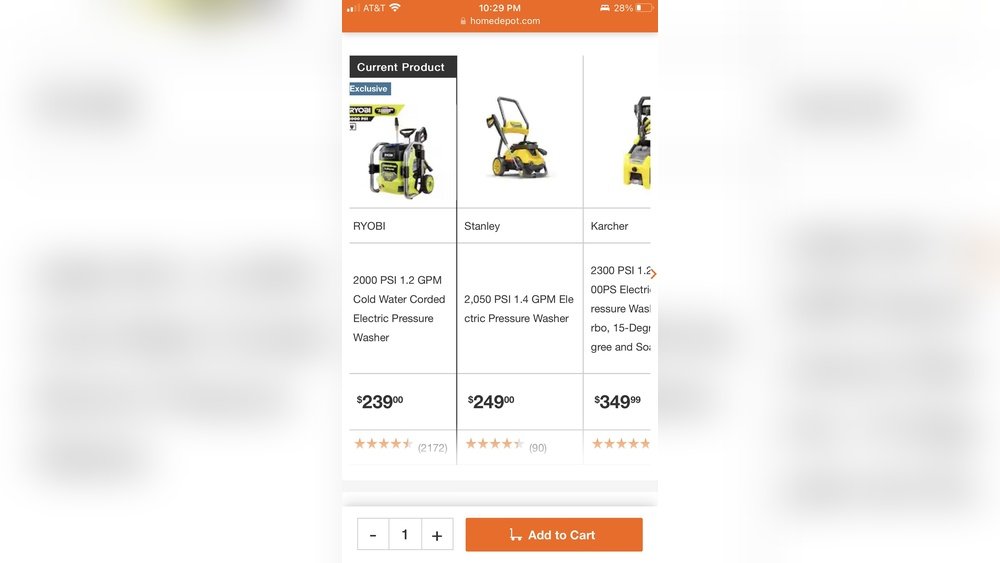
Choosing the right pressure washer can feel overwhelming. You stand in the store, looking at electric and gas models, hearing advice from friends, reading reviews online—and still, the decision is not easy. Pressure washers are powerful tools for cleaning cars, driveways, patios, decks, fences, and more. But which one fits your needs: electric or gas pressure washer? This article will help you understand the main differences, pros and cons, costs, maintenance, safety, and real-life uses, so you can make a confident choice.
Let’s dive deep into both options, comparing them with real numbers, clear examples, and practical advice. By the end, you’ll know exactly which pressure washer is right for your home or business, and how to get the best results from it.
How Pressure Washers Work
Pressure washers use water under high pressure to remove dirt, grime, mold, and stains from surfaces. All models have a pump, hose, nozzle, and trigger gun. The main difference is the power source—electricity or gasoline. This choice affects everything: cleaning power, weight, price, noise, and what you can clean.
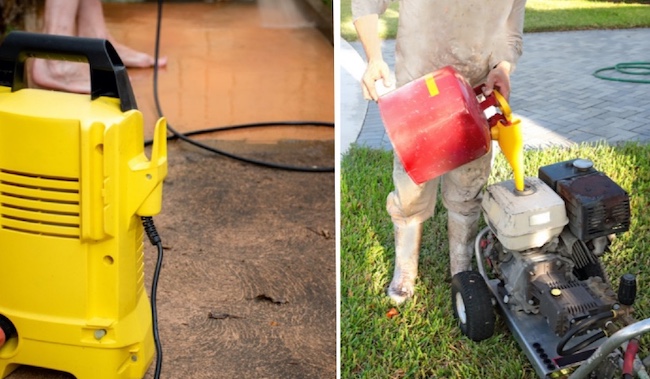
Electric pressure washers usually plug into a standard outlet. They are quieter, lighter, and better for lighter cleaning jobs. Gas pressure washers use a gasoline engine. They are much stronger, heavier, and more suitable for tough jobs.
Electric Pressure Washers: Features, Pros, And Cons
Key Features
- Power source: Runs on standard household electricity (120V)
- Pressure: Usually 1,300–2,000 PSI (pounds per square inch)
- Water flow: 1.2–1.8 GPM (gallons per minute)
- Weight: 15–35 lbs (easy to move)
- Noise: Quiet (can use without ear protection)
- Startup: Button or trigger—instant start
- Best for: Cars, bikes, patio furniture, small decks, fences, windows
Advantages
- Easy to use: Plug in, connect hose, start cleaning.
- Lightweight: Most people can lift and move them easily.
- Low maintenance: No oil, spark plugs, or fuel to worry about.
- Quiet operation: No need to warn your neighbors.
- Affordable: Entry models start around $100–$150.
- Safe for delicate surfaces: Less risk of damaging paint or wood.
Disadvantages
- Less power: Struggles with heavy-duty jobs (e.g., oil stains, concrete, old paint).
- Limited mobility: Tied to an electrical outlet and extension cord.
- Shorter hoses: Usually 20–30 feet; limits reach.
- Not for professional use: Not made for all-day, commercial cleaning.
Common Mistakes With Electric Models
- Using too short an extension cord, which can overheat and damage the motor.
- Expecting them to clean heavy, caked-on grime from driveways or construction sites.
- Ignoring water filter maintenance, which can reduce pump life.
:strip_icc()/BHG-Gas-Electric-pressure-washer_103089703_957382570--7e1abd1121094722a557e43f47504f95.jpg)
Gas Pressure Washers: Features, Pros, And Cons
Key Features
- Power source: Gasoline engine (usually 4-stroke)
- Pressure: 2,000–4,000+ PSI (sometimes up to 4,400 PSI)
- Water flow: 2.0–4.0 GPM
- Weight: 50–100+ lbs (some need two people to lift)
- Noise: Loud (hearing protection recommended)
- Startup: Pull cord (like a lawnmower)
- Best for: Concrete driveways, siding, decks, commercial work, paint prep
Advantages
- Much more power: Fast cleaning of tough stains, old paint, grease, and large areas.
- No cord: Use anywhere—job sites, farms, large properties.
- Longer hoses: Often 30–50 feet for better reach.
- Professional-grade: Handles frequent, heavy use.
- Wider nozzle options: For many types of jobs.
Disadvantages
- Heavy and bulky: Harder to move and store.
- High maintenance: Needs oil changes, air filters, spark plugs, and fuel storage.
- Louder: Can disturb neighbors.
- Higher price: Good models start at $300+, pro models cost $600+.
- More risk of damage: Can etch concrete or strip paint if misused.
Common Mistakes With Gas Models
- Forgetting to winterize or drain fuel before storage—this causes engine problems.
- Using too strong a nozzle on soft surfaces, leading to permanent damage.
- Not checking oil level, which can destroy the pump or engine.
Key Comparison: Electric Vs Gas Pressure Washer
To make things clearer, here’s a side-by-side look at the most important differences.
| Feature | Electric Pressure Washer | Gas Pressure Washer |
|---|---|---|
| Pressure (PSI) | 1,300–2,000 | 2,000–4,400 |
| Flow Rate (GPM) | 1.2–1.8 | 2.0–4.0 |
| Power Source | Electricity | Gasoline |
| Noise Level | Low | High |
| Weight | 15–35 lbs | 50–100+ lbs |
| Maintenance | Low | High |
| Best Use | Light/medium cleaning | Heavy-duty/pro use |
| Price | $100–$250 | $300–$800+ |
What To Consider When Choosing
1. Cleaning Power Needed
If you just want to wash your car, clean outdoor furniture, or rinse off dust from siding, an electric model is likely enough. For stripping paint, removing oil stains, or cleaning large driveways, a gas pressure washer is often the only option.
Non-obvious tip: High PSI doesn’t always mean better cleaning. The combination of PSI and GPM (flow) is what actually moves dirt. For example, a 1,800 PSI washer with 1.8 GPM can clean faster than a 2,000 PSI washer with only 1.2 GPM.
2. Frequency Of Use
For once-a-month cleaning, an electric model is fine. If you clean weekly, or have a lot of surfaces, gas becomes worth the investment. Overuse of an electric washer for heavy jobs often leads to breakdowns.
3. Mobility And Reach
Electric washers need to be close to an outlet. Outdoor extension cords can only reach so far. Gas models are best for farms, construction, or places with no electricity.
4. Noise And Neighborhood
If you live in an apartment, townhouse, or have close neighbors, electric is the polite choice. Gas washers are very loud—like a lawnmower or chainsaw.
5. Maintenance Willingness
Electric washers only need basic care: clean the filter, keep dry, store inside. Gas washers need regular oil changes, fresh fuel, air filter replacement, and winterizing.
6. Budget
Electric models are cheaper at first, and in the long term (less maintenance, no gas). Gas models cost more upfront and over time.
7. Storage Space
Electric units are smaller and easier to fit in a garage or shed. Gas models take up more room and need to be stored safely (no gas leaks).
Real-life Examples
- Car detailing: Electric is safer for the paint. Most car washes use 1,400–1,900 PSI models.
- Deck cleaning: Small wood decks do well with electric washers, but old, stained, or large decks often need gas models.
- Driveways: For mildew, an electric washer can handle it. For old oil stains or prepping for paint, only gas has the power.
- Commercial cleaning: Gas is the standard. Most professional cleaners use 3,000–4,200 PSI gas washers with 3–4 GPM flow.
- Apartment balconies: Electric is best—quiet, easy, and won’t disturb others.
Safety: What You Must Know
Pressure washers can be dangerous. Even “weak” electric models can cut skin or damage eyes. Gas models are even riskier.
Top Safety Tips
- Never point the spray at people or pets.
- Wear eye protection and closed shoes.
- Test on a small spot before spraying a whole area.
- Use the right nozzle—some focus water into a sharp jet that can cut wood or paint.
- Never use a gas pressure washer in a closed space; carbon monoxide can build up and cause poisoning.
- For gas models, let the engine cool before storing or refueling.
- Keep cords and hoses away from water puddles to avoid shocks.
Non-obvious tip: Electric washers can trip your home’s breaker if the circuit is overloaded. Always use a heavy-duty extension cord rated for outdoor use and high amps.
Cost Over Time
Many buyers focus only on the purchase price. But what about total cost? Here’s a simple example:
| Year | Electric Washer (avg.) | Gas Washer (avg.) |
|---|---|---|
| 1 (Purchase) | $180 | $400 |
| Annual Maintenance | $10 | $70 |
| Annual Fuel/Power | $15 | $60 |
| 5-Year Total | $265 | $830 |
Gas washers often cost 2–3 times more over five years, even if you use them only a few times per year.
Which Is Right For You? (quick Scenarios)
- You live in a small home, wash your car, and clean patio furniture: Go electric.
- You have a large driveway, garage, and do home improvement projects: Gas is better.
- You want quiet operation and little maintenance: Electric wins.
- You need to clean far from any power source: Gas is the only option.
- You want to clean mold from siding twice a year: Electric is enough.
- You run a cleaning business: Only consider gas.
Environmental Impact
Electric pressure washers are more eco-friendly. They use less water per job (because they’re weaker), and produce no emissions. Gas models emit CO2 and other pollutants, and must be handled carefully to prevent fuel spills.
Some gas models now meet strict EPA standards, but electric is still the “green” choice.
Maintenance: What To Expect
Electric Pressure Washer Maintenance
- Unplug after use.
- Store inside (protect from freezing).
- Clean filter monthly.
- Check hoses and connectors for leaks.
- Run pump with plain water for 1 minute after using detergent.
Gas Pressure Washer Maintenance
- Change oil every 3–6 months.
- Replace spark plug yearly.
- Clean or replace air filter.
- Use fuel stabilizer if stored for long periods.
- Drain water and fuel before winter.
Non-obvious tip: Running a gas washer dry (no water in the pump) for even 1–2 minutes can destroy the seals or pump. Always check water flow before starting.
Attachments And Accessories
Both types offer useful add-ons:
- Turbo nozzles: Increase cleaning speed by spinning the water jet.
- Surface cleaners: Circular attachments for even cleaning of driveways and patios.
- Foam cannons: Spray thick soap, great for car washing.
- Extension wands: Reach high places without ladders.
But, some accessories are only available for gas models (like heavy-duty surface cleaners).
Noise Levels: What To Expect
Electric washers are about 60–80 decibels (like normal conversation or a vacuum). Gas models are 85–100 decibels—similar to a motorcycle or chainsaw. Hearing protection is smart for gas, but not usually needed for electric.
If you want to wash your car early or late, electric lets you do so without complaints.
Durability And Lifespan
Electric washers typically last 3–7 years with normal use. The main failure is the pump or motor. Gas washers last 5–15 years, especially if maintained well. Commercial gas models can last decades.
Non-obvious tip: Letting the pressure washer idle (on but not spraying) for more than 2 minutes can overheat the pump. Always turn off or squeeze the trigger to release pressure.
Cleaning Results: What’s Really Different?
The biggest difference is the type of dirt and the time it takes.
- Electric: Cleans dust, mud, pollen, light mildew. Takes longer for large areas.
- Gas: Removes old stains, chewing gum, grease, caked mud, and paint. Cleans faster and more deeply.
If you want a “like-new” look for concrete or wood, gas is often necessary.
Who Should Not Use A Gas Pressure Washer
Some users should avoid gas models:
- People with little experience using power equipment.
- Those who dislike engine maintenance.
- Apartment dwellers (fuel, noise, and storage issues).
- Anyone with limited storage space.
For these users, electric is safer and simpler.
Popular Models: Examples
Electric
- Sun Joe SPX3000: 2,030 PSI, 1.76 GPM. Lightweight, 5 quick-connect nozzles, $170–$200.
- Greenworks GPW1501: 1,500 PSI, 1.2 GPM. Compact, under $120.
- Ryobi RY141900: 2,000 PSI, 1.2 GPM. Sturdy wheels, under $200.
Gas
- Simpson MegaShot MSH3125: 3,200 PSI, 2.5 GPM. Honda engine, $350–$400.
- Generac 7019 OneWash: 2,000–3,100 PSI adjustable, 2.4 GPM, $400.
- Champion 3200-PSI: 3,200 PSI, 2.4 GPM. Durable, under $350.
Always check user reviews and warranty before buying.
Making Your Decision: Final Checklist
Ask yourself:
- What surfaces do I clean most often?
- Do I want simple, quiet operation—or maximum power?
- Is mobility (no cords) important?
- How much maintenance am I willing to do?
- What is my total budget (including fuel, repairs, accessories)?
- Do local rules restrict noise or gas storage?
If you’re still unsure, rent a gas pressure washer for a day and compare with an electric model. Many hardware stores offer this service.
For more detailed technical specs, you can visit the Wikipedia page on pressure washers.

Frequently Asked Questions
What Does Psi Mean In Pressure Washers?
PSI stands for pounds per square inch. It measures the pressure of the water stream. Higher PSI means more cleaning force. For cars and windows, 1,300–1,900 PSI is enough. For driveways and paint removal, 2,800–4,000 PSI is better.
Can I Use A Gas Pressure Washer Indoors?
No. Gas engines produce carbon monoxide, which is deadly in closed spaces. Only use gas washers outdoors or in open, well-ventilated areas.
Are Electric Pressure Washers Safe For Cars?
Yes, if you use the right nozzle (usually the 25-degree or 40-degree tip) and keep the wand at least 1 foot from the paint. Avoid high-pressure “turbo” nozzles on cars.
How Long Do Pressure Washers Last?
Electric models last 3–7 years with normal use. Gas models last 5–15 years, or longer with good maintenance. Pumps and engines need care to reach their maximum lifespan.
Do Gas Pressure Washers Need Special Fuel?
Most use regular unleaded gasoline (87 octane). Use fresh fuel and add a fuel stabilizer if you store the washer for months. Some pro models need oil and gas mixed—always check the manual.
Choosing between electric and gas pressure washers isn’t just about power—it’s about what you clean, where you live, and how much time you want to spend on maintenance. With the facts above, you can now make the best choice for your home or business and get sparkling clean results every time.
As an Amazon Associate, We earn from qualifying purchases