
I have spent years testing, pushing, and maintaining all kinds of lawn care machinery on various types of turf. In my experience, choosing between a heavy-duty gas machine and a lightweight plug-in model comes down to how much sweat equity you want to invest in your yard. I put both of these distinct machines through their paces to help you decide which power source fits your weekend routine.
electric mower vs gas mower: At a Glance
| Gas-Powered Electric Lawn Mower | Electric Lawn Mower | |
|---|---|---|
| Power Source | Gasoline engine with a battery-powered electric push-button start | Corded electrical outlet or rechargeable lithium-ion battery |
| Cutting Power | High torque; easily cuts through thick, tall, and wet grass | Moderate power; can bog down in dense or overgrown turf |
| Maintenance Required | High; requires oil changes, spark plugs, air filters, and fuel stabilization | Low; requires only blade sharpening and basic cleaning |
| Starting Mechanism | Effortless electric push-button, bypassing the traditional pull-cord | Instant push-button or bail-lever start |
| Runtime & Range | Unlimited range; limited only by fuel tank capacity | Limited by cord length or battery charge capacity |
| Weight & Maneuverability | Heavy; often requires self-propelled drive systems to assist | Lightweight; very easy to push, turn, and transport |
| Noise & Emissions | Loud operation with localized exhaust emissions | Extremely quiet operation with zero localized emissions |
Complete Comparison: Gas-Powered Electric Lawn Mower vs Electric Lawn Mower
| 24 in. 201cc Electric Start Select | LawnMaster MEB1114K Electric Corded Lawn Mower | |
|---|---|---|
| Product Image | 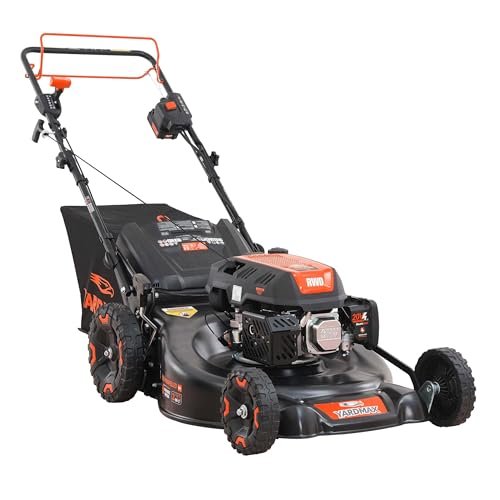 | 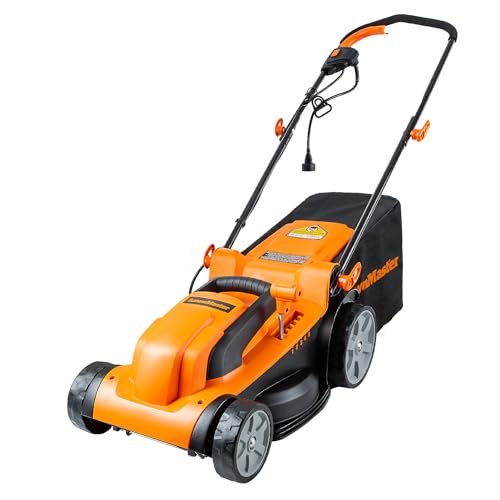 |
| Price | View On Amazon | View On Amazon |
| Category | Premium | Budget |
| Power Source & Motor | Gas (201cc Engine) with Electric Start | Electric Corded (11-Amp Motor, 3,300 RPM) |
| Cutting Width | 24 inches | 14 inches (15-inch deck) |
| Drive & Speed Control | Self-Propelled RWD, PACE 6-Speed CVT | Manual Push |
| Deck Material & Technology | Heavy-duty 16-gauge stamped steel with MAXFlow volute spiral design | Lightweight impact-resistant polymer |
| Cutting Height Options | 7 positions (1.57” to 3.74”) via Single-lever | 5 positions (1.4” to 3”) via Single-lever |
| Grass Management & Versatility | 3-in-1 capability (Mulch, Bag, Side Discharge) with cleanout port | Rear bagging with included 7-Gallon collection bag |
| Weight & Maneuverability | Heavy-duty high-wheel RWD with double ball bearing wheels | Ultra-lightweight (28 lbs) with folding handles for compact storage |
| Best For | Medium to large yards, thick grass, and hilly terrain | Small yards, tight spaces, and low-maintenance eco-friendly mowing |
| Amazon Link | View On Amazon | View On Amazon |
| Overall Winner | Winner (Premium Power & Performance) | Runner-Up (Best Budget & Portability) |
Heavy Duty Power: 24 in. 201cc Gas Walk Behind Self Propelled Lawn Mower
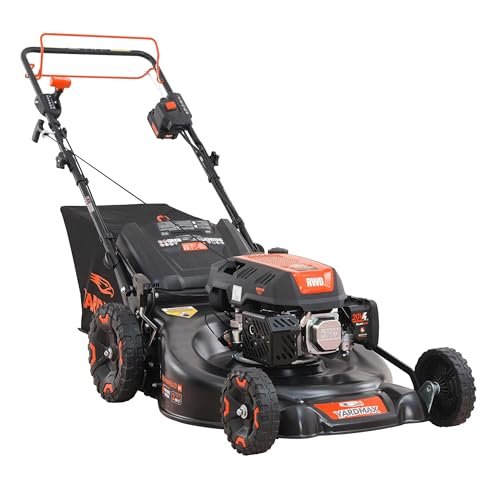
This beast of a machine brings commercial-grade capability to residential lawns. I immediately noticed how the massive 201cc engine tears through thick, wet tall fescue without bogging down. Starting a gas mower can often be a back-breaking chore, but this model features an integrated Electric Start system that fires up the engine with a simple button press. The PACE 6 Speed CVT (continuously variable transmission) allows you to match the mower’s self-propelled drive to your exact walking speed. The one-piece seamless steel deck reduces overall machine vibration. This solid construction makes the ride feel stable, even when navigating bumpy terrain. Cleanup is equally straightforward thanks to the built-in deck cleanout port for washing away wet grass clippings. You can quickly set your mowing height with a single-lever deck adjustment.
- Electric Start eliminates the need for pulling recoil cords.
- 6-Speed CVT adapts the rear-wheel drive to your personal walking pace.
- 24-inch steel deck covers more ground per pass, reducing overall mowing time.
- Single-lever height adjuster changes all four wheels simultaneously.
- Integrated cleanout port allows easy under-deck washing with a garden hose.
Pros
- Massive cutting width handles large properties quickly.
- Rear-wheel drive tackles steep slopes and uneven ground effortlessly.
- Heavy steel deck provides excellent mulching and vacuum pressure.
Cons
- High maintenance requirements including gas, oil, and spark plugs.
- Very heavy to turn in tight corners or narrow garden beds.
Best for:
Homeowners with large yards, hilly terrain, and thick grass varieties who want maximum cutting power without the physical strain of pull-starting a gas engine.
Expert Opinion: This machine is a true powerhouse that bridges the gap between commercial capacity and residential convenience, provided you do not mind routine engine maintenance.
Lightweight Simplicity: LawnMaster MEB1114K Electric Corded Lawn Mower
This compact corded machine is the polar opposition of the gas-powered heavy hitter. I was immediately struck by how incredibly light this unit feels when lifting it out of the box. The 11AMP motor delivers a surprising amount of power, spinning the blade at 3,300 RPM to cleanly slice through standard backyard grass. Because it runs purely on electricity, there are no gas or batteries to manage, charge, or replace. You get unlimited runtime as long as you stay plugged into an outlet. The 14-inch cutting width is narrow, but it allows you to squeeze into tight garden pathways where wider mowers cannot fit. You can customize your cut with 5 different deck heights ranging from 1.4 inches to 3 inches. Its 7.75-inch rear wheels glide over flat turf with minimal pushing effort. Clippings are caught in a 7-gallon collection bag that detaches quickly for clean disposal.
- 11AMP motor delivers a consistent 3,300 RPM blade speed.
- Zero-emission design requires no fuel, oil, or battery charging.
- 5-position height adjustment ranges from 1.4 inches to 3 inches.
- 7.75-inch rear wheels provide nimble steering around trees and flower beds.
- 7-gallon grass catcher holds a decent volume of clippings before needing a dump.
Pros
- Extremely lightweight and easy to push or carry.
- Zero maintenance beyond sharpening the blade.
- Whispering quiet operation compared to any gas engine.
Cons
- Dragging an extension cord around trees and bushes requires constant management.
- Narrow cutting path requires more passes to finish the yard.
Best for:
Urban homeowners with small, flat yards who want a quiet, budget-friendly machine that requires zero mechanical upkeep.
Expert Opinion: For small city lots, this corded option offers unmatched simplicity and reliability, though you must master the art of cord management.
Electric Mower vs Gas Mower: Key Differences That Matter
Comparing these two machines highlights the classic debate of electric mower vs gas mower designs, where raw power competes directly with user-friendly simplicity.
Performance comparison
The gas-powered mower wins on raw muscle. Its 201cc engine generates massive torque, allowing it to slice through dense weeds, damp grass, and overgrown brush without stalling. The 24-inch steel blade mulches grass into fine dust. The corded electric mower, while spinning at a high RPM, relies on speed rather than torque. It will struggle, stall, or chew through its circuit breaker if you force it through thick, overgrown patches.
Price/Value analysis
Upfront costs tell a dramatic story. The corded LawnMaster is incredibly affordable and costs virtually nothing to run over its lifespan. The heavy-duty gas mower represents a serious financial investment. You must also factor in the ongoing costs of fuel, engine oil, air filters, and fuel stabilizer for the gas machine. Over five years, the corded electric option is undeniably more budget-friendly.
Build quality comparison
The gas model features a heavy, one-piece steel deck and steel chassis elements designed to survive years of abuse. It handles flying stones and accidental curb impacts with minor cosmetic scratches. The corded electric model relies heavily on high-impact plastic for its deck and body panels. This makes it rust-proof and lightweight, but it feels much more fragile than its steel counterpart.
User experience differences
Operating these two machines feels entirely different. The gas mower is loud, heavy, and smells of exhaust, but the self-propelled drive system does the hard pushing work for you. The corded electric mower is almost silent and emits no fumes. You must constantly throw, loop, and navigate a long extension cord to avoid running over it, which adds a layer of puzzle-solving to your chore.
Which Should You Choose?
If you have a half-acre yard or larger, thick turfgrass, or a lawn with steep hills, the gas-powered self-propelled mower is your best choice. It has the physical capacity and self-propelled drive to tackle tough terrain without exhausting you.
Choose the corded electric mower if you live on a smaller city lot under a quarter-acre, have close neighbors who appreciate peace and quiet, and want a machine you can hang on a wall hook without worrying about leaking fluids.
The final verdict depends on your property layout. For large, demanding properties, nothing matches the raw productivity and physical relief of the gas PACE drive system. For small, simple yards, the corded LawnMaster delivers effortless maintenance and unbeatable value.
Frequently Asked Questions
Q: In the electric mower vs gas mower debate, which one is better for wet grass?
A: Gas mowers are much better for wet grass because their high-torque engines can spin heavy steel blades through heavy, clumped moisture without clogging or stalling the motor.
Q: How do I avoid cutting the cord on a corded electric lawn mower?
A: Start mowing closest to your electrical outlet and work your way outward, throwing the cord onto the previously cut grass so it always stays behind your path.
Q: Do I need to buy a specific extension cord for the corded model?
A: Yes, you need a medium or heavy-duty outdoor-rated extension cord. Use a 14-gauge cord for lengths up to 50 feet, or a thicker 12-gauge cord if you are reaching up to 100 feet.
Q: Does the gas mower come with a battery for the electric start?
A: Yes, electric start gas mowers include a small, integrated rechargeable battery that powers the starter motor, which you occasionally plug into a wall outlet to charge.
Q: When comparing electric mower vs gas mower lifespans, which lasts longer?
A: A well-maintained gas mower with a steel deck can easily last 10 to 15 years, whereas plastic-bodied electric mowers typically last around 5 to 8 years before electrical switches or plastic components wear out.
Q: Can the corded electric mower handle uneven ground?
A: It can handle mild bumps, but its lightweight plastic chassis and smaller wheels will bounce around on rough, rutted ground more than a heavy steel-deck gas mower.
As an Amazon Associate, We earn from qualifying purchases